












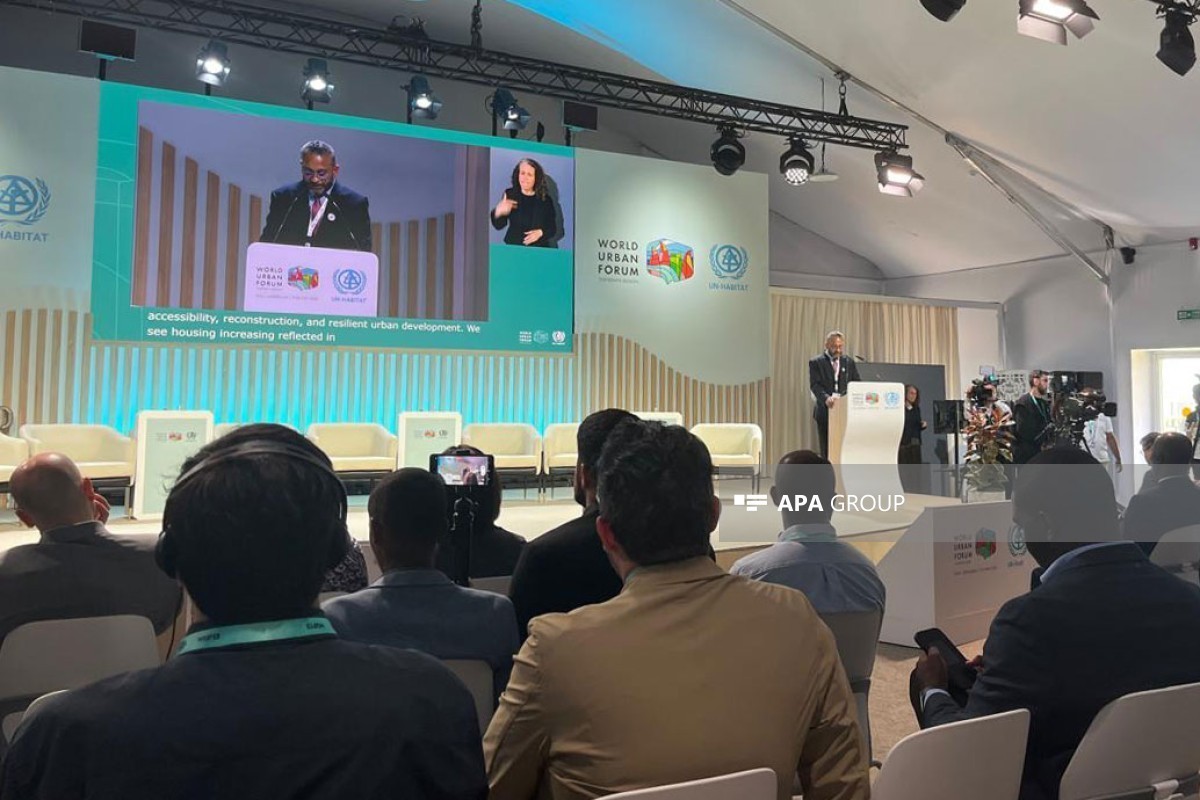


“The decisions we make in the housing sector directly affect land use, transport systems, energy demand and emissions. Therefore, it is important to view housing not as a secondary issue, but as a key priority," Patrick Kanagasinham, Director of the Regional Programmes Division of the United Nations Human Settlements Programme (UN-Habitat), said during his speech at the special session titled “Housing at the Center of Global Coalitions” held within the framework of WUF13, APA reports.
“There is also an important shift at the international level. Housing is once again becoming one of the main directions of multilateral cooperation. Within the framework of WUF13, governments are exchanging experience in the fields of housing affordability, informal settlements, homelessness, housing finance, accessibility, reconstruction and sustainable urban development.
At the same time, the housing issue is increasingly being reflected in countries’ national climate plans and commitments.
In addition, through the ‘Open-Ended Intergovernmental Expert Working Group on Adequate Housing,’ member states are developing the first truly global and intercontinental dialogue dedicated to housing issues.
This is a very important and significant step. However, all these signals must now turn into stronger collective action,” the UN official said.
He emphasized that housing should stand at the center of global coalitions: “This issue is not secondary or a problem to be solved later. Housing is not on the margins of climate discussions, but an important part of them. It is not an issue that comes after infrastructure planning, but a core element of planning. At the same time, it is also an integral part of economic policy.”


 Follow us on Telegram
 t.me/apanewsaz
 Follow us on Instagram
 Follow us on TikTok
 Follow us on Facebook
 Follow us on X


