











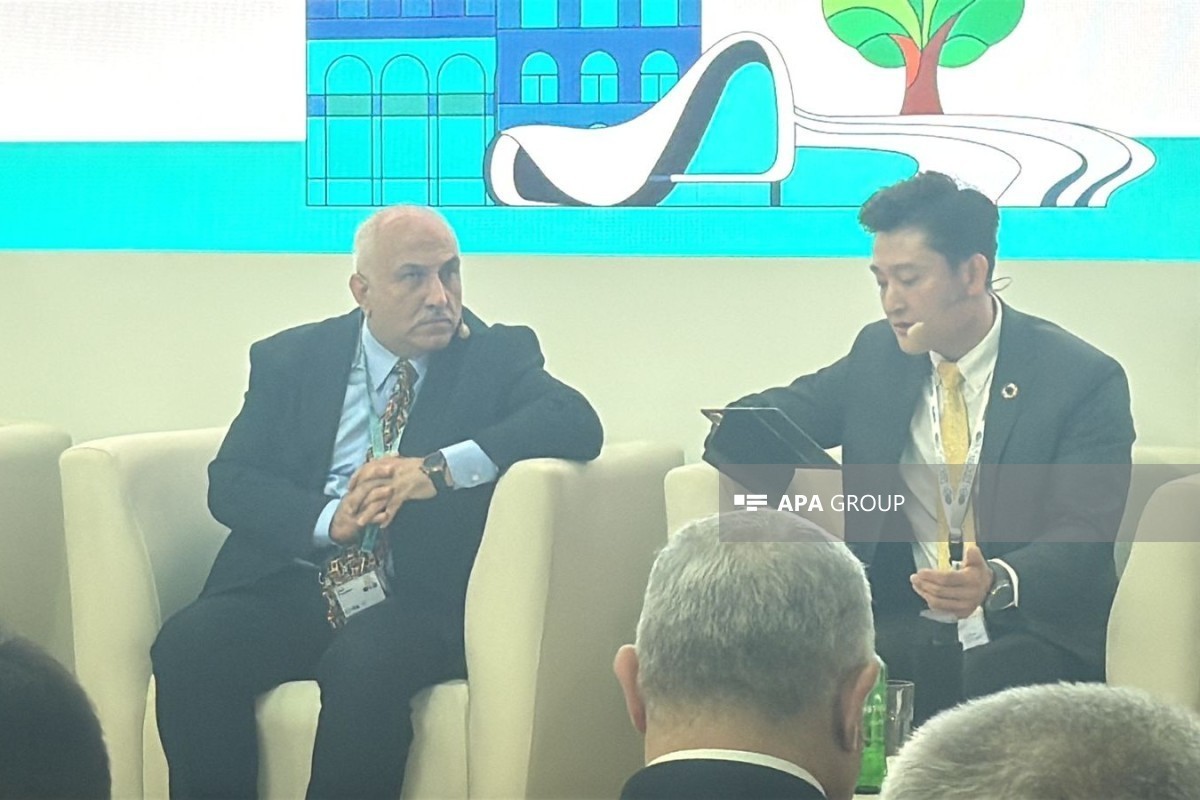


In recent years, migration flows have not followed the previous stable model globally, but have instead become volatile and complex in nature, Fuad Huseynov, deputy chairman of the State Committee for Refugees and IDPs, said during the session titled “Migration and Cities: A Framework for Safe, Innovative and Sustainable Governance” held within the framework of WUF13, APA reports.
He noted that this is especially evident in cases of forced displacement caused by conflicts: “The current situation has led to the implementation of large-scale housing projects for internally displaced persons. The only sustainable and fair solution to this crisis was to ensure humanitarian support at the local level within the framework of a political settlement of the conflict. This was also noted in the report of the U.S. Special Representative for Human Rights on the conflict in Azerbaijan.”
Fuad Huseynov stated that another key issue was the liberation of the occupied territories: “This made it possible for internally displaced persons to exercise their fundamental and universal right to return safely, voluntarily, and with dignity to their native lands. Following the 44-day Patriotic War in 2020, not only was Azerbaijan’s territorial integrity within its internationally recognized borders restored, but new conditions were also created for the safe and voluntary return of internally displaced persons.
Today, Azerbaijan has entered a new phase of post-war development and is implementing the ‘Great Return’ program. This process is a rare and unique example in the world both in terms of its scale and the extent of the destruction,” he said.


 Follow us on Telegram
 t.me/apanewsaz
 Follow us on Instagram
 Follow us on TikTok
 Follow us on Facebook
 Follow us on X


