












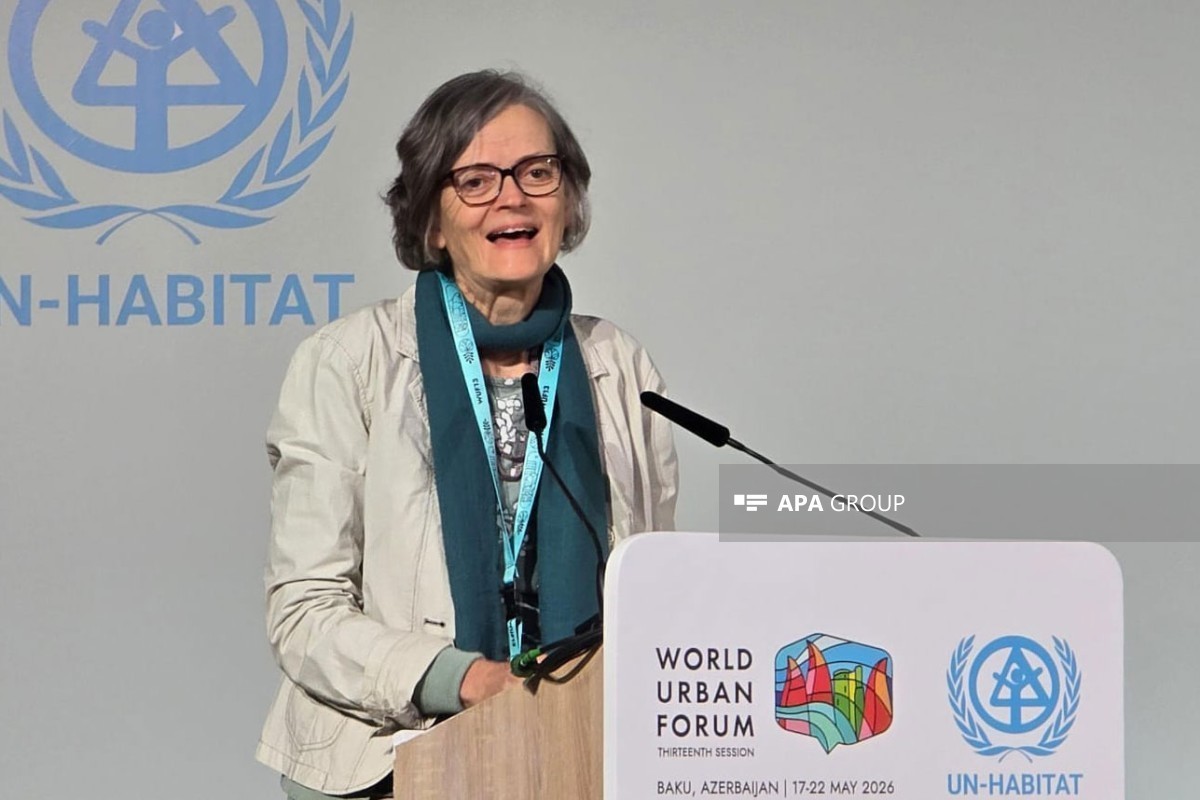


The transformation of informal settlements does not imply the destruction of the existing situation, but rather the gradual improvement of these areas with the active participation of their residents, Marie Huchzermeyer, Professor in the School of Architecture and Planning at Wits University in Johannesburg, South Africa said during her speech at the dialogue session titled “Transforming informal settlements and slums: housing for the world” held within the framework of WUF13, APA-Economics reports.
According to her, the approaches of states toward informal settlements can take various forms, such as forced eviction, state-determined solutions, neglectful attitudes, temporary legal status, legalization and transformation.
Marie Huchzermeyer noted that the most appropriate model currently supported by international organizations is the transformation approach: “This model takes the existing living environment as a basis and envisages the direct participation of residents in decision-making. Alongside the improvement of informal settlements, it is important to increase the supply of accessible and serviced land plots in order to prevent the emergence of new such areas in the future.”
According to her, proper policies and legislation can enable cities to manage increasing urbanization pressure more effectively.


 Follow us on Telegram
 t.me/apanewsaz
 Follow us on Instagram
 Follow us on TikTok
 Follow us on Facebook
 Follow us on X


