












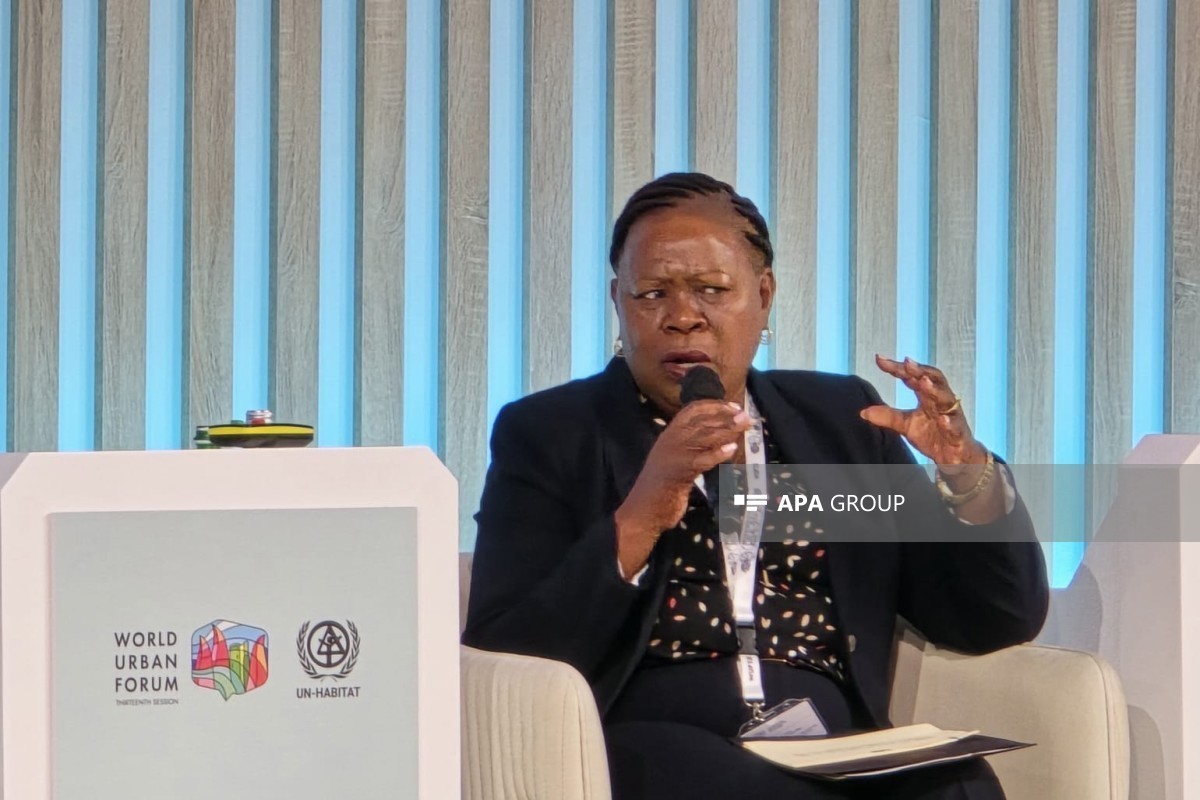


The success of the program on upgrading informal settlements in Kenya is related not only to financing, but also to resolving land issues and the active participation of communities, Kenya’s Cabinet Secretary for Lands, Public Works, Housing and Urban Development Alice Wahome said during her speech at the dialogue session titled “Transforming informal settlements and slums: housing for the world” held within the framework of WUF13, APA-Economics reports.
According to her, Kenya’s Informal Settlements Improvement Program (KISIP) is being implemented with approximately 350 million US dollars in financial support from the World Bank.
Alice Wahome noted that the availability of financial resources alone is not sufficient. Resolving land issues and involving local communities in the process play a decisive role in the success of the program.
According to the minister, although the majority of people living in slums are not owners of the buildings, they have lived in those areas for generations. This turns the formalization of property rights and documentation in accordance with the requirements of international financial institutions into one of the main challenges.
She stressed that without the participation of residents and the regulation of land documentation, projects on upgrading informal settlements can hardly deliver sustainable results.


 Follow us on Telegram
 t.me/apanewsaz
 Follow us on Instagram
 Follow us on TikTok
 Follow us on Facebook
 Follow us on X


