












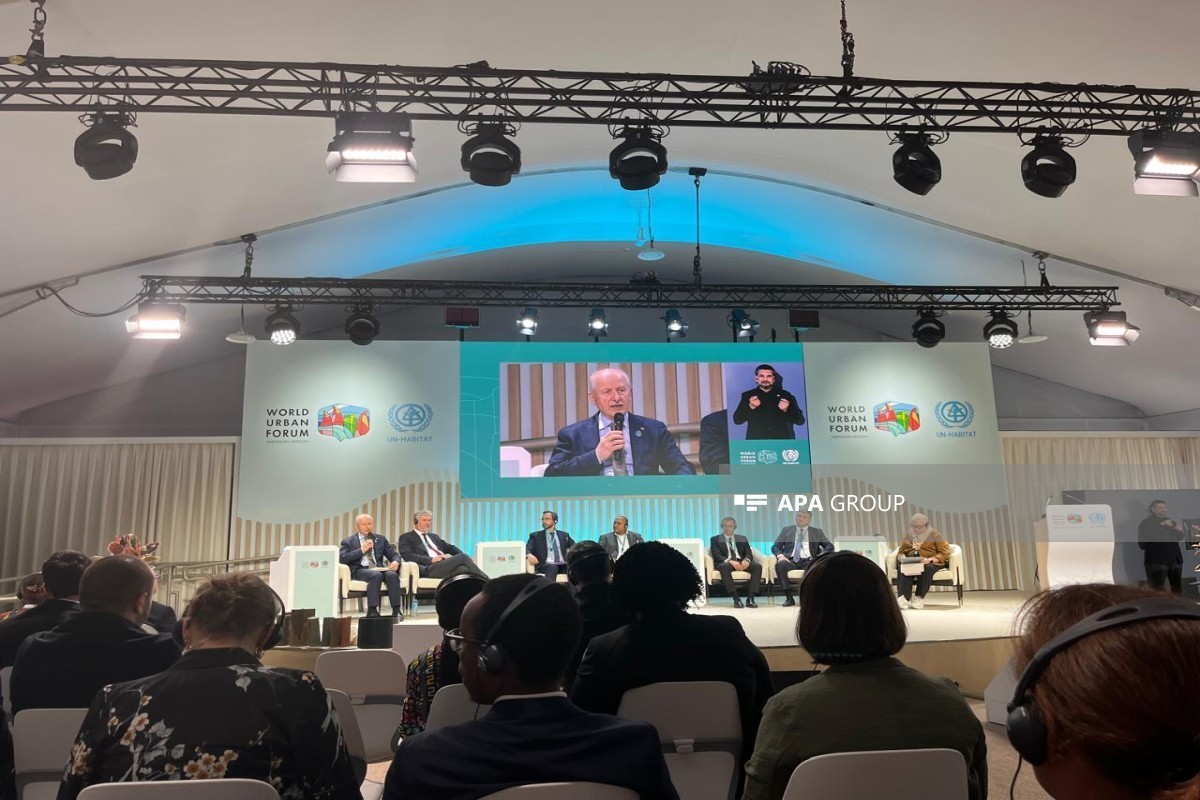


Türkiye has returned 90 million tons of waste to the economy through the “Zero Waste” project, Hasan Suver, Deputy Minister of Environment, Urbanization and Climate Change of Türkiye, said during the special session titled “Advancing Waste Management Towards a Circular Economy” held within the framework of WUF13, APA reports.
The deputy minister stated that unmanaged waste creates serious environmental, climate and social risks, especially in vulnerable urban areas.
According to him, uncontrolled waste increases methane emissions, causes water and soil pollution, and raises the risk of floods and natural disasters.
It was emphasized during the speech that the “Zero Waste” project launched in 2017 has already become a global environmental initiative. Within the framework of the project, the “Zero Waste Management System” has been established in thousands of buildings and residential areas, and awareness training has been conducted for 28 million people.
According to the information provided, the recycling rate in Türkiye increased from 13 percent in 2017 to 37.53 percent in 2025. The target is to raise this figure to 60 percent by 2035 and to 70 percent by 2053.
The deputy minister noted that from the start of the project implementation until the end of 2025, a total of 90 million tons of recyclable waste had been returned to the economic cycle. These include 36.1 million tons of paper and cardboard, 10.2 million tons of plastic, 3.5 million tons of glass and 9.6 million tons of metal waste.
It was reported that recycling contributed 365 billion Turkish liras to the Turkish economy. In addition, energy savings equivalent to the annual energy needs of millions of families were achieved, 60 billion liters of oil were saved and the cutting down of 613 million trees was prevented.


 Follow us on Telegram
 t.me/apanewsaz
 Follow us on Instagram
 Follow us on TikTok
 Follow us on Facebook
 Follow us on X


