













Work to be carried out in the fields of bus, railway, metro and tram transport for passenger transportation in Baku has been announced, APA reports.
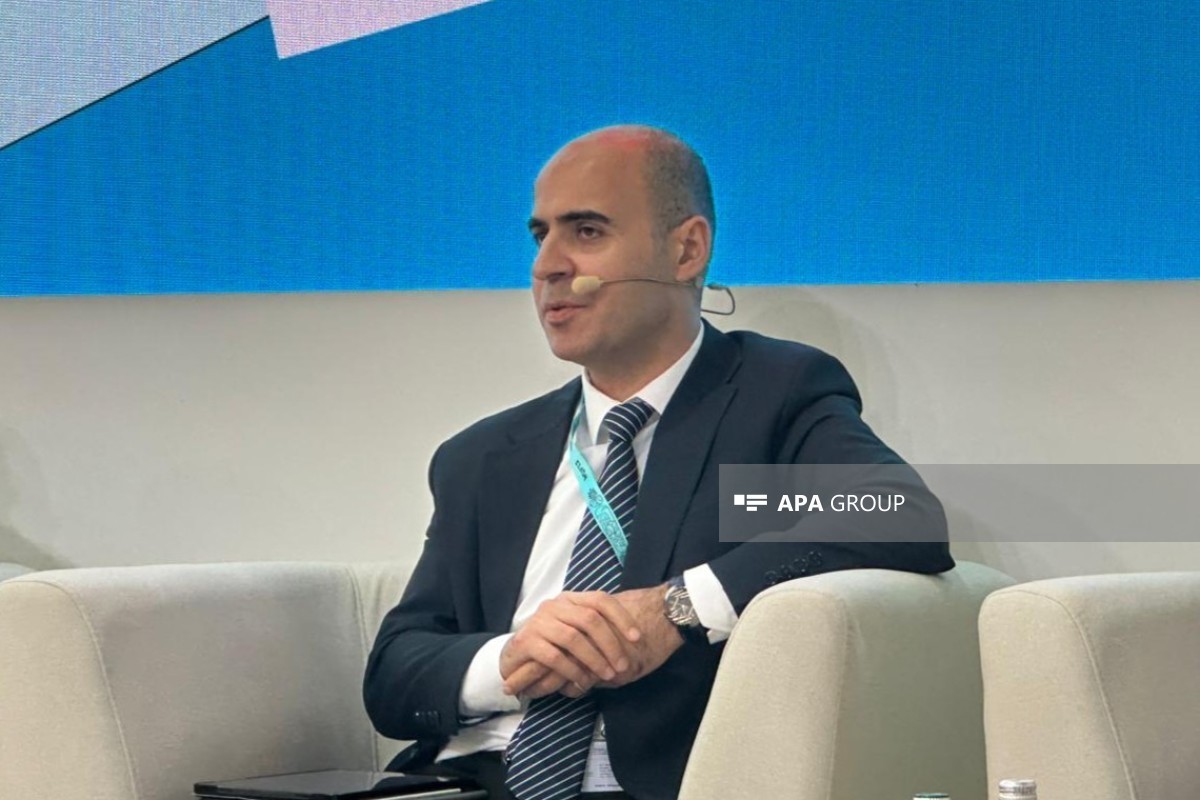
Tarlan Safarov, head of the Baku Regional Department at the Azerbaijan Land Transport Agency (AYNA), said during an event dedicated to Baku’s Master Plan held within the framework of WUF13 that their main focus has been on the complete restructuring of the city’s bus transport system while evaluating active projects:
"Significant progress has been achieved within the framework of the State Program. A total of 368 green energy-powered buses have been introduced to our streets, and 114 kilometers of dedicated bus lanes have been constructed. As a result, our daily active bus fleet has increased by 30 percent, with 2,300 buses operating every day. With this expansion, we currently transport 494 million passengers annually. In addition, contactless payment integration has been expanded to 1,900 buses. To support mobility goals, the regional railway network is being expanded to serve surrounding suburban areas. Passenger railway lines are planned to directly connect residential settlements, including Bilgah, Mashtaga, Albaliliq, Bina and Hovsan, with central Baku. Furthermore, underutilized freight corridors from Keshla to the Boyuk-Shor section are being repurposed to manage suburban passenger flows. To support the growth of this network and increase service frequency, the purchase of 20 new modern passenger trains is planned.”
“Ten new strategic stations are being designed and planned to improve access across the city. In addition, the separation of the Green and Red metro lines at the central ‘28 May’ interchange station is planned in order to ensure maximum network frequency and safety. This upgrade will completely eliminate our biggest transit bottleneck,” he said.
According to Tarlan Safarov, light rail systems are also being reintroduced into Baku’s urban structure: “Modern tram networks are being analyzed for high-density corridors, and a route from Mehdiabad to the ‘28 May’ center is considered a priority.
We no longer view highways, railways, metro or trams as separate segments. Instead, they are being integrated into a unified digital and physical ecosystem. This integration is essential for eliminating transit friction, optimizing travel times and maximizing accessibility for all residents. This brings us to our core transit philosophy: One City. One Network. One Journey.
To realize this philosophy, a strong network of Multimodal Hubs is being integrated between strategic locations including Sumgayit, Khirdalan, Sabunchu and Koroghlu. These hubs will enable seamless passenger transfers between railway, metro and bus networks in less than two minutes.”
AYNA also spoke about measures taken in the field of micromobility. It was noted that 60.3 kilometers of dedicated bicycle lanes have already been constructed and more than 1,200 organized parking spaces installed. Currently, micromobility accounts for 12 percent of short-distance trips in the city center:
“At the same time, our streets are being returned to pedestrians. New quality standards for sidewalks have been approved. The pedestrianization of Islam Safarli Street has been completed, while active pedestrian networks are planned for Lev Tolstoy, Khagani and Topchubashov streets. In addition, new pedestrian concepts are currently being developed for Tabriz Street and busy areas around the ‘Ganjlik’ station hub.
In conclusion, our strategic vision for Baku’s mobility is very simple: we want a faster, safer and greener transit system.”


 Follow us on Telegram
 t.me/apanewsaz
 Follow us on Instagram
 Follow us on TikTok
 Follow us on Facebook
 Follow us on X


