












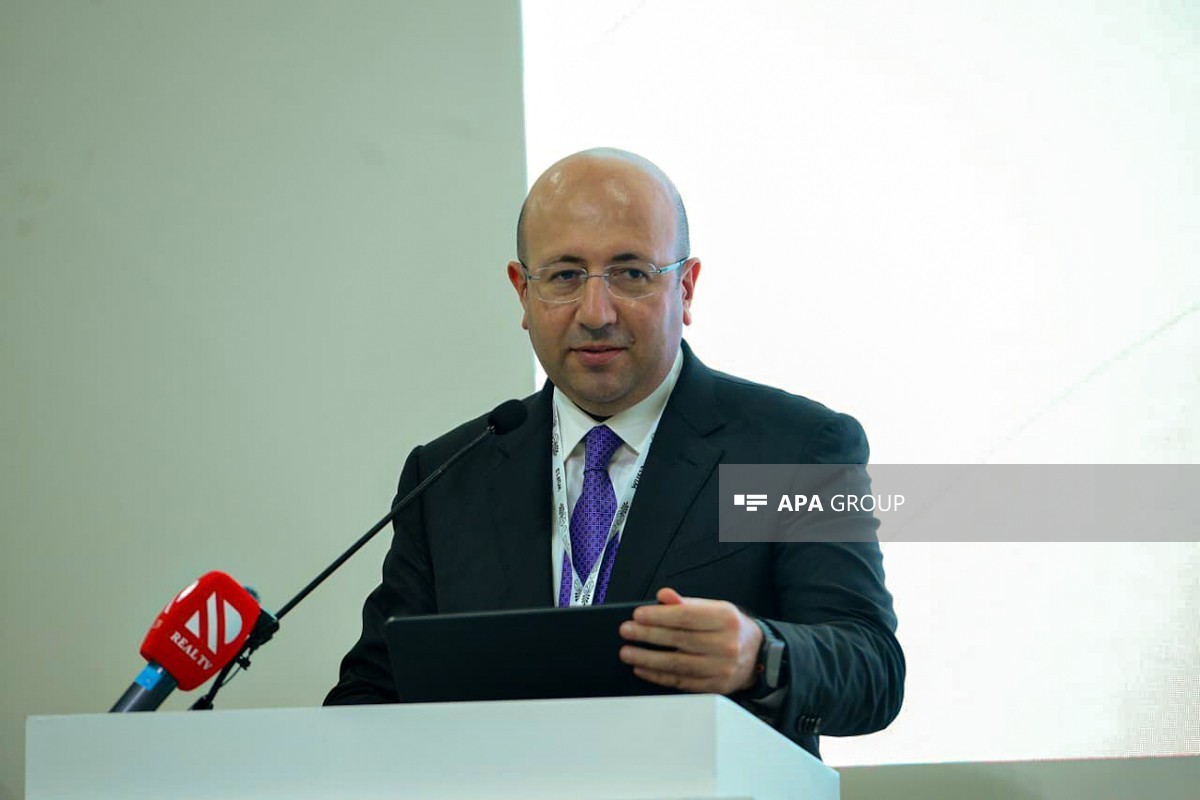

"Cities are the main engines of mobility, trade, and innovation and generate a large share of global GDP," said Anar Guliyev, Chairman of the State Committee on Urban Planning and Architecture of the Republic of Azerbaijan and National Coordinator of WUF13, during the event “D-8 High-Level Energy and Urban Dialogue” held within the framework of WUF13, APA reports.
He noted that cities are also responsible for about 70% of global emissions and more than two-thirds of global energy consumption: “This further highlights the role of cities in combating climate change and the importance of urban planning, design, and development processes.”
Anar Guliyev said that in Azerbaijan, increasing energy efficiency and strengthening climate resilience are an integral part of urban policy.
“Green construction and energy-efficient buildings have become key directions of our urban development strategy. This approach reflects our belief that a sustainable urban future depends on reducing the long-term environmental impact of construction and infrastructure,” he emphasized.
He added that the transition to green construction is not only an environmental necessity but also an important economic opportunity. Investments in energy-efficient buildings and sustainable infrastructure reduce operating costs, improve quality of life, increase investment attractiveness, promote innovation, and create new jobs. Thus, this approach also contributes to long-term economic sustainability.
“At the same time, large-scale reconstruction and restoration work in Azerbaijan’s liberated territories is of special importance. After the liberation of Karabakh and surrounding districts, Azerbaijan has launched an ambitious reconstruction process in regions that suffered severe destruction for many years. Entire cities and villages, social infrastructure, transport networks, energy systems, and public services are being rebuilt,” Anar Guliyev noted.


 Follow us on Telegram
 t.me/apanewsaz
 Follow us on Instagram
 Follow us on TikTok
 Follow us on Facebook
 Follow us on X


