













APA presents an article by Mahammad Rahmanifer titled "Varzigan - a city where Sattarkhan was born" as part of the "Explore South Azerbaijan" project.
Previous articles within the project can be found here.
The city of Varzigan (Varzgan) is located 70 km from the city of Tabriz, which is considered the center of the East Azerbaijan province. It should be noted that according to the administrative-territorial division of the country in Iran, the South Azerbaijan region is divided into the provinces (provinces) of West Azerbaijan, East Azerbaijan, Ardabil, Zanjan, Alborz, Qazvin, and Hamadan. The city of Varzigan is located in the center of the Varzigan district (shahristan). It is surrounded by smaller settlements and villages of this district such as Kharvana, Uzumdil, Bakirova, Arazil, Joshi,n and Dizmar.
According to the 2017 census, the population of Varzigan district is 52,600 people. The population of this city speaks Azerbaijani Turkish. They are Muslims and Shiites.
Like many cities in Azerbaijan, Varzigan district is located in a mountainous region. In fact, this city, like Ahar and Kaleybar, is considered part of Garadagh district. Garadagh region is known for its very cold, sometimes frosty winters and warm, cool summers. The main occupation of the population of this region is agriculture and animal husbandry, and the main products are lentils, wheat and honey.
A brief look at the history of Varzigan from ancient times to the modern era
The presence of Urartu stone inscriptions in the region indicates that the history of this city dates back to the pre-Christian era. According to historical sources, the Urartu state (860–547 BC) included the region as part of its territory during its heyday. Although the main territories of Urartu included the western cities of Azerbaijan, at the peak of this empire's power it subjugated all the lands up to the vicinity of Ardabil. The evidence for this claim is the cuneiform stone inscriptions found near the city of Sarab. The Sigyndyl stone inscription located near Varzigan is also a relic of the Urartu state and the history of this region dates back to even more ancient times.
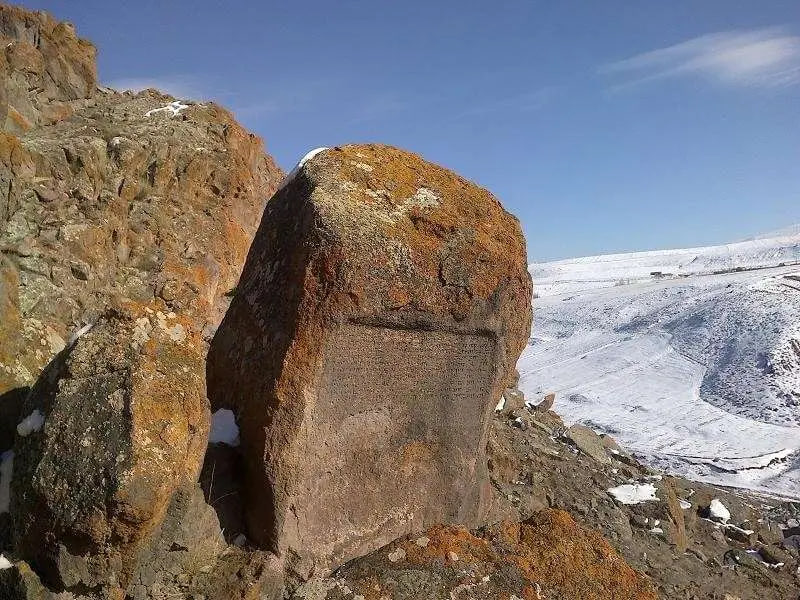
(Sigundil Stone Inscription)
Unfortunately, no comprehensive scientific research has been conducted on the history of the Varzigan region. However, as we have noted, the location of the Sigundil Stone Inscription in this region, the presence of very ancient historical fortresses in these lands, the discovery of objects dating back centuries before Islam as a result of archaeological excavations, and the presence of monuments from different historical periods in the region indicate that the basic raw materials necessary for studying the ancient history of this region exist to a certain extent.
Based on these historical works, it can be said that the settlement of people in these lands dates back to the times before the Urartian Empire. For example, it is estimated that the ancient petroglyphs located in the Goshadash district of the Sungun region of Varzigan date back to the 5th century BC. The petroglyphs, which are associated with dancing images of people and animals, are considered a rich treasure of Azerbaijani history. They are information files of human life from the distant past and are full of unsolved secrets.
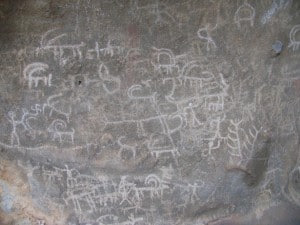
(Twin petroglyphs)
These petroglyphs are considered the foundation of the creation of code letters, writing, message exchange, language, history, myths, art and culture. It is also noteworthy that the most repeated animal motif in them is the mountain goat. The goat has a very important place in the ancient mythology of Azerbaijan. Even in South Azerbaijan, on the eve of the holiday, the goats go around the villages and bring the good news of the holiday. The main motif of the tradition of the goats is the goat that brings the good news of spring.
As an example, we can mention the Joshin castle, located in the center of the historical Dizmar region of Garadagh, between the villages of Gal and Joshin. Although the mountain on which this castle was built is not very high, the road to the castle is so difficult that special means are required. Thus, it turns out that the castle was built for defensive purposes.
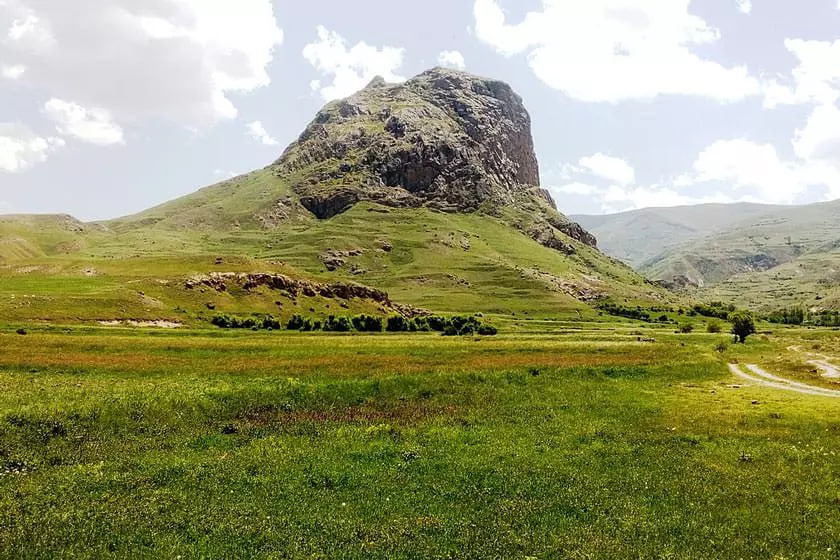
(The mountain where Joshin Castle is located)
The entrance steps to this fort are made of carved stone. The remains of the fort include two large rocks on the east and west sides, probably used for observation, basins dug into the rocks to store water, and small cylindrical holes for placing torches.
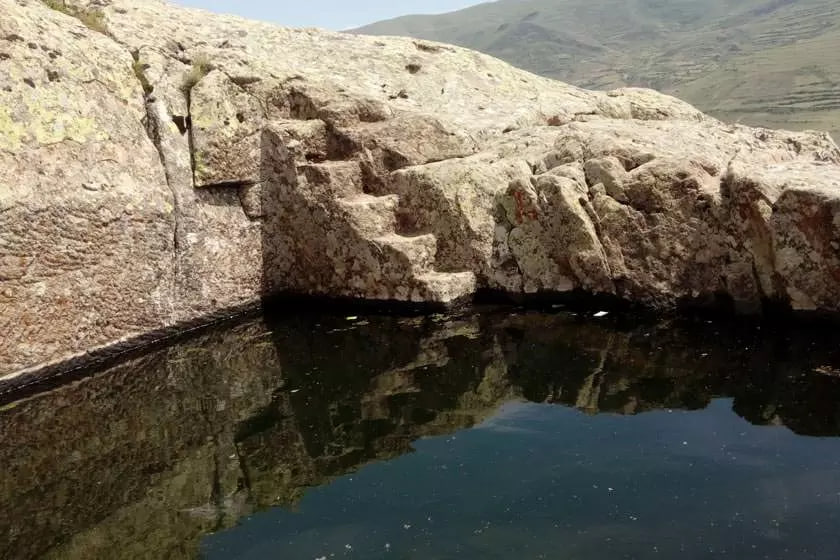
(Josh's Castle)
Another example is the pre-Islamic Agca Qala. Unfortunately, like many other historical monuments of South Azerbaijan, this fortress has been severely damaged, and now only 8 circular semi-cylindrical towers and 11 pieces of thick and wide stone walls remain.
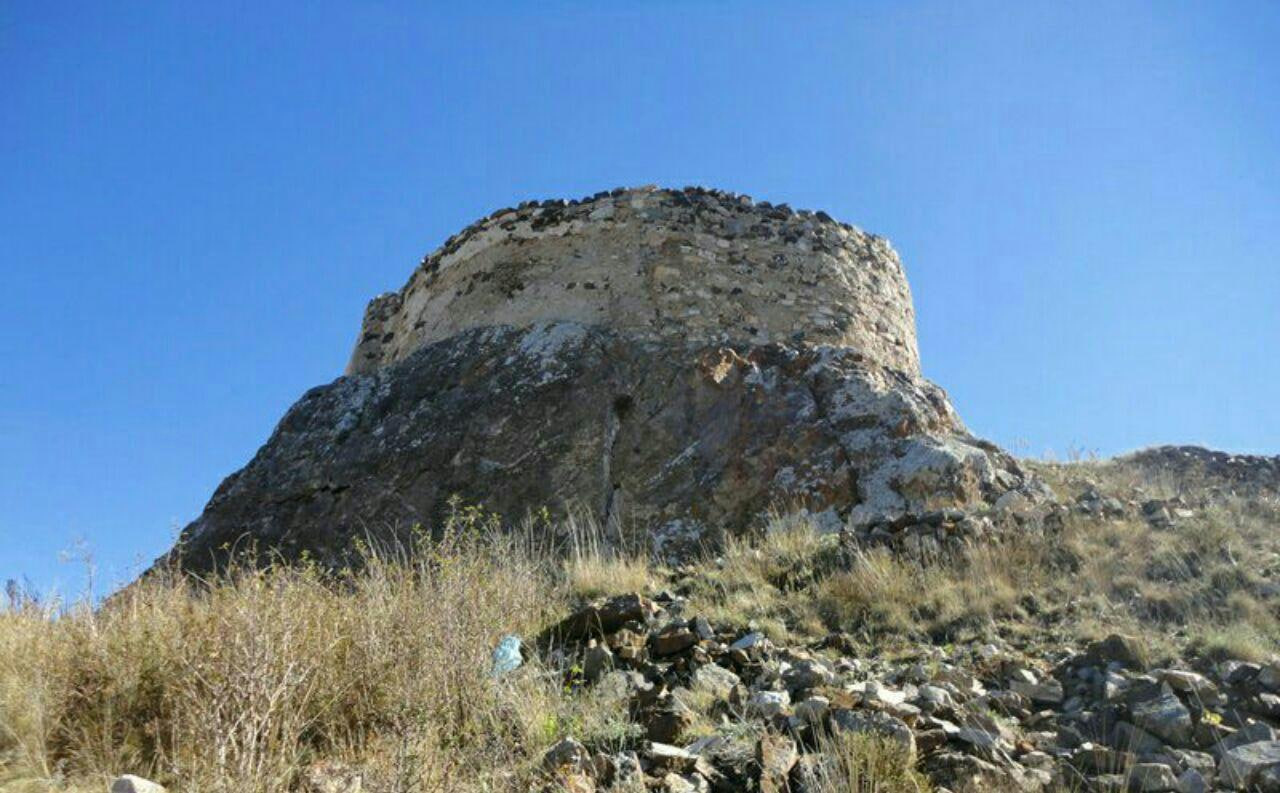
(One of the circular towers of Agca Gala)
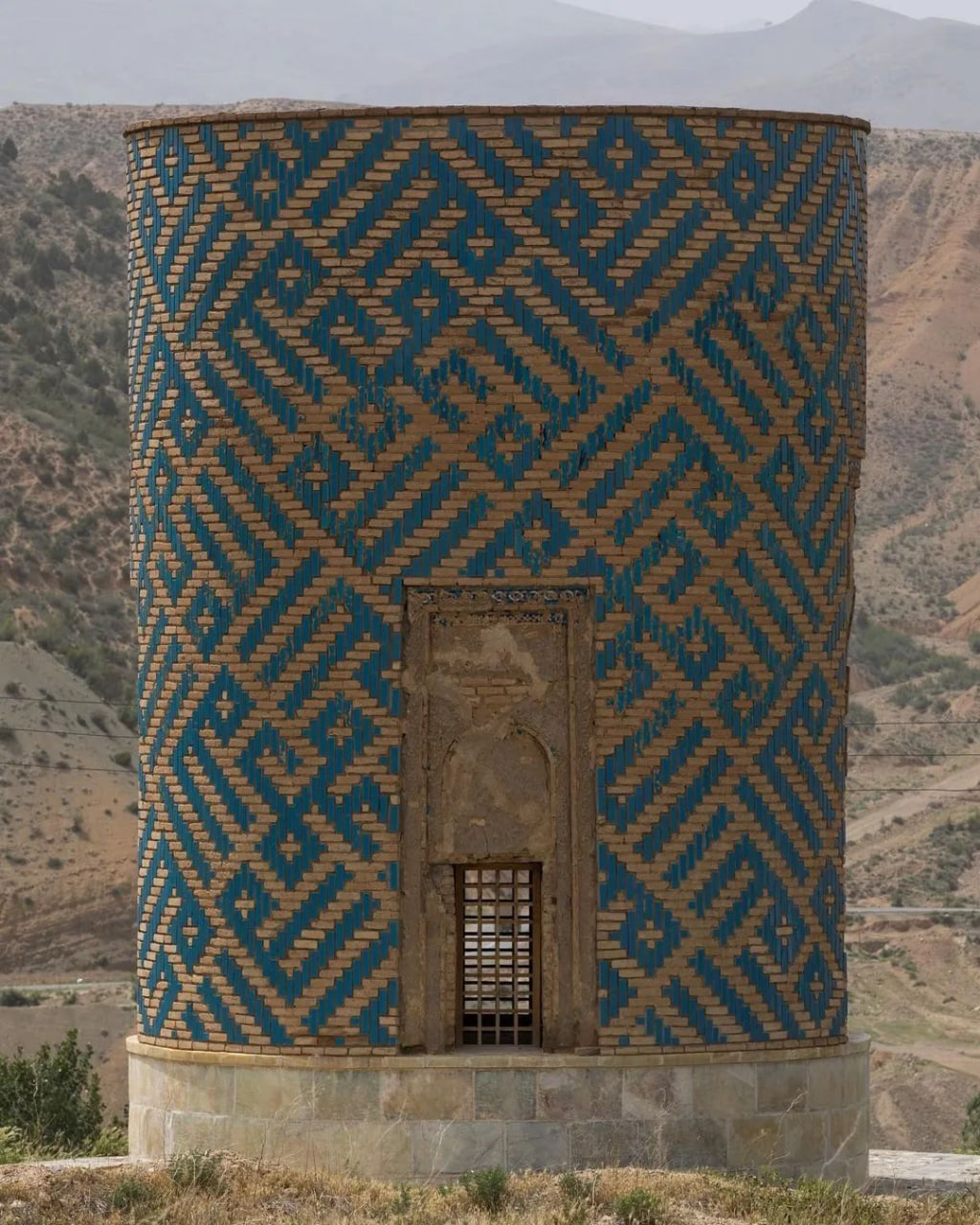
The Blue Dome, located near the village of the same name in the Kharvana region of the Varzigan region, is considered another historical monument of this region. This building, which is most likely the tomb of one of the famous people of history, has two parts: a basement and a first floor. The domes of the upper floor have collapsed. The building is made of stone, the body of which is made of red square bricks, and the word "Allah" is written on it in turquoise tiles. Since no inscriptions have been found in the building, it is not known which historical figure it belongs to and when it was built. However, it is known that the architectural style of the building belongs to the last period of the Mongol Elkhans, or that it was built between the Mongol Elkhans and the Safavids.
What was mentioned in this small article was only a part of the works that could give us a clue about the ancient history of this region. In the last two hundred years, the men who came out of this region played an important role in the history of Azerbaijan and Iran. We can say without a doubt that Sattarkhan stands at the head of these men. Sattarkhan, who led the Azerbaijani fighters in the Mashrut movement and is considered such a hero today with his fearlessness and courage and a symbol of the courage of the South Azerbaijani Turks, was born on October 20, 1866 in one of the villages of Varzigan. The house where he was born and raised still stands in its place. Unfortunately, no work has been done to preserve the house, and in its current state, nothing but ruins remains.
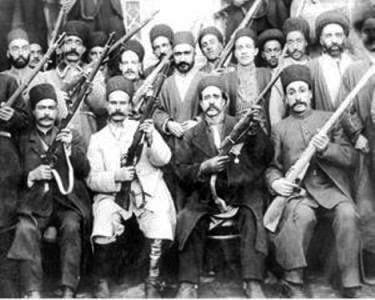
(Sattarkhan, first row, 2nd from right, among the devotees of the Azerbaijani constitutional movement)
The youth of the Verzigan region, the homeland of the Sattarkhans, cannot remain indifferent to their past, culture, language, and identity. Let us not forget that Verzigan is located in the Garadagh region. As we have noted in our previous articles, the Garadagh region is one of the most obvious regions where the Azerbaijani Turkish identity is preserved. The word “Garadagh ashigs” is still spoken in languages and is a word that reminds us of Azerbaijani culture. This region, which has a rich ashig culture, keeps the Azerbaijani past, culture, language, and identity alive in the music and lyrics of the ashigs. Since the majority of the population of this region lives in small towns and villages, the assimilation and Persianization policy that has been going on in the country for more than a hundred years has not been very effective in this region. At least, it has had less effect than in other regions of South Azerbaijan.
As we have written about other cities of South Azerbaijan, Azerbaijani dance and music, performances of Azerbaijani amateurs, performances of ashugs, bayatis, Azerbaijani mughamat, Tuesday evening festivities, Novruz holiday fashions, sayachis, kosa, tekemchis, chilla night fashions, Koroglu "dastani" customs, fashions and traditions live in this city, so it can be said that Azerbaijaniness and Turkishness also live. However, Azerbaijani Turkish identity is not only reflected in these, the customs and traditions of the region have also spread to its cuisine. Motifs from this region can also be seen in carpets and kilims woven in other regions of Azerbaijan.
Let us not forget that the factor that turns a community into a nation, in addition to the above, is the spirit of national solidarity. We have seen this spirit of solidarity among Azerbaijanis from time to time. We saw the clearest example of this during the Karabakh war. Another event that very clearly reflected this spirit of solidarity was the strong earthquake that occurred in Verzigan. As a result of the terrible earthquake that occurred on August 11, 2012, many buildings collapsed, many people died and were injured. From the first hours of the news, all of South Azerbaijan mobilized to help their brothers and sisters. Aid was sent from all over South Azerbaijan to all cities, villages and towns of the Varzigan region. People from different regions of South Azerbaijan worked tirelessly to rebuild the collapsed buildings. Although the Varzigan earthquake was a painful event, it clearly showed everyone the spirit of solidarity of the Turks of South Azerbaijan.
The last word:
The Varzigan region, like most regions of Azerbaijan, is one of the most deprived places with unique treasures in its heart. Among these countless treasures, it is enough to mention only the Sungun copper mine. The value of the reserves, which alone account for one of the world's copper reserves and 52% of Iran's copper reserves, is estimated at $ 320 billion and is sufficient for the prosperity and development of the region. But unfortunately, local residents do not benefit from the exploitation of this huge copper mine, on the contrary, the environment is destroyed, underground and surface water sources are polluted, and farms and gardens are damaged. Thus, the raw materials extracted from the mine are loaded onto trucks and transported to Persian regions (Kirman province). However, if copper ore processing plants were built in the region, at least local residents would be provided with jobs. However, despite the protests of the population of other regions of Azerbaijan, and even local government officials, the issue has not been resolved.


 Follow us on Telegram
 t.me/apanewsaz
 Follow us on Instagram
 Follow us on TikTok
 Follow us on Facebook
 Follow us on X


