














The city of South Azerbaijan famous for its carpets – RESEARCH
APA presents Mohammad Rahmanifar’s article “Heris City, which introduces Azerbaijani Culture to the world with its Carpets” as part of the “Discover South Azerbaijan” project.
You can read the previous article of the project here.
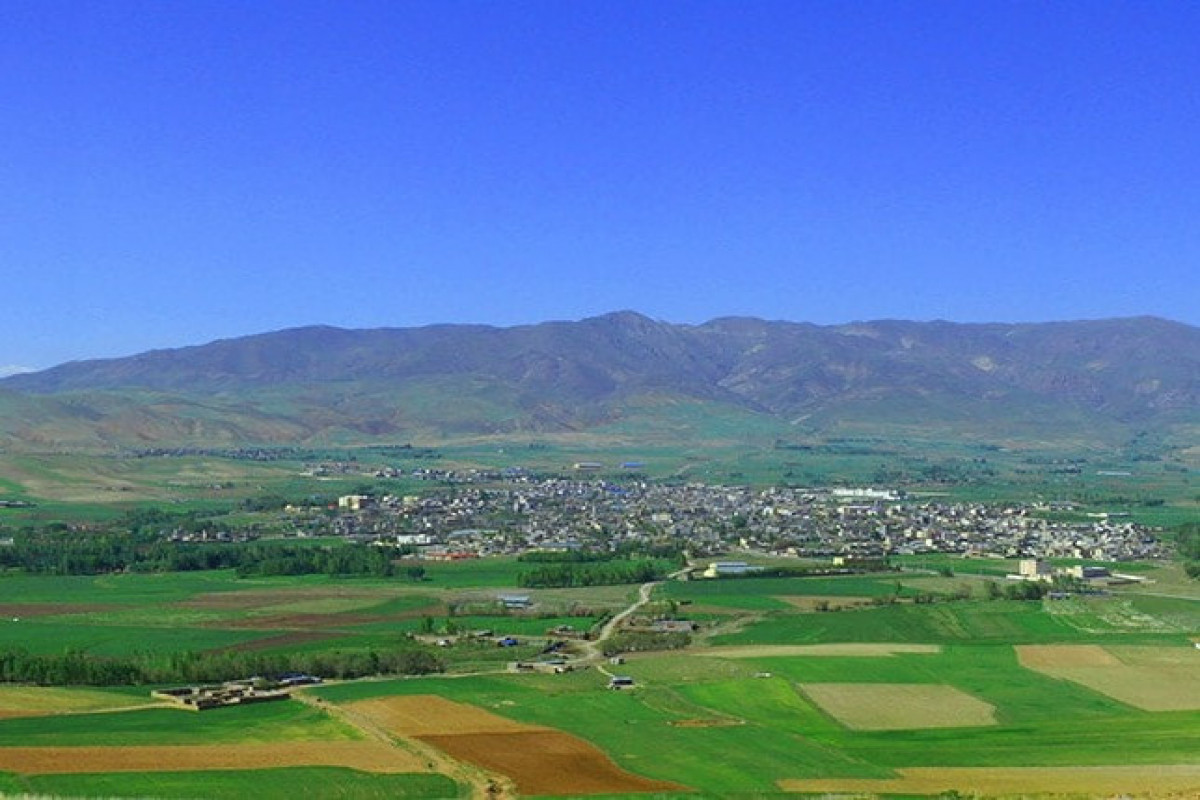
Heris city is located 88 km west of Tabriz, which is considered the center of East Azerbaijan province. It borders Sarab and Meshginshahr (Khiyav) cities to the east, Ahar and Varzeqan cities to the north, and Bostanabad (Ojan) city to the south. It should be noted that according to Iran’s administrative territorial division, the South Azerbaijan region is divided into the provinces (ostans) of West Azerbaijan, East Azerbaijan, Ardabil, Zanjan, Alburz, Qazvin, and Hamadan. Some cities, however, are included in other provinces.
According to the 2017 census, the population of Heris city was more than 12,515, and the population of Heris district was 69,093. Heris city is actually located at the center of Heris district (shahristan), and the central part (bakhsh) of this district covers cities such as Heris, Bakhshayish, Zarna, Kalvana, and Arbatan, as well as several villages. The city’s second administrative division, called Khaja (Khoja), is only 25 kilometers away from Tabriz. The vast majority of the population in this region are Muslim Shias and speak Azerbaijani Turkish.
Heris city is located at an altitude of 1,800 meters above sea level, near the Qoshadag, Bozqush, Sabulaq, Aghdag, and Savalan mountains. The Aji Chay river, which passes nearby, has a significant impact on the city’s climate. This region experiences cold, icy winters and mild summers. The main occupations of Heris residents are trade, farming, animal husbandry, and carpet weaving. Many men and women work in carpet production workshops.

Heris from ancient times to the modern era
Like some cities and districts of Azerbaijan, unfortunately, no comprehensive scientific research has been conducted on the ancient history of this region. Moreover, since historical sources and academic studies are insufficient, it is difficult to speak about the history of the region. Only a number of scattered historical documents and the historical sites and monuments located in the region can provide some clues. The mention of Heris in the Rab’e Rashidi endowment during the reign of the Mongol Ilkhan Ghazan Khan indicates the city’s antiquity. We know that Rab’e Rashidi was established during the Mongol Ilkhanate (1256–1356) by Ghazan Khan’s learned and powerful vizier, Khoja Rashidaddin Fazlullah Hamadani, and at that time it was one of the largest academic and scientific centers in the world.

(Hovuzlu Gala – Ismail Village)
The presence of numerous monuments from the Safavid and Qajar periods also indicates the historical continuity of the region’s significance. The existence of sites such as Ayi Castle from the Stone Age and Urartu period in Shiran, Sheikh Ishaq Mausoleum (in Khanqah village), Minaq Cemetery, Hiq Cemetery, Govur Cemetery, Jamalabad Stone Mosque and Esnaq Mosque (8th century AH), Chinar Brick Tower, the historical bath of the Palace, and Goydara Caravanserai confirms the accuracy of our statement.

(Sheikh Ishaq Mausoleum – Safavid Period)
Among the prominent figures emerging in this region, the name of Sheikh Salim can be mentioned, who played an influential role in encouraging support for the Constitutional Movement (1905–1911). Sheikh Salim promoted the Constitution, justice, and freedom through his passionate speeches. This did not escape the attention of the opponents of the Constitution. For this reason, on January 1, 1912, Sheikh Salim was one of the eight constitutionalists hanged by the Russians in Tabriz.

(The constitutionalist supporters hanged by the Russians in Tabriz; Sheikh Salim is the fourth from the left)
During the Constitutional Movement, Azerbaijan was seeking freedom and justice not only for itself but for all of Iran, yet in return, it received nothing but oppression, injustice, and discrimination. As an undesirable consequence of the Constitutional Movement, in 1925 the Turkic Qajar dynasty fell from power, and the pro-Persian Pahlavi regime seized power in Iran. Thus began a period of disaster in Azerbaijan. The Pahlavi regime, as a pro-Persian and racist state, tried to weaken Azerbaijan economically, politically, and culturally. Naturally, the fact that the Azerbaijani people were Turkish also influenced Rza Shah’s approach. In fact, at the core of the pro-Persian ideology, which has roots going far back but re-emerged as a theory on the eve of the Constitutional Revolution, lies hostility toward Turks and Arabs. For this reason, when this ideology became state policy during Rza Shah’s era, the mother tongue of the South Azerbaijani Turks was banned, and Azerbaijani Turks were demeaned and insulted both in the education system and throughout all state institutions. The ultimate goal of this policy of the authorities was to destroy the identity and culture of the Azerbaijani Turks. Of course, the central government’s relations with Azerbaijan had a character of revenge. It was as if the Persians, who had lived under the rule of the Turks for nearly a thousand years, were now taking historical revenge on them.
As a result of Iran’s occupation by the Allies In 1941, Rza Shah’s dictatorship was overthrown, and South Azerbaijan rose again. This movement was brutally suppressed in 1946 by Rza Shah’s son, Mohammad Rza Shah, and the previous pressures against South Azerbaijan were once again carried out, this time in a more severe manner.
Although the Iranian government’s policy over the past hundred years has managed to assimilate a portion of the Azerbaijani Turks, Azerbaijani culture still survives very strongly and robustly in Heris city and the surrounding areas. It can perhaps be said that this region is one of the few areas of South Azerbaijan where the Iranian government’s oppressive cultural policy has not been very successful. It should be noted that in this region, which is close to the Qaradag region, the existence of a rich ashugs (folk singer) tradition, along with other factors, has also played an influential role in preserving and strengthening Azerbaijani Turkish culture. As long as customs, fashions, and traditions such as Azerbaijani dance and music, performances by Azerbaijani amateurs, performances by ashugs, bayatis, Azerbaijani mughamat, fashions of the last Tuesday of the year, Novruz holiday fashions, sayachis, tekemchilis, Chilla night, and the epic "Koroglu" live in this city, it means that Azerbaijan still lives in this city.
Sheikh Salim was hanged and killed by the Russians, yet the spirit of freedom and justice never died in South Azerbaijan and in the places where he was born. Today, the South Azerbaijani Turks, especially the younger generation, appear determined to preserve their Azerbaijani identity, Turkishness, culture, history, and language despite all the obstacles and harshness of the government. Without any doubt, it can be said that today the city and the surrounding Qaradag region are considered among the areas where Azerbaijani culture is most strongly preserved. Poets, writers, ashugs, and other activists of the Azerbaijani national movement, who stood with firm determination against the cultural, economic, and political oppression of the Iranian government and endured the pain of imprisonment and incarceration, promise a bright future for South Azerbaijan. It is true that compared to the state institutions trying to erase Azerbaijani culture, their resources are very limited, but their unshakable will has led to a daily strengthening of the desire among the new generation of South Azerbaijani Turks to reclaim their identity.
The city that introduces Azerbaijani culture to the world with its carpets
The art of Azerbaijani carpet weaving is not limited to the fine delicate carpets woven in Tabriz, the finely decorated wall carpets woven in Sardari, or the fish-motif carpets woven in Khoy. Within the South Azerbaijani carpet weaving school, the coarse-woven carpets of Heris also hold an important place and status. While preserving their originality and reflecting Turkish-Azerbaijani culture, they are also used in Europe and America to decorate homes, cultural, and art centers due to their compatibility with Western decoration.

Each design and pattern of Heris carpets tells real stories related to the region’s past, and in fact, these stories are passed on to future generations as a memory through the language of art. All these knots and patterns were created inspired by the nature of the region. The motifs used in the carpets are drawn both from Turkish Azerbaijani mythology (Dede Qorqud, Asli and Kerem, Qır At and Boz At) and inspired by the local vegetation of the region. Thus, the history of a community and a homeland is hidden in the knots of the carpets and conveyed to future generations through the language of art.


 Follow us on Telegram
 t.me/apanewsaz
 Follow us on Instagram
 Follow us on TikTok
 Follow us on Facebook
 Follow us on X


