












It was said in the amendment that except the cases “envisaged by the law, no one can be shadowed, video, photo, voice of no one can be recorded without his/her permission or ignoring his/her objectionâ€, Gudrat Hasanguliyev, member of the parliament’s standing commission for state-building and legal policy, told APA. He said the journalistic activity was regulated by the laws on mass media and freedom of information. These laws allow to journalists to be free in collecting the information. “Some people say that if any public figure or official commits a crime, the journalist will not monitor their actions. It is profoundly incorrect. The Criminal Code reads that not only the journalist, but ordinary citizen has information about any crime and doesn’t report about that, he/she has responsibility for inactivityâ€, said the parliamentarian.
Hasanguliyev said if any person objected the videotape, it must be stopped, because everybody had a right for private life. Therefore there is no restriction for the journalists in this amendment. Unfortunately some people forget about the phrase “except the cases envisaged by the law†in the introduction of the amendment.
Hasanguliyev said if journalist wanted to make report on private life of any public figure or official, which is interesting for the society it would depend on the situation and on the public figure or official. “If the person protests the videotape, but the journalist ignores the protests and continues taping, it will be considered as a violation of Constitution, because private life of everyone is inviolable. In any case, the final decision can be made by the courtâ€. Hasanguliyev said it was impossible that some officials would use the amendment for other goals. “The journalist has a freedom to collect information. He/she asks the question. It is different matter that whether the question would be answered or not. The journalist can collect information within the legislative regulations and not interfering into the private life. The journalist is responsible only in the case of private life. However if any official commits actions contrary to morality, violates the law, the journalist has a right to collect information about that, to publish it and even to inform the law-enforcement bodies, to write critical articleâ€.
Chairman of Azerbaijan Press Council Aflatun Amashov said that no one could ban the reports of social importance. He said amendments to Article 32 of the Constitution were described in the different laws. The mass media law also allows using of secret audio- and videotape only with the permission of the taped person. Otherwise it is banned.
The law on “Mass media†also envisages the right to refute and this law determined the rules of refutation. These issues were envisaged in the previous laws,†he said.
Aflatun Amashov said the restriction in the constitution does not concern the issues of social importance.
“It should be determined which information may be regarded as socially important. This issue will be discussed in the Press Council and we will more likely prepare an advisory document for journalists,†he said.
Asked whether the amendment to Article 32 will cause problem for journalists, Amashov said journalists will not face serious problems, if they work within the framework of the power allowed by the law.
Teacher of journalism faculty of Baku State University, expert on media issues Zeynal Mammadli told APA that the European Court of Human Rights has a notice on the information about private life of public figures and officials, this notice should be applicable to Azerbaijan, too.
“Public figure and officials, even their private lives can be criticized, but there are certain terms. Media can cover the moments of the private life, which are of social importance. Taking into account the practice of our courts, the case in connection with an official was rarely solved in line with the European norms. This is the problem. The notions of official and public figure are not explained in our law. This poses threat. It is not known who may be considered an official, or a public figure. All this shows that the amendments made to Article 32 of the Constitution will create obstacles in the real life,†he said.
Zeynal Mammadli said it is normal if this amendment is applicable to ordinary people.
“But it is not normal if we speak about an official and a public figure. In this case we should explain the notion of official and public figure. If a journalist has got facts, audio and video records about negative actions of an official, he should not be obliged to hide the facts because of the amendments to the constitution,†he said.
Director of Media Rights Institute Rashad Hajili said according to the amendment made to Article 32, secret audio, video recording is prohibited.
“Of course, it is connected with the protection of private life. But unambiguous prohibition of shooting will result in the restriction of journalists’ freedom of media and expression. This will result in the imbalance between these rights. Life of ordinary people is not interesting for journalists. They collect information about life of persons of public importance. This boundary is not clearly shown in the law,†he said.
Editor-in-chief of 525-ci qezet Rashad Majid said the attitude towards the amendment to Article 32 is not unambiguous. He said the amendment will not create serious problems for journalists.
“Various laws envisage restrictions to interfere in the private life of a citizen without his (her) consent. But according to the international documents, these restrictions do not concern with the life of public figures. I think, that’s why sometimes famous people are blackmailed, or black PR is used. In most cases it does not serve journalism. That’s why this amendment may cause problem only for the politicians carrying our black PR against each other,†he said.
Rashad Majid considers that “racketeering†journalism played a special role in making this amendment to the constitution.
“They formed an opinion that journalists abuse freedom of expression,†he said.
Asked whether the attitude of officials towards media will change, the editor-in-chief said it was mainly connected with the personal features of officials.
“Some officials are open to media, some are closed, the others do not contact media. Therefore, amendments to the constitution do not change their attitude towards media,†he said.
Do amendments to Article 32 of Azerbaijan Constitution restrict the journalistic activity? – OPINION POLL

 01 April 2009 13:29 (UTC +04:00)



 İDMAN XƏBƏR
 Follow us on Telegram
 t.me/apanewsaz
 Follow us on Instagram
 Follow us on TikTok
 Follow us on Facebook
 Follow us on X
Media
Azerbaijani journalists’ congress postponed by one day
12:59
 7 October 2026
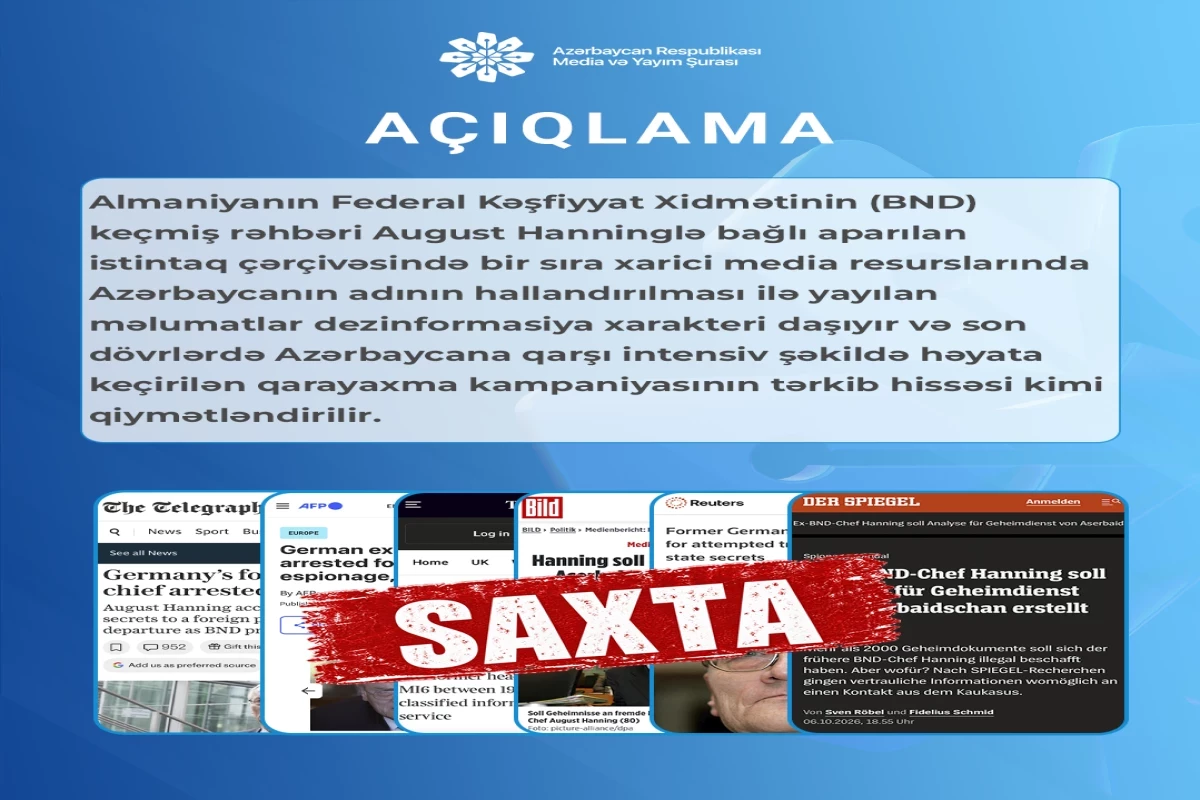
Media and Broadcasting Council: Linking Azerbaijan to former German intelligence chief is disinformation
10:25
7 October 2026
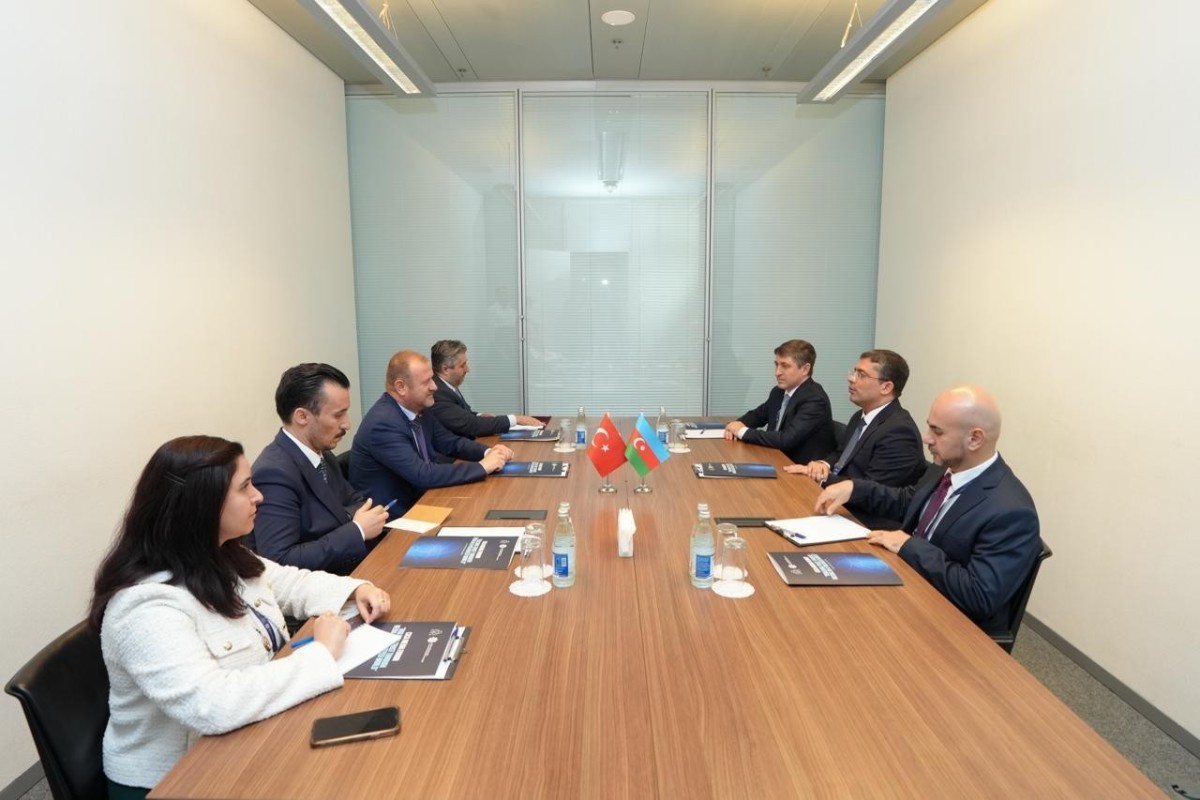
Ahmad Ismayilov meets RTÜK chairman
16:40
1 October 2026
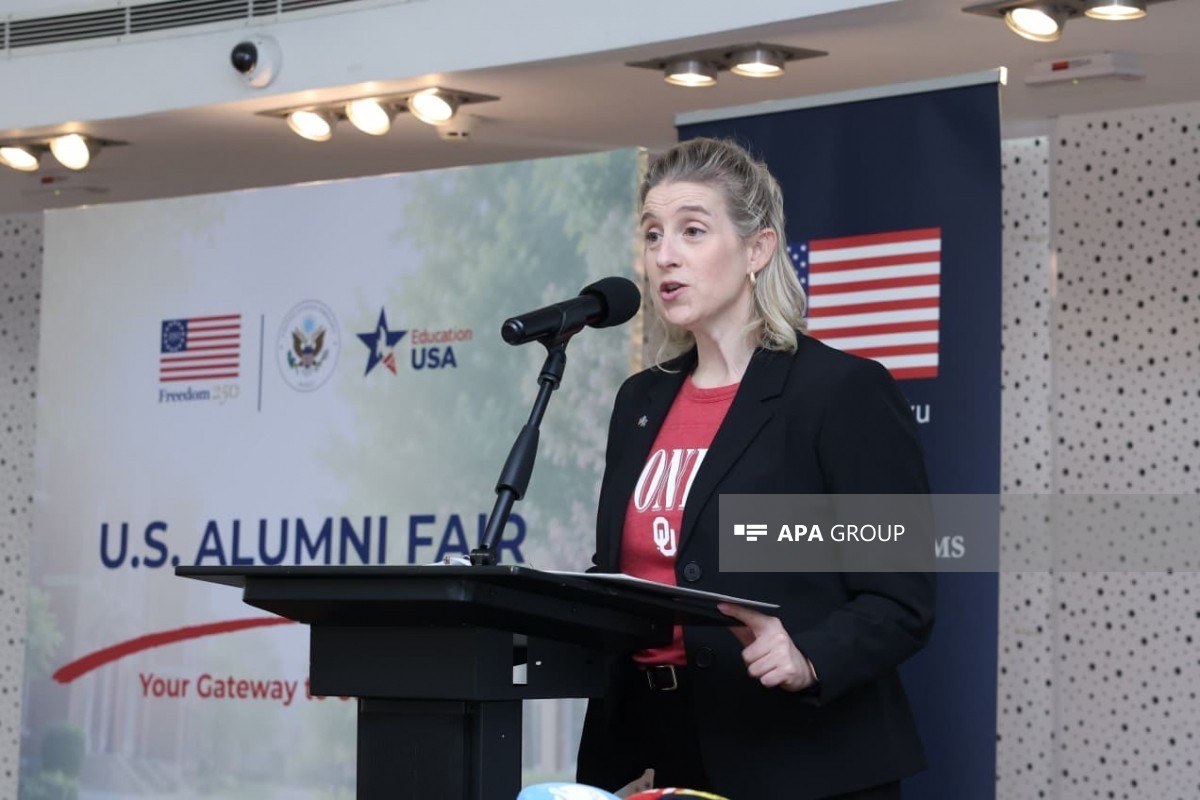
US Embassy Chargé d’Affaires meets with representatives of leading media outlets in Baku
16:27
28 September 2026

NEWS FEED
Ushakov: Timing of next Putin-Trump meeting has not been discussed
07:22
10 October 2026
Witkoff: Ukraine’s energy security and post-war recovery discussed in Miami
05:25
10 October 2026
Zelensky criticizes Trump over diesel deal with Putin amid Ukraine-US talks
03:19
10 October 2026
US talks on Ukraine address European security architecture — media
02:51
10 October 2026
Ushakov: Putin, Trump did not discuss new meeting
02:39
10 October 2026
Zelenskyy: Ukrainian negotiating team used as “smokescreen” amid US-Russia diesel deal
01:58
10 October 2026
Ukrainian President: Letting Russia sell fuel means investing in its war
01:46
10 October 2026
Russia ready to supply oil to US, global markets — Putin after call with Trump
01:00
10 October 2026
Russia begins lifting diesel exports restrictions immediately — deputy PM
00:43
10 October 2026
Magnitude 7.6 earthquake rocks Panama, tremors reach Colombia
00:22
10 October 2026
United States lifts sanctions on Russian diesel fuel supplies to global markets
23:57
9 October 2026
Trump selects Katie Zacharia as White House press secretary
23:42
9 October 2026
Trump: Russia to release 300k tons of diesel now
23:26
9 October 2026
Araghchi: Agreement reached on joint projects involving Russia, Iran, and Azerbaijan
22:55
9 October 2026
Posts targeting relations between Türkiye and Azerbaijan called as disinformation
22:37
9 October 2026
Türkiye parts ways with national team coach Vincenzo Montella
22:25
9 October 2026
Match between Azerbaijani football clubs Neftçi and Sabah ends with goalless draw
21:59
9 October 2026
Telegraph: Spain and Greece have refused to supply Patriot missiles to Ukraine
21:47
9 October 2026
Russian budget deficit total $61.1 bln in 9M 2026 — Finance Ministry
21:32
9 October 2026
Dutch parliament to vote on country's exit from ICC
21:15
9 October 2026
Video shared on President Ilham Aliyev’s social media accounts on his visit to Turkmenistan-VIDEO
20:55
9 October 2026
One person dies, one in serious condition after Greek refinery incident
20:30
9 October 2026
EU calls US sanctions on International Criminal Court 'regrettable'
20:14
9 October 2026
Several AZAL flights to Moscow temporarily suspended
19:58
9 October 2026
Trump: More oil is currently reaching global market through Strait of Hormuz than before
19:51
9 October 2026
ICC urges members to make sure it can continue despite US sanctions
19:40
9 October 2026
Founder of Russia's Rybar Telegram channel Zvinchuk being deported from Montenegro - UPDATED
19:15
9 October 2026
Rubio slaps fresh sanctions on ‘rogue’ International Criminal Court, vows to ‘end the ICC’ if prosecution threats go on
19:09
9 October 2026
Netanyahu condemns Nobel Peace Prize awarded to former ICC judge
18:54
9 October 2026
Ukraine announces it has begun closing Russian airspace
18:42
9 October 2026
Latvian Foreign Minister meets Azerbaijani ambassador
18:30
9 October 2026
US imposes sanctions on International Criminal Court, hours after former judge wins Nobel
18:17
9 October 2026
Armenian EAEU official accused of issuing fake certificates for products intended for Russian market
17:56
9 October 2026
More than 370 flights delayed, 62 canceled at Moscow airports in past 24 hours
17:50
9 October 2026
Ararat Mirzoyan holds phone call with Hakan Fidan
17:30
9 October 2026
Filipino traveler: Gandzasar Monastery will have great tourism potential
17:26
9 October 2026
Russian army bombs Zaporizhzhia: 1 killed, 19 injured
17:20
9 October 2026
UAE traveler: Work carried out in Karabakh is magnificent
17:12
9 October 2026
Loud explosions heard in southern and southeastern Moscow
17:11
9 October 2026
Azerbaijan, Germany discuss development of economic cooperation
17:05
9 October 2026
Peskov: Putin is always glad to see Witkoff and Kushner
17:04
9 October 2026
Kremlin reveals topics discussed at trilateral meeting of Azerbaijani, Russian and Iranian presidents
16:57
9 October 2026
UK says Kuwait buys $489 million air defence system
16:57
9 October 2026
Participants of 4th International Conference on Missing Persons Visit Shusha - PHOTO - UPDATED
16:56
9 October 2026
Kushner and Witkoff to discuss ‘new’ peace plan with Ukrainian delegation, sources say
16:52
9 October 2026
Liquefied gas tanker targeted in Strait of Hormuz
16:49
9 October 2026
Turnover through new-generation cash registers in Azerbaijan increases by 15%
16:43
9 October 2026
International travelers visit Ganjasar Monastery - PHOTO
16:40
9 October 2026
President Ilham Aliyev met with President of Iran in Turkmenbashi - UPDATED - 1
16:34
9 October 2026
President Ilham Aliyev concluded working visit to Turkmenistan
16:33
9 October 2026


