












Baku. Shahriyar Alizadeh – APA. Chairman of the Azerbaijan Constitutional Court Farhad Abdullayev gave an interview to APA
-How do you value the activity of the Constitutional Court in the past 12 years it has functioned?
-The Constitutional court is a part of judicial power, but it differs from other courts for its goals, duties, authorities and procedures. It is an institution of constitutional control, which place in the supreme power system, authorities and main directions of the activity are settled by the Constitution of the country. The Constitutional Court has a special assignment among the supreme power institutions. It passed 182 decisions and 39 decrees on the constitutional cases in the past years it has functioned. It examines the disputed acts coordinating them with the Constitution and other laws, makes comments on the norms of Constitution and laws and the constitutional-legal content of the laws. The Constitutional Court attaches great attention to the international experience, bases on the international law and precedent law of the European Court. Examination and approval of the results of presidential and parliamentary elections in the country is also one of the directions of the Constitutional Court’s activity.
-What cases dominate in the individual complaints addressed to the Constitutional Court?
-The Constitutional Court didn’t consider receiving of individual complaints until 2004. The institution of individual complaints was established after the Constitutional reforms in 2002 and new law on the Constitutional Court adopted in 2004. Most complains are about the judicial acts. 74 decisions have been passed on the basis of such complaints so far. Those decisions are forming significant legal positions regarding the protection of rights and freedoms of the citizens, protection of their property rights, labor, social protection, housing and other rights. It doesn’t turn the Constitutional Court into the next judicial instance. It is an exceptional method of protection of the rights during the examination of the judicial acts on the basis of individual complaints.
The duty of the Constitutional Court of Azerbaijan is to provide the superiority of Constitution and clear the way for restoration of violated human rights and independence. Complaints on judicial acts are connected especially with conflicts caused by civil, flat, family, tax, labor and other issues. Use of residential area, not giving property share, possessory activity, disloyalty or abolishment of agreements, land parceling, return to work, mitigate a punishment, complaints from court acts on sentencing may be shown as examples for it.
-At what level are the relations between Constitutional Court and international law organizations? What measures are expected to take in this direction in future?
- Since its establishment, the Constitutional Court pays great attention to strengthening and enhancing of relations with control organs on constitution of foreign countries, as well as with Council of Europe, OSCE, American Bar Association (ABA-CEELI), German Technical Cooperation (GTZ) and other international organizations. At the invitation of Constitutional Court the representatives of control organs on constitution of Russia, Germany, USA, Belgian, Czech Republic, Slovakia, Hungary, Slovenia, Turkey, Norway, Spain, Ukraine, Georgia, Moldova, Lithuania, Latvia, Kyrgyzstan and other countries, as well as representatives of European Court of Human Rights have repeatedly paid business visits to our country. Within some years, memorandums of agreement have been signed between the Constitutional Court of the Republic of Azerbaijan and Constitutional Courts of Turkey, Belarus and Moldova. Cooperation with the Council of Europe and Venice Commission assumes great importance within international activity. At the invitation of Azerbaijan, the commission’s expert group has visited our country many times, gave their opinions on the sphere of legal reforms, as well as on “Constitutional Court†and the Court’s projects on Internal Regulations. As you know, Azerbaijan marks the 15th anniversary of passing the Constitution of the country. On November 12, in connection with this historical event, the Constitutional Court of Azerbaijan is planning to hold an international conference on “Constitutional mechanism of protection of human rights and independence†together with the Venice Commission of the Council of Europe, GTZ and OSCE Office in Baku. Representatives from the constitutional courts of Germany, Belarus, Turkey, Georgia, Lithuania, Russia, Kazakhstan, Latvia, Ukraine, Estonia and from the European Court of Human Rights are expected to participate in the conference.
-What measures should Azerbaijan take to coordinate the activity of courts and judges with European standards?
- Of course, it is wide aspecting and multigrade process. It includes combining of legislation with European standards, institutional changes, formation of legal thought and etc very serious issues. In my opinion, significant steps on the first two directions were taken within the last period: national legislation system meeting international standards has been created, our country supports the Convention for the Protection of Human Rights and Fundamental Freedoms, European Social Charter, new court system had started as a result of realized law reforms. Important steps were also taken in the direction of providing transparence in the election of judges, strengthening of judges’ independence and social defense, high professional preparation of them, at the same time, organizing trainings for them in the developed countries. After all these processes the judges must do much to ensure the compliance of the work of the national courts with the European standards. I consider that judges must properly assess their independence, improve themselves, follow the modern tendencies of the law. Sometimes, a judge has so much work that it becomes difficult to cope with all this. In this respect the decree issued by President Ilham Aliyev in August to increase the number of the judges is of great importance. Moreover, the opening of administrative courts, opening of the courts of grave crimes in the regions will help normalize the working load of the judges and increase the quality of the judicial acts. Other important issues concerning your question are some psychological problems related to the judges’ approaches and attitude of the public. They require more time.
-Can the activities of Azerbaijani courts and judges be considered satisfactory after the reforms?
-You know Azerbaijan Republic restored its independence in 1991, legal reforms started in 1995 after the new Constitution was adopted, the new judicial system was launched in 2000. A number of complex measures have been successfully taken in the abovementioned fields. This process is an important part of the legal state and civil society set as priority by Azerbaijan. Therefore, it would not be right to consider so many reforms completed, sum up the results, give concrete assessment in a short period of time. Of course, compared with the previous years serious positive changes are being observed in the activity of the courts. These changes are obvious in the public justice, qualification of judges and quality of the judicial acts. Therefore, it would be right to assess the abovementioned issue from the aspect of the dynamics of the reforms. It should also be taken into consideration that the process of reforms is continuing. It is no secret that there are shortcomings in the work of some judges. Of course, if there is work there will be some shortcomings and mistakes. The main thing is to prevent such negative cases immediately. We all know that the Judicial Legal Council is seriously working to prevent such cases. Assessing the judges’ activity it should be taken into account that judgeship is a creative profession. While considering a case every judge is guided by the legislation, his belief and legal thought. The judge passes the final decision on behalf of the state, confidence in the public justice is directly connected with the judge’s independence, his influence in he society. Therefore, it requires high responsibility to express opinion on the judges’ activity, criticize them.
-Do you agree to the judgments of the European Court against Azerbaijan?
-Our country has passed a long and complicated way to reach the present level of the European integration. Azerbaijan is a full member of the European family and of course, the legal values commonly accepted there are important for us. As regards your question, the judgment of the European Court against any state does not honor that state. Azerbaijan is not an exception in this issue. A citizen, or a lawyer may not agree to the judgment of the Strasbourg Court. But the main task of the courts is to prevent these judgments. Of course, it is impossible to fully prevent these judgments, their existence is natural to some extent. Even the most leading states of Europe have not been insured against the judgments of the Strasbourg Court against them. On the contrary, the statistics shows that the countries having the most advanced law schools are not at the last places in this list. For example, from 1 November, 1998 till 1 January, 2010, the European Court passed 193 judgments on the cases against Austria, 656 judgments on the cases against France, 119 judgments on the cases against Germany. So the main thing is not to agree or not to the European Court’s judgments against us, but to prevent similar cases in future. For this the precedent experience of the European Union, including the judgments against Azerbaijan must be attentively studied.
-The number of the appeals from Azerbaijan to the European Union is reportedly increasing. What can you say about it?
-First of all, this issue must be analyzed as a part of the common tendency in Europe. Everybody knows that the number of the appeals from the Council of Europe member states to the European Court of Human Rights is increasing rapidly. The increase of the number of the appeals from the member states resulted in the adoption of the new Protocol improving the procedure of considering the cases. As regards the number of appeals from Azerbaijan, for example, the European Court considered 708 appeals in 2007, 334 in 2008 and 361 in 2009. For comparison, the court considered 621 cases from Bosnia and Herzegovina, 726 from Czech Republic, 471 from Switzerland, 2122 from Georgia, 326 from Latvia. On the other hand, I think it is not unusual that Azerbaijanis are actively using the opportunities offered to them by the law. Of course, it is not praiseworthy that most of the appeals considered in the court are sent to Strasbourg. I think in order to prevent, citizens’ awareness should be raised about the European Court, it requires the support of the state bodies, persons offering legal services and nongovernmental organizations.
Chairman of the Azerbaijan Constitutional Court: “The main thing is not to agree or not to the European Court’s judgments against us, but to prevent similar cases in future†– INTERVIEW

 21 September 2010 11:29 (UTC +04:00)



 İDMAN XƏBƏR
 Follow us on Telegram
 t.me/apanewsaz
 Follow us on Instagram
 Follow us on TikTok
 Follow us on Facebook
 Follow us on X
Incident

SWISS flight aircraft en route Zurich-Shanghai made emergency landing in Baku
20:45
 19 October 2026
Seven people suspected of calling for violent seizure of power in Azerbaijan placed on international wanted list
18:28
19 October 2026

State Security Service detains organizer of car arson attacks in Masazir abroad
17:38
19 October 2026
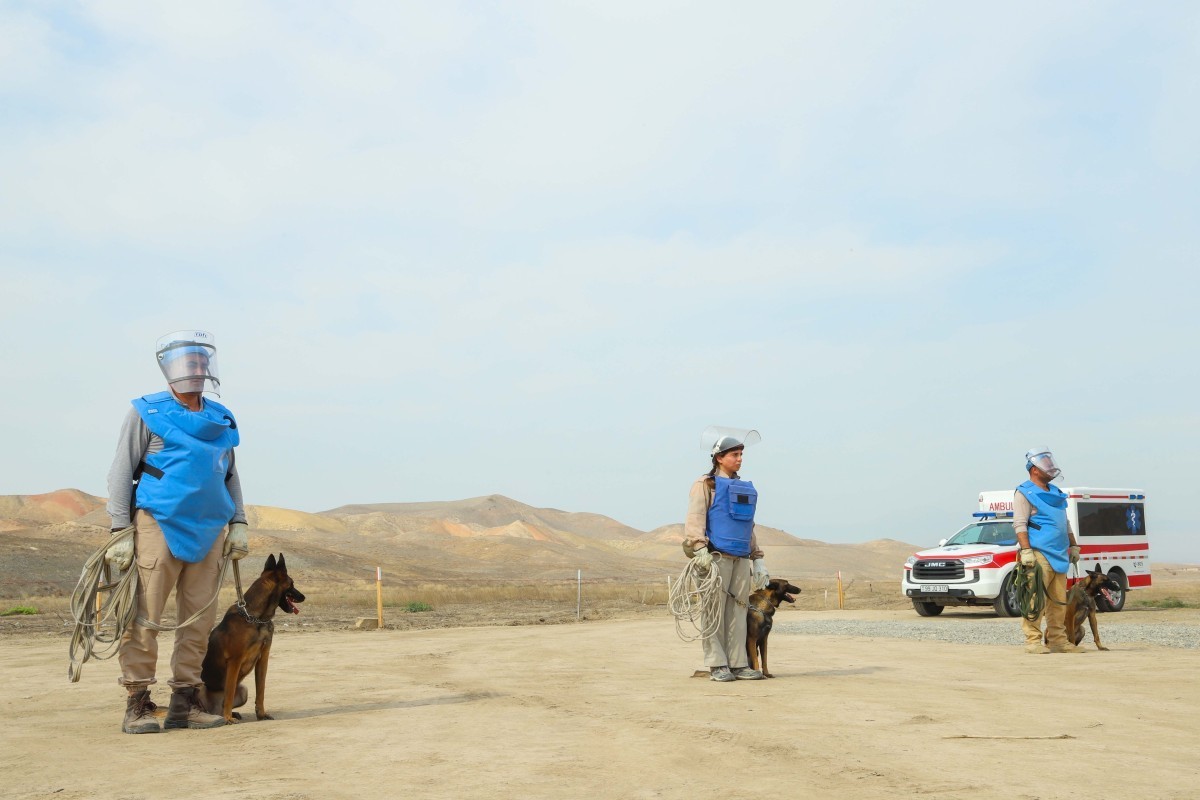
308,945 hectares cleared of mines in Jabrayil, Gubadli and Zangilan
15:37
19 October 2026

NEWS FEED
Trump: It's time for Ukraine to put someone in the negotiating chair instead of Zelenskyy
00:18
Audio
20 October 2026
Azerbaijan marks six years since liberation of Zangilan city
00:00
20 October 2026
Pope calls Zelenskyy following talks with Putin, details of discussion emerge
23:38
19 October 2026
Ashgabat hosts concert of State Symphony Orchestra of Turkmenistan
23:19
19 October 2026
Pakistan's top general to visit Tehran on Tuesday - IRGC
23:03
19 October 2026
Leyla Aliyeva watches performance of Turkmen iconic Galkynysh national equestrian group in Arkadag city
22:52
19 October 2026
Leyla Aliyeva visits Children’s Health and Rehabilitation Center in Arkadag city-PHOTO
22:46
19 October 2026
Leyla Aliyeva meets with Oguljahan Atabayeva in Arkadag
22:40
19 October 2026
Uzbekistan, U.S. sign agreements worth $12 bln
22:04
19 October 2026
BFMTV: France imposes curfew on several streets in Paris
21:46
19 October 2026
Houthis claim strikes on Aramco site, Saudi oil field
21:36
19 October 2026
President: We did not stoop to the level of the barbarians and child-killers who caused so much suffering for our people
21:10
19 October 2026
Iranian president holds meeting with Russian foreign minister
21:00
19 October 2026
SWISS flight aircraft en route Zurich-Shanghai made emergency landing in Baku
20:45
19 October 2026
Russia, Iran discuss cooperation between Tehran and EAEU
20:21
19 October 2026
US court issues arrest warrant for former Cuban leader Raul Castro
19:51
19 October 2026
Russian strike on park in Kharkiv region kills six - UPDATED
19:37
19 October 2026
13-year-old boy suspected of stabbing teacher and pupil in Romania after TikTok posts
19:24
19 October 2026
Azerbaijan and UAE Air Force Commanders meet - PHOTO
19:13
19 October 2026
Five cases of mpox confirmed in St. Petersburg
18:56
19 October 2026
Ukrainian army strikes Russian radar station and ammunition depots
18:38
19 October 2026
Lavrov: Russia ready to help find solutions to Iran-US conflict
18:29
19 October 2026
Seven people suspected of calling for violent seizure of power in Azerbaijan placed on international wanted list
18:28
19 October 2026
Russia’s Lavrov discusses US war and regional security during Tehran visit
18:22
19 October 2026
Leyla Aliyeva pays visit to Turkmenistan
18:08
19 October 2026
Difficult tactical manoeuvres are performed during “Falcons Meet – 2026” exercise - VIDEO
18:06
19 October 2026
Ukrainian children brought to Azerbaijan visit Gabala and Sheki
18:03
19 October 2026
Azerbaijan-UAE military cooperation is discussed
18:02
19 October 2026
Houthis launch missile strike on military camp in Yemen, killing 53 - UPDATED
18:00
19 October 2026
Araghchi discusses regional and international issues with Lavrov
17:59
19 October 2026
Japanese ambassador to Azerbaijan completes diplomatic mission
17:53
19 October 2026
State Security Service detains organizer of car arson attacks in Masazir abroad
17:38
19 October 2026
Azerbaijan extends deadline for obtaining a construction permit for a solar power plant in Fuzuli
17:14
19 October 2026
Azerbaijan Press Council issues appeal to Turkish media outlets
17:13
19 October 2026
Next Global Assessment of Azerbaijan's National Statistical System underway
17:10
19 October 2026
Azerbaijan expands telecommunications infrastructure in Aghdara
17:09
19 October 2026
CBA and National Bank of Slovakia sign MoU
17:01
19 October 2026
Car exports from Georgia to Azerbaijan decline by 32%
16:46
19 October 2026
Swedish Embassy: Military cooperation between NATO and Azerbaijan is developing
16:42
19 October 2026
Georgia's trade turnover with Azerbaijan exceeds $1 billion this year
16:30
19 October 2026
Iranian and Russian foreign ministers meet in Tehran
16:28
19 October 2026
ANAS to consider removing Ramiz Mehdiyev from full membership - ANAS President
16:20
19 October 2026
Germany summons Iranian envoy over alleged attack plots against pro-Israel figures
16:16
19 October 2026
Azerbaijani citizens purchase 70 apartments in Türkiye last month
16:12
19 October 2026
Fitch Ratings CEO: Azerbaijan's financial resources support stability of manat exchange rate - INTERVIEW
16:09
19 October 2026
Qatar warns of risk of further deepening global energy crisis
15:59
19 October 2026
German ambassador visits Sumgayit
15:56
19 October 2026
Trump urges France to close its borders immediately
15:47
19 October 2026
European Commission rejects US proposal to resume gas purchases from Russia
15:39
19 October 2026
308,945 hectares cleared of mines in Jabrayil, Gubadli and Zangilan
15:37
19 October 2026


