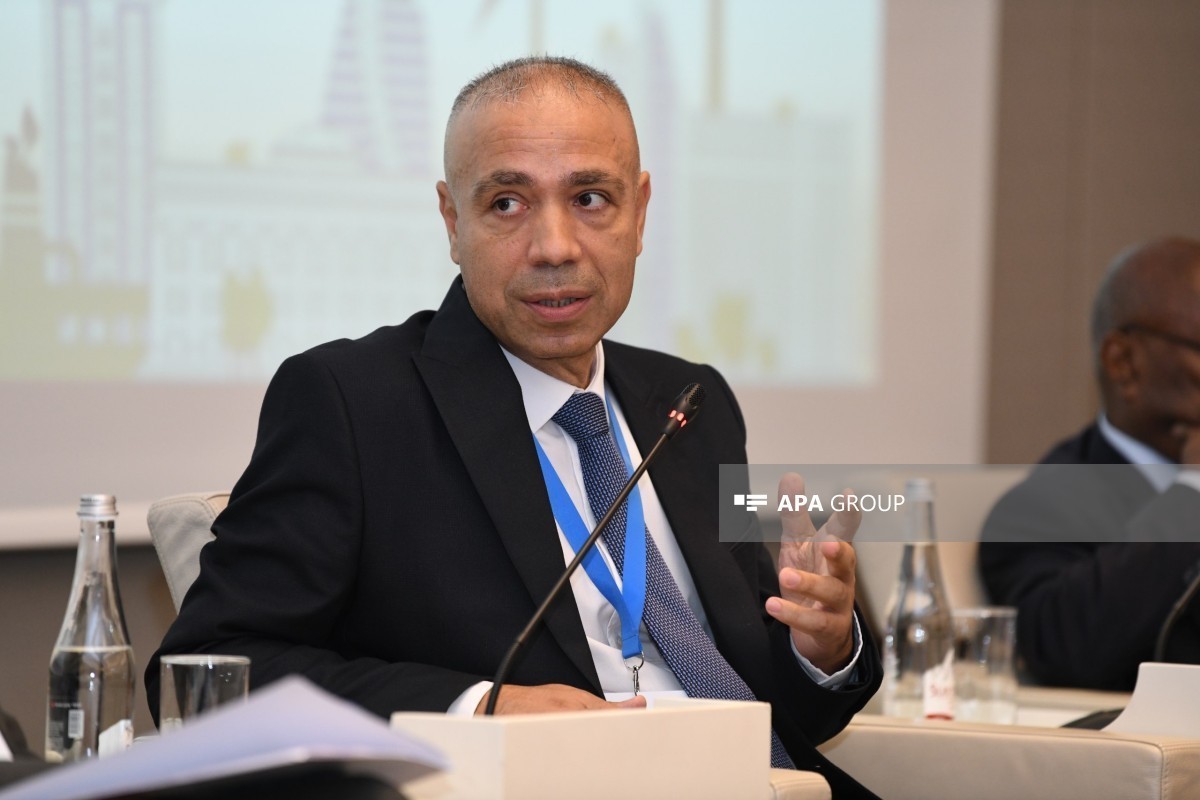


Dr. Tedros Adhanom Ghebreyesus, the Director-General of the World Health Organization (WHO), during the panel titled "Reimagining Multilateralism for a Multipolar World" at the 12th Global Baku Forum, has described the consequences of the U.S. stopping its financial aid to global health and humanitarian programmes, APA reports.
WHO Director-General, stated during the panel that the U.S. accounted for 30% of all overseas development assistance, so the sudden disruption to that funding is having a huge impact on health and humanitarian work around the world.
"On immunization, WHO’s network of more than 700 laboratories for detecting outbreaks of measles and rubella faces imminent shutdown, increasing the risk of local outbreaks, global spread and avoidable deaths. The sudden suspension of US funding and the sudden disengagement of U.S. institutions is also affecting global efforts to eradicate polio and the response to mpox epidemics in Africa.
Apart from the impact on disease-specific programmes, U.S. funding cuts are also affecting the response to humanitarian crises. Almost 24 million of the most vulnerable people are at risk of not being able to access essential health services, including for mental health, gender-based violence and sexual and reproductive health. More than 2,600 health facilities in 12 humanitarian settings have already suspended services at least partially, or will do very soon.
In Haiti, staff have been laid off, salaries have been cut, drug stocks are running out and laboratory operations have been disrupted, jeopardizing the ability to monitor and respond to threats including HIV and malaria.
In Ethiopia, the abrupt loss of U.S. funding threatens to reverse progress in disease control, immunization rates, maternal and child health, and emergency preparedness. In Cox’s Bazar in Bangladesh – the largest refugee camp in the world – diagnosis and treatment of Hepatis C has been disrupted, as well as disease surveillance, primary and secondary health care for refugees, laboratory services, procurement of supplies and salaries of health workers.
What is the result of all these disruptions? If these disruptions continue, we could see an additional 15 million cases of malaria and 107,000 deaths this year alone; And more than 10 million additional cases of HIV and 3 million HIV-related deaths; All of these impacts are avoidable. For the moment, these numbers are projected, not real – but they could become real very quickly. Of course, the U.S. Administration is within its rights to decide what it supports, and to what extent. The U.S. has been extremely generous over a long period of time, and perhaps the global health and humanitarian world has become too reliant on that generosity. If the U.S. is to scale back its support, we only ask that it consider continuing its funding, at least until solutions can be found, so lifesaving services can be sustained ," said Dr. Tedros Adhanom Ghebreyesus.


 Follow us on Telegram
 t.me/apanewsaz
 Follow us on Instagram
 Follow us on TikTok
 Follow us on Facebook
 Follow us on X