


The video materials circulated regarding former prosecutor of the International Criminal Court (ICC), Luis Moreno Ocampo, and his son Tomas Ocampo raise serious questions about the processes taking place within European political institutions.

Confessions revealing the realities
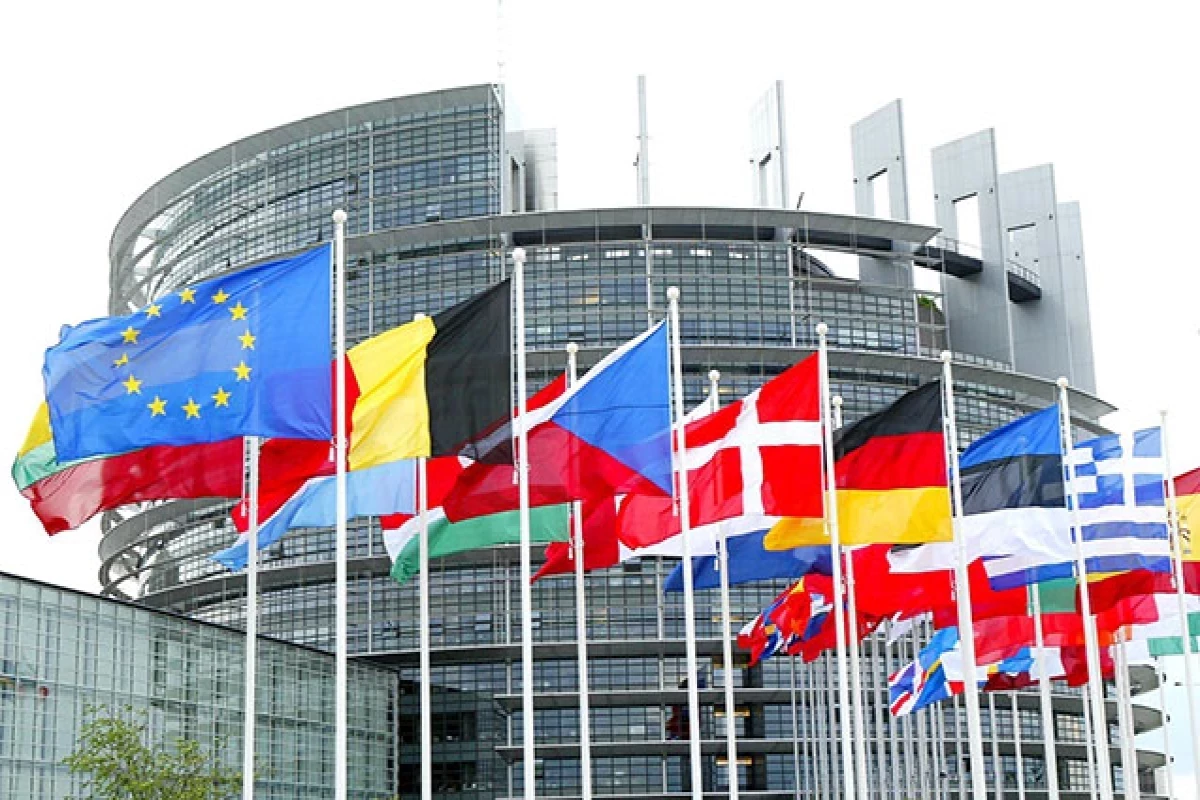
Member of Parliament (Milli Majlis) Soltan Mammadov said in a statement to APA that the views and open confessions voiced in these footage demonstrate the level to which various lobbying groups have extended their influence within the European Parliament and, in general, the structures of the European Union. In particular, the activities of Armenian lobby networks and their attempts to influence the formation of political decisions come to the forefront in this context:
“Such statements are among the important factors that undermine trust in the functioning of international law and political institutions. Processes that have been observed for many years, but were difficult to confirm with concrete evidence, are now being openly exposed. This shows how weak the mechanisms of transparency and accountability in the international system are.”

Lobbying and influence mechanisms in European institutions
The MP emphasized that the circulated materials reveal the coordinated activities of various lobbying groups within the European Parliament. This activity is not limited to shaping opinions, but also extends to directing political decisions and forming positions against certain states:
“In this context, the allegations voiced around the name of former High Representative of the European Union for Foreign Affairs and Security Policy Josep Borrell attract particular attention. This raises serious questions about the objectivity of the positions demonstrated toward Azerbaijan during his tenure.
Such cases deal a serious blow not only to the reputation of individual figures, but to European institutions as a whole. The existence of such cases in European politics shows that decisions are made not on the basis of objective grounds, but within the framework of certain financial and political interests. This contradicts the principles of functioning of democratic institutions and European values.”

The transformation of “human rights” rhetoric into a tool
Soltan Mammadov stated that the “human rights” accusations voiced against Azerbaijan for years should be assessed precisely as a result of such lobbying activities. According to him, this topic is sometimes used not to reflect objective realities, but as a tool of political pressure:
“The selective application of international law and human rights principles undermines the essence of these concepts. If the same standards are not applied to all countries, this already indicates the dominance of political interests rather than law. In this regard, the confessions of Luis Moreno Ocampo and his son once again prove that certain circles use legal arguments as a means of manipulation.”
Attempt to interfere in regional processes
The MP noted that attempts to influence political processes within Armenia are also clearly visible in the circulated footage: “In particular, the views voiced regarding the removal of Armenian Prime Minister Nikol Pashinyan from power demonstrate the scale of these interference attempts. Such approaches do not only mean interference in the internal affairs of one country, but also pose a serious threat to stability in the region.
The influence of external forces on political processes may lead to the deepening of conflicts and the emergence of new centers of tension. This may lead to undesirable consequences for both Azerbaijan and Armenia. Such scenarios should also be assessed as steps directed against the ongoing peace process between Azerbaijan and Armenia. In order to ensure sustainable peace in the region, it is important to minimize external interference.”

Corruption in European structures
Soltan Mammadov emphasized that the confessions of Luis Moreno Ocampo and his son also raise serious concerns about the level of corruption in European structures: “This shows the existence of systemic problems in the governance system of the European Union. Corruption is one of the main factors affecting not only the economy but also the quality of political decisions. If decisions are shaped through corruption mechanisms, their legitimacy and fairness come into question. This deals a serious blow to the global reputation of the European Union.
Against the backdrop of these events, the European Parliament and other European institutions should not remain silent. It is important to investigate such serious allegations and provide clear explanations to the public. The principles of transparency and accountability should be reflected not only in statements but also in real actions. Otherwise, such scandals will further weaken trust in European institutions and damage their international reputation. The international community should not remain indifferent to this issue and must demonstrate a principled stance to uphold the rule of law. These confessions reveal only a part of the existing problems in European politics. These facts once again confirm the need for serious reforms in the international legal system and political institutions."


 Follow us on Telegram
 t.me/apanewsaz
 Follow us on Instagram
 Follow us on TikTok
 Follow us on Facebook
 Follow us on X