















Discussions on the opening of the Türkiye-Armenia border have raised economic expectations in Kars. The emergence of new markets, expansion of trade, an increase in tourist flows, and the city gaining a more advantageous position in terms of logistics are among the main arguments.
These have a certain economic basis. However, the existing figures do not provide sufficient grounds to draw an automatic equation between the opening of the border and the economic development of Kars. On the contrary, when looking at the statistics, it appears that the opening of the border will create both opportunities and new competition for Kars.
Armenia is not a new market for Turkish goods
According to the Armenian Ministry of Foreign Affairs, the country imported $368.3 million worth of Turkish-origin products in 2025. This figure stood at $335.9 million in 2024 and $337.1 million in 2023. Armenia’s exports to Türkiye, meanwhile, amounted to just $473,000 in 2025.
In other words, the closure of the land border has not prevented Turkish goods from entering the Armenian market. Since 1993, products have mainly been transported via Georgia. The opening of the border could primarily shorten the existing trade route and reduce logistics costs.
This is an important distinction. The issue is not the creation of a market worth hundreds of millions of dollars from scratch, but rather easier access to an existing market.
What do Kars’s exports say?
To assess the reality of optimistic forecasts regarding the opening of the border, it is enough to look at Kars’s own export structure.
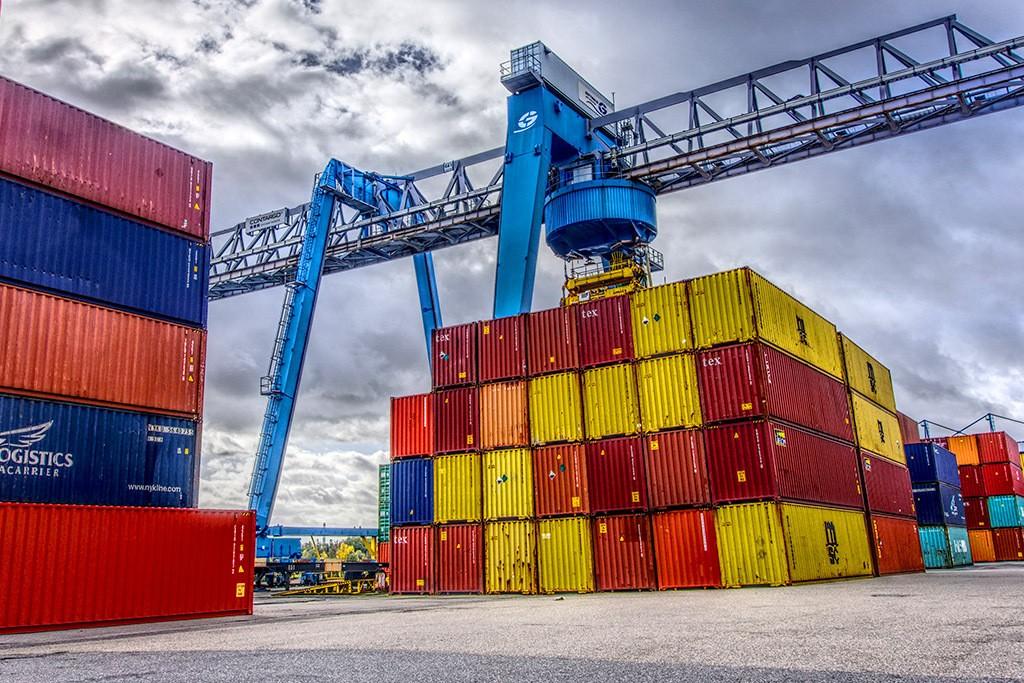
According to available statistics, Kars’s largest export category in 2025 is cement, glass, ceramics and soil products – $3.415 million. Exports of mining products amount to $293,000, exports of machinery and equipment to $25,200, and automotive industry products to $24,000.
The figures are considerably lower for agricultural products. Exports of cereals, pulses and oilseeds amount to $13,600, while exports of fruit and vegetable products stand at just $6,900.
Approximately 90% of exports are accounted for by cement, glass, ceramics and soil products alone.
This structure requires a more cautious approach to expectations that large volumes of dried fruit, nuts and other food products will be exported from Kars to Armenia after the border opens. This is because Kars’s current export base is not built around these products.
On the contrary, the existing figures show that, at the initial stage, more realistic opportunities for Kars in the Armenian market may emerge in construction materials and certain industrial products.
The border may facilitate access to a new market, but it does not in itself create production capacity. For exports to increase, products, price advantages, processing capacity, certification, and a sustainable supply are also necessary.

Competitors are already present in the Armenian market
Another problem for Kars is that the Armenian market is not empty.
According to the Ministry of Economy of Armenia, imports from Iran alone amounted to $679 million in 2025.
Iran has a direct land border with Armenia and has long-established trade relations in various products, including food. Armenia also has extensive trade with Russia, Georgia, China and other markets.
Moreover, the competitors of Kars producers will not be limited to foreign companies. Once the border opens, Türkiye’s larger production centers will also be able to export products to Armenia more easily.
For this reason, geographical proximity is an advantage for Kars, but it is not a sufficient advantage. If a product costs more or is not produced in sufficient quantities, proximity to the border does not solve all the problems.
The border will open in both directions
Discussions often focus only on goods that will be transported from Kars to Armenia. However, from an economic perspective, the other direction of the border should also be taken into account.
Currently, Armenia’s exports to Türkiye are very low. Exports worth $473,000 in 2025 are almost symbolic compared with imports from Türkiye. However, the emergence of direct transport opportunities could also reduce the costs for Armenian producers to access the Turkish market. This issue is particularly important for Kars because agriculture and livestock farming have a significant share in the province’s economy.
_1788529181.webp)
Livestock farming: Kars’s most sensitive sector
According to 2025 data from the Kars Provincial Directorate of Agriculture and Forestry, the total number of cattle and small livestock in the province is 1.5 million head. In just one year, 290,000 head of livestock were sent from Kars to other regions of Türkiye.
These figures show that livestock farming is not just an ordinary economic activity for Kars. The sector is directly linked to the incomes of thousands of families, milk and meat processing, cheese production and other related areas.
Therefore, the possible impact of the opening of the border on this sector should be calculated separately.
The production costs of a Kars farmer include feed, energy, labor, transportation and veterinary services. If, in the future, access to the Turkish market becomes easier for meat or other livestock products of Armenian origin, and the final price of those products is lower than that of products from Kars producers, local farmers may face new price competition.
In this case, producers would be left with two options: lower prices and reduce profitability, or maintain existing prices and face the risk of losing market share.
It would not be correct to say at this stage that Armenian meat will capture the Kars market. For this, production costs, wholesale prices, customs tariffs, and sanitary and veterinary requirements in Armenia and Türkiye should be compared.
However, in Kars, which has a livestock population of 1.5 million head, it is important to calculate the economic impact of such a scenario in advance. If the economic benefits of opening the border are measured solely on the basis of export opportunities, half of the picture will be left out.
_1788529551.jpg)
The main profit may come not from trade, but from services, but…
All this does not mean that Kars will not benefit from the opening of the border. On the contrary, the city’s greater and more tangible advantage may emerge in other sectors.
Logistics, freight transportation, warehousing services, customs activities, hospitality, the restaurant business, retail trade and tourism may benefit from increased movement across the border.
In particular, the expansion of transport links along the Kars–Gyumri route, the activation of railway opportunities and the establishment of tourism routes such as Ani–Gyumri could generate additional revenue for the service sector in Kars.
However, here too, it is necessary to take into account the difference between national trade and local earnings.
For example, if $1 million worth of products manufactured in Istanbul are transported to Armenia via Kars, this represents $1 million in Türkiye’s exports. The revenue Kars receives from that operation is the amount that remains in the city through freight transportation, warehousing, fuel, restaurants and other services.
In other words, being a transit point and being a logistics hub are not the same thing.
It is not enough for cargo simply to pass through Kars. The cargo needs to receive services in the city, be stored, sorted and processed there, and generate revenue for local businesses. Otherwise, even if trade figures increase, the added value remaining in Kars may be limited.
Expectations and economic outcomes need to be distinguished
The opening of the Türkiye–Armenia border could create real opportunities for Kars. This is not in dispute. Shorter distances, lower logistics costs, and increased tourist and freight flows could expand the city’s economic opportunities.
However, looking at Kars’s current export structure reveals another picture: the majority of exports are concentrated in one product group – cement, glass, ceramics and soil products – while agricultural and fruit and vegetable exports remain at very low levels.
At the same time, livestock farming, one of the pillars of the city’s economy, may face new competition.
For this reason, before presenting the opening of the border as a “major economic leap for Kars,” the export potential, the impact of new imports, freight and tourist flows, as well as the added value that will remain in the city, should be calculated.
Opening the border is not a goal for Kars, but an economic tool. Its success will be measured not by how many goods cross the border, but by how much income, production and employment that movement generates in Kars.


 Follow us on Telegram
 t.me/apanewsaz
 Follow us on Instagram
 Follow us on TikTok
 Follow us on Facebook
 Follow us on X


