










Permanent Mission of Azerbaijan to the United Nations told APA that the letter dated 23 December 2009 addressed to the UN Secretary-General took stance on recent statement made by Armenian representative in the United Nations:
“I would like to draw your attention to the recent statements made in the United Nations by the representatives of the Republic of Armenia, which contravene the declared commitment of this country’s Government to the constructive and international law-based solution of the conflict between Armenia and Azerbaijan.
Thus, the Permanent Representative of the Republic of Armenia to the United Nations in his statement at the 6216th meeting of the Security Council, on 11 November 2009, claimed that “Armenia’s involvement (read: aggression against Azerbaijan) prevented ethnic cleansing, which had been subtly conducted by Azerbaijan during the 70 year of Soviet rule and was aimed at wiping out Armenians
from their ancestral homesâ€. Another example of similar distortion is found in the speech of the representative of Armenia in the meeting of the Third Committee of the General Assembly held on 2 November 2009 entailing the claim that “(i)n the Nagorno-Karabakh region, the people had sought their right to self-determination in a peaceful manner and through negotiationâ€.
Such cynical allegations are not an exception to the usual speculations by Armenian officials as to the origin, course and consequences of the war of aggression unleashed against Azerbaijan. We fully realize that attempts by Armenia to mislead the international community obviously carry the danger of causing a distorted perception of the essence of the problem, pose a serious threat to political settlement perspectives and purport to advocate the culture of impunity and therefore cannot be left unaddressed.
It is curious, to say the least, that while referring to the alleged ethnic cleansing policy towards Armenians during Soviet rule and their “peaceful†aspirations, the representatives of Armenia usually pass over in silence the facts irrefutably testifying to the opposite, in particular that over the 70 years of Soviet rule, Armenia succeeded in expanding its territory, mostly at the expense of Azerbaijani lands, and using every possible means to expel the Azerbaijanis from
their lands. Suffice it to say that during the Soviet period the territory of Armenia increased from 8,000-10,000 to 29,800 square kilometres.
In the 1920s the mountainous Garabakh (Nagorny Karabakh) was given the status of autonomy within the Soviet Socialist Republic of Azerbaijan and its administrative borders were defined in such a way as to ensure that the Armenian population constituted a majority. At the same time, the more than half-millionstrong Azerbaijani community compactly residing in Armenia at that time was
refused the same privilege, and attempts to so much as mention this were promptly,roughly and savagely suppressed. Instead of accusing Azerbaijan, it is for the Government of Armenia to realize that, unlike itself, which has purged its territory of all non-Armenians and become auniquely mono-ethnic State, Azerbaijan has preserved its ethnic diversity to the present day. Indeed, unconcealed racial prejudices prevailing in the policy and practice of Armenia constitute illustrative evidence of the obvious lack of credibility of the official Yerevan assurances of good intentions.
Moreover, contrary to the declared noble purposes of its so-called
involvement, Armenia makes at the same time a series of historical assertions, the objective of which is to substantiate the policy of territorial expansionism (see, for example, document A/63/781-S/2009/156, para. 21 and below). In other words, it is
more than clear that Armenia’s military actions against Azerbaijan were aimed, from the very beginning, at seizing the territories by means of force and fundamental change of their demographic composition.
The Armenian side’s “forgetfulness†also frequently concerns the chronology of events pertaining to the beginning of the present-day stage of the conflict between Armenia and Azerbaijan. In reality, large-scale combat operations initiated by Armenia on the territory of Azerbaijan were preceded by the attacks at the end of 1987 on the Azerbaijanis in Khankandi (during the Soviet period, Stepanakert) and
Armenia, resulting in a flood of Azerbaijani refugees and internally displaced persons, as well as in a number of illegal declarations and decisions taken with a view to securing the unilateral secession of Nagorny Karabakh from Azerbaijan.
Shortly after the assertion of claims on Nagorny Karabakh at the end of the 1980s, under instructions from and with the blessing of the Armenian authorities, the more than 200,000 Azerbaijanis remaining were forcibly deported from Armenia. This process was accompanied by killings, torture, enforced disappearances, destruction of property and pillaging, throughout Armenia. These acts were conducted on a widespread and systematic basis. During only three days,
from 27 to 29 November 1988, in the course of pogroms in the Armenian towns of Gugark, Spitak and Stepanavan, 33 Azerbaijanis were killed. In all, 216 Azerbaijanis were killed in Armenia in 1987-1989, including children, women and elderly people.
At the end of 1991 and the beginning of 1992, the conflict entered into a military phase and Armenia initiated combat operations on the territory of Azerbaijan. That period was marked by the increase of the magnitude, intensity and consistency of the attacks. In February 1992, the town of Khojaly in Azerbaijan was notoriously overrun and its population was subjected to an unprecedented massacre.
On the night of 25 and 26 February 1992, 613 civilians were killed, including 106 women, 63 children and 70 elderly persons. Another 1,000 people were wounded and 1,275 were taken hostage. To this day, 150 people from Khojaly remain missing. Facts confirm that the intentional slaughter of the Khojaly town civilians on 25 and 26 February 1992 was directed towards their mass extermination
only because they were Azerbaijanis.
In sum, the ongoing armed conflict in and around the Nagorny Karabakh region of the Republic of Azerbaijan has resulted in the occupation of almost one fifth of the territory of Azerbaijan and has made approximately one out of every eight persons in the country an internally displaced person or refugee; 20,000 people have been killed, 50,000 people have been wounded or have become invalids and about 5,000 citizens of Azerbaijan are still missing. The aggression against Azerbaijan has severely damaged the socio-economic sphere of the country and has also had catastrophic consequences for its cultural heritage both in the occupied
territories and in Armenia.
Armenia used military force to occupy the territory of Azerbaijan and to establish on it a subordinate separatist entity constructed on ethnic lines, which survives by virtue of Armenia’s military and other support and which the world has refused to recognize.
Taking into account the above, it is curious to hear that “(i)n the Nagorno-Karabakh region, the people had sought their right to self-determination in a peaceful manner and through negotiationâ€. It should be particularly emphasized that the Azerbaijani refugees and internally displaced persons were forced to flee because Armenia and its military forces had the clear aim of ethnic cleansing and of
creating a mono-ethnic culture in the captured territories. Indeed, what Armenia considers “involvement to prevent ethnic cleansing†should obviously be read as “involvement to conduct ethnic cleansingâ€.
Therefore, Armenia’s claims to the application of the principle of selfdetermination are contrary to and unsustainable in the context of international law.
Otherwise, this would be tantamount to accepting the results of a violation of fundamental norms of international law, including, in particular, what amounts to the most serious international crimes, as well as a rule prohibiting the use of force.
I should be grateful if you would have the present letter and the information contained herein circulated as a document of the General Assembly, under agenda items 14 and 18, and of the Security Councilâ€.
Azerbaijani Ambassador to UN sends letter to Secretary-General about the situation in Nagorno Karabakh

 06 January 2010 18:44 (UTC +04:00)


 İDMAN XƏBƏR
 Follow us on Telegram
 t.me/apanewsaz
 Follow us on Instagram
 Follow us on TikTok
 Follow us on Facebook
 Follow us on X
Foreign
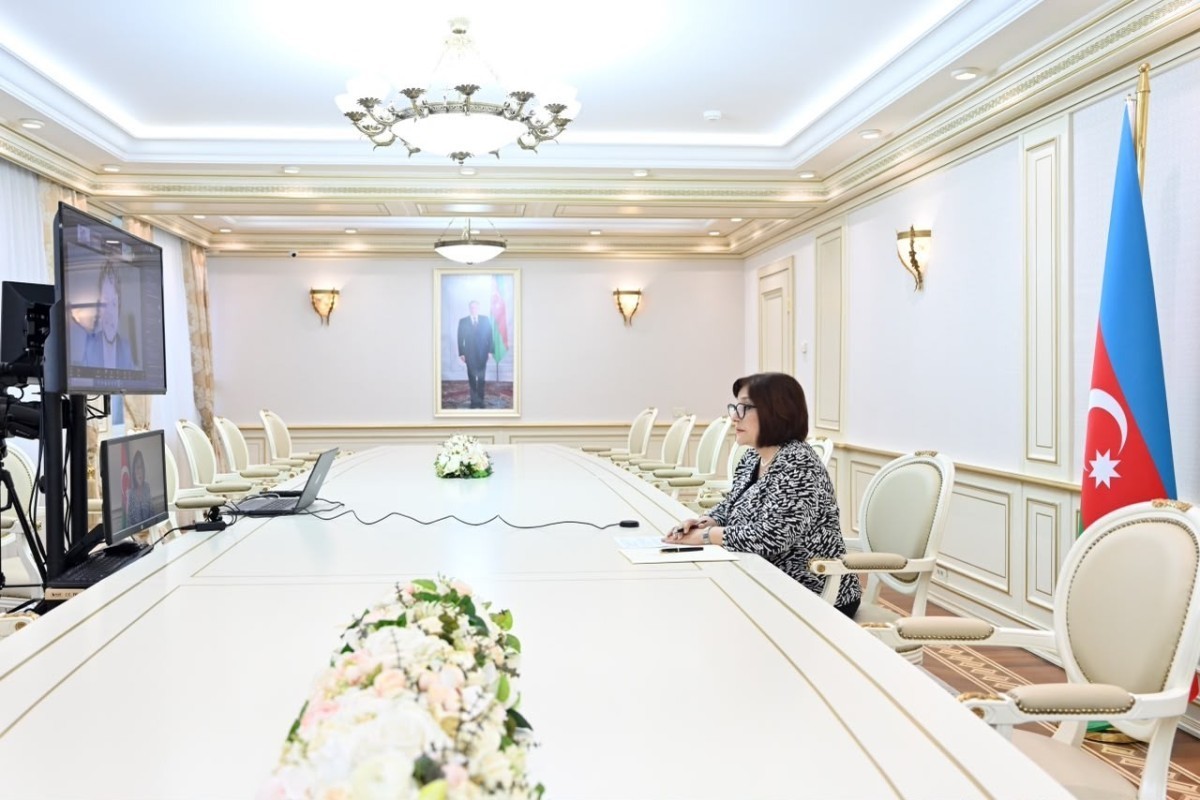
Sahiba Gafarova speaks at IPU high-level dialogue on digital governance
15:37
 10 July 2026
President of Latvia's Constitutional Court visits Azerbaijan
15:10
10 July 2026
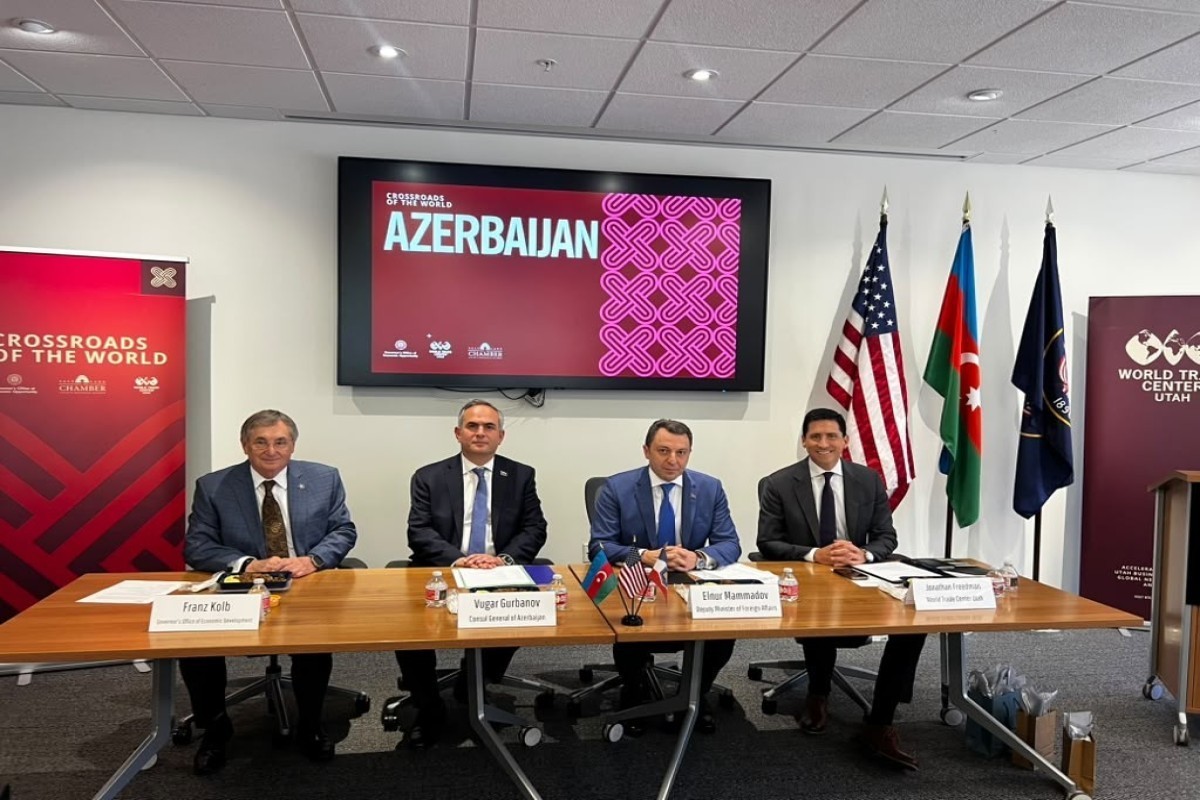
Azerbaijani deputy FM pays working visits to Utah and California
13:04
10 July 2026

Azerbaijan approves natural gas supply agreement with Georgia -DECREE
12:56
10 July 2026

NEWS FEED
Georgian opposition leader Aleko Elisashvili sentenced to 13 years in prison for attempted terrorist attack
15:44
10 July 2026
Sahiba Gafarova speaks at IPU high-level dialogue on digital governance
15:37
10 July 2026
Rutte, Zelenskyy to attend Ukraine 'Coalition of the Willing' meeting, Elysee says
15:30
10 July 2026
“AzerGold” CJSC organizes infotour to Dashkasan district and CIRPA for tourism bloggers
15:19
10 July 2026
President of Latvia's Constitutional Court visits Azerbaijan
15:10
10 July 2026
Azerbaijan's Health Ministry dismisses claims of mumps outbreak in Baku, urges parents to rely on official information
14:43
10 July 2026
Russia's air defenses destroy nearly 5,000 drones in one week - MoD
14:35
10 July 2026
Peskov: Kyiv is not in favor of the peace process
14:28
10 July 2026
Russia facing fuel shortage, Deputy PM says
14:07
10 July 2026
Peskov: Türkiye's sale of Russian S-400 systems is a highly sensitive issue
14:02
10 July 2026
Missile alert has been declared in Moscow
13:51
10 July 2026
Azerbaijan's Milli Majlis to hold next session on July 13
13:46
10 July 2026
Azerbaijan to digitalize procedures for extending foreigners' temporary stay
13:44
10 July 2026
Azerbaijan to amend fine for failure to repatriate foreign currency funds, introduce exemption from liability
13:41
10 July 2026
Azerbaijan to introduce fines for violations of cybersecurity requirements
13:38
10 July 2026
Administrative arrest to be imposed for repeated participation in gambling
13:37
10 July 2026
Baku to host international conference on media and decolonization
13:20
10 July 2026
ING: Central Bank of Azerbaijan may keep interest rate unchanged for an extended period
13:12
10 July 2026
Azerbaijani deputy FM pays working visits to Utah and California
13:04
10 July 2026
New sales rules proposed for fisheries products in Azerbaijan
13:03
10 July 2026
Azerbaijan drafts new law to modernize fisheries sector
12:59
10 July 2026
Azerbaijan determines procedure for foreign individuals and legal entities to use its aquatic bioresources
12:59
10 July 2026
Azerbaijan approves natural gas supply agreement with Georgia -DECREE
12:56
10 July 2026
Selçuk Bayraktar visits Bayraktar production facilities in Azerbaijan
12:54
10 July 2026
Azerbaijan's external public debt falls to $4.62 bln
12:39
10 July 2026
Azerbaijan prepares new draft law "On Seed Production", establishes registry
12:32
10 July 2026
Azerbaijan's strategic foreign exchange reserves approach $85.8 billion
12:28
10 July 2026
Azerbaijan's economy grows by 1% in the first half of 2026
12:24
10 July 2026
Gas and condensate production volumes at Absheron field revealed
12:03
10 July 2026
Russia ships propane and fertilizer to Armenia via Azerbaijan
12:02
10 July 2026
ADB keeps Azerbaijan's inflation forecast unchanged
11:59
10 July 2026
Ebola death toll in DR Congo rises to 625
11:45
10 July 2026
Official reception held at Gulustan Palace to mark Diplomatic Service Day - PHOTO
11:35
10 July 2026
Three new road bridges under construction in Garadagh
11:31
10 July 2026
Azerbaijan identifies new grounds for temporary restriction of internet information resources
11:28
10 July 2026
Penalties for organizing gambling activities in virtual formats to be tightened
11:27
10 July 2026
Azerbaijan to require special permit for circulation of civilian autonomous unmanned aerial vehicles
11:25
10 July 2026
Export incentive to be introduced for products manufactured in the Alat Free Economic Zone
11:23
10 July 2026
Azerbaijan to set stricter oversight and inspections for civilian drones
11:23
10 July 2026
Azerbaijan to establish legal framework for operation of autonomous ships
11:20
10 July 2026
Azerbaijani Parliament ratifies legal assistance agreement with Ukraine on civil and commercial matters
11:17
10 July 2026
Major Russian oil refinery, oil infrastructure reportedly struck by Ukrainian drones
11:14
10 July 2026
Azerbaijan joins another international convention related to shipping
11:10
10 July 2026
Next session of Azerbaijan's Milli Majlis gets underway
11:03
10 July 2026
ADB keeps Azerbaijan's 2026-2027 economic growth forecast unchanged
10:49
10 July 2026
Türkiye sells Russian-made S-400 systems to Gulf country - Hürriyet
10:39
10 July 2026
Azerbaijan Minister of Defense meets with Baykar’s Chairman of the Board
10:31
10 July 2026
Shusha to host 4th Global Media Forum
10:27
10 July 2026
US engineering consulting firm AECOM team surveys TRIPP site in Armenia
10:20
10 July 2026
Azerbaijan and Russia discuss allocation of Samur River water resources
10:15
10 July 2026


