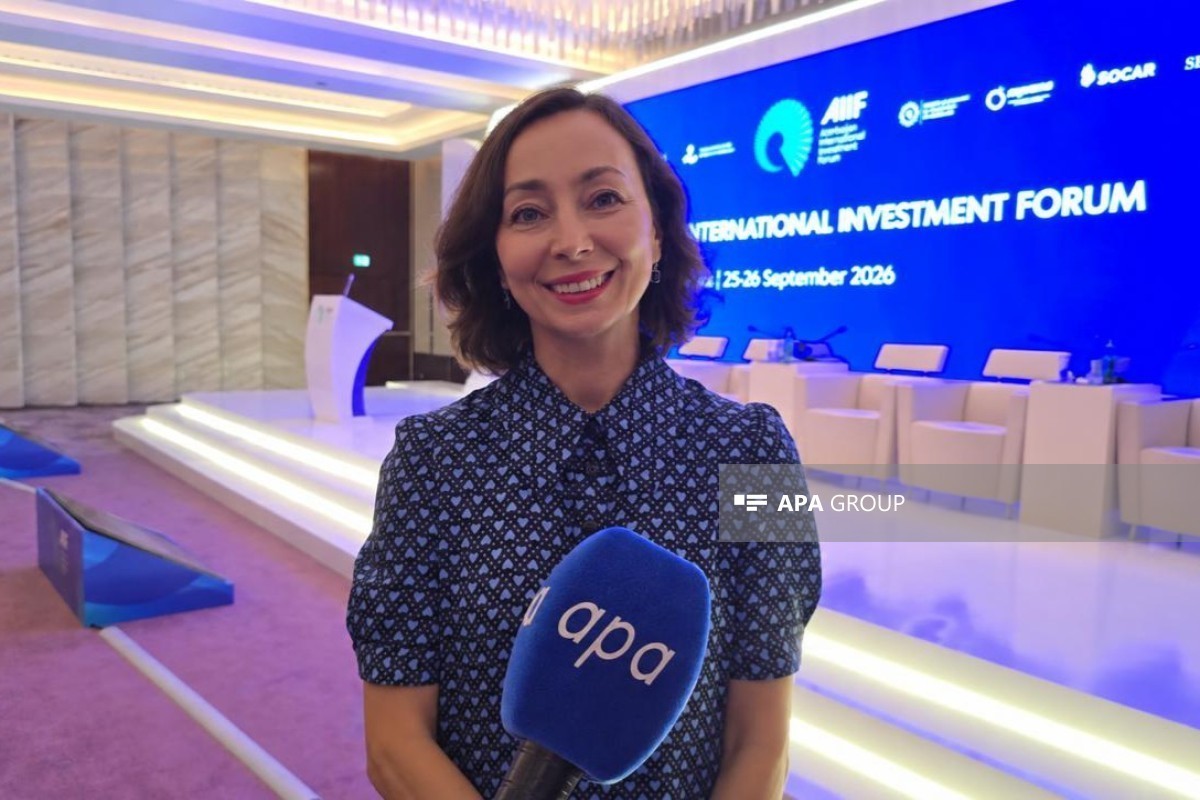


Stella Renita, Head of the European Investment Bank (EIB) Group Regional Representation for the South Caucasus, answered questions from APA-Economics.
– What investment opportunities does the EIB currently see in Azerbaijan, and which sectors are of particular interest to you?
– We see several areas with investment potential in Azerbaijan. Of course, one of the key areas is energy, particularly renewable energy and energy efficiency. Another important area is connectivity.
We are keen to explore where we could do more in Azerbaijan. That is something we are working on at the moment: trying to identify specific projects where our financing and expertise could benefit Azerbaijan and support its priorities.
– Azerbaijan is currently focusing on the development of the non-oil sector. This is not only about green energy, but also infrastructure, while the mining sector is also important for Azerbaijan. Do you see opportunities for EIB investment in these sectors?
– Of course, investment needs go beyond green energy. Infrastructure is important for developing the non-oil economy, whether we are talking about transport connections or more sustainable infrastructure in cities. Access to finance for smaller businesses is another area where the EIB has experience, including through partnerships with local banks.
And on the mining sector you mentioned, critical raw materials in particular are an area of interest to the EIB. We would be interested in exploring potential opportunities in Azerbaijan.
– Other international financial institutions, such as the EBRD and ADB, have significantly larger portfolios in Azerbaijan, while the EIB’s portfolio is relatively small. Do you see opportunities to increase investment in Azerbaijan through the financial sector, including partnerships with local banks?
– We do see potential there. We already have financing through local banks, which allows us to support businesses indirectly. In fact, more than 120 enterprises across Azerbaijan have benefited from EIB funding through one such partnership.
We would, of course, be interested in considering where we could do more. There is certainly room for us to build on what we have done in Azerbaijan so far.
We work closely with the European Commission, including on investment needs in connectivity in Azerbaijan and the wider region. As the EU bank, owned by the EU Member States, we invest in line with EU policies and look at where we can support shared priorities.
So I think there is scope for further discussion. The important thing now is to identify suitable projects and see where the EIB could add value.
– The Azerbaijani government has indicated that it is open to discussions and partnerships with international financial institutions. Could this create opportunities for the EIB to expand its activities in Azerbaijan?
– Yes, I believe it could. During this forum, we heard Finance Minister Sahil Babayev and Central Bank Governor Taleh Kazimov emphasise how important collaboration with international financial institutions is.
We welcome this openness to dialogue. It is encouraging, and we would be pleased to discuss concrete projects and see where we might be able to contribute.
– I follow the reports of international organisations, particularly those related to the South Caucasus and Azerbaijan. The EIB’s activities in the region appear to receive less attention compared with some other international financial institutions. What can you tell us about the EIB’s current portfolio in the South Caucasus?
– We are active in the South Caucasus region. In Armenia, our financing has grown considerably. The total signed since the start of our operations is now around €1.25 billion. We work there across a range of sectors, and we continue to look at opportunities that fit the country’s priorities and those of the European Union.
In Georgia, we have signed around €2.36 billion in financing since we began operating there. Around €1 billion has gone towards road connectivity, and we have also financed projects in other areas, including support for the private sector through local banks.
In Azerbaijan, we are looking at how we might build on our work to date and see where our financing and expertise could be useful.
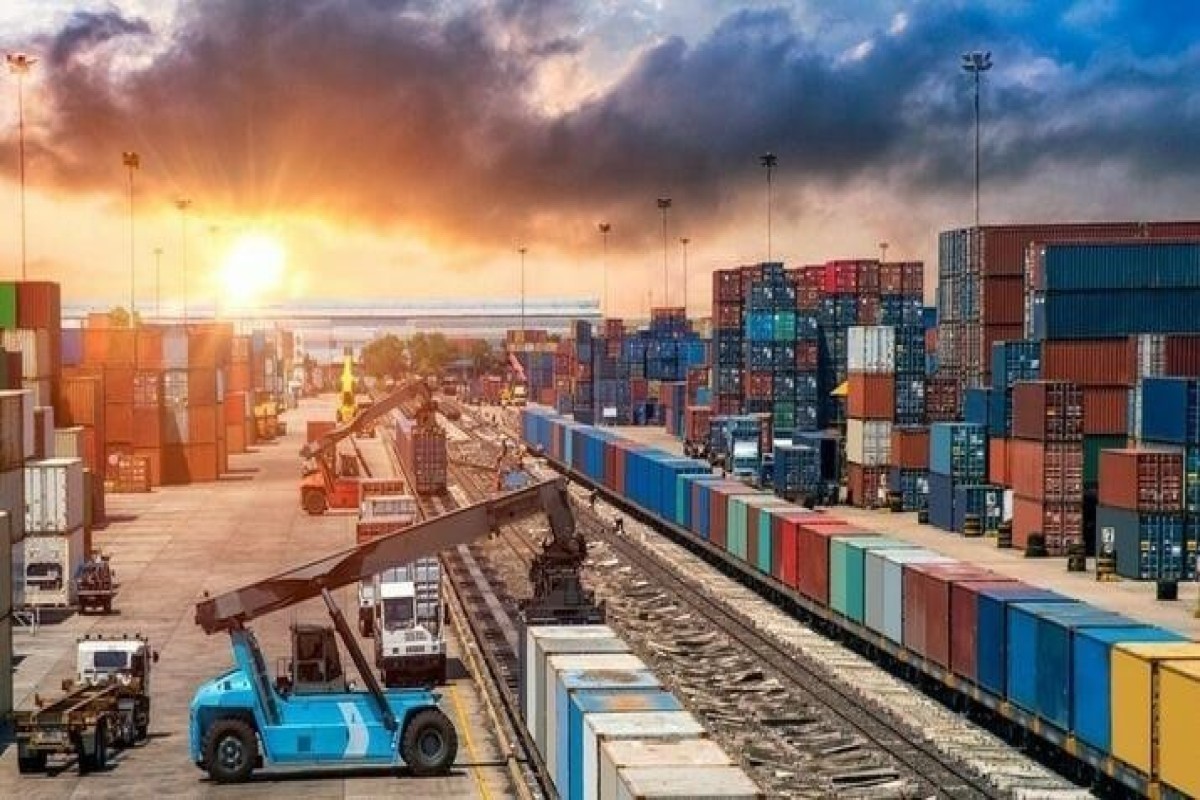
– The geopolitical crises we are seeing around the world have highlighted the importance of transport corridors. In this context, how do you assess the role of the Middle Corridor for international financial institutions? Is the EIB interested in financing elements of the Middle Corridor, including projects in Azerbaijan?
– I think the Middle Corridor is very important, and its development will require substantial investment. International financial institutions can play a valuable role here, not only because of the financing they can bring, but also because of their expertise. They can help with technical assistance and with preparing strong projects that may attract further investment.
For the EIB, transport connectivity is an area we know well. We have already supported transport connectivity in the South Caucasus, and we are interested in exploring how we might contribute to the Middle Corridor in Azerbaijan.


 Follow us on Telegram
 t.me/apanewsaz
 Follow us on Instagram
 Follow us on TikTok
 Follow us on Facebook
 Follow us on X