












The economic risk score was revised to ’7’ from ’8’ and the industry risk score to ’8’ from ’9’.
The BICRA summarizes our view of the risks that a bank operating in a particular country and banking industry faces relative to those in other banking industries. A BICRA is scored on a scale from 1 to 10, ranging from the lowest-risk banking systems (group 1) to the highest-risk (group 10). Other countries in BICRA group ’8’ include Argentina, Kazakhstan, Uzbekistan, Nigeria, and Georgia.
Our revised economic risk score for Azerbaijan is ’7’. We have revised our assessment of economic imbalances to "low risk" from "intermediate risk", while our "high risk" assessment of "economic resilience" and "extremely high risk" of "credit risk in the economy", as our criteria define these terms, remain unchanged.
Azerbaijan’s only moderate level of wealth and the concentration of the economy in commodities, particularly oil, are the main reasons for our "high risk" assessment of economic resilience. We estimate that the oil and gas sectors directly contributed 40% of GDP in 2011, and another 35% indirectly through ancillary industries and services.
We consider the Azerbaijani banking industry to be in an expansion phase. We project that credit will expand faster than the underlying economy: about 10% in 2012, a level close to the 8.1% growth of loans in 2011.
Despite these very high loan growth rates in nominal terms, credit growth expressed in percentage points of GDP has been low. Even though this is somewhat distorted by the oil-inflated GDP, we think this suggests an absence of credit-fueled bubbles. In addition, growth of inflation-adjusted residential housing prices is sluggish. We believe that mortgage loans do not represent a major risk for Azerbaijan’s banking sector because the segment is underdeveloped. Therefore, we do not consider Azerbaijan as an economy in the process of building up imbalances. This is the main factor explaining our "low risk" assessment for economic imbalances.
Azerbaijan has low levels of corporate and personal indebtedness. The level of financial intermediation is indeed low, reflected in the 21% ratio of bank loans to private and nonfinancial public enterprises to GDP at year-end 2011. Nevertheless, our "extremely high risk" assessment of credit risk in the economy largely stems from our opinion of banks’ relaxed underwriting standards, with a weak payment culture and rule of law.
Our revised industry risk score for Azerbaijan is ’8’. This reflects that we have maintained our assessment of "very high risk" in the institutional framework and in systemwide funding and changed our assessment of competitive dynamics to "high risk" from "very high risk".
The Central Bank of Azerbaijan has the ability to intervene and take preventive measures, through external administration and other mechanisms.
The Central Bank’s response to the crisis was adequate and timely in our view. It lowered the refinancing rate and reserve requirements on liabilities several times. The Central Bank also provided direct liquidity support to some commercial banks. During the crisis no banks in Azerbaijan defaulted. The Central Bank has managed to retain an adequate level of depositor confidence in the system, supported by various measures, including a deposit insurance compensation mechanism that has been in effect since August 2007.
However, we consider that the Central Bank’s quasi-fiscal activity undermined asset quality, as belatedly indicated by the increase in nonperforming loans (NPLs). We note that regulatory forbearance allowed the largest state-owned International Bank of Azerbaijan (IBA) to accumulate a significant amount of NPLs on its balance sheet and continue to operate with a breach of capital covenants for a prolonged period. This underpins our "very high risk" assessment of the institutional framework.
In our view, Azerbaijan’s banking sector is also characterized by weak governance and transparency.
Azerbaijani banks feature a moderate risk appetite, in our view. IBA continues to dominate Azerbaijan’s banking market, with about 30% of total banking assets in 2011.
IBA and other banks controlled by the ruling elite enjoy privileged access to good-quality borrowers, thus creating competitive distortions in the market.
The government’s privatization of IBA has recently gained momentum, but we think that this process would require significant capital and funding support from the government, part of which has already been provided.
Systemwide funding is of "very high risk" and reflects structural deficiencies, including a relatively low share of loans funded by deposits (about 60%), a still high amount of funding obtained in foreign currency, the need to fund part of banking assets from wholesale sources, and the shallow domestic bond and short-term note markets.
Nevertheless, in our opinion, funding is an area that has improved in recent years, thanks to increased recourse to retail deposits to fund asset growth, a decline in cross-border funding, a somewhat decreasing percent of foreign currency funding, and the supportive policies of the Central Bank.
We believe that Azerbaijan’s government has significant capacity and willingness to support domestic banks with high and moderate systemic importance. We continue to classify the Azerbaijan government as "supportive" toward the domestic banking system. This classification recognizes the government’s track record of providing support to the banking system in 2008-2011.
S&P revises BICRA on Azerbaijan to group ’8’ from group ’9’

 14 May 2012 12:43 (UTC +04:00)



 İDMAN XƏBƏR
 Follow us on Telegram
 t.me/apanewsaz
 Follow us on Instagram
 Follow us on TikTok
 Follow us on Facebook
 Follow us on X
Finance
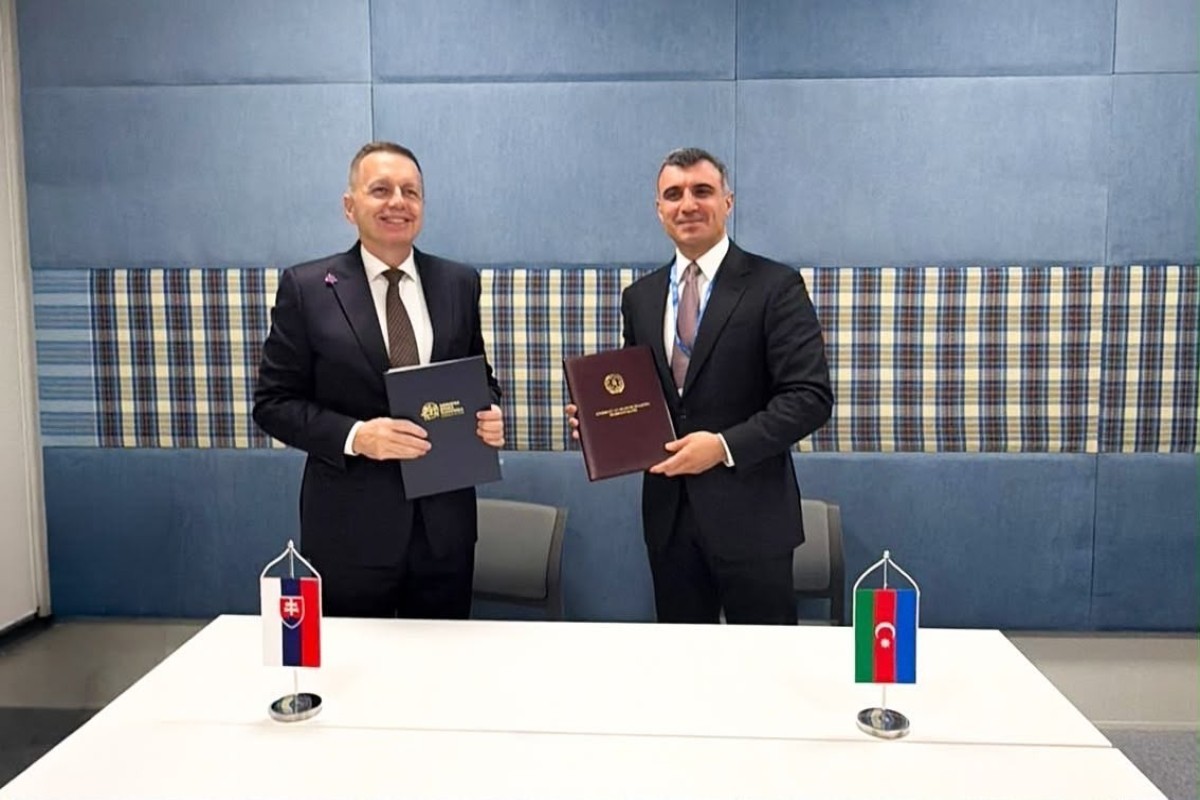
CBA and National Bank of Slovakia sign MoU
17:01
 19 October 2026

Fitch Ratings CEO: Azerbaijan's financial resources support stability of manat exchange rate - INTERVIEW
16:09
19 October 2026
World Bank to increase funding for Baku to $500 million
10:48
19 October 2026

World Bank says AI could transform developing economies
18:39
18 October 2026

NEWS FEED
Pakistan's top general to visit Tehran on Tuesday - IRGC
23:03
19 October 2026
Leyla Aliyeva watches performance of Turkmen iconic Galkynysh national equestrian group in Arkadag city
22:52
19 October 2026
Leyla Aliyeva visits Children’s Health and Rehabilitation Center in Arkadag city-PHOTO
22:46
19 October 2026
Leyla Aliyeva meets with Oguljahan Atabayeva in Arkadag
22:40
19 October 2026
Uzbekistan, U.S. sign agreements worth $12 bln
22:04
19 October 2026
BFMTV: France imposes curfew on several streets in Paris
21:46
19 October 2026
Houthis claim strikes on Aramco site, Saudi oil field
21:36
19 October 2026
President: We did not stoop to the level of the barbarians and child-killers who caused so much suffering for our people
21:10
19 October 2026
Iranian president holds meeting with Russian foreign minister
21:00
19 October 2026
SWISS flight aircraft en route Zurich-Shanghai made emergency landing in Baku
20:45
19 October 2026
Russia, Iran discuss cooperation between Tehran and EAEU
20:21
19 October 2026
US court issues arrest warrant for former Cuban leader Raul Castro
19:51
19 October 2026
Russian strike on park in Kharkiv region kills six - UPDATED
19:37
19 October 2026
13-year-old boy suspected of stabbing teacher and pupil in Romania after TikTok posts
19:24
19 October 2026
Azerbaijan and UAE Air Force Commanders meet - PHOTO
19:13
19 October 2026
Five cases of mpox confirmed in St. Petersburg
18:56
19 October 2026
Ukrainian army strikes Russian radar station and ammunition depots
18:38
19 October 2026
Lavrov: Russia ready to help find solutions to Iran-US conflict
18:29
19 October 2026
Seven people suspected of calling for violent seizure of power in Azerbaijan placed on international wanted list
18:28
19 October 2026
Russia’s Lavrov discusses US war and regional security during Tehran visit
18:22
19 October 2026
Leyla Aliyeva pays visit to Turkmenistan
18:08
19 October 2026
Difficult tactical manoeuvres are performed during “Falcons Meet – 2026” exercise - VIDEO
18:06
19 October 2026
Ukrainian children brought to Azerbaijan visit Gabala and Sheki
18:03
19 October 2026
Azerbaijan-UAE military cooperation is discussed
18:02
19 October 2026
Houthis launch missile strike on military camp in Yemen, killing 53 - UPDATED
18:00
19 October 2026
Araghchi discusses regional and international issues with Lavrov
17:59
19 October 2026
Japanese ambassador to Azerbaijan completes diplomatic mission
17:53
19 October 2026
State Security Service detains organizer of car arson attacks in Masazir abroad
17:38
19 October 2026
Azerbaijan extends deadline for obtaining a construction permit for a solar power plant in Fuzuli
17:14
19 October 2026
Azerbaijan Press Council issues appeal to Turkish media outlets
17:13
19 October 2026
Next Global Assessment of Azerbaijan's National Statistical System underway
17:10
19 October 2026
Azerbaijan expands telecommunications infrastructure in Aghdara
17:09
19 October 2026
CBA and National Bank of Slovakia sign MoU
17:01
19 October 2026
Car exports from Georgia to Azerbaijan decline by 32%
16:46
19 October 2026
Swedish Embassy: Military cooperation between NATO and Azerbaijan is developing
16:42
19 October 2026
Georgia's trade turnover with Azerbaijan exceeds $1 billion this year
16:30
19 October 2026
Iranian and Russian foreign ministers meet in Tehran
16:28
19 October 2026
ANAS to consider removing Ramiz Mehdiyev from full membership - ANAS President
16:20
19 October 2026
Germany summons Iranian envoy over alleged attack plots against pro-Israel figures
16:16
19 October 2026
Azerbaijani citizens purchase 70 apartments in Türkiye last month
16:12
19 October 2026
Fitch Ratings CEO: Azerbaijan's financial resources support stability of manat exchange rate - INTERVIEW
16:09
19 October 2026
Qatar warns of risk of further deepening global energy crisis
15:59
19 October 2026
German ambassador visits Sumgayit
15:56
19 October 2026
Trump urges France to close its borders immediately
15:47
19 October 2026
European Commission rejects US proposal to resume gas purchases from Russia
15:39
19 October 2026
308,945 hectares cleared of mines in Jabrayil, Gubadli and Zangilan
15:37
19 October 2026
Working Group on mine and unexploded ordnance clearance holds meeting in Jabrayil
15:32
19 October 2026
French premier calls for localized curfews starting Monday evening amid unrest
15:28
19 October 2026
Lavrov visits Iran
15:12
19 October 2026
Azerbaijani Parliament speaker meets Kyrgyz parliament speaker - PHOTO
15:02
19 October 2026


