









1 The aggregate growth for the CIS, says the United Nations major economic report, World Economic Situation and Prospects 2012 (WESP), is expected to decelerate to 4.0 per cent in 2012 before accelerating somewhat in 2013 as demand from developed economies eventually strengthens.
The report launched today says that economic activity expanded in the CIS in 2011, although growth was subdued in comparison to the faster pace observed prior to 2008. Aggregate gross domestic product (GDP) in the region rose by about 4.3 per cent in 2011, compared to 4.5 per cent in 2010, with the Russian Federation remaining the major force of economic dynamism in the CIS region. Growth will, however, weaken in the outlook due to the deterioration of the global economic situation, particularly in developed economies, and the resulting decline in commodity exports and commodity prices.
Inflation for the region accelerated to 9.6 per cent in 2011, up from 7.1 per cent in 2010. But headline inflation peaked in the Russian Federation and declined sharply in the second half of the year as the impact of the 2010 drought diminished. In Belarus, the devaluation of the rouble resulted in a sharp acceleration of inflation. In Kazakhstan, the one-off effects of customs union with Belarus and the Russian Federation resulted in price increases, as some imports became more expensive. According to the UN’s economic outlook, more subdued growth due to global slowdown will lead to more moderate increases in prices in the region. Inflation for the region is expected to decelerate to 7.8 per cent in 2012 and is likely to decline further in 2013.
Economic growth strengthened fiscal positions throughout the region in 2011, especially in the energy-producing economies. Despite high oil prices, payroll tax reform and increased tariff revenue in the Russian Federation, the budget ended roughly in balance, indicating its vulnerability to changes in the external environment. In Kazakhstan, a doubling of the duty on oil in 2011 to $40 per tonne helped to reduce the deficit. Meanwhile, several countries in the region continued to receive external resources to support their economies. Among these, fiscal consolidation was substantial in Ukraine, while in Kyrgyzstan increased social and infrastructure spending widened the deficit. With a weakening of oil prices, deficits are likely to widen unless revenue is strengthened, the UN projects. This holds for the Russian Federation, in particular, where greater social and public spending in the run-up to the presidential elections is expected to widen the fiscal budget deficit.
Improved terms of trade and better employment prospects supported domestic demand in the region. In Belarus, domestic demand contracted, but exports rose strongly as a consequence of a sharp devaluation of the rouble. This was triggered by significant pressures on foreign-exchange reserves as large State spending and unsustainable growth in wages and credit fuelled import demand. In Azerbaijan, repair works at some drilling platforms disrupted oil production and contributed to a sharp deceleration in growth. By contrast, gas exports increased in Turkmenistan due to new infrastructure. The recovery from political unrest in 2010 and donor-funded infrastructure significantly boosted output in Kyrgyzstan. The region experienced a significant rebound in agriculture after a bad harvest in 2010. This was especially important for Armenia and Ukraine.
The economic recovery has been accompanied by a modest improvement in labour market indicators, with unemployment rates falling in the largest countries in the region. The economies of Georgia and the Republic of Moldova have shown limited ability to generate more jobs, despite continued output growth. In the outlook, labour
market indicators are expected to improve modestly in the region.
The aggregate current-account surplus of the region widened, mainly due to the improved performance of Kazakhstan and the Russian Federation. Higher commodity prices and increased export volumes have driven an increase of exports in the region. The Russian Federation’s external surplus underpinned significant capital outflows to the tune of $49.3 billion during the first nine months of 2011. In Ukraine, strong import demand, due in part to investment and construction related to the Euro 2012 football championships, offset higher exports and led to a widening of the currentaccount deficit. But the UN report estimates that global economic slowdown is likely to reverse this trend.
In the Russian Federation, a moderation of inflationary pressures in the last part of 2011 and deterioration of the economic outlook led to a pause in interest rate increases. However, foreign-exchange interventions to support the Russian rouble amid worsening risk perceptions resulted in tighter liquidity. In 2012, growing downside risks to the global economy and lower inflationary pressures may prompt a loosening of the monetary stance in the region, the UN finds. This has already taken place in Armenia and Georgia, where key interest rates were reduced in the second half of 2011, and in Georgia, reserve requirements were loosened to stimulate the long-term financing of commercial banks.
Although adjustments induced by the last recession have reduced reliance on external funding in Kazakhstan and the Russian Federation, thus lowering their vulnerability, foreign financing remains critical for the region, in particular for Ukraine and other non-energy-exporting countries that continue to have large current-account deficits. For some countries, the increased likelihood of slower global economic activity is likely to impair access to global capital markets. Moreover, the financial sector remains fragile in several economies. This is dampening domestic demand. In a pessimistic global scenario, the CIS economies would enter into a recession with GDP falling on average by 2 per cent.


 Follow us on Telegram
 t.me/apanewsaz
 Follow us on Instagram
 Follow us on TikTok
 Follow us on Facebook
 Follow us on X
Finance
Conference on digital transformation of public finance to be held
 11:49
 20 October 2026
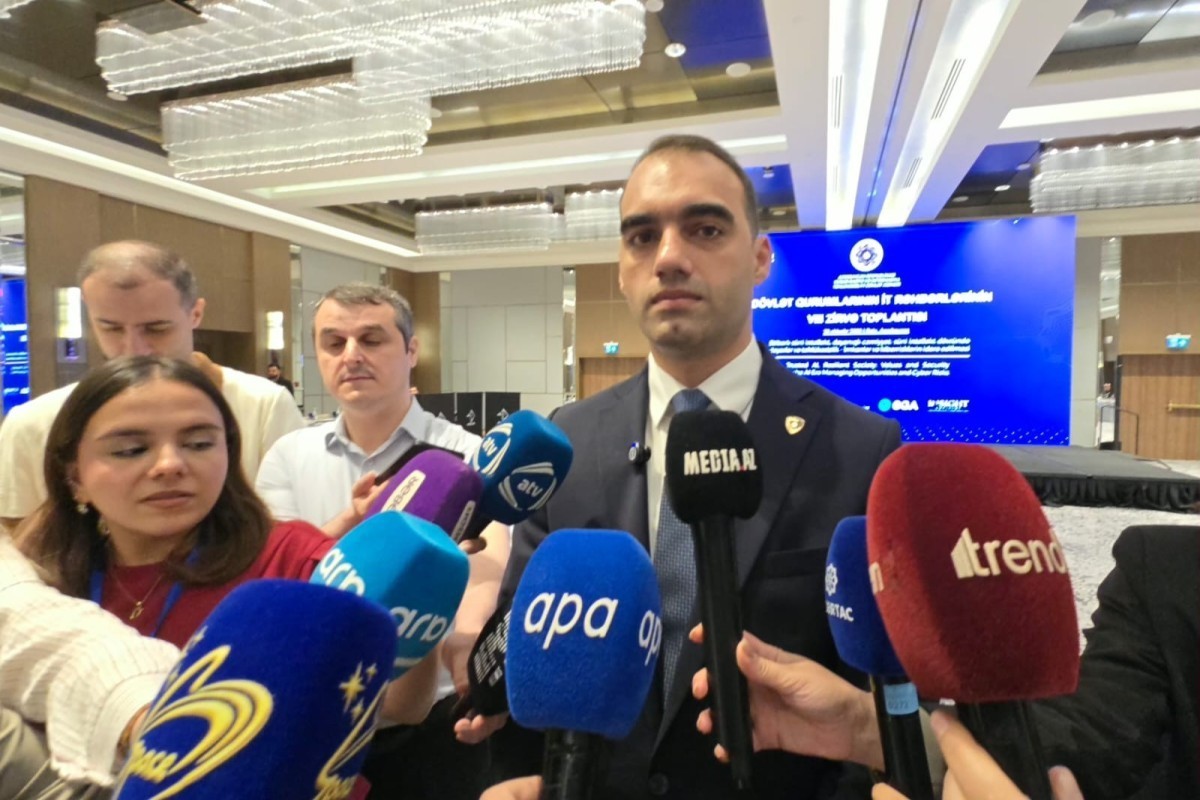
Nadir Novruzov: Information on cyber threats shared with banks through Central Bank
11:48
20 October 2026
Azerbaijan's State Oil Fund investment portfolio grows by over 5%
11:46
20 October 2026
Assets of Azerbaijan's State Oil Fund announced
11:13
20 October 2026

NEWS FEED
Karabakh National Park established - ORDER
15:53
20 October 2026
Swedish ambassador meets with Hikmat Hajiyev
15:38
20 October 2026
Russia to increase penalties for calls for mass riots
15:34
20 October 2026
“Falcons Meet – 2026” exercise holds Distinguished Visitors’ Day - VIDEO
15:32
20 October 2026
Armenia could lose more than half of remittances from Russia
15:22
20 October 2026
Armenia's trade turnover with EAEU countries could fall by 55.6% if membership is suspended
15:13
20 October 2026
Azerbaijan adopts new state standards for railway and road transport
15:03
20 October 2026
Armenia's gas import costs could rise by 69% if it leaves EAEU
14:55
20 October 2026
Türkiye appoints Sergen Yalcin as national football team coach
14:50
20 October 2026
Zangilan City Day marked with festive events - PHOTO
14:42
20 October 2026
Azerbaijan reveals total oil output from East Azeri platform
14:26
20 October 2026
Kyrgyz President receives Azerbaijani Parliament speaker
14:12
20 October 2026
Two tankers catch fire after hitting sea mines in Strait of Hormuz
14:00
20 October 2026
Moscow considers it necessary to resume strategic stability talks with US
13:55
20 October 2026
Moscow hopes meeting between Putin and Witkoff will be arranged soon
13:47
20 October 2026
Development of cooperation between ICDO and Azerbaijan discussed
13:38
20 October 2026
France's mounting debt crisis: How Macron's economic policies are putting financial stability at risk – ANALYSIS
13:35
20 October 2026
Turkish parliament to ratify "Mecca Agreement"
13:32
20 October 2026
Russian army claims capture of settlement in Ukraine's Zaporizhzhia region
13:31
20 October 2026
Ministry: Digitalization of processes along Middle Corridor will further increase efficiency
13:30
20 October 2026
Elkhan Sadigli: Government agencies should not grant AI direct access to systems
13:14
20 October 2026
Pakistani citizen detained while attempting to cross Azerbaijan-Russia border illegally - PHOTO
13:11
20 October 2026
Ministry: Development of Zangezur Corridor will strengthen regional transport links
13:11
20 October 2026
Leyla Aliyeva, Oguljahan Atabayeva and Saida Mirziyoyeva hold trilateral meeting in Ashgabat
13:03
20 October 2026
Transit cargo transportation through Azerbaijan reaches record high
13:02
20 October 2026
Kazakhstan deports Azerbaijani-origin Russian rapper Navai
12:48
20 October 2026
We will demonstrate unity of Turkic world to friends and foes - Chairman
12:42
20 October 2026
Georgia's revenue from visits from Azerbaijan increases by over 18%
12:30
20 October 2026
Zelenskyy: Safe conditions must be ensured for elections
12:28
20 October 2026
Iranian Foreign Ministry denies discussion of transferring nuclear material to Russia during Lavrov's visit
12:09
20 October 2026
Azerbaijan to introduce work permit exemptions for foreign agronomists and veterinarians
12:04
20 October 2026
Azerbaijan to increase liability for military personnel, introduce alternative penalties
12:01
20 October 2026
Conference on digital transformation of public finance to be held
11:49
20 October 2026
Nadir Novruzov: Information on cyber threats shared with banks through Central Bank
11:48
20 October 2026
Azerbaijan's State Oil Fund investment portfolio grows by over 5%
11:46
20 October 2026
US defense chief meets Netanyahu during surprise visit to Israeli airbase
11:45
20 October 2026
Speaker of Milli Majlis addresses TURKPA Council meeting in Bishkek
11:43
20 October 2026
Large-scale cyberattacks target Azerbaijan's government agencies over past week
11:40
20 October 2026
Azerbaijan's Oil Fund sees increase in revenues from ACG and Shah Deniz
11:31
20 October 2026
Drug smuggling from Iran into Azerbaijan prevented - PHOTO
11:23
20 October 2026
Azerbaijan prepares for first resettlement to two villages in Jabrayil and Zangilan, holds draw
11:20
20 October 2026
AI systems of government agencies in Azerbaijan to undergo security audits
11:16
20 October 2026
Zelenskyy held a "substantive" conversation with Rubio
11:14
20 October 2026
Azerbaijan to adopt new requirements for safe use of artificial intelligence
11:13
20 October 2026
Assets of Azerbaijan's State Oil Fund announced
11:13
20 October 2026
Drone attack causes fire at Druzhba oil pipeline facility in Tambov
11:11
20 October 2026
Azerbaijan to ratify partially revised Radio Regulations with declaration
11:09
20 October 2026
Department head: Dependence on foreign AI services may pose risks to government agencies
11:03
20 October 2026
Cyberattacks can reach critical stages in 22 seconds thanks to AI - Department Head
11:01
20 October 2026
Oversight of AI agents' activities must be strengthened - Executive Director
10:53
20 October 2026


