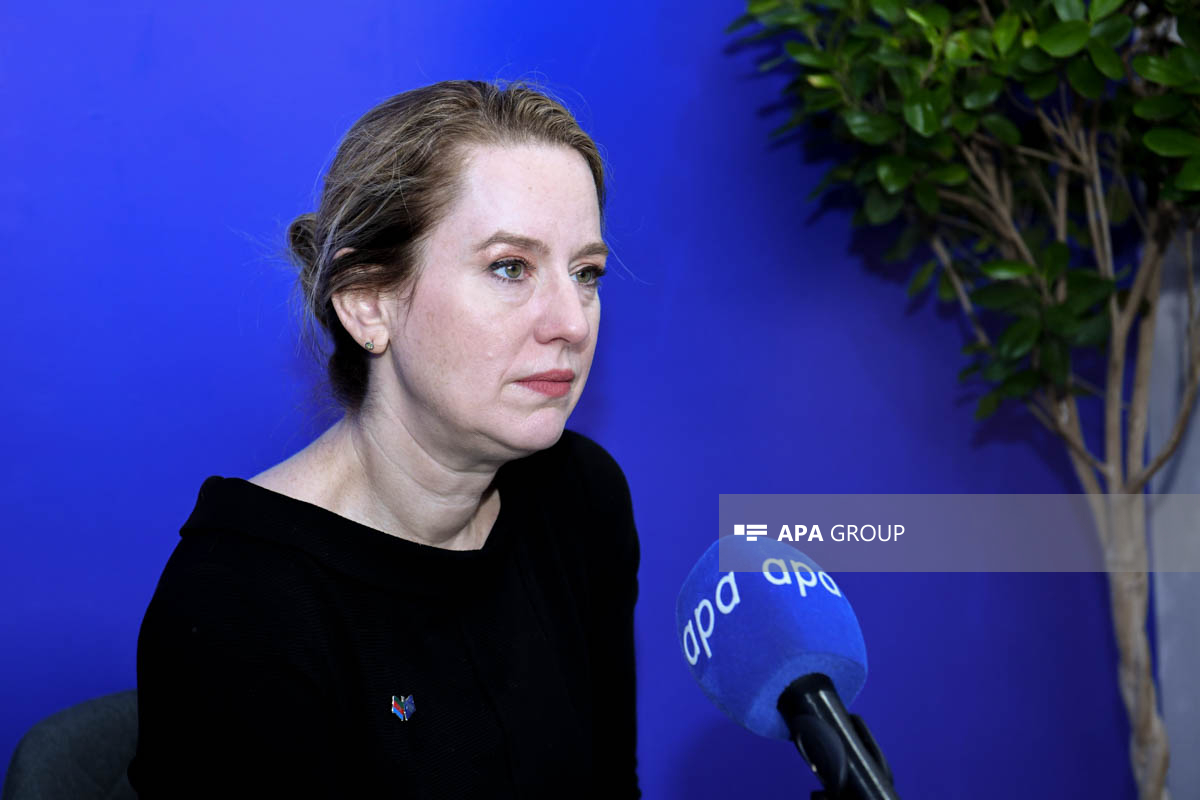
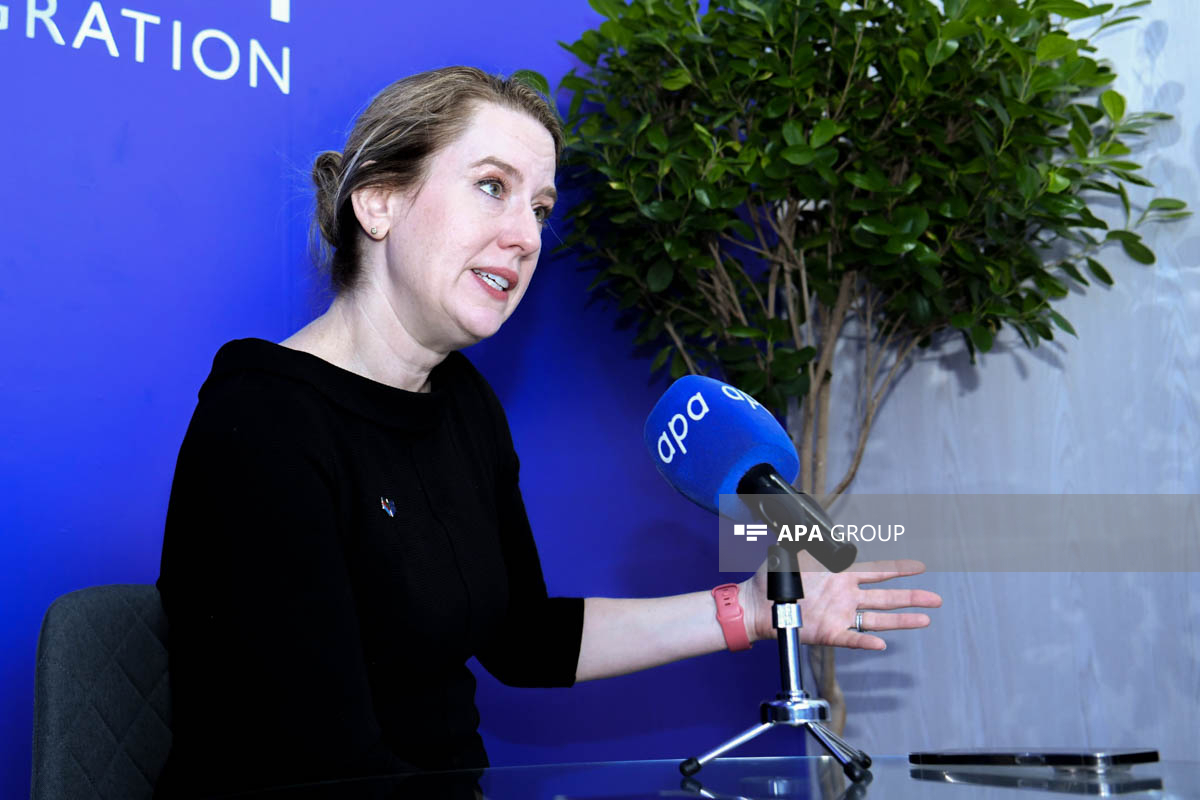
APA Information Agency interviewed Amy Pope, Director General of the International Organization for Migration

- How does the issue of climate change affect the migration problem?
We see people today who have lost their homes and jobs and are being displaced by climate change. So more people are being displaced by climate than by conflict. We know that this problem will continue to grow because so many people live in extremely vulnerable communities. Our goal here at COP29 is to make sure that governments are thinking ahead about how we can support communities.
- In the world, global warming is currently higher than normal. Natural disasters also create migration flows. What steps does your organization take to solve climate problems?
We start by working with communities. We are already working directly with communities that are already living in very fragile conditions. We are helping them adapt to the future. In some cases, that means building more resilient housing. In some cases, that means finding new ways to farm their land. In other cases, that means developing new skills because the skills they are using now will no longer be relevant.
- What is the extent of the impact of climate change among the causes of migration flows?
We are also responding to communities that are affected by climate change. When a natural disaster strikes, we are often there to provide life-saving support to help communities find shelter, hygiene kits, or other basic means of survival.
- The problem of developing small island states is raised within the framework of COP29. If there is a natural disaster, does the International Organization for Migration have a plan for those countries?
We work very closely with a lot of small island states. For example, in the Pacific Islands, we are in 10 countries. We also work in the Caribbean and the Indian Ocean. And there are a number of ways that we work with them. Number one is that if there is a natural disaster, we will provide life-saving support there.
Now the issue is that it depends on the resources to do that. So we have the capacity, but if something terrible happens - look at the landslides in Papua New Guinea - we rely on donors to support that work.
- Do you believe that the financial problem will be solved at COP29? In general, does the solution to the problem of climate change depend on finance alone?
A lot of the people that we support are extremely vulnerable. Many of them are living in very vulnerable contexts. Many of them have very few resources and very little resilience. So funding is very important. Because you know, it may not seem like a lot of money to some committees, but it is money that is essential for, for example, rebuilding shelters or improving infrastructure or creating other ways of adapting to climate change.
Without funding, without money, you can't really get results. As you know, the communities that are most affected are the ones that are least responsible for creating the problem. So it's absolutely essential to ensure that they have the means to respond to it. We hope to see that at COP29.
Firuza Vahid
Zulfiyya Orucaliyeva
Photo: Ilkin Nabiyev


 Follow us on Telegram
 t.me/apanewsaz
 Follow us on Instagram
 Follow us on TikTok
 Follow us on Facebook
 Follow us on X