Ruslan Edelgeriyev: “Climate change is increasingly being used as a political pressure tool”
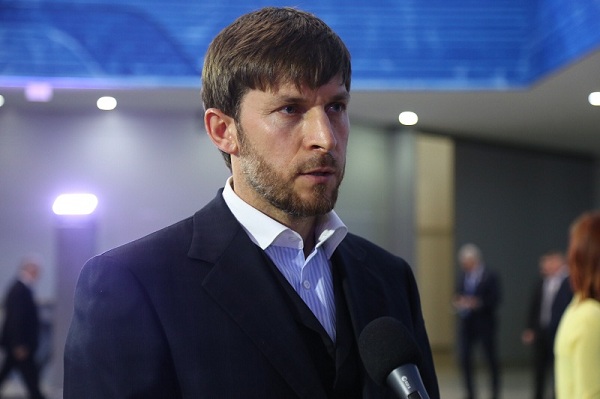
Interview with Ruslan Edelgeriyev, Head of the Russian Federation Delegation at COP29, Aide to the President of the Russian Federation, and Special Presidential Envoy for Climate Change, to APA’s Moscow correspondent Farid Akbarov.
- What are Russia's main expectations from COP29?
- For us, the central topic of negotiations at COP29 is the new quantitative goal related to financing. This goal must ensure a level of support that is adequate to the scale of the climate crisis, while staying within the mandates of the UN Framework Convention on Climate Change and the Paris Agreement. We are also eagerly awaiting the conclusion of the multi-year negotiation process on the methodological aspects of the market mechanism under Article 6.4 of the Paris Agreement, which could not be completed in Dubai.
Finally, as always, we will strive to ensure that the legal interests of countries whose economies are dependent on fossil fuels are taken into account. The recent past has shown what sudden and thoughtless steps in trying to accelerate the energy transition have led to. It is our duty not to allow this negative experience to be erased from the collective memory of the international community. Otherwise, we risk repeating the same mistake.
"I am sure that Mukhtar Babayev's team, whom I know personally, will cope with the responsibility assigned to him"
- What can you say about Azerbaijan’s efforts as the COP29 host?
- The selection of Baku to host COP29 of the UN Framework Convention on Climate Change (UNFCCC) is not only a reflection of Azerbaijan's serious commitment to environmental and climate issues at the national level but also demonstrates the country’s growing international influence as a country capable of becoming a platform for effective resolution of disagreements on the climate agenda at the international level. The success of multilateral conferences like the one in Baku depends very much on the chairperson - the experience of his leading negotiators, his image as an honest and impartial mediator who is ready to listen to all points of view, find a common denominator from them and, on this basis, offer a solution that satisfies as many parties as possible. I am confident that the team led by Mukhtar Babayev, whom I personally know, will successfully meet the responsibility entrusted to them.
"It is hard to believe that donor countries can significantly increase funding in a short period of time"
- Azerbaijan has also proposed the creation of a special fund to support developing countries in the fight against climate change and has called for increased financing for measures to reduce greenhouse gas emissions. There was a previous agreement to allocate $100 billion annually for this purpose, but it was acknowledged that this amount was insufficient. What do you think is the optimal annual funding amount for emission reduction measures?
- The question of the optimal annual funding amount for greenhouse gas emission reduction measures is complex and does not have a straightforward answer. The initial agreement of $100 billion in 2009 was not the result of scientifically calculated assessments of the climate needs of developing countries, but rather more of a political gesture.
The real volume of these needs, as it is now known, exceeds this amount at least several times. The real scale of these needs should form the basis of a new multilateral agreement on financing. At the same time, it is hard to believe that donor countries will be able to significantly increase funding in a short period of time, because we know that even the $100 billion target has remained out of reach for a long time. Therefore, when agreeing on new goals, there must be an element of realism. Otherwise, if we adopt a target that is bound to fail again, the trust in the multilateral process will be shaken even more than before.
In this context, it is also important to consider the recent U.S. presidential election, which was traditionally expected to make a significant contribution to international climate finance flows. I don't want to make predictions in advance, but under the leadership of Donald Trump, the level of participation of the future American administration is a major question that all participants in the negotiations must consider.
"The emergence of joint projects in the field of combating climate change with Azerbaijan is a matter of time"
- Climate change is not a future risk – it is a real and present danger affecting billions of people in the contemporary world. The increasing geopolitical tensions and the uncertainty observed on the international stage should push states to cooperate in the fight against climate change, the greatest transnational problem of the century. As a global power, what specific steps is Russia taking in this direction? Considering that Azerbaijan is a leader in the South Caucasus and one of the strong states in the CIS space, is there a prospect for joint projects between Moscow and Baku in this area?
- Despite geopolitical upheavals, Russia has always remained open to dialogue with all countries within the framework of the climate agenda. Yes, this position has not changed over the past few years, and yes, when the opportunity arises, we take concrete steps to demonstrate that we are ready for a mutually respectful and equal dialogue on this matter, even with countries that are not the friendliest to us. At the same time, it must be acknowledged that there is no point in endlessly knocking on closed doors – it is more productive to direct diplomatic efforts towards those who have not been invited to the negotiation table twice. In short, our doors are open, we are ready to engage with others, but if we are repeatedly ignored, we will simply find other partners. Fortunately, we do not lack such partners.
By the way, one of our strategic partners is Azerbaijan. In August of this year, a memorandum of cooperation was signed between our countries in the field of low-carbon development, which should serve as the basis for specific bilateral projects in this area. I believe that the emergence of such projects is just a matter of time.
"Congress members' appeal could be part of a broader pressure strategy against Azerbaijan"
- The American congressmen sent a letter to the US State Department and called to impose sanctions against Azerbaijan. One month before the start of COP29, it seems that the United States has increased its pressure on Azerbaijan. Don't you think the West is turning the climate issue into a powerful tool for political manipulation? What can you say about this topic?
- Yes, indeed, there is an increasing impression that climate change is being used more and more as a tool for political pressure. A clear example of this is the recent appeal by U.S. congressmen to the State Department to impose sanctions on Azerbaijan, just a month before COP29 begins in Baku.
Here, the geopolitical context must be taken into account. Azerbaijan occupies a strategically important position, and there are certain tensions in its relations with the West. Therefore, it cannot be excluded that the climate issue is used to achieve other political goals. The appeal by the congressmen could be part of a broader pressure strategy against Azerbaijan.
At the same time, there are grounds to believe that the new U.S. leadership may take a more measured approach to this issue compared to the current one. We will have to wait and see.


 Follow us on Telegram
 t.me/apanewsaz
 Follow us on Instagram
 Follow us on TikTok
 Follow us on Facebook
 Follow us on X