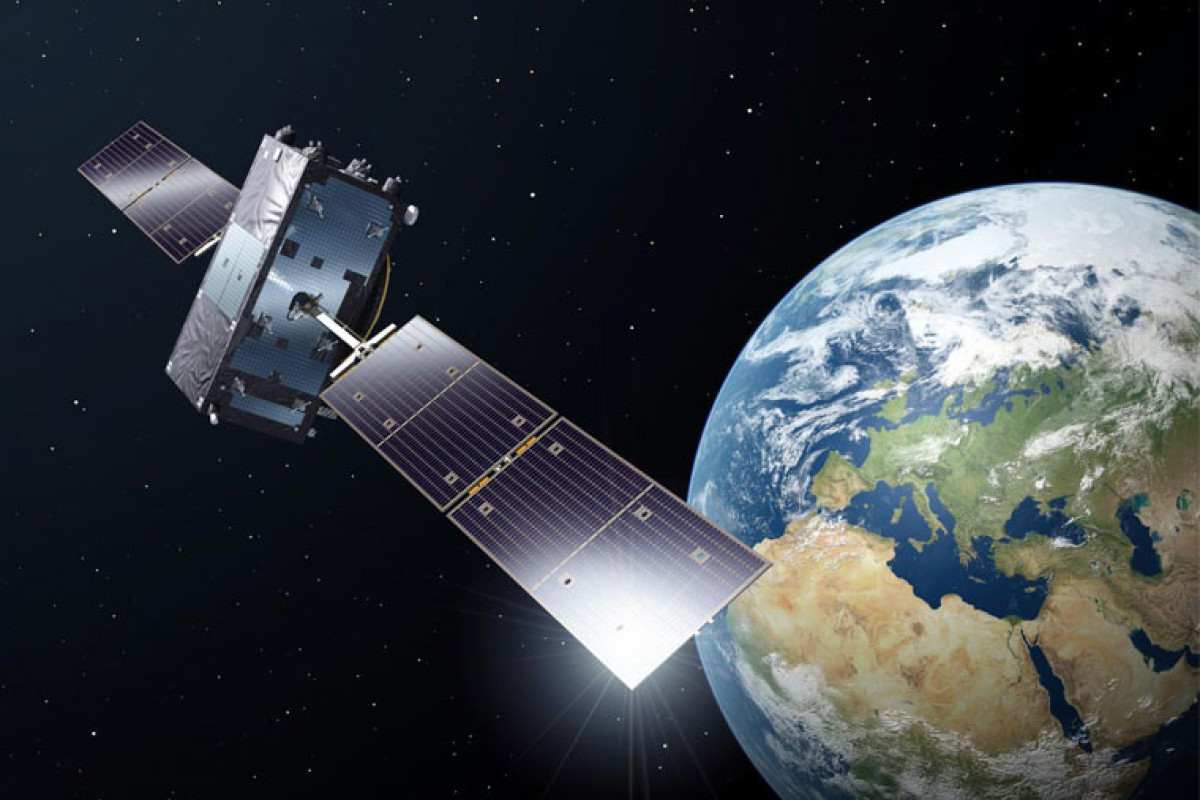

Iran's Minister of Communications and Information Technology Isa Zarepour has said that the domestically made Nahid-1 and Nahid-2 telecommunications satellites will be launched into orbit by March 2023, APA reports citing IRNA.
Zarepour added that "other satellites are also in line to be launched".
Iran's Islamic Revolution Guards Corps (IRGC) Aerospace Force Commander Amir Ali Hajizadeh said on November 20 that Iran would use its new Qaem-100 satellite launch vehicle (SLV) to put a satellite into orbit in the next few months.
In early November, the Aerospace Force of the IRGC announced the successful launch of the Qaem 100 three-stage solid fuel suborbital carrier. Qaem 100, the first of its kind manufactured by Iranian scientists, is capable of putting satellites weighing up to 80 kilograms into orbit 500 kilometers from the earth's surface. The vehicle’s solid-fueled first-stage engine, which had been subjected to ground tests earlier this year, completed its first suborbital spaceflight on November 5.
On December 14, the Iranian Space Agency (ISA) and its Russian counterpart, Roscosmos, signed a memorandum of understanding to cooperate in building satellites and related infrastructure. The agreement provides for cooperation in building remote sensing satellites and communications satellites as well as infrastructure for satellite assembly, launching, and testing.
The Director-General of Roscosmos, Yuri Borisov said during the ceremony that one of the joint goals was to send an astronaut to a "Russian Space Station" - presumably a new station to be constructed as a result of Russia's uncertain plans to withdraw from the International Space Station as early as 2025.
The Iranian Space Agency has announced that the satellite will be used for agriculture and water resources planning and the Russian embassy in Tehran said the spacecraft was devised for non-military purposes.


 Follow us on Telegram
 t.me/apanewsaz
 Follow us on Instagram
 Follow us on TikTok
 Follow us on Facebook
 Follow us on X