










Baku-APA. In a striking admission, President Bashar Assad said in an interview broadcast Wednesday that his armed forces will need time to defeat the rebels and addressed the string of defections from his authoritarian regime, APA reports quoting Associated Press.
The comments amounted to an acknowledgment that even though the opposition lacks the government’s tanks and airplanes, their tenacity and tactical creativity — combined with the military’s struggle to fight on multiple fronts — have yielded a stalemate that could prolong the civil war with many more dead.
Over the past few months, Syria’s military has increasingly been stretched thin fighting on multiple fronts against rebels seeking to oust Assad. His forces have been unable to quell the rebellion as it spread to the capital, Damascus, with significant clashes that began in July and to Syria’s largest city, Aleppo, a few weeks later. At the same time, the military is fighting smaller scale battles in a string of other cities and towns around the country.
With neither side making significant advances, the conflict is looking more like a war of attrition that could be very drawn out.
"We are fighting a regional and global war, so time is needed to win it," Assad said in an interview with the pro-regime private TV station Dunya. "We are moving forward. The situation is practically better but it has not been decided yet. That takes time," he told the station, which is majority owned by Rami Makhlouf, a cousin of Assad and one of Syria’s wealthiest men.
"If the armed forces wanted to use the entire range of its firepower, it can wipe out many areas. But this will be unacceptable," said Assad.
Assad also appeared to make light of the significant number of defections, some of them senior military and political officials, including the prime minister.
"Defections are a positive process. Generally, it is self-cleansing of the state and the nation," said Assad. "If there is a Syrian citizen who knows of someone who wishes to flee but is hesitant to do so he should encourage him," he said with a smile. "Whoever flees is either weak or bad. A patriotic or a good person does not flee."
Assad claimed there were cases when authorities knew in advance of officials who wanted to flee and allowed them to do so unhindered. But he did not provide any specifics to back up the claim.
Taken together with his comments to a visiting Iranian official over the weekend, Assad shows willingness for an even more prolonged conflict, even with more than 20,000 estimated dead in more than 17 months of fighting.
His regime, he told the senior Iranian official, would continue the fight against the rebels "whatever the price."
Some analysts saw the interview as a counter-attack by the regime to burnish its image in the face of recent military gains by the rebels.
Analysts and rights activists say the military has been unable to defeat the rebels in large part because of the tactics of its enemy — a rag-tag army of civilians-turned-fighters and defected soldiers without a clear chain of command.
"It is extremely difficult to stop an insurrection that has spread so widely, even with far superior firepower, as demonstrated by the U.S. experience in Iraq and Afghanistan," said Christopher Chivvis, a senior analyst with the Rand Corporation. "The task becomes even harder when there are neighboring countries that support the insurrection"
The insurgents do not have to hold territory and can take advantage of the fact that the military cannot fight as easily on multiple fronts, said Michael W. Hanna, a Middle East expert who monitors the Syrian conflict for the Century foundation in New York.
Hanna also picked up on Assad’s claim that the military is holding back on using its full power.
"If the Syrian military wants to retake territory it can do so but will be forced to use disproportionate force," he said. "Such actions run the perennial risk of alienating civilians and creating new motivations for anti-government actions."
Hisham Jaber, a retired Lebanese army general who heads a Beirut-based think tank, argues that Assad’s military cannot employ overwhelming force to put down the fighting in Damascus and Aleppo, the country’s two largest cities with major political and economic importance.
"Assad may be ready to destroy Homs and Hama (cities in central Syria) but he cannot do that in Aleppo, for example, and does want heavy casualties among civilians," he said. "At the end, a regular army is not suited for guerrilla warfare."
Syrian activists speak of the limitations faced by the regime in using everyone in uniform. Assad’s Alawite-led regime, they explain, is unable to trust military personnel from the majority Sunni Muslim sect to fight mostly Sunni rebels.
Assad is a follower of the Alawite sect, an offshoot of Shiite Islam.
Other activists speculate that Sunni pilots have been grounded out of fear they would defect with their warplanes.
On the other hand, they say the rebels are taking advantage of growing logistical and moral support from the civilian population in many areas, while the military was being increasingly seen as an oppressive force that kills with impunity.
Rights groups monitoring the violence now report the deaths of up to 250 or more Syrians on daily basis, though the figures are impossible to independently verify. The fighting has been intense enough to force hundreds of thousands to flee their homes, seeking refuge elsewhere in the country or in neighboring nations.
Assad appeared confident and relaxed in the interview and at times tried to laugh off or make light of serious issues in the conflict.
He responded with a hearty laugh when told by the interviewer about speculations and rumors about his whereabouts.
"I am here with you in Damascus in the presidential palace," he said. "They have not been able until now to instill fear in my heart or the heart of Syrians. Everyone (in Syria) is worried about the country and that’s natural. "
Assad has rarely appeared in public since four of his top security officials were assassinated in a July 18 rebel bombing in Damascus.
He sought to deflect any charges of military failure, reverting to his favored rhetoric that the uprising is a conspiracy by foreign powers to weaken Syria.
"What is taking place (in Syria) is neither a revolution, nor a spring. It is a conspiracy," he said, alluding to the Arab Spring revolutions that have topped authoritarian regimes in Tunisia, Egypt, Libya and Yemen.
Assad paid tribute to his supporters at home, saying they stood steadfastly behind him, and also praised the armed forces.
But he criticized the leaders of onetime ally Turkey.
"The state of Turkey bears direct responsibility for the blood being shed in Syria."
Syrian officials routinely cite neighboring Turkey, along with Saudi Arabia and Qatar, as among the rebels’ main supporters, providing them with money and weapons.
Turkish Foreign Minister Ahmet Davutoglu said on Wednesday he would press the U.N. Security Council to set up a safe haven inside Syria to protect thousands of people fleeing the violence. Turkey has long been floating the idea of a no-fly zone, or buffer zone, to protect displaced Syrians from attacks by Assad’s forces, but the issue has become more pressing now the number of refugees in Turkey has exceeded 80,000 — a number it says approaches its limits.
"We expect the U.N. to step in and protect the refugees inside Syria, and if possible, to shelter them in camps there," Davutoglu told reporters before leaving for New York to attend Thursday’s high-level U.N. Security Council meeting on Syria.
On that prospect, Assad said: "Talk about safe havens does not exist and is unrealistic, even for countries that have assumed the role of a foe."


 Follow us on Telegram
 t.me/apanewsaz
 Follow us on Instagram
 Follow us on TikTok
 Follow us on Facebook
 Follow us on X
Asia
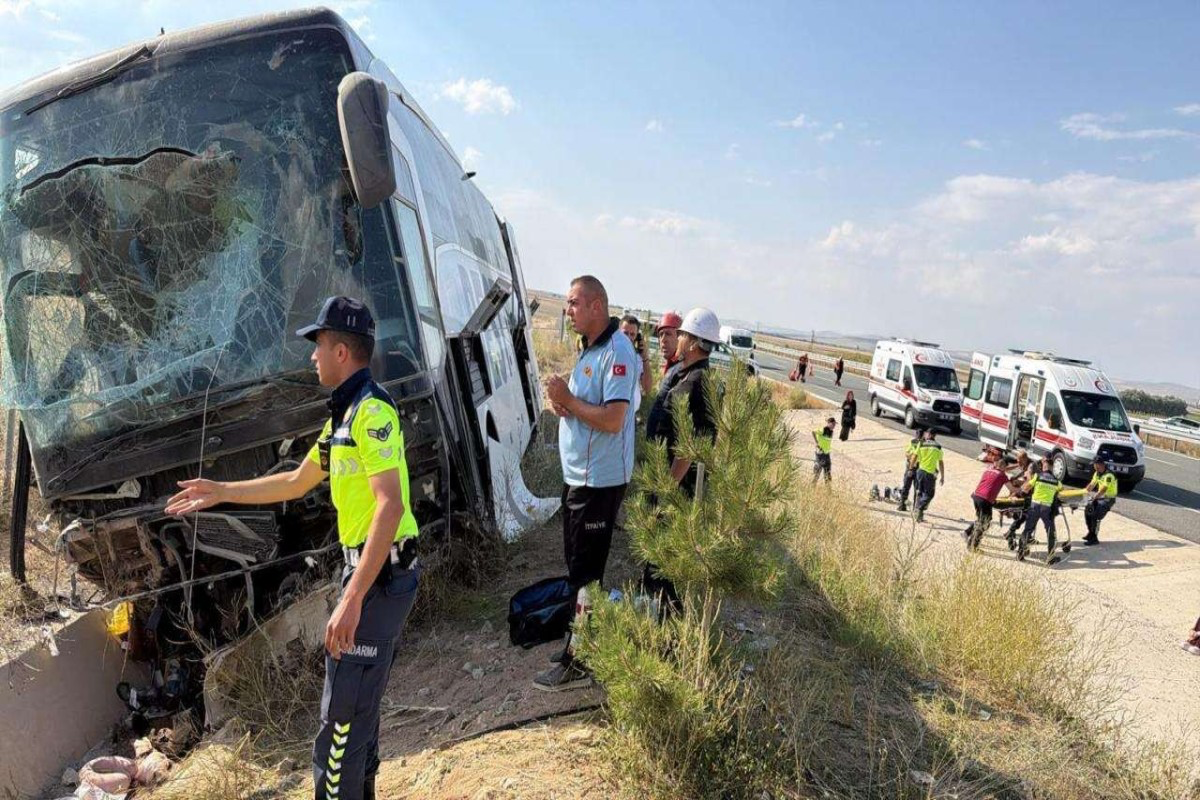
40 people injured in bus accident in Türkiye
 22:51
22:51
 3 July 2026

Netanyahu and Trump speak, agree to meet "soon" in the US, Israel says
22:04
3 July 2026
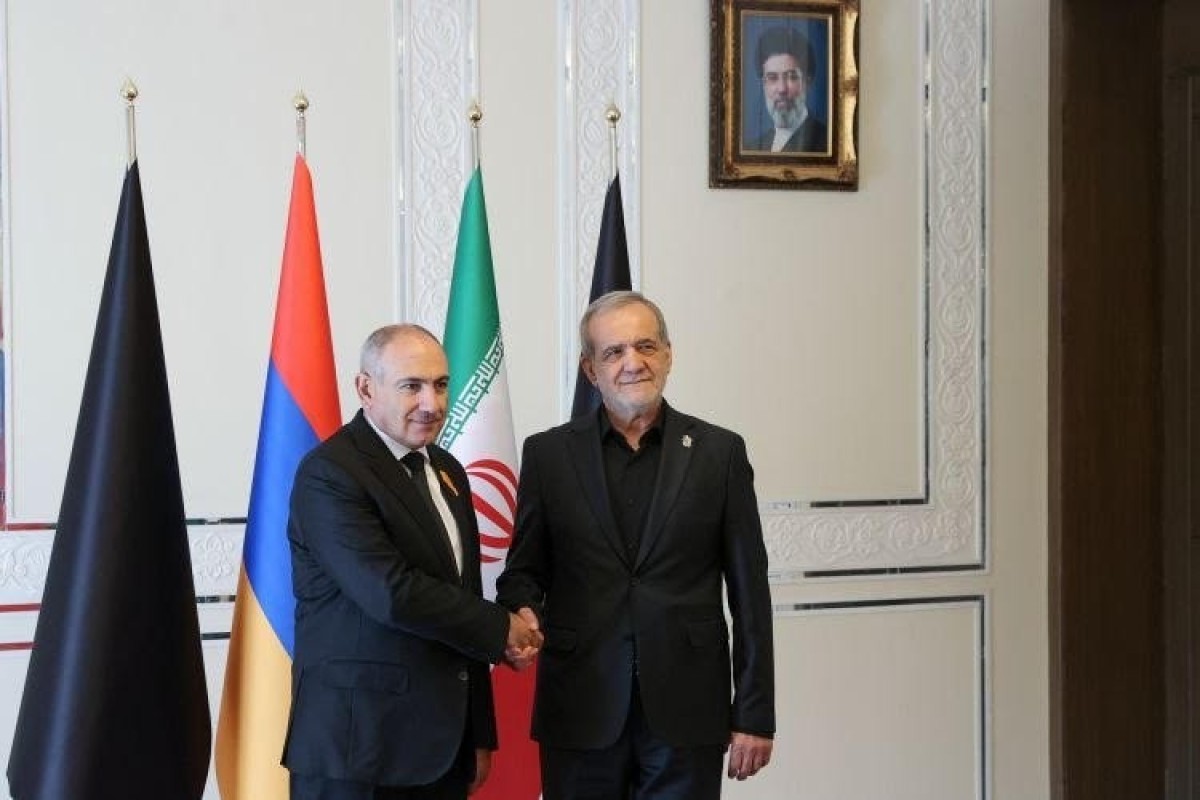
Iranian President Masoud Pezeshkian meets Armenian PM Nikol Pashinyan in Tehran
12:08
3 July 2026
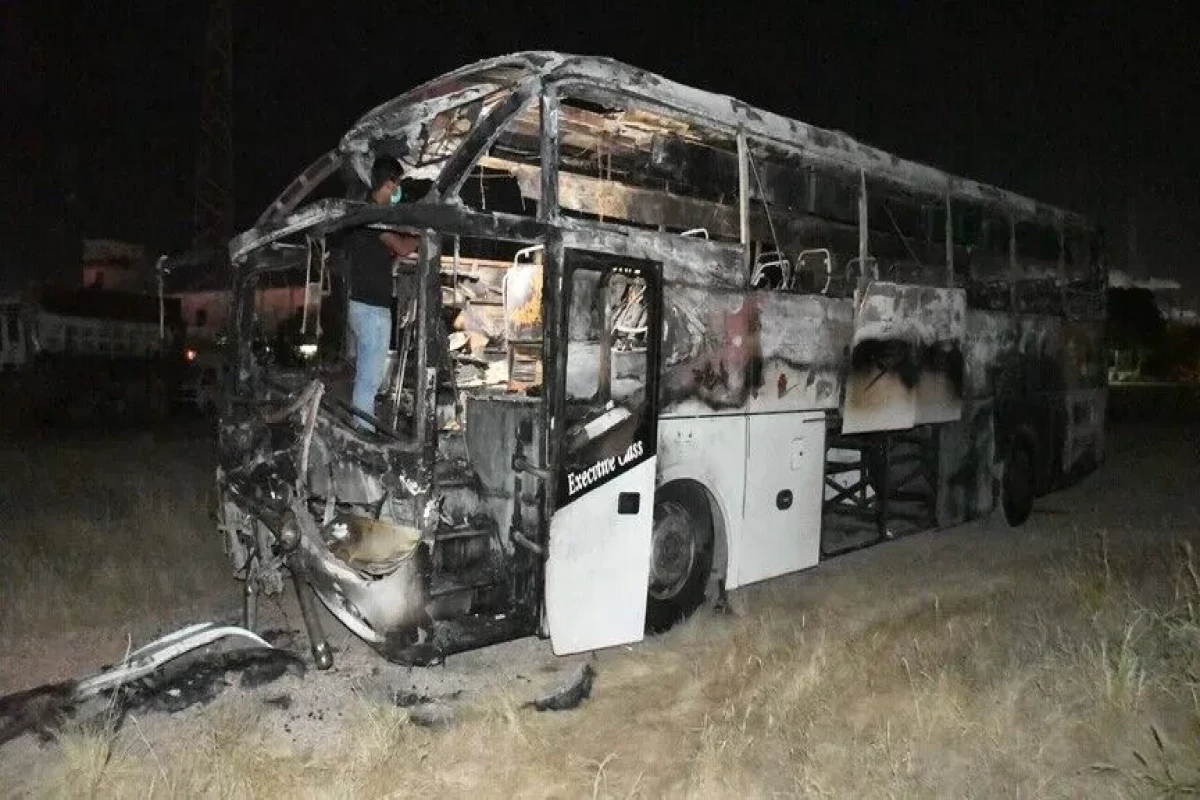
At least 40 killed after bus falls into ravine in Pakistan
11:37
3 July 2026

NEWS FEED
ADB: Expanding Baku Metro passenger capacity could cut carbon emissions by 70,000 tons annually
11:32
4 July 2026
Trump says US gave Iran 'a week off' for funeral of Iran' late supreme leader amid stalled talks
11:10
4 July 2026
Explosion in residential house in Baku leaves one dead, three injured
11:03
4 July 2026
President Ilham Aliyev: It is gratifying that Azerbaijan–United States relations have been developing successfully and along an upward trajectory
10:58
4 July 2026
Azerbaijan MFA congratulates US on Independnece Day
10:55
4 July 2026
President Ilham Aliyev: Today, Azerbaijan and Armenia live in peace and are building trade relations
10:52
4 July 2026
CMO Chairman to visit Uzbekistan
10:47
4 July 2026
President Ilham Aliyev congratulates Donald Trump on 250th anniversary of U.S. independence
10:30
4 July 2026
Combined Arms Army holds the next training session with reservists - VIDEO
10:10
4 July 2026
Russian bomb attack kills at least four in Ukraine's Sumy
10:02
4 July 2026
St. Petersburg oil terminal reportedly struck by Ukrainian drones
09:37
4 July 2026
Russia says it destroyed 389 Ukrainian drones overnight
09:32
4 July 2026
Azerbaijan's Azeri Light crude rises by more than $1 on global market
09:04
4 July 2026
Oil prices rise in global markets
09:02
4 July 2026
French mine-clearing assets remain deployed in Persian Gulf, Macron says
08:57
4 July 2026
Zelensky urges G7 and US to stop Russian strikes on Ukraine
07:32
4 July 2026
Brazil's Bolsonaro to remain under house arrest
02:13
4 July 2026
France and UK ready to deploy militaries to support transit in Strait of Hormuz
01:45
4 July 2026
Police investigate a shopping mall shooting that left 2 dead in suburban Detroit
01:33
4 July 2026
Death toll of Venezuela earthquakes rises to 2,645
01:17
4 July 2026
Egyptian national team has reached the 1/8 finals of the World Cup
00:57
4 July 2026
Trump pardoned six US citizens convicted under Biden administration
00:45
4 July 2026
Lewis Hamilton eyes British Grand Prix Sprint victory
00:12
4 July 2026
Workers protest Mercedes-Benz cost-cutting
23:45
3 July 2026
Merz: Germany will take on more responsibility in security matters
23:28
3 July 2026
Hungary greenlights another cluster in Ukraine's EU accession talks
23:12
3 July 2026
40 people injured in bus accident in Türkiye
22:51
3 July 2026
Assistant to Azerbaijani President congratulates US on occasion of Independence Day
22:36
Audio
3 July 2026
Remains of Bahadur Kamalov, a martyr of the First Karabakh War, were buried in Kalbajar
22:12
3 July 2026
Netanyahu and Trump speak, agree to meet "soon" in the US, Israel says
22:04
Audio
3 July 2026
Azerbaijan’s Speaker attends farewell ceremony for Ayatollah Seyyed Ali Khamenei in Tehran-PHOTO
19:30
Audio
3 July 2026
Court considers defendants' motions during appeal hearing of Armenian nationals
19:06
Audio
3 July 2026
Missing First Karabakh War martyr Madina Babayeva laid to rest in Kalbajar 33 years later - PHOTO
18:56
3 July 2026
Media: NATO summit to approve €140 billion military aid package for Ukraine
18:45
3 July 2026
ADY discusses expansion of Railway Cooperation with Russia and Iran
18:21
3 July 2026
ICDO Secretary General meets Sudan's foreign minister to discuss humanitarian cooperation
18:18
3 July 2026
In riposte to Trump, Merz says Germany can defend its military spending push
17:48
3 July 2026
Nakhchivan's electricity demand fully met by renewable energy for over two months
17:28
3 July 2026
Armenian parliament approves new voter eligibility requirements
17:25
3 July 2026
Mass graves acknowledgment: ICMP Director-General confirms what Azerbaijan has asserted for years - ANALYSIS
17:25
3 July 2026
European Parliament staff were staying at the hotel in Kyiv that was attacked by Russia
17:20
3 July 2026
Poland's Tusk says Ukraine wants to lower tension, should confront history
17:04
3 July 2026
EU issues sanctions against six people involved in death of Navalny
16:41
3 July 2026
Turkish National Defense University delegation continues its visit to Azerbaijan
16:31
3 July 2026
New York Times: US dissuaded Israel from plot to assassinate Iranian negotiating delegation
16:24
3 July 2026
WSJ: Rubio blocked Hegseth's plan to cut US troop presence in Europe
16:01
3 July 2026
Death toll linked to extreme heat in France rises to 2,025
15:46
3 July 2026
Magnitude 6.2 earthquake strikes off eastern Indonesia: USGS
15:04
3 July 2026
Five killed, 18 injured in reported Ukrainian drone strike on Tokmak market
14:37
3 July 2026
Remains of First Karabakh War missing martyr Moysum Aliyev laid to rest in Fuzuli
14:29
3 July 2026


