










Baku – APA. Prisoners held for months without charge in a secret jail in Baghdad were subjected to horrific torture over a period of months - including electric shocks and rape, claims suggest, APA reports quoting BBC.
A British citizen, who is still in detention, is among the men making the allegations.
The BBC has spoken to former prisoners who back up the picture of systematic abuse at the detention centre detailed in a new report by the US-based pressure group, Human Rights Watch.
The secret detention facility at Muthana airbase is now closed.
The corridors and cells in the converted military barracks stand empty.
But it is believed that, until earlier this month, more than 400 prisoners - including a man with dual British-Iraqi citizenship - suffered months of the most excruciating torture.
"It started when they put plastic bags over our heads to suffocate us," one man told the BBC.
"Then they tortured us with electric shocks after pouring water over our bodies."
He had been held at Muthana since September last year, but was released after existence of the detention centre came to light last month.
British detainee
The man does not want to reveal his identity for fear of retribution, but he is one of a number of people spoken to by the BBC whose stories of terrifying abuse are almost identical to accounts given to Human Rights Watch by former inmates of Muthana now in detention elsewhere.
"Some of us were sodomised, with sticks or sometimes steel pipes and they applied electric shocks to our genitals. They told us if we did not confess they would bring our mothers and sisters and rape them in front of us."
More than 300 of these detainees have now been moved to a different prison in Baghdad, where they say the torture has stopped and their treatment is relatively benign.
Among those is a 68-year-old British-Iraqi national who says he travelled to Iraq late last year in search of his son.
He told Human Rights Watch he was arrested in December 2009, and held at Muthana, where he claims to have suffered torture.
He is in a wheelchair and told the human rights group he was diabetic and in need of medical attention.
Endemic abuse?
The British embassy in Baghdad said it was aware of a British-Iraqi national being held in Baghdad, and that he had received visits from embassy staff who were providing him with consular assistance.
The Iraqi government has strongly denied any suggestion that it operates secret detention facilities, or that abuse in the country’s prisons is endemic.
"I can assure you that this is not institutionalised," says Saad Yousif al-Mouttalebi, a prospective member of parliament for the Prime Minister Nouri al-Maliki’s State of Law coalition.
"There are individual acts of cruelty to inmates. Some have been reported. This is a matter that we do not tolerate at any level whatsoever."
But Human Rights Watch says the abuse suffered at Muthana was "routine and systematic".
"It seems that this was a standard practice that was used by the interrogators to get information," says Samer Muscati, a researcher for Human Rights Watch.
’Same stories’
Earlier this week he spoke to more than 40 former inmates of the Muthana detention centre.
"We have interviewed other prisoners in different facilities, people who were held by the British and by the Americans. Although treatment of people in detention facilities in Iraq isn’t great, this really did stand out for us.
"The fact that everyone we looked at had these marks in the same places, and had the same stories - it seems to be part of a pattern."
Mr Muscati says that the prisoners were effectively dealt with outside the law.
"It was a secret prison because people in the government didn’t know it existed, family members had no idea where their loved ones were, and these detainees didn’t have access to any legal recourse, and judicial process."
Nearly all the prisoners were arrested late last year in and around the city of Mosul in northern Iraq, a predominantly Sunni Muslim region where al-Qaeda and other insurgent activity has been strong.
Human Rights Watch says that during their interrogations, the detainees were accused of aiding and abetting terrorism, and forced to sign confessions - but none was officially charged.
Under Saddam Hussein, Iraq’s prisons were notorious for their brutal torture chambers.
Today, it seems, the abuse may be continuing, seven years after his fall from power.


 Follow us on Telegram
 t.me/apanewsaz
 Follow us on Instagram
 Follow us on TikTok
 Follow us on Facebook
 Follow us on X
Asia
Iran, Oman stress need for coordination on Strait of Hormuz traffic in foreign minister call
 16:44
16:44
 25 June 2026
Ghalibaf criticizes US over claims regarding Iran's unfrozen assets
16:43
25 June 2026
Iraqi Oil Ministry denies reports of potential OPEC exit, urges output quota reassessment-UPDATED
16:39
25 June 2026
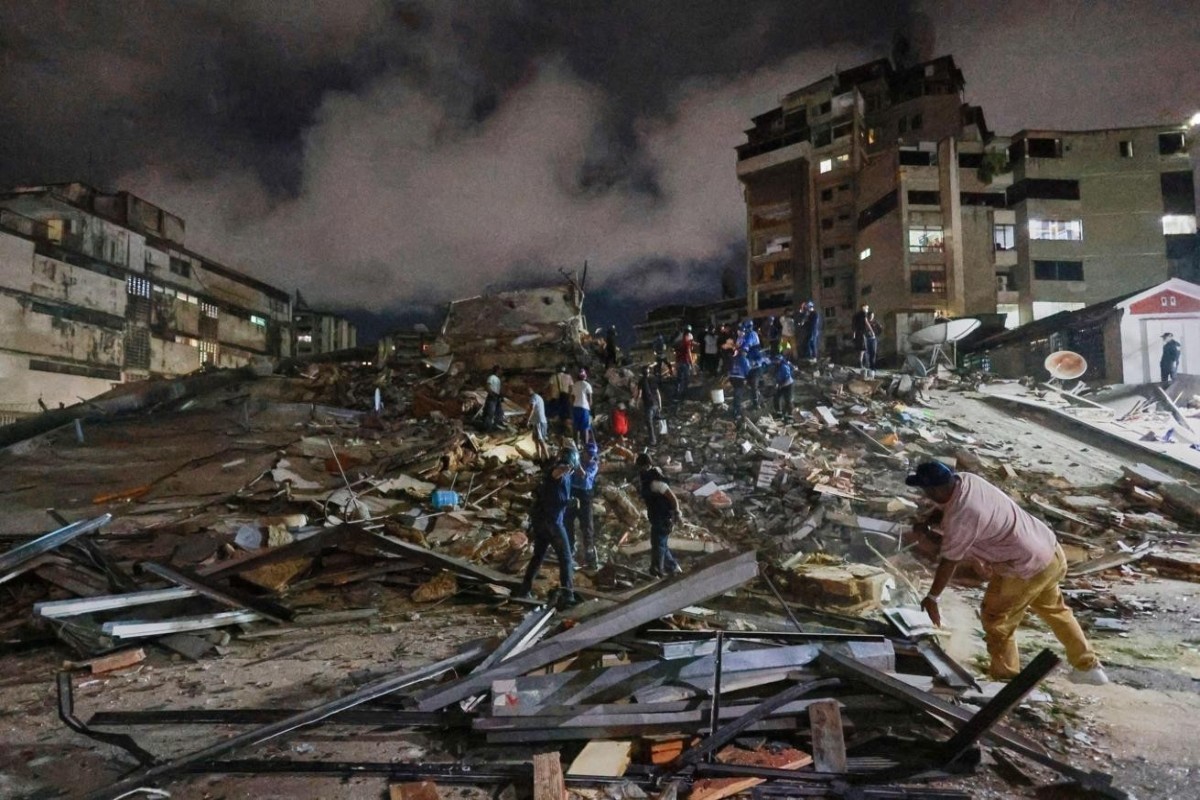
Death toll from Venezuela earthquake rises to 164 - UPDATED - 1 - VIDEO
14:52
25 June 2026

NEWS FEED
Telephone conversation held between Azerbaijani, Turkmen Presidents
20:37
25 June 2026
Vice-President of the Heydar Aliyev Foundation Leyla Aliyeva meets with Head of the Vatican Apostolic Library and Apostolic Archive
20:14
25 June 2026
Ziya Öztürkler praises Azerbaijan's continued support for the TRNC
19:50
25 June 2026
Apple says removal of VK apps from App Store is due to sanctions compliance
19:34
25 June 2026
Ruben Rubinyan elected as candidate for Speaker of the National Assembly of Armenia
19:26
25 June 2026
Missile alert declared in Moscow region-UPDATED
19:16
25 June 2026
Hikmat Hajiyev discusses Azerbaijan–NATO partnership with Secretary General's Special Representative
18:59
25 June 2026
Armenian Prosecutor General's Office petitions CEC to authorize criminal prosecution of Gagik Tsarukyan
18:55
25 June 2026
Venezuela's foreign minister thanks Azerbaijan for solidarity following earthquake
18:16
25 June 2026
Azerbaijan and Kazakhstan agree on full transition to electronic permit system
18:10
25 June 2026
Rubio believes no final agreements reached in Anchorage
18:10
25 June 2026
US, Iran agree in principle to establish direct military communication channel, Vance says
18:09
25 June 2026
Rubio believes no final agreements reached in Anchorage
18:03
25 June 2026
Azerbaijan Army servicemen participate in Anatolian Eagle-2026 International Exercise-VIDEO
18:01
25 June 2026
Leadership of the Ministry of Defense visits Central Clinical Hospital - PHOTO
17:52
25 June 2026
Eight Azerbaijani cities to host military marches marking Armed Forces Day
17:45
25 June 2026
Azerbaijan MFA: Existing opportunities should be used to finalize peace process with Armenia
17:30
25 June 2026
Rubio says Israel, Lebanon close to commitment of intent
17:18
25 June 2026
Lukashenko: Peoples of Belarus, Russia, and Ukraine will be together sooner or later
17:09
25 June 2026
Romanian ambassador leaves Russian Foreign Ministry without comment
17:08
25 June 2026
Rubio: Iran's support for regional proxies should be addressed in memorandum talks
17:07
25 June 2026
Azerbaijan and Ukraine discuss current cooperation agenda
17:06
25 June 2026
Azerbaijan-Israel innovation dialogue held at Shimon Peres Center - PHOTO
17:02
25 June 2026
Iran, Oman stress need for coordination on Strait of Hormuz traffic in foreign minister call
16:44
25 June 2026
Ghalibaf criticizes US over claims regarding Iran's unfrozen assets
16:43
25 June 2026
Iraqi Oil Ministry denies reports of potential OPEC exit, urges output quota reassessment-UPDATED
16:39
25 June 2026
President Ilham Aliyev signs order awarding Defense Ministry servicemen
16:31
25 June 2026
Azerbaijan's President awards fallen servicemen posthumously
16:31
25 June 2026
Military Institute named after Heydar Aliyev holds another graduation ceremony - PHOTO - VIDEO
16:26
25 June 2026
Azerbaijan establishes "Intellectual Customs" information system
16:24
25 June 2026
President Ilham Aliyev awards major general rank to five Defense Ministry servicemen
16:23
25 June 2026
Ashura blood donation campaign concludes in Azerbaijan, 1,269.45 liters of blood collected -PHOTO-UPDATED-1
16:21
25 June 2026
Rubio: No Gulf country supports charging fees for passage through the Strait of Hormuz
16:14
25 June 2026
Hikmat Hajiyev, Macron's adviser review state of Azerbaijan-France relations
16:10
25 June 2026
Azerbaijani cadet awarded Italy's "Sword of Honor"
16:00
25 June 2026
Azerbaijan establishes budget-funded organizations based on several public legal entities - DECREE
16:00
25 June 2026
Defense minister: Azerbaijani Armed Forces are among the strongest militaries in the region
15:56
25 June 2026
US sends search and rescue teams to Venezuela after deadly earthquake
15:55
25 June 2026
Citizens of Kyrgyzstan and Tajikistan graduate with honors from Heydar Aliyev Military Institute
15:53
25 June 2026
More than 90 kg of marijuana found in truck carrying cauliflower from Iran to Russia - PHOTO
15:47
25 June 2026
Azerbaijan's Foreign Minister attends Ukraine Recovery Conference in Poland
15:38
25 June 2026
Azerbaijan joins International Convention on the Control of Harmful Anti-Fouling Systems on Ships
15:25
25 June 2026
Charter of the State Medical Insurance and Expertise Agency approved-DECREE
15:24
25 June 2026
Azercell launches “Əsgərcell” offer on the occasion of 26 June – Armed Forces Day
15:23
25 June 2026
Azerbaijan recalls ambassador to Uzbekistan
15:14
25 June 2026
Financial results of "AzerGold" CJSC and its subsidiaries for year-end 2025 announced
15:14
25 June 2026
Azerbaijani delegation explores advanced pediatric rehabilitation practices in Israel
15:08
25 June 2026
Kremlin urges Russians to switch to Android and "national systems" after VK app removed from App Store
15:06
25 June 2026
Russia says nearly 170,000 Ukrainian drones shot down since war began
14:57
25 June 2026
Kremlin comments on Zelenskyy's statement about Belarusian retransmitters
14:54
25 June 2026


