










Baku-APA. There is renewed hope in Washington that Palestinian-Israeli peace talks will resume as early as next week after a hiatus of some 18 months, APA reports quoting news.xinhuanet.com website.
In an interview with Israel’s Channel 2 TV that was broadcast Monday night, Palestinian President Mahmoud Abbas said he is optimistic the Arab League will approve indirect talks when it meets on May 1.
A Syrian newspaper, however, suggested on Tuesday that support from the league was not guaranteed. Syria objects to the pan-Arab governing body making decisions on behalf of the Palestinians.
Yet the mood in Israel and the Palestinian territories remains relatively buoyant after months of pessimism.
Should the talks commence next month though, the leaders will have to agree on their nature.
ROAD TO PROXIMITY TALKS
"Let (Israel) come and try us. In the name of the Palestine Liberation Organization, we are prepared to make an agreement," Abbas said in his opening statement in the interview. He then said he hopes the Arab League will okay the commencement of the talks.
This is something of a turn around on Abbas’ part.
Until now, the Palestinian leader has insisted there would be no talks unless Israel agrees to a full cessation of building work both in the West Bank and East Jerusalem.
A week ago, sources told Xinhua Israeli Prime Minister Benjamin Netanyahu rejected U.S. demand that Israel halt construction in any part of Jerusalem, which he sees as Israel’s "united, indivisible capital."
That leaves Israeli political science professor Galia Golan thinking the change in Abbas’ stance must be the result of the Americans exerting intense pressure on him.
"I have a feeling that Abbas has had really no choice; Obama has made it very clear that while he’s bringing his pressure on Israel, the relations with Netanyahu are so strained that the Palestinians must come back to negotiations," said Golan, who is a leader of Israel’s Peace Now movement.
Golan believed there are positive signals all around when U.S. envoy George Mitchell was in the Middle East this weekend.
"The trouble is you don’t know how much of that is propaganda and how much is real," she said.
INTENTIONS OF BOTH SIDES DOUBTFUL
Even if talks do begin early next month, there is considerable cynicism on both sides of the fence regarding the seriousness, with which the prospective interlocutors will take that process.
"Let’s see if (the Palestinians) stop talking and begin doing," said Jonathan Fighel, a senior researcher at the International Institute for Counter-Terrorism, which is located just to the north of Tel Aviv.
"Are the Palestinians going to carry on talking, messing about and confusing everyone or are they ready to enter a serious framework? Right now the ball is mainly in their court," he added.
Likewise, Golan wondered just how well-intentioned the Netanyahu team will be. She believed they are likely to drag out the initial phase of talks for as long as possible. She compared Netanyahu’s likely tactics to those of Yitzhak Shamir, who was Israel’s premier in the 1980s. Shamir was known for his diplomatic procrastination.
Even if Israel was led by someone other than the hawkish Netanyahu, the Palestinians would be sceptical regarding the negotiations because of their disillusionment with past parleys " that never went anywhere. They were a sham," she said.
Israel is ready to enter the proximity talks during which it is prepared to make some "cosmetic concessions," suggested Fighel.
In his opinion, moving quickly from proximity or indirect talks to real negotiations is in Israel’s best interest.
Until Israel moves towards final-status talks, the Israeli- Palestinian conflict will remain center stage. With the advancement of the peace process will come a strategic benefit to Israel, he argued.
"If it doesn’t, there are sufficient negative forces prepared to take advantage of the conflict to advance enmity in the region - - not just among the Palestinian people, also the Iranians, the Syrians and Hezbollah," warned Fighel.
DOMESTIC POPULARITY OF THE TWO LEADERS
However, in both camps there are likely stumbling blocks, which Abbas and Netanyahu may find tough to shift.
Golan feared Abbas will not gain much support at home for joining any talks with Israel right now. A poll published earlier this month and one to be issued later this week both indicate that Abbas’ popularity is on the up on the Palestinian street.
"The reason is that he has been holding firm in not agreeing to just go back to talks, so there’s going to have to be something said about these talks that will strengthen Abbas," said Golan.
The discussions may well produce nothing, particularly because they are likely to be indirect. If that is the case then his popularity could well freefall once again, she said.
Domestic support for Abbas was in decline until recently, because he was seen to be weak in the face of the U.S. pressure last year regarding the Goldstone inquiry into the Gaza war, which took place some 16 months ago.
Similarly, Fighel was not convinced that Netanyahu can create the necessary environment for concessions because of the political make up of his own coalition back home.
His government is mainly composed of hawks, with just one party, Labor, offering a dovish shoulder for Netanyahu. Indeed, Labor’s leader, Ehud Barak, is in Washington this week attempting to set the stage for Mitchell’s scheduled return to the Middle East next week.
The U.S. envoy hopes Barak’s visit, coupled with that to the Middle East of U.S. Deputy Assistant Secretary of State for Near Eastern Affairs David Hale, will pave the way to the early resumption of peace talks.
There is also talk in Israel right now of a possible formalization of the peace process when Abbas is slated to meet Obama at the White House next month.
Yet despite the guarded optimism all parties involved realize that even if talks do begin in the next couple of weeks, the substantial gaps between the Israelis and Palestinians mean the odds of their success are still extremely long.


 Follow us on Telegram
 t.me/apanewsaz
 Follow us on Instagram
 Follow us on TikTok
 Follow us on Facebook
 Follow us on X
Asia
Iran, Oman stress need for coordination on Strait of Hormuz traffic in foreign minister call
 16:44
16:44
 25 June 2026
Ghalibaf criticizes US over claims regarding Iran's unfrozen assets
16:43
25 June 2026
Iraqi Oil Ministry denies reports of potential OPEC exit, urges output quota reassessment-UPDATED
16:39
25 June 2026
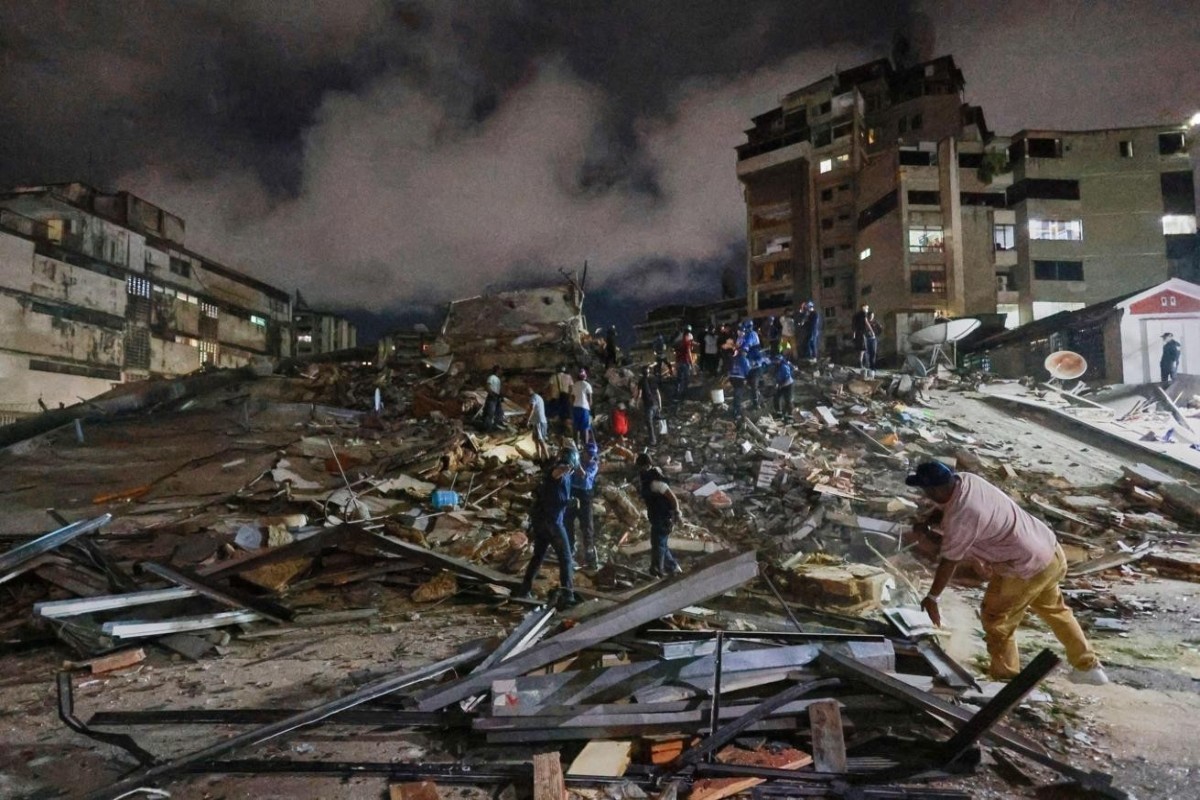
Death toll from Venezuela earthquake rises to 164 - UPDATED - 1 - VIDEO
14:52
25 June 2026

NEWS FEED
Telephone conversation held between Azerbaijani, Turkmen Presidents
20:37
25 June 2026
Vice-President of the Heydar Aliyev Foundation Leyla Aliyeva meets with Head of the Vatican Apostolic Library and Apostolic Archive
20:14
25 June 2026
Ziya Öztürkler praises Azerbaijan's continued support for the TRNC
19:50
25 June 2026
Apple says removal of VK apps from App Store is due to sanctions compliance
19:34
25 June 2026
Ruben Rubinyan elected as candidate for Speaker of the National Assembly of Armenia
19:26
25 June 2026
Missile alert declared in Moscow region-UPDATED
19:16
25 June 2026
Hikmat Hajiyev discusses Azerbaijan–NATO partnership with Secretary General's Special Representative
18:59
25 June 2026
Armenian Prosecutor General's Office petitions CEC to authorize criminal prosecution of Gagik Tsarukyan
18:55
25 June 2026
Venezuela's foreign minister thanks Azerbaijan for solidarity following earthquake
18:16
25 June 2026
Azerbaijan and Kazakhstan agree on full transition to electronic permit system
18:10
25 June 2026
Rubio believes no final agreements reached in Anchorage
18:10
25 June 2026
US, Iran agree in principle to establish direct military communication channel, Vance says
18:09
25 June 2026
Rubio believes no final agreements reached in Anchorage
18:03
25 June 2026
Azerbaijan Army servicemen participate in Anatolian Eagle-2026 International Exercise-VIDEO
18:01
25 June 2026
Leadership of the Ministry of Defense visits Central Clinical Hospital - PHOTO
17:52
25 June 2026
Eight Azerbaijani cities to host military marches marking Armed Forces Day
17:45
25 June 2026
Azerbaijan MFA: Existing opportunities should be used to finalize peace process with Armenia
17:30
25 June 2026
Rubio says Israel, Lebanon close to commitment of intent
17:18
25 June 2026
Lukashenko: Peoples of Belarus, Russia, and Ukraine will be together sooner or later
17:09
25 June 2026
Romanian ambassador leaves Russian Foreign Ministry without comment
17:08
25 June 2026
Rubio: Iran's support for regional proxies should be addressed in memorandum talks
17:07
25 June 2026
Azerbaijan and Ukraine discuss current cooperation agenda
17:06
25 June 2026
Azerbaijan-Israel innovation dialogue held at Shimon Peres Center - PHOTO
17:02
25 June 2026
Iran, Oman stress need for coordination on Strait of Hormuz traffic in foreign minister call
16:44
25 June 2026
Ghalibaf criticizes US over claims regarding Iran's unfrozen assets
16:43
25 June 2026
Iraqi Oil Ministry denies reports of potential OPEC exit, urges output quota reassessment-UPDATED
16:39
25 June 2026
President Ilham Aliyev signs order awarding Defense Ministry servicemen
16:31
25 June 2026
Azerbaijan's President awards fallen servicemen posthumously
16:31
25 June 2026
Military Institute named after Heydar Aliyev holds another graduation ceremony - PHOTO - VIDEO
16:26
25 June 2026
Azerbaijan establishes "Intellectual Customs" information system
16:24
25 June 2026
President Ilham Aliyev awards major general rank to five Defense Ministry servicemen
16:23
25 June 2026
Ashura blood donation campaign concludes in Azerbaijan, 1,269.45 liters of blood collected -PHOTO-UPDATED-1
16:21
25 June 2026
Rubio: No Gulf country supports charging fees for passage through the Strait of Hormuz
16:14
25 June 2026
Hikmat Hajiyev, Macron's adviser review state of Azerbaijan-France relations
16:10
25 June 2026
Azerbaijani cadet awarded Italy's "Sword of Honor"
16:00
25 June 2026
Azerbaijan establishes budget-funded organizations based on several public legal entities - DECREE
16:00
25 June 2026
Defense minister: Azerbaijani Armed Forces are among the strongest militaries in the region
15:56
25 June 2026
US sends search and rescue teams to Venezuela after deadly earthquake
15:55
25 June 2026
Citizens of Kyrgyzstan and Tajikistan graduate with honors from Heydar Aliyev Military Institute
15:53
25 June 2026
More than 90 kg of marijuana found in truck carrying cauliflower from Iran to Russia - PHOTO
15:47
25 June 2026
Azerbaijan's Foreign Minister attends Ukraine Recovery Conference in Poland
15:38
25 June 2026
Azerbaijan joins International Convention on the Control of Harmful Anti-Fouling Systems on Ships
15:25
25 June 2026
Charter of the State Medical Insurance and Expertise Agency approved-DECREE
15:24
25 June 2026
Azercell launches “Əsgərcell” offer on the occasion of 26 June – Armed Forces Day
15:23
25 June 2026
Azerbaijan recalls ambassador to Uzbekistan
15:14
25 June 2026
Financial results of "AzerGold" CJSC and its subsidiaries for year-end 2025 announced
15:14
25 June 2026
Azerbaijani delegation explores advanced pediatric rehabilitation practices in Israel
15:08
25 June 2026
Kremlin urges Russians to switch to Android and "national systems" after VK app removed from App Store
15:06
25 June 2026
Russia says nearly 170,000 Ukrainian drones shot down since war began
14:57
25 June 2026
Kremlin comments on Zelenskyy's statement about Belarusian retransmitters
14:54
25 June 2026


