










Baku-APA. The European Commission outlined a series of measures to help support airlines and improve coordination following the chaos from a cloud of volcanic ash that grounded more than 100,000 flights, stranded millions of passengers and caused airlines to lose billions of euros in revenue, APA reports quoting online.wsj.com website.
Representatives of European airlines and airports, who criticized how the crisis was handled as it unfolded, welcomed the commission’s proposals.
EU Transport Commissioner Siim Kallas estimated that the crisis, which shut airspace across much of Northern and Central Europe for six days starting April 15, had cost airlines world-wide between €1.5 billion and €2.5 billion ($2 billion and $2.7 billion). Airline schedules in Europe have since returned to normal.
The exceptional circumstances may justify some government support to airlines to help them cope with losses they incurred as a direct result of the crisis, Mr. Kallas said. Any aid would be granted by EU member states, not the EU itself. The 27-country bloc generally prohibits state aid to companies.
Mr. Kallas cautioned that support could be granted only based on "uniform criteria established at the European level" and set out by the commission, the EU’s executive arm. The commission will soon issue a clear set of guidelines on this matter, he said.
"But state aid is not a miracle," Mr. Kallas said. "There is not a sack of money waiting for a crisis."
The commission is proposing to allow governments to make loans and guarantees to airlines at market conditions to alleviate cash-flow problems following the disruption, Mr. Kallas said.
Other short-term measures that airlines have requested, and which the EU is likely to endorse, include waiving restrictions on night operations at airports so carriers can bring stranded passengers home; a relaxation of scheduling rules on takeoffs and landings to give airlines more operational flexibility; and temporary deferral of air-traffic charges to help ease cash-flow pressures on airlines.
For the longer term, European officials will develop new systems to handle future volcanic eruptions or other disruptions, Mr. Kallas said.
The commission is also proposing to accelerate its work on integrating European air-traffic control through a long-running project known as the Single European Sky. Mr. Kallas said that the Single Sky "would not have solved the problem, but would have enabled a more nimble approach."
The EU will separately propose new global rules for airlines and air-traffic controllers to deal with volcanic eruptions. The proposal will be presented in September to a general meeting of the International Civil Aviation Organization, an arm of the United Nations.
ICAO’s current rules, developed after eruptions in the 1980s, tell carriers to completely avoid clouds of volcanic dust or ash. They were the main reason European governments completely closed their airspace.
Ulrich Schulte-Strathaus, secretary-general of the Association of European Airlines, said the task force led by Mr. Kallas and two other EU commissioners had in "a remarkably short time frame" come up with sound analysis of how the grounding’s impact should be handled and a similar crisis could be avoided in the future.
Mr. Schulte-Strathaus said EU airlines wouldn’t seek state aid, but shouldn’t be left completely responsible for the financial consequences of government decisions to close airspace.
Olivier Jankovec, director-general of the Airports Council International Europe, another trade group, said the commission’s proposal "could constitute a feasible European aviation-relief plan" and praised its swift preparation.
The commission’s proposals will be discussed and potentially approved by EU transport ministers at a special meeting on Tuesday.
Mr. Kallas worked with EU competition commissioner Joaquin Almunia and with Olli Rehn, commissioner for economic and financial affairs, to ensure that the response fit within EU rules on state aid and economic policies.
Airlines had argued that flight restrictions imposed after the eruption of the volcano under Iceland’s Eyjafjallajokull glacier were too severe for the risk posed by the ash cloud it created.
Carriers also criticized the lack of coordination on the crisis. Air authorities in individual countries took differing decisions on closing and opening national airspace, often based on identical data.
Passengers, meanwhile, have criticized airlines for not moving faster to repatriate them, and for sending mixed messages on what compensation they will be entitled to. Mr. Kallas said EU passenger-rights rules—which say airlines must pay for meals, drinks and hotels for stranded passengers—must be enforced across the region.
"No airline should benefit by avoiding its legal obligations," he said.
U.S., Asian and Middle Eastern airlines that lost money will have to deal with the losses on their own, unless their governments decide to help out. But European airlines were by far the hardest hit, as many of their home bases were closed. And any aid offered within the EU is likely to be a fraction of the total losses EU carriers have faced.


 Follow us on Telegram
 t.me/apanewsaz
 Follow us on Instagram
 Follow us on TikTok
 Follow us on Facebook
 Follow us on X
Asia
Iran, Oman stress need for coordination on Strait of Hormuz traffic in foreign minister call
 16:44
16:44
 25 June 2026
Ghalibaf criticizes US over claims regarding Iran's unfrozen assets
16:43
25 June 2026
Iraqi Oil Ministry denies reports of potential OPEC exit, urges output quota reassessment-UPDATED
16:39
25 June 2026
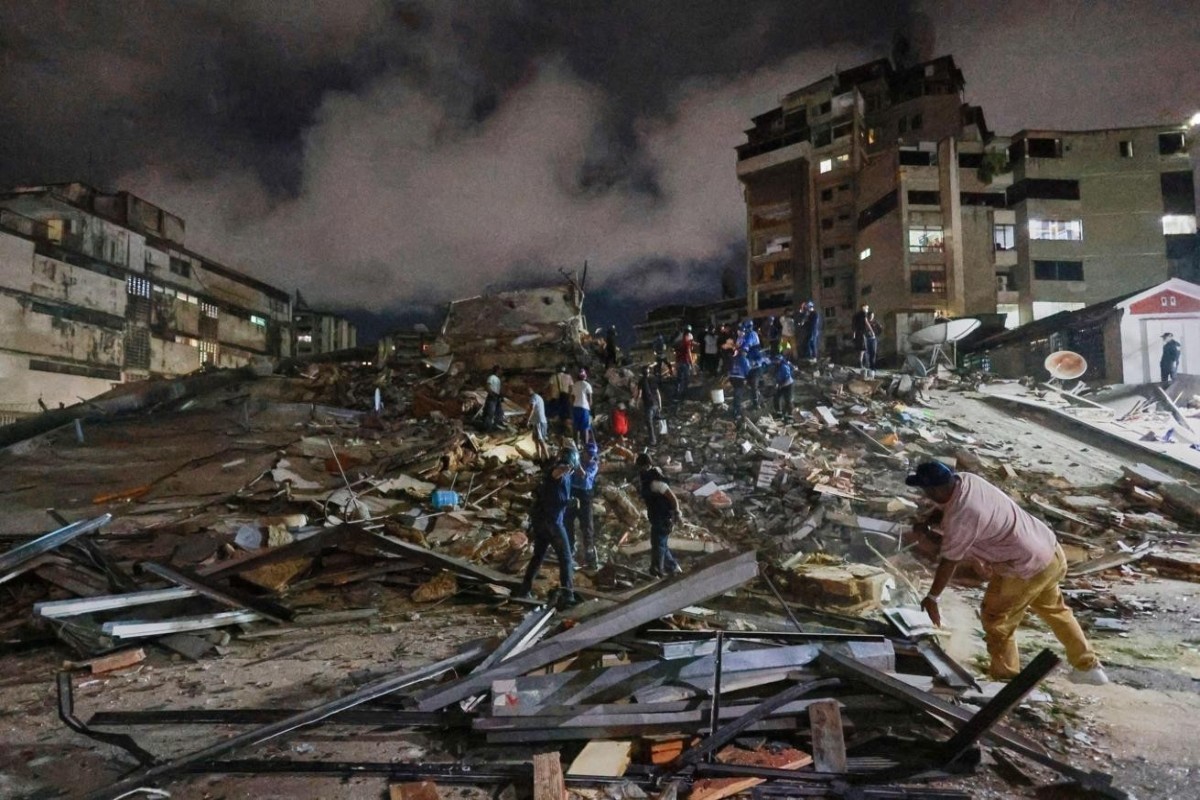
Death toll from Venezuela earthquake rises to 164 - UPDATED - 1 - VIDEO
14:52
25 June 2026

NEWS FEED
Telephone conversation held between Azerbaijani, Turkmen Presidents
20:37
25 June 2026
Vice-President of the Heydar Aliyev Foundation Leyla Aliyeva meets with Head of the Vatican Apostolic Library and Apostolic Archive
20:14
25 June 2026
Ziya Öztürkler praises Azerbaijan's continued support for the TRNC
19:50
25 June 2026
Apple says removal of VK apps from App Store is due to sanctions compliance
19:34
25 June 2026
Ruben Rubinyan elected as candidate for Speaker of the National Assembly of Armenia
19:26
25 June 2026
Missile alert declared in Moscow region-UPDATED
19:16
25 June 2026
Hikmat Hajiyev discusses Azerbaijan–NATO partnership with Secretary General's Special Representative
18:59
25 June 2026
Armenian Prosecutor General's Office petitions CEC to authorize criminal prosecution of Gagik Tsarukyan
18:55
25 June 2026
Venezuela's foreign minister thanks Azerbaijan for solidarity following earthquake
18:16
25 June 2026
Azerbaijan and Kazakhstan agree on full transition to electronic permit system
18:10
25 June 2026
Rubio believes no final agreements reached in Anchorage
18:10
25 June 2026
US, Iran agree in principle to establish direct military communication channel, Vance says
18:09
25 June 2026
Rubio believes no final agreements reached in Anchorage
18:03
25 June 2026
Azerbaijan Army servicemen participate in Anatolian Eagle-2026 International Exercise-VIDEO
18:01
25 June 2026
Leadership of the Ministry of Defense visits Central Clinical Hospital - PHOTO
17:52
25 June 2026
Eight Azerbaijani cities to host military marches marking Armed Forces Day
17:45
25 June 2026
Azerbaijan MFA: Existing opportunities should be used to finalize peace process with Armenia
17:30
25 June 2026
Rubio says Israel, Lebanon close to commitment of intent
17:18
25 June 2026
Lukashenko: Peoples of Belarus, Russia, and Ukraine will be together sooner or later
17:09
25 June 2026
Romanian ambassador leaves Russian Foreign Ministry without comment
17:08
25 June 2026
Rubio: Iran's support for regional proxies should be addressed in memorandum talks
17:07
25 June 2026
Azerbaijan and Ukraine discuss current cooperation agenda
17:06
25 June 2026
Azerbaijan-Israel innovation dialogue held at Shimon Peres Center - PHOTO
17:02
25 June 2026
Iran, Oman stress need for coordination on Strait of Hormuz traffic in foreign minister call
16:44
25 June 2026
Ghalibaf criticizes US over claims regarding Iran's unfrozen assets
16:43
25 June 2026
Iraqi Oil Ministry denies reports of potential OPEC exit, urges output quota reassessment-UPDATED
16:39
25 June 2026
President Ilham Aliyev signs order awarding Defense Ministry servicemen
16:31
25 June 2026
Azerbaijan's President awards fallen servicemen posthumously
16:31
25 June 2026
Military Institute named after Heydar Aliyev holds another graduation ceremony - PHOTO - VIDEO
16:26
25 June 2026
Azerbaijan establishes "Intellectual Customs" information system
16:24
25 June 2026
President Ilham Aliyev awards major general rank to five Defense Ministry servicemen
16:23
25 June 2026
Ashura blood donation campaign concludes in Azerbaijan, 1,269.45 liters of blood collected -PHOTO-UPDATED-1
16:21
25 June 2026
Rubio: No Gulf country supports charging fees for passage through the Strait of Hormuz
16:14
25 June 2026
Hikmat Hajiyev, Macron's adviser review state of Azerbaijan-France relations
16:10
25 June 2026
Azerbaijani cadet awarded Italy's "Sword of Honor"
16:00
25 June 2026
Azerbaijan establishes budget-funded organizations based on several public legal entities - DECREE
16:00
25 June 2026
Defense minister: Azerbaijani Armed Forces are among the strongest militaries in the region
15:56
25 June 2026
US sends search and rescue teams to Venezuela after deadly earthquake
15:55
25 June 2026
Citizens of Kyrgyzstan and Tajikistan graduate with honors from Heydar Aliyev Military Institute
15:53
25 June 2026
More than 90 kg of marijuana found in truck carrying cauliflower from Iran to Russia - PHOTO
15:47
25 June 2026
Azerbaijan's Foreign Minister attends Ukraine Recovery Conference in Poland
15:38
25 June 2026
Azerbaijan joins International Convention on the Control of Harmful Anti-Fouling Systems on Ships
15:25
25 June 2026
Charter of the State Medical Insurance and Expertise Agency approved-DECREE
15:24
25 June 2026
Azercell launches “Əsgərcell” offer on the occasion of 26 June – Armed Forces Day
15:23
25 June 2026
Azerbaijan recalls ambassador to Uzbekistan
15:14
25 June 2026
Financial results of "AzerGold" CJSC and its subsidiaries for year-end 2025 announced
15:14
25 June 2026
Azerbaijani delegation explores advanced pediatric rehabilitation practices in Israel
15:08
25 June 2026
Kremlin urges Russians to switch to Android and "national systems" after VK app removed from App Store
15:06
25 June 2026
Russia says nearly 170,000 Ukrainian drones shot down since war began
14:57
25 June 2026
Kremlin comments on Zelenskyy's statement about Belarusian retransmitters
14:54
25 June 2026


