










Baku – APA. A new study says the Afghanistan Taliban enjoy a slew of advantages that historically correlate with insurgent success, such as Pakistani sanctuary and a weak government in Kabul, APA reports quoting csmonitor.com web-page.
While current US counterinsurgency doctrine in Afghanistan broadly conforms with historical best practices, the Taliban enjoy a slew of advantages that historically correlate with insurgent success, according to a new study of 89 past and ongoing insurgencies worldwide.
Factors that favor the Taliban include receiving sanctuary and support in another country, learning to be more discriminating in targeting their attacks, and fighting a government that’s both weak and reliant on direct external support.
The historical trends suggest that the Achilles heel for the Taliban would be the loss of their Pakistani sanctuary, while the principal American vulnerability lies in Hamid Karzai’s anocracy, or weak, pseudodemocracy. The study, says the author, cannot be predictive, but can help the US address or exploit these vulnerabilities.
"A lot of the things being done in the current [US military] plan are along the lines of successful things we’ve seen in the study," says Ben Connable, lead author "How Insurgencies End," published by RAND Corp. in Washington. "The key is if the US recognizes it is working with an anocracy and recognizes the limits of that kind of government, you can work on solutions to that problem."
Anocracies rarely win
Solutions to the problem of this type of weak central government, he says, involve focusing on local governance and setting up local civil defense forces that are carefully tied down to one location. To some degree, the US is already doing this. In rural Helmand, the Marines are focused on building local government from scratch. And international forces have dabbled with setting up arbakai, a traditional militia tied to a local council.
Still, anocracies have won only about 15 percent of their conflicts with insurgents. "Democratizing an anocracy in the midst of an insurgency is an unappealing but not necessarily impossible venture," the report reads.
Another lesson: Indiscriminate terror attacks on civilians tends to backfire on insurgents. The report mentions the Taliban have learned to discriminate, though UN data challenge that. Most civilian deaths in 2009 were caused by insurgents. Their killing of civilians increased by 41 percent over 2008 levels, while pro-government forces reduced civilian killings by 28 percent.
However, there’s little indication that these Taliban indiscretions have backfired on the movement so far.
Study’s limitations
There may be limitations to applying international templates to a country like Afghanistan, a tendency among US military planners that has caused unease among Afghanistan-specific experts. The brain trust reportedly involved in Gen. Stanley McChrystal’s counterinsurgency plan relied heavily on counterinsurgency – not regional – experts.
"Afghanistan may well share similarities with other countries and societies, but these elements need to be documented rather than assumed," anthropologist Thomas Barfield writes in his new book, "Afghanistan: A Cultural and Political History."
The RAND study looked at 89 insurgencies dating to the 1934 start of Mao’s uprising in China. In order to be included, the conflict needed to have killed at least 1,000 people, among other criteria. Excluded conflicts include the Iranian Revolution of 1979, the Sikh uprising in 1980s India, and the Uighur independence movement in China’s Xinjiang Province.
The final scoreboard: 28 wins for governments, 26 wins for insurgencies, 19 mixed results, and 16 ongoing.
Most of the study’s findings conform to the current conventional wisdom surrounding counterinsurgency. One exception lies in the common belief that insurgents have the advantage of time. The average length of government-won conflicts is greater than for those won by insurgents.
The median length of an insurgency is 10 years. However, "insurgencies with more than two clear parties involved have longer, more-violent, and more-complex endings. Afghanistan is a case in point," the report notes.
’Like designing a mission to Mars’
More than half the insurgencies studied ended with some negotiation, even in cases with clear winners and losers, but for Afghanistan that does not represent an easy way out.
"This is an extremely complicated negotiation theory problem," says Stephen Biddle, a counterinsurgency expert at the Council on Foreign Relations in Washington. "If you were to say ’I am going to be strategist king and I am going to design the perfect solution,’ it’s like designing a mission to Mars – the complexity of it is really quite great."
And expectations among experts about the final outcome in Afghanistan have clearly scaled back, particularly since the fraud-riddled fiasco of Mr. Karzai’s reelection.
"I doubt anybody is going to get their ideal best case out of this. The Pakistanis are very unlikely to get their Taliban government in Kabul to puppet from Islamabad. The US is very unlikely to get a strong centralized, western-style democracy," says Mr. Biddle.
President Obama’s effort to speed up the resolution in Afghanistan by planning a draw down in 2011 elicits concern from Connable. He says that in cases where a foreign power like the US sponsored an embattled government, the premature withdrawal of support tended to result in the government losing.
"...Without addressing the root causes of the insurgency, without insuring the government could stand on its own two feet – then the governments tended to lose," he says.
Precedent suggests Afghanistan Taliban could win: report

 24 April 2010 04:59 (UTC +04:00)


 İDMAN XƏBƏR
 Follow us on Telegram
 t.me/apanewsaz
 Follow us on Instagram
 Follow us on TikTok
 Follow us on Facebook
 Follow us on X
Asia
Iran, Oman stress need for coordination on Strait of Hormuz traffic in foreign minister call
16:44
 25 June 2026

Ghalibaf criticizes US over claims regarding Iran's unfrozen assets
16:43
25 June 2026
Iraqi Oil Ministry denies reports of potential OPEC exit, urges output quota reassessment-UPDATED
16:39
25 June 2026
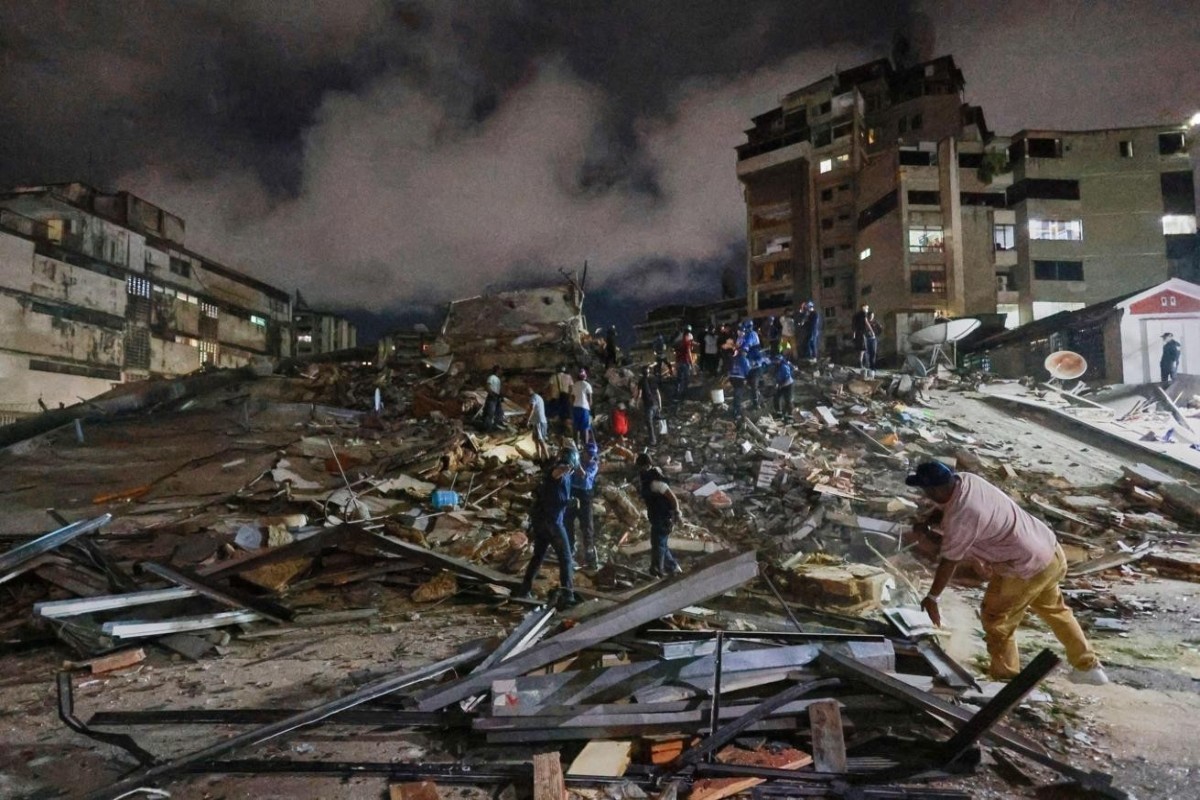
Death toll from Venezuela earthquake rises to 164 - UPDATED - 1 - VIDEO
14:52
25 June 2026

NEWS FEED
Telephone conversation held between Azerbaijani, Turkmen Presidents
20:37
25 June 2026
Vice-President of the Heydar Aliyev Foundation Leyla Aliyeva meets with Head of the Vatican Apostolic Library and Apostolic Archive
20:14
25 June 2026
Ziya Öztürkler praises Azerbaijan's continued support for the TRNC
19:50
25 June 2026
Apple says removal of VK apps from App Store is due to sanctions compliance
19:34
25 June 2026
Ruben Rubinyan elected as candidate for Speaker of the National Assembly of Armenia
19:26
25 June 2026
Missile alert declared in Moscow region-UPDATED
19:16
25 June 2026
Hikmat Hajiyev discusses Azerbaijan–NATO partnership with Secretary General's Special Representative
18:59
25 June 2026
Armenian Prosecutor General's Office petitions CEC to authorize criminal prosecution of Gagik Tsarukyan
18:55
25 June 2026
Venezuela's foreign minister thanks Azerbaijan for solidarity following earthquake
18:16
25 June 2026
Azerbaijan and Kazakhstan agree on full transition to electronic permit system
18:10
25 June 2026
Rubio believes no final agreements reached in Anchorage
18:10
25 June 2026
US, Iran agree in principle to establish direct military communication channel, Vance says
18:09
25 June 2026
Rubio believes no final agreements reached in Anchorage
18:03
25 June 2026
Azerbaijan Army servicemen participate in Anatolian Eagle-2026 International Exercise-VIDEO
18:01
25 June 2026
Leadership of the Ministry of Defense visits Central Clinical Hospital - PHOTO
17:52
25 June 2026
Eight Azerbaijani cities to host military marches marking Armed Forces Day
17:45
25 June 2026
Azerbaijan MFA: Existing opportunities should be used to finalize peace process with Armenia
17:30
25 June 2026
Rubio says Israel, Lebanon close to commitment of intent
17:18
25 June 2026
Lukashenko: Peoples of Belarus, Russia, and Ukraine will be together sooner or later
17:09
25 June 2026
Romanian ambassador leaves Russian Foreign Ministry without comment
17:08
25 June 2026
Rubio: Iran's support for regional proxies should be addressed in memorandum talks
17:07
25 June 2026
Azerbaijan and Ukraine discuss current cooperation agenda
17:06
25 June 2026
Azerbaijan-Israel innovation dialogue held at Shimon Peres Center - PHOTO
17:02
25 June 2026
Iran, Oman stress need for coordination on Strait of Hormuz traffic in foreign minister call
16:44
25 June 2026
Ghalibaf criticizes US over claims regarding Iran's unfrozen assets
16:43
25 June 2026
Iraqi Oil Ministry denies reports of potential OPEC exit, urges output quota reassessment-UPDATED
16:39
25 June 2026
President Ilham Aliyev signs order awarding Defense Ministry servicemen
16:31
25 June 2026
Azerbaijan's President awards fallen servicemen posthumously
16:31
25 June 2026
Military Institute named after Heydar Aliyev holds another graduation ceremony - PHOTO - VIDEO
16:26
25 June 2026
Azerbaijan establishes "Intellectual Customs" information system
16:24
25 June 2026
President Ilham Aliyev awards major general rank to five Defense Ministry servicemen
16:23
25 June 2026
Ashura blood donation campaign concludes in Azerbaijan, 1,269.45 liters of blood collected -PHOTO-UPDATED-1
16:21
25 June 2026
Rubio: No Gulf country supports charging fees for passage through the Strait of Hormuz
16:14
25 June 2026
Hikmat Hajiyev, Macron's adviser review state of Azerbaijan-France relations
16:10
25 June 2026
Azerbaijani cadet awarded Italy's "Sword of Honor"
16:00
25 June 2026
Azerbaijan establishes budget-funded organizations based on several public legal entities - DECREE
16:00
25 June 2026
Defense minister: Azerbaijani Armed Forces are among the strongest militaries in the region
15:56
25 June 2026
US sends search and rescue teams to Venezuela after deadly earthquake
15:55
25 June 2026
Citizens of Kyrgyzstan and Tajikistan graduate with honors from Heydar Aliyev Military Institute
15:53
25 June 2026
More than 90 kg of marijuana found in truck carrying cauliflower from Iran to Russia - PHOTO
15:47
25 June 2026
Azerbaijan's Foreign Minister attends Ukraine Recovery Conference in Poland
15:38
25 June 2026
Azerbaijan joins International Convention on the Control of Harmful Anti-Fouling Systems on Ships
15:25
25 June 2026
Charter of the State Medical Insurance and Expertise Agency approved-DECREE
15:24
25 June 2026
Azercell launches “Əsgərcell” offer on the occasion of 26 June – Armed Forces Day
15:23
25 June 2026
Azerbaijan recalls ambassador to Uzbekistan
15:14
25 June 2026
Financial results of "AzerGold" CJSC and its subsidiaries for year-end 2025 announced
15:14
25 June 2026
Azerbaijani delegation explores advanced pediatric rehabilitation practices in Israel
15:08
25 June 2026
Kremlin urges Russians to switch to Android and "national systems" after VK app removed from App Store
15:06
25 June 2026
Russia says nearly 170,000 Ukrainian drones shot down since war began
14:57
25 June 2026
Kremlin comments on Zelenskyy's statement about Belarusian retransmitters
14:54
25 June 2026


