










Baku – APA. Iran has agreed to give the United Nation’s nuclear monitoring agency greater inspection and monitoring rights to a sensitive site where it is enriching uranium to higher levels, diplomats said Friday, APA reports quoting “The Wall Street Journalâ€.
The move—indirectly confirmed by a senior Iranian envoy, the Associated press reported—comes as Tehran mounts a diplomatic offensive meant to stave off new U.N. sanctions for its defiance of Security Council demands that it curb nuclear activities that could be used to make weapons.
Iran’s president is in Africa this week to build alliances to evade stronger U.N. sanctions, ease Iran’s international isolation and strengthen its economy. Landing in Uganda Friday, President Mahmoud Ahmadinejad will discuss his country’s nuclear program with President Yoweri Museveni. Uganda hasn’t yet ruled out the possibility it could vote for sanctions against Iran over its nuclear program, said a spokesman for the Ugandan president.
Mr. Ahmadinejad is expected to personally make his case after a two-day trip to Zimbabwe, where President Robert Mugabe urged him to remain resolute in defiance of the West.
Iran began enriching uranium to near 20% two months ago and says it will be turned into fuel rods for research reactors that manufacture medical isotopes for cancer patients. It says it was forced to take this step because Western nations refused to meet it half way on a moribund plan that would have supplied the rods from abroad.
The International Atomic Energy Agency had pushed in vain for greater access to the enrichment operation since the start of the project, seeking to realign monitoring cameras already set up to oversee Iran’s long-standing enrichment plant that is churning out much-lower-level uranium. It has also been asking for more frequent inspections, the diplomats said.
They said Iran agreed in principle about 10 days ago to some—but not all—of the oversight the IAEA had asked for. "They have not agreed to the full measures sought by the agency but enough so that the agency would be happy’’ after being stonewalled for two months, said one of three diplomats.
Ali Asghar Soltanieh, the chief Iranian envoy to the IAEA, indirectly confirmed agreement, saying the two sides had "constructive talks" on the issue.
This isn’t the first time Iran has agreed to implement confidence-building measures. In 2003, Iran voluntarily suspended enrichment activities and offered to provide the IAEA with additional information about its nuclear facilities as a confidence-building measure. By 2007 Iran canceled the concessions.
The tentative agreement, if implemented, shows the difficulties the IAEA faces in monitoring Iran’s compliance with its international obligations in the nuclear field. Iran reserves the right to refuse monitoring that isn’t specifically required under international agreements that are often decades-old, such as the Treaty on the Non-Proliferation of Nuclear Weapons that Iran signed in 1968.
Iran last year rejected a U.N.-backed plan that offered nuclear fuel rods in exchange for Iran’s stock of lower-level enriched uranium. That swap would have curbed Tehran’s capacity to make a nuclear bomb.
Six world powers—the five permanent Security Council members plus Germany—endorsed the confidence-building proposal. Backed by the IAEA, the deal foresaw shipping 2,420 pounds (1,100 kilograms) of low-enriched uranium from Iran to Russia to be enriched to 20%, then to France for processing into fuel rods for the research reactor that makes nuclear isotopes needed for medical purposes.
Beyond meeting Iran’s needs, the U.S. and its allies saw the proposal as delaying Iran’s ability to make a nuclear weapon by stripping it of much of the enriched uranium it would need for such a project. Tehran denies seeking such arms, insisting it is enriching only for an envisaged network of power-generating nuclear reactors.
Though Iran initially rejected the proposal, its leaders have tried to keep the offer on the table, proposing variations without accepting the Vienna-based IAEA’s terms. The main stumbling block has been Tehran’s refusal to ship the bulk of its low-enriched uranium abroad—a condition insisted upon by the West as key to slowing Iran’s accumulation of enriched uranium and thereby any bomb-making capacities.
In the meantime, Iran has pushed ahead with further enriching uranium to 20% on its own, announcing this week that it has produced five kilograms (11 pounds) of the material, though it isn’t clear if it is able to take the next step of turning them into fuel rods for the reactor.
Any success in enriching up to that level brings Iran closer to quickly being able to make weapons-grade uranium that serves as the core of nuclear warheads.
The Iranian concession comes just before the weekend visit of Iran’s foreign minister to Austria on the first stop of an international campaign aimed at weakening a U.S.-backed push for new U.N. sanctions.
Manouchehr Mottaki will meet his Austrian counterpart, Michael Spindelegger, on Sunday, Austria’s Foreign Ministry said.
Austria is a nonpermanent member of the U.N. Security Council, which is preparing to consider a fourth round of sanctions on Tehran for its nuclear defiance.
Before his trip, Mr. Mottaki said Iran wants to talk with all council members except the U.S about the nuclear fuel swap deal. Iranian delegations, he said, will be pushing for agreement on the proposal in visits to veto-wielding permanent council members China and Russia and rotating members, including Uganda, where President Mahmoud Ahmadinejad arrived Friday.
For months, Russia and China have blocked attempts by the U.S., Britain and France—the three other permanent Security Council members—to introduce new sanctions.
Russia has recently expressed a readiness to support "smart" sanctions that don’t target the Iranian people. China also appears willing but is insisting on further watering down present drafts submitted by the West.
Only permanent council members could veto proposed sanctions, but strong opposition by nonpermanent members could strengthen Iran’s case.
Brazil and Turkey, also serving two-year terms on the Security Council, already have indicated a reluctance to support new sanctions, and Brazil’s President Luiz Inacio Lula da Silva is due in Tehran on May 15.
One of the diplomats said Mr. Mottaki would also be meeting IAEA chief Yukiya Amano but added the Iranian was bringing nothing new to the table that could unlock the impasse on the fuel swap.


 Follow us on Telegram
 t.me/apanewsaz
 Follow us on Instagram
 Follow us on TikTok
 Follow us on Facebook
 Follow us on X
Asia
Iran, Oman stress need for coordination on Strait of Hormuz traffic in foreign minister call
 16:44
16:44
 25 June 2026
Ghalibaf criticizes US over claims regarding Iran's unfrozen assets
16:43
25 June 2026
Iraqi Oil Ministry denies reports of potential OPEC exit, urges output quota reassessment-UPDATED
16:39
25 June 2026
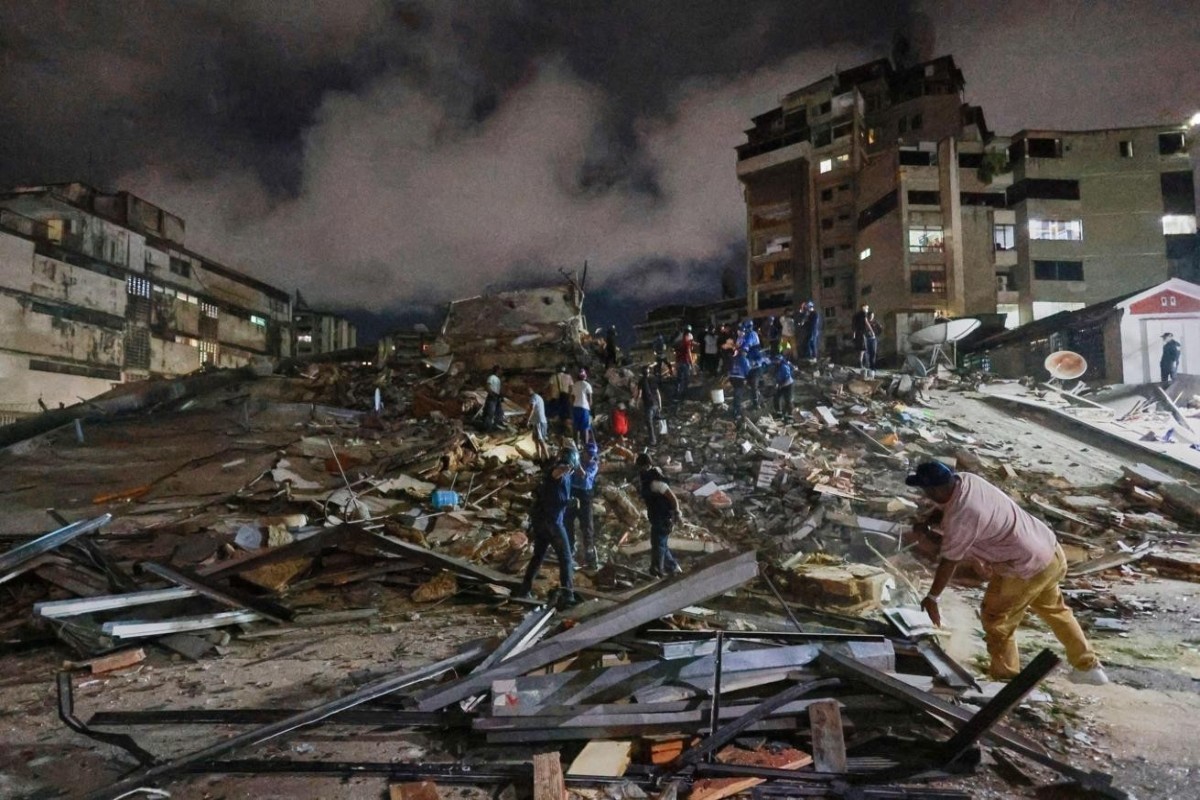
Death toll from Venezuela earthquake rises to 164 - UPDATED - 1 - VIDEO
14:52
25 June 2026

NEWS FEED
Telephone conversation held between Azerbaijani, Turkmen Presidents
20:37
25 June 2026
Vice-President of the Heydar Aliyev Foundation Leyla Aliyeva meets with Head of the Vatican Apostolic Library and Apostolic Archive
20:14
25 June 2026
Ziya Öztürkler praises Azerbaijan's continued support for the TRNC
19:50
25 June 2026
Apple says removal of VK apps from App Store is due to sanctions compliance
19:34
25 June 2026
Ruben Rubinyan elected as candidate for Speaker of the National Assembly of Armenia
19:26
25 June 2026
Missile alert declared in Moscow region-UPDATED
19:16
25 June 2026
Hikmat Hajiyev discusses Azerbaijan–NATO partnership with Secretary General's Special Representative
18:59
25 June 2026
Armenian Prosecutor General's Office petitions CEC to authorize criminal prosecution of Gagik Tsarukyan
18:55
25 June 2026
Venezuela's foreign minister thanks Azerbaijan for solidarity following earthquake
18:16
25 June 2026
Azerbaijan and Kazakhstan agree on full transition to electronic permit system
18:10
25 June 2026
Rubio believes no final agreements reached in Anchorage
18:10
25 June 2026
US, Iran agree in principle to establish direct military communication channel, Vance says
18:09
25 June 2026
Rubio believes no final agreements reached in Anchorage
18:03
25 June 2026
Azerbaijan Army servicemen participate in Anatolian Eagle-2026 International Exercise-VIDEO
18:01
25 June 2026
Leadership of the Ministry of Defense visits Central Clinical Hospital - PHOTO
17:52
25 June 2026
Eight Azerbaijani cities to host military marches marking Armed Forces Day
17:45
25 June 2026
Azerbaijan MFA: Existing opportunities should be used to finalize peace process with Armenia
17:30
25 June 2026
Rubio says Israel, Lebanon close to commitment of intent
17:18
25 June 2026
Lukashenko: Peoples of Belarus, Russia, and Ukraine will be together sooner or later
17:09
25 June 2026
Romanian ambassador leaves Russian Foreign Ministry without comment
17:08
25 June 2026
Rubio: Iran's support for regional proxies should be addressed in memorandum talks
17:07
25 June 2026
Azerbaijan and Ukraine discuss current cooperation agenda
17:06
25 June 2026
Azerbaijan-Israel innovation dialogue held at Shimon Peres Center - PHOTO
17:02
25 June 2026
Iran, Oman stress need for coordination on Strait of Hormuz traffic in foreign minister call
16:44
25 June 2026
Ghalibaf criticizes US over claims regarding Iran's unfrozen assets
16:43
25 June 2026
Iraqi Oil Ministry denies reports of potential OPEC exit, urges output quota reassessment-UPDATED
16:39
25 June 2026
President Ilham Aliyev signs order awarding Defense Ministry servicemen
16:31
25 June 2026
Azerbaijan's President awards fallen servicemen posthumously
16:31
25 June 2026
Military Institute named after Heydar Aliyev holds another graduation ceremony - PHOTO - VIDEO
16:26
25 June 2026
Azerbaijan establishes "Intellectual Customs" information system
16:24
25 June 2026
President Ilham Aliyev awards major general rank to five Defense Ministry servicemen
16:23
25 June 2026
Ashura blood donation campaign concludes in Azerbaijan, 1,269.45 liters of blood collected -PHOTO-UPDATED-1
16:21
25 June 2026
Rubio: No Gulf country supports charging fees for passage through the Strait of Hormuz
16:14
25 June 2026
Hikmat Hajiyev, Macron's adviser review state of Azerbaijan-France relations
16:10
25 June 2026
Azerbaijani cadet awarded Italy's "Sword of Honor"
16:00
25 June 2026
Azerbaijan establishes budget-funded organizations based on several public legal entities - DECREE
16:00
25 June 2026
Defense minister: Azerbaijani Armed Forces are among the strongest militaries in the region
15:56
25 June 2026
US sends search and rescue teams to Venezuela after deadly earthquake
15:55
25 June 2026
Citizens of Kyrgyzstan and Tajikistan graduate with honors from Heydar Aliyev Military Institute
15:53
25 June 2026
More than 90 kg of marijuana found in truck carrying cauliflower from Iran to Russia - PHOTO
15:47
25 June 2026
Azerbaijan's Foreign Minister attends Ukraine Recovery Conference in Poland
15:38
25 June 2026
Azerbaijan joins International Convention on the Control of Harmful Anti-Fouling Systems on Ships
15:25
25 June 2026
Charter of the State Medical Insurance and Expertise Agency approved-DECREE
15:24
25 June 2026
Azercell launches “Əsgərcell” offer on the occasion of 26 June – Armed Forces Day
15:23
25 June 2026
Azerbaijan recalls ambassador to Uzbekistan
15:14
25 June 2026
Financial results of "AzerGold" CJSC and its subsidiaries for year-end 2025 announced
15:14
25 June 2026
Azerbaijani delegation explores advanced pediatric rehabilitation practices in Israel
15:08
25 June 2026
Kremlin urges Russians to switch to Android and "national systems" after VK app removed from App Store
15:06
25 June 2026
Russia says nearly 170,000 Ukrainian drones shot down since war began
14:57
25 June 2026
Kremlin comments on Zelenskyy's statement about Belarusian retransmitters
14:54
25 June 2026


