










Baku – APA. Iran’s Revolutionary Guard Corps started a large-scale, land, sea and air exercise in the Persian Gulf and strategic Strait of Hormuz early Thursday, with state media reporting units would test-fire new missile capabilities during the drill, dubbed "Great Prophet 5", APA reports quoting “The Wall Street Journalâ€.
Iran has a history of saber-rattling under pressure. A U.S.-led push has been building steam at the United Nations for fresh economic sanctions against Tehran, while President Mahmoud Ahmadinejad and other Iranian officials have mounted what appears to be a diplomatic push to thwart the U.N. effort.
The Revolutionary Guard’s deputy chief, Brig. Gen. Hossein Salami, said the five-day exercise would begin Thursday, according to Iran’s IRIB news agency. He said the exercises were aimed at showing Iran’s "strength, will and national resolve to defend independence and territorial integrity."
The Strait of Hormuz, which links the Persian Gulf and Gulf of Oman, is a transit route for about 20% of the world’s daily oil supply, is the relatively narrow passageway between Iran and Oman that connects the Persian Gulf and the Gulf of Oman . Iranian commanders have from time to time threatened to obstruct the strait in retaliation for any attack. Oil prices appeared little affected by the announcement, reported by Iranian media late morning Wednesday. Prices of U.S. benchmark crude were higher in Asian trading, but analysts attributed the move to strong corporate profit reports and reopened commercial air space in Europe.
The Iranian navy and Revolutionary Guard, which operates in parallel to Iran’s regular armed forces, frequently patrol the Persian Gulf. The Gulf is also heavily patrolled by American and allied warships, and U.S. and other Western naval officials describe the Guard’s naval units as more erratic than Iran’s regular navy.
Some analysts worry that provocation from Guard units could quickly escalate. "It’s the IRGC navy…that will be more provocative in their maneuvers and in their potential interaction with shipping," said Theodore Karasik, director of research and development at the Dubai-based Institute for Near East & Gulf Military Analysis, a think tank.
The Revolutionary Guard is a vast military and paramilitary organization that operates in parallel with Iran’s regular armed forces and answers directly to Iran’s clerical leadership.
The U.S. and many of its Western and Arab allies accuse Iran of pursuing nuclear weapons. Tehran says its program is peaceful. President Barack Obama said late last month he hoped to have a sanctions deal within weeks, but talks among Security Council members have been slow, with China continuing to signal ambivalence toward new measures.
In recent days, Iranian officials have floated anew a counterproposal to a U.N.-backed draft deal, hammered out last year, for providing nuclear fuel to Iran for use in a medical-research reactor. That deal would have seen Iran sending off the bulk of its lower-enriched nuclear fuel to be upgraded overseas and sent back to Iran.
Iranian negotiators helped draft the deal, but the country’s leadership never backed it. Instead, officials have offered several, sometimes-contradictory alternatives, including most recently a proposal to swap the fuel simultaneously and on Iranian soil. Earlier this year, Iran began enriching its lower-grade fuel on its own, further alarming Western officials.
Ali Akbar Salehi, head of Iran’s Atomic Energy Organization, said Wednesday that Foreign Minister Manouchehr Mottaki would be reaching out to U.N. Security Council members to discuss the sanctions effort. He said he will also be talking to officials in other countries about Iran’s proposed fuel swap, Iranian media reported.
Iran and the West both appear to be courting nonpermanent members of the Security Council over sanctions. The U.S. and its allies need the support of nine of 15 members, without a veto by any of the council’s permanent members, which include China. Still, nonpermanent members opposed to fresh sanctions could weaken any package and provide diplomatic support to Tehran.
This week Mr. Ahmadinejad is scheduled to visit Uganda, a nonpermanent member. U.K. officials have also reached out to Uganda, along with Nigeria, another former British colony and nonpermanent member, people familiar with the matter said. Ugandan and Nigerian leaders have yet to declare their hand, one of these people said.


 Follow us on Telegram
 t.me/apanewsaz
 Follow us on Instagram
 Follow us on TikTok
 Follow us on Facebook
 Follow us on X
Asia
Iran, Oman stress need for coordination on Strait of Hormuz traffic in foreign minister call
 16:44
16:44
 25 June 2026

Ghalibaf criticizes US over claims regarding Iran's unfrozen assets
16:43
25 June 2026
Iraqi Oil Ministry denies reports of potential OPEC exit, urges output quota reassessment-UPDATED
16:39
25 June 2026
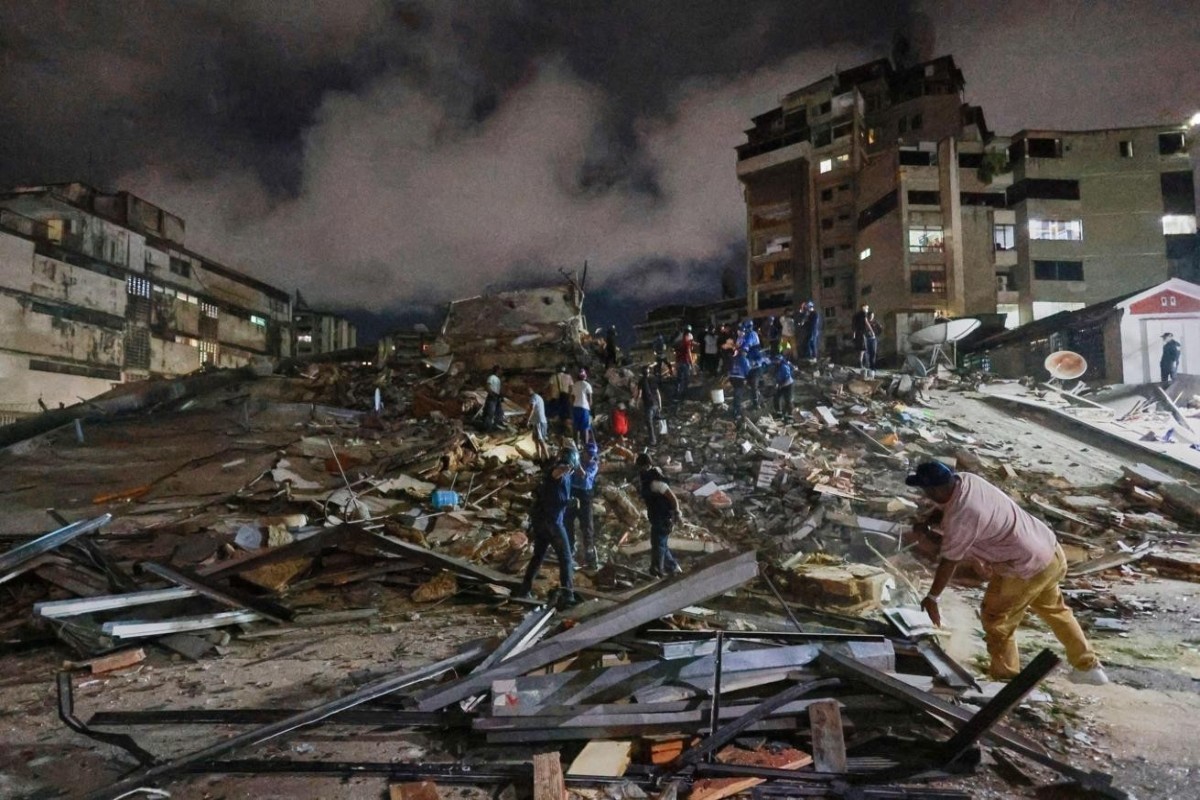
Death toll from Venezuela earthquake rises to 164 - UPDATED - 1 - VIDEO
14:52
25 June 2026

NEWS FEED
Telephone conversation held between Azerbaijani, Turkmen Presidents
20:37
25 June 2026
Vice-President of the Heydar Aliyev Foundation Leyla Aliyeva meets with Head of the Vatican Apostolic Library and Apostolic Archive
20:14
25 June 2026
Ziya Öztürkler praises Azerbaijan's continued support for the TRNC
19:50
25 June 2026
Apple says removal of VK apps from App Store is due to sanctions compliance
19:34
25 June 2026
Ruben Rubinyan elected as candidate for Speaker of the National Assembly of Armenia
19:26
25 June 2026
Missile alert declared in Moscow region-UPDATED
19:16
25 June 2026
Hikmat Hajiyev discusses Azerbaijan–NATO partnership with Secretary General's Special Representative
18:59
25 June 2026
Armenian Prosecutor General's Office petitions CEC to authorize criminal prosecution of Gagik Tsarukyan
18:55
25 June 2026
Venezuela's foreign minister thanks Azerbaijan for solidarity following earthquake
18:16
25 June 2026
Azerbaijan and Kazakhstan agree on full transition to electronic permit system
18:10
25 June 2026
Rubio believes no final agreements reached in Anchorage
18:10
25 June 2026
US, Iran agree in principle to establish direct military communication channel, Vance says
18:09
25 June 2026
Rubio believes no final agreements reached in Anchorage
18:03
25 June 2026
Azerbaijan Army servicemen participate in Anatolian Eagle-2026 International Exercise-VIDEO
18:01
25 June 2026
Leadership of the Ministry of Defense visits Central Clinical Hospital - PHOTO
17:52
25 June 2026
Eight Azerbaijani cities to host military marches marking Armed Forces Day
17:45
25 June 2026
Azerbaijan MFA: Existing opportunities should be used to finalize peace process with Armenia
17:30
25 June 2026
Rubio says Israel, Lebanon close to commitment of intent
17:18
25 June 2026
Lukashenko: Peoples of Belarus, Russia, and Ukraine will be together sooner or later
17:09
25 June 2026
Romanian ambassador leaves Russian Foreign Ministry without comment
17:08
25 June 2026
Rubio: Iran's support for regional proxies should be addressed in memorandum talks
17:07
25 June 2026
Azerbaijan and Ukraine discuss current cooperation agenda
17:06
25 June 2026
Azerbaijan-Israel innovation dialogue held at Shimon Peres Center - PHOTO
17:02
25 June 2026
Iran, Oman stress need for coordination on Strait of Hormuz traffic in foreign minister call
16:44
25 June 2026
Ghalibaf criticizes US over claims regarding Iran's unfrozen assets
16:43
25 June 2026
Iraqi Oil Ministry denies reports of potential OPEC exit, urges output quota reassessment-UPDATED
16:39
25 June 2026
President Ilham Aliyev signs order awarding Defense Ministry servicemen
16:31
25 June 2026
Azerbaijan's President awards fallen servicemen posthumously
16:31
25 June 2026
Military Institute named after Heydar Aliyev holds another graduation ceremony - PHOTO - VIDEO
16:26
25 June 2026
Azerbaijan establishes "Intellectual Customs" information system
16:24
25 June 2026
President Ilham Aliyev awards major general rank to five Defense Ministry servicemen
16:23
25 June 2026
Ashura blood donation campaign concludes in Azerbaijan, 1,269.45 liters of blood collected -PHOTO-UPDATED-1
16:21
25 June 2026
Rubio: No Gulf country supports charging fees for passage through the Strait of Hormuz
16:14
25 June 2026
Hikmat Hajiyev, Macron's adviser review state of Azerbaijan-France relations
16:10
25 June 2026
Azerbaijani cadet awarded Italy's "Sword of Honor"
16:00
25 June 2026
Azerbaijan establishes budget-funded organizations based on several public legal entities - DECREE
16:00
25 June 2026
Defense minister: Azerbaijani Armed Forces are among the strongest militaries in the region
15:56
25 June 2026
US sends search and rescue teams to Venezuela after deadly earthquake
15:55
25 June 2026
Citizens of Kyrgyzstan and Tajikistan graduate with honors from Heydar Aliyev Military Institute
15:53
25 June 2026
More than 90 kg of marijuana found in truck carrying cauliflower from Iran to Russia - PHOTO
15:47
25 June 2026
Azerbaijan's Foreign Minister attends Ukraine Recovery Conference in Poland
15:38
25 June 2026
Azerbaijan joins International Convention on the Control of Harmful Anti-Fouling Systems on Ships
15:25
25 June 2026
Charter of the State Medical Insurance and Expertise Agency approved-DECREE
15:24
25 June 2026
Azercell launches “Əsgərcell” offer on the occasion of 26 June – Armed Forces Day
15:23
25 June 2026
Azerbaijan recalls ambassador to Uzbekistan
15:14
25 June 2026
Financial results of "AzerGold" CJSC and its subsidiaries for year-end 2025 announced
15:14
25 June 2026
Azerbaijani delegation explores advanced pediatric rehabilitation practices in Israel
15:08
25 June 2026
Kremlin urges Russians to switch to Android and "national systems" after VK app removed from App Store
15:06
25 June 2026
Russia says nearly 170,000 Ukrainian drones shot down since war began
14:57
25 June 2026
Kremlin comments on Zelenskyy's statement about Belarusian retransmitters
14:54
25 June 2026


