













Baku-APA. The Muslim Brotherhood is trying to maneuver its way between its fierce anti-Israel ideology and the realities of governing as it ascends to leadership in Egypt for the first time in its history and faces the key question of how to deal with the country’s peace treaty with the Jewish state, APA reports quoting Associated Press.
The fundamentalist group’s stance on the accord — opposition but not renunciation — is a telling sign of its broader style of politics. It can play down its hardline doctrine in favor of short-term pragmatism as it looks to the long term, leaves its options open and engages in a degree of double-talk to pave the way.
The stance could also reflect the group’s own evolution as its new political party, whose members will be the ones actually involved in governing, gradually has to distinguish itself from the hard line of the Brotherhood itself, an 83-year-old organization whose leadership worked for decades in a hive-like secrecy because of state repression.
"The Brotherhood is in a real challenge and real crisis. For the first time, they are in power, which forces them to be rational when it comes to foreign policy because any miscalculations might blow their gains," said Khalil al-Anani, an Egyptian expert on Islamic movements.
Brotherhood officials have assured the United States that they will abide by the 32-year-old Camp David accords, a major concern for the Americans, who consider the deal a cornerstone of stability in the region.
Revoking the treaty, Israel’s top concern, seems firmly off the table, since it would put the Brotherhood into what it sees as an unnecessary conflict with the West. Instead, Brotherhood leaders say they want to renegotiate some provisions, particularly restrictions on the troops Egypt can station in the Sinai Peninsula.
At the same time, they denounce the accord as "unfair" to Egypt and have floated the idea of putting it to a referendum. That may be an attempt to play to the group’s anti-Israeli base, but a referendum would open up the explosive possibility of the Egyptian public rejecting the deal.
They also say that the Brotherhood itself will not recognize Israel and that its members will not meet with Israeli counterparts.
"Nobody can force me" to sit with Israelis, a top Brotherhood figure, Mahmoud Ezzat, told The Associated Press in an interview.
He said the Brotherhood would follow the Palestinian Islamic group Hamas in its attitude on the peace process — no direct participation. "Just like Hamas’ way in dealing with Israel, it is elected by the people, it negotiates through mediators."
"I have the right to act in a way that is consistent with my position without harming the other party," he said.
Analysts believe that for the short term, the Brotherhood would stay away from ministerial portfolios that involve direct contact with Israel, such as the Foreign Ministry, and rely on an elected president to deal with Israel in the Mideast peace process.
The Brotherhood’s top priority is believed to be to solidify its political domination within Egypt. A confrontation with Israel and the United States over the peace deal could endanger that. The Brotherhood, banned for decades, will be the strongest party in the first parliament since the Feb. 11 fall of Hosni Mubarak, after winning nearly 50 percent of the vote in recent elections.
But the group is deeply entrenched in its anti-Israeli ideology and can’t be seen by its supporters to be throwing that away.
Like the general Egyptian public, Brotherhood cadres were taught since childhood in the group’s "educational curriculum" that its elders carried arms and fought Israel in 1948 to liberate the land of Palestine. The Brotherhood opposed the peace deal with Israel in 1979 and then-President Anwar Sadat jailed some of its members in retaliation.
"If party leaders were spotted making contacts with Israel, it will cause upheaval inside the group," said Tharwat Kherbawi, a former Brother. "The Brotherhood fears its base, raised and fed on hatred of Israel. They have been told for decades that any deal with Israel is corrupt."
In 2007, Essam el-Arian, now deputy head of the Brotherhood’s Freedom and Justice political party, raised an uproar within the group when he told a newspaper the Brotherhood, if it came to power, was ready to recognize Israel and respect peace deals. In the face of the furor, he said that while the group doesn’t recognize Israel, it must act with "political realism" on Israel once in government.
Last month, officials from the Brotherhood’s Freedom and Justice Party met with several top U.S. officials, including Sen. John Kerry. The group’s website showed rare pictures of the meeting, with party member Saad el-Katatni — now tapped to be the new parliament speaker — shaking hands with Kerry, who patted his shoulder warmly.
Party leader Mohammed Morsi told Kerry that Egypt "respects the conventions and treaties that were signed," according to a statement by the group. In Washington, the State Department said the administration has received assurances from the Brotherhood respects the accords.
The central leadership of the Brotherhood mother organization quickly distanced itself. The group’s deputy leader Rashad Bayoumi denied any assurances were given and vowed Brotherhood members would not sit down with Israel.
"We don’t recognize Israel at all. This is an enemy, an occupier, a rapist and a criminal," he said.
Two weeks later, the group gave a warmer welcome to Hamas Prime Minister Ismail Haniyeh in his first visit outside the Gaza Strip since the militant group overran the territory in 2007. He was received at the Brotherhood’s main headquarters by a line of young men and veiled women waving green Hamas flags.
The visit suggested the Brotherhood will seek to stronger ties with Hamas, which the Mubarak government generally shunned, even helping Israel in the post-2007 blockade of Gaza. Haniyeh emphasized the historic link between the groups. Hamas is an ofshoot of the Brotherhood, though the Brotherhood disavowed violence in the 1970s.
"The Islamic resistance group of Hamas is the Jihad arm of the Brotherhood, it is the Palestinian face," Haniyeh said.
The Brotherhood’s talk of treaty amendments and a referendum appears aimed at showing its anti-Israel credentials — though at the same time, the group is not formally committed to following through.
Kherbawi said talk of a referendum is mainly to save face as the Brotherhood works out how to deal with Israel. "They want to hold the stick in the middle and walk the tightrope," he said. "They don’t want to fall from the rope."
As for the changes, Brotherhood spokesman Mahmoud Ghozlan pointed to provisions barring the Egyptian military from deploying in the Sinai, near the Israel border. "Its a matter of sovereignty," he told the AP.
Amending those provisions would not touch the central issues of peace and recognition. Israel has shown some flexibility on the Sinai issue, agreeing to troop deployments there last year during the chaos of the revolution.
However, Israel may be reluctant to formally amend the deal or see heavy armor or air forces in Sinai. Israeli Foreign Ministry spokesman Yigal Palmor said the government would not comment on the prospect of changes since there has been no official call by Egypt to do so.
For the near future, a Brotherhood-dominated Egypt will likely follow policies not that far from Mubarak’s, said several analysts.
"They know that Egypt is not Gaza and any ruling party must respect treaties inherited from previous government because they can’t risk deterioration of relations with America or even Israel," said Emad Gad, an Egyptian specialist on Israel studies.


 Follow us on Telegram
 t.me/apanewsaz
 Follow us on Instagram
 Follow us on TikTok
 Follow us on Facebook
 Follow us on X
Africa
At least twelve dead after migrant boat incident off Gambia
 16:19
16:19
 16 October 2026
Two killed, five injured in shooting in S. Africa
16:09
14 October 2026
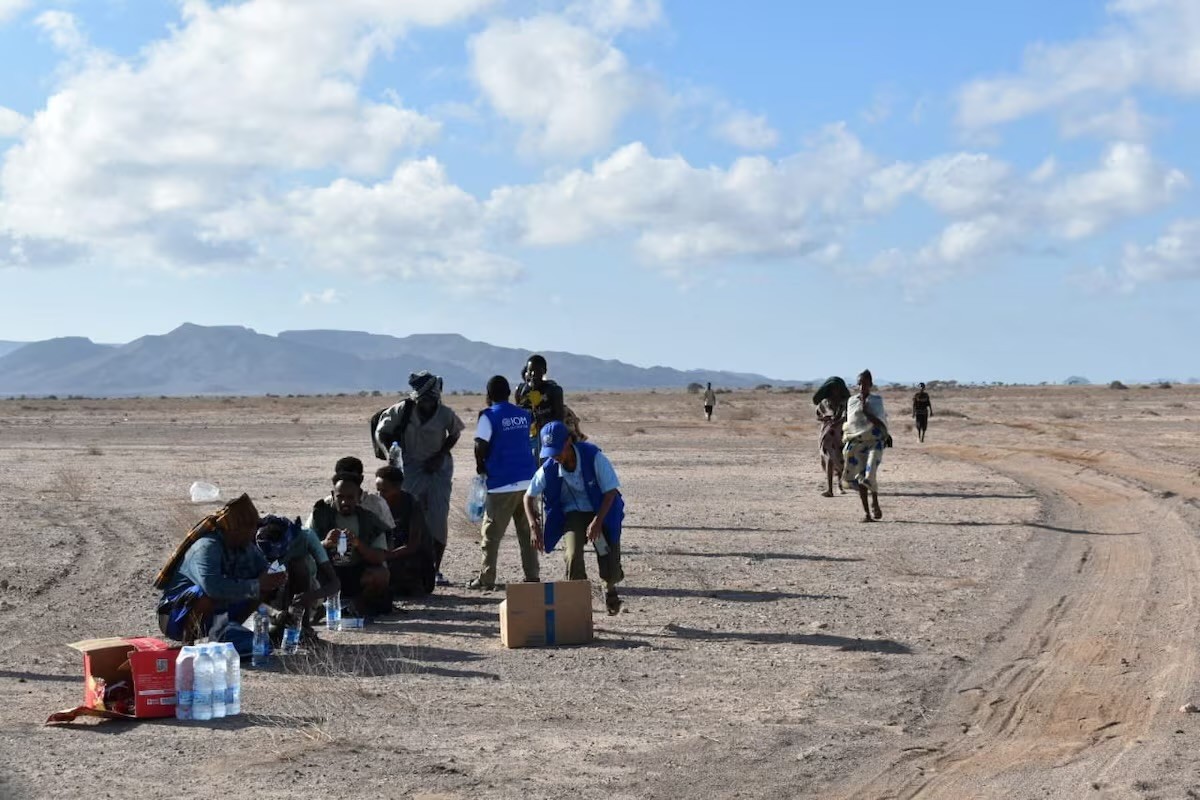
At least 139 migrants dead, including some children, after boat from Djibouti to Yemen capsizes, UN agency says
21:17
11 October 2026
Central African Republic foils planned large-scale militant attack
07:04
11 October 2026

NEWS FEED
Armenian NPP director general: We intend to develop energy cooperation with Azerbaijan
17:09
16 October 2026
New Azerbaijan Party terminates Ramiz Mehdiyev's membership - UPDATED - 1
17:02
16 October 2026
Azerbaijan extends funding for war-disabled persons and martyrs' families until 2029
16:58
16 October 2026
Zelenskyy: Ukraine in talks with US on new meeting
16:55
16 October 2026
Energy security in the South Caucasus discussed at Russian Energy Week
16:53
16 October 2026
Moscow airports overcrowded following Ukrainian drone attacks - PHOTO
16:37
16 October 2026
Azerbaijan's Deposit Insurance Fund and Uzbekistan's Deposit Guarantee Agency ink Memorandum
16:32
16 October 2026
At least twelve dead after migrant boat incident off Gambia
16:19
16 October 2026
Kogalym airport in Russia closed for first time due to drone threat
16:00
16 October 2026
Official Moscow warns of threat of militants crossing from Afghanistan into Central Asia
15:58
16 October 2026
Oil Fund earns nearly AZN 8 billion from oil and gas sales - EXCLUSIVE
15:58
16 October 2026
Polish FM: US has not spent a cent on Ukraine’s defense since January last year
15:42
16 October 2026
Chief of General Staff of Azerbaijan Army meets with NATO delegation
15:40
16 October 2026
Prospects for further development of Azerbaijan-Sri Lanka relations discussed
15:38
16 October 2026
Novak announced the actual solution to the issues of diesel supplies to the United States
15:36
16 October 2026
Armenia PM, Iran president meet in Yerevan, discuss bilateral agenda
15:12
16 October 2026
Criminal case opened over calls to seize power in Azerbaijan, Turkish citizen declared wanted
15:05
16 October 2026
Heydar Aliyev International Airport to switch to autumn-winter flight schedule
14:39
16 October 2026
Foreign Minister Jeyhun Bayramov meets with CICA Secretary General Kairat Sarybay
14:11
16 October 2026
Azerbaijan prevents smuggling of 35 kg of drugs from Iran
14:10
16 October 2026
FM Mirzoyan: Armenia-Türkiye border could open at any moment
14:05
16 October 2026
Media representatives familiarize themselves with demining operation carried out by MES in Aghdam - PHOTO
14:01
16 October 2026
Peskov accuses Zelenskyy of refusing to assume responsibility
14:00
16 October 2026
Lukashenko orders expansion of volunteer defense units in Belarus
13:50
16 October 2026
Death toll from Istanbul floods reaches 4, three people missing
13:39
16 October 2026
Araghchi: Iran concerned about US presence in region, but trusts Armenia
13:37
16 October 2026
Prospects for LNG supplies to Vietnam discussed in Baku
13:16
16 October 2026
9th Congress of Azerbaijani journalists held - PHOTO - UPDATED - 1
13:02
16 October 2026
SOCAR announces intention to purchase gas from Gazprom
12:59
16 October 2026
ADY chairman attends New Silk Way Business Forum in Kazakhstan
12:57
16 October 2026
President Ilham Aliyev awards group of individuals for contributions to development of Paralympic movement
12:55
16 October 2026
President Ilham Aliyev received newly appointed Georgian ambassador to Azerbaijan
12:54
16 October 2026
President Ilham Aliyev received newly appointed Indian ambassador to Azerbaijan
12:50
16 October 2026
Press Council will continue its activities to develop journalism - Chairman
12:37
16 October 2026
Azerbaijan detains six foreigners over attempted illegal border crossings
12:33
16 October 2026
Chemical production indicators in Azerbaijan announced - TABLE
12:30
16 October 2026
High demand could help Azerbaijan increase export potential of halal products - Deputy Chairman
12:25
16 October 2026
New board of Directors of Azerbaijan’s Press Council formed
12:15
16 October 2026
Fuel oil production sharply increases in Azerbaijan - TABLE
12:09
16 October 2026
Azerbaijan Press Council elects new Chairman
12:03
16 October 2026
Parliament committee chairman: Artificial intelligence cannot replace civil servants
12:02
16 October 2026
28 state standards reviewed in Azerbaijan
11:57
16 October 2026
Nearly 30 bcm of gas transported through Azerbaijan’s main pipelines this year
11:57
16 October 2026
State standards to become more accessible to businesses - Deputy Chairman
11:53
16 October 2026
AZSTAND: Nearly 4,000 new regulatory documents to be developed in Azerbaijan
11:50
16 October 2026
Russia’s Ryazan Oil Refinery hit by drone attack again
11:48
16 October 2026
Key indicators of Azerbaijan's oil and gas sector - TABLE
11:48
16 October 2026
Volume of oil transported via BTC this year announced
11:44
16 October 2026
Number of state standards adopted in Azerbaijan nearly triples
11:44
16 October 2026
Speaker: Ilham Aliyev’s election as President in 2003 holds special place in country’s history
11:42
16 October 2026


