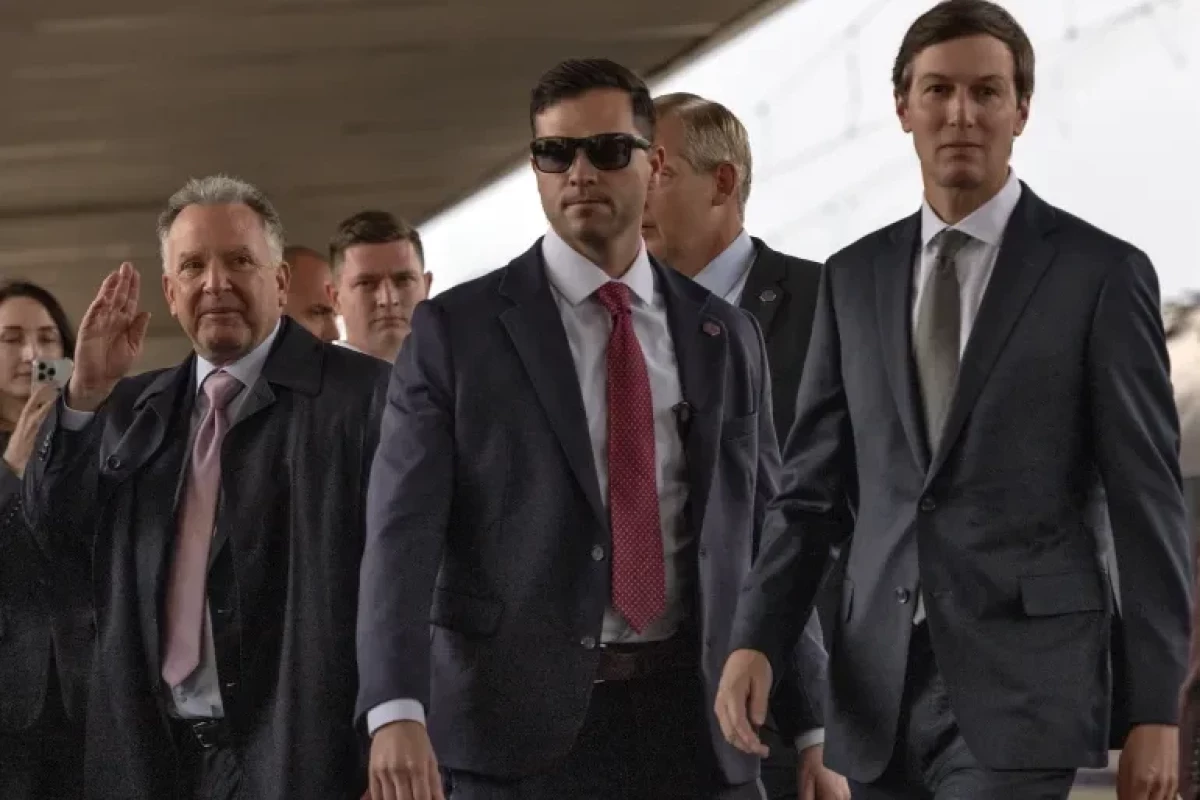


US President Donald Trump’s intention to end the Russia-Ukraine war has become one of the key priorities on Washington’s foreign policy agenda. The contacts of Trump administration representatives Steve Witkoff and Jared Kushner with Moscow and Kyiv also indicate that the White House is seeking to develop a new negotiating mechanism by directly assessing the positions of the parties. However, the intensification of diplomatic activity does not yet mean that the fundamental differences between Moscow and Kyiv have been resolved.
One of the key features distinguishing Trump’s approach is that the war is being assessed not only within the framework of Ukrainian or European security, but also through the prism of broader US strategic interests.
American political commentator Peter Tase told APA that Washington’s primary objective is not to finance the war indefinitely, but to reach an agreement that protects US strategic interests and can create long-term stability in Europe.
“The main difference between Trump’s approach and that of previous administrations is that he is trying to build diplomacy not solely around the demands of Ukraine or Russia, but through the prism of US interests,” Tase noted.
From this perspective, the prolongation of the war in Ukraine creates a twofold problem for Washington. On the one hand, the United States is committing substantial financial and military resources; on the other, it is being forced to divert its attention from the Indo-Pacific region and its strategic competition with China. Tase believes that the continuation of the war is accelerating the further deepening of Moscow’s political, economic and military ties with Beijing, which is not a desirable scenario for the United States.
Nevertheless, the main obstacle facing Trump is the fundamentally different approaches of Moscow and Kyiv to the terms of peace.
Russian expert and Doctor of Political Sciences Tatyana Poloskova said that Witkoff and Kushner’s contacts with Russia had produced no sensational breakthrough and that the parties remained committed to their previous positions on the key issues.
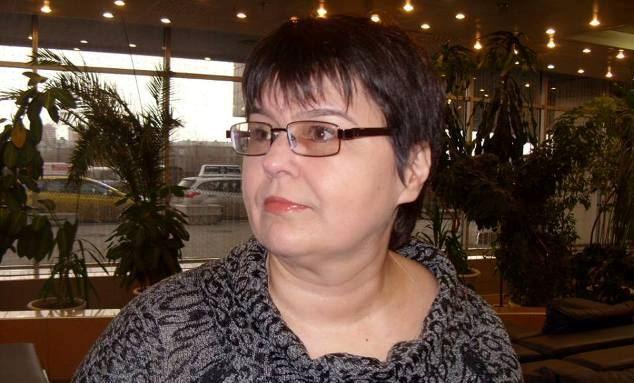
“At present, neither side is willing to make concessions on the territorial issue. Nevertheless, I believe the visit itself is a positive development. The existence of such a negotiating channel between the United States, Russia and Ukraine is important,” Poloskova said.
Ukrainian political scientist Valeriy Dymov, meanwhile, stresses that the view from Kyiv is more skeptical. According to him, there is little expectation in Ukraine that Witkoff and Kushner’s visits will lead to a swift and comprehensive peace agreement.

According to Dymov, one of the main reasons for the problem is Ukraine’s desire to be treated as a fully-fledged party to the negotiations. He believes that in previous initiatives Kyiv was sometimes approached as though it were already the defeated side.
“Under such an approach, Ukraine was not at the negotiating table, but ‘on the menu’,” Dymov said.
A comparison of these three positions clearly illustrates the challenge facing the Trump administration. Washington views ending the war as a strategic necessity; Moscow wants its security and territorial demands to be taken into account; while Kyiv considers sovereignty and territorial integrity to be the immutable foundation of any agreement.
This is precisely why the territorial issue remains the most difficult knot in the negotiations.
Tase believes that Trump’s success will depend on how far he can move the parties away from their maximalist positions. In his view, the United States has sufficient leverage to influence both sides. Washington can use military and financial assistance to Ukraine, while in its dealings with Moscow it can employ tools such as tightening sanctions or easing them under certain conditions.
Poloskova, meanwhile, says Moscow’s position remains firm. According to her, the Kremlin does not appear prepared to retreat on fundamental issues concerning the status of Donbas, Crimea, Ukraine’s NATO prospects and Russia’s security demands.
“Frankly, I do not know either how these positions can be reconciled. The parties’ positions on the territorial issue are extremely far apart,” the Russian expert noted.
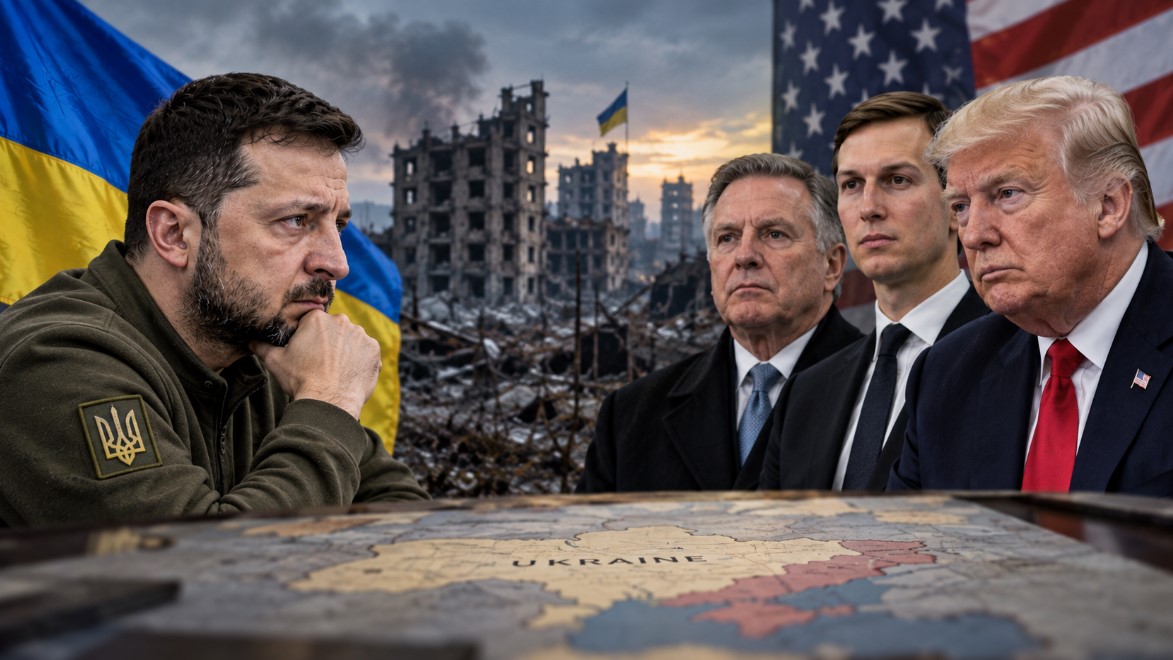
Dymov, meanwhile, says territorial concessions are fundamentally unacceptable to Kyiv. In his view, the issue is not merely about changing a line on the map, but about Ukraine’s state sovereignty.
“Ukraine cannot compromise on the territorial issue. This is not only a matter of public position, but also one arising from the Constitution of Ukraine,” the political scientist stressed.
Under these circumstances, the primary function of Witkoff and Kushner’s mission may be to determine the actual limits of the concessions each side is prepared to make. According to Tase, the task of the US representatives is not simply to listen to the positions of Moscow and Kyiv. The objective is to identify for President Trump the areas in which genuine opportunities for agreement exist.
Poloskova also considers maintaining the negotiating channel important, but she is not overly optimistic about the current process. To some extent, she compares the negotiations with the former Minsk Group: there is a process, and there is movement, but the outcome is not yet visible.
Dymov, meanwhile, draws attention to the fact that Witkoff is not perceived in Ukraine as a completely neutral mediator. According to him, Witkoff’s long-standing and intensive contacts with Moscow have generated certain suspicions within Ukrainian society.
“In the eyes of a significant part of Ukrainian society, Witkoff gives the impression of being a mediator whose position is closer to Moscow’s,” Dymov said.
Nevertheless, refusing contacts with US representatives is not a realistic option for Kyiv either. Dymov believes that at least limited results can be achieved in trilateral or other formats. Prisoner exchanges, humanitarian issues and other localized agreements could provide an initial foundation for a broader diplomatic process.
Tase also believes that the success of Witkoff and Kushner’s mission should not be measured by the immediate signing of a final peace agreement. In his view, at the initial stage, a ceasefire, prisoner exchanges, restrictions on attacks against energy and critical infrastructure, and the establishment of a direct negotiating mechanism could all be considered tangible results.
However, the ceasefire issue itself is also a source of disagreement between the parties. According to Poloskova, Moscow prefers a full-fledged peace treaty rather than a temporary pause. The Russian side believes that a short-term ceasefire could allow Ukraine to rebuild its forces and later resume military operations.
Kyiv, meanwhile, regards post-ceasefire security mechanisms as the key issue. According to Dymov, political promises and economic investment alone cannot be regarded as sufficient security guarantees for Ukraine.
“A real security guarantee should be close to the level of Article 5 of the NATO Charter. If there is no complete political and legal certainty that the guarantee provided will be fulfilled in the future, its practical value is limited,” he said.
This reveals the second major dilemma facing Trump: ending the war and creating a sustainable peace are not the same thing. A rapid ceasefire may appear to be a diplomatic success, but if the security mechanisms are weak, the possibility of the war resuming several years later cannot be ruled out.
Tase also draws attention precisely to this point. In his view, not just any agreement can be considered a success for Trump. The United States needs to achieve a model that does not lead to another large-scale confrontation in the future.
At the same time, the economic component of the negotiations is becoming increasingly important. Poloskova notes that there are financial and industrial circles in both the United States and Russia interested in resolving the sanctions issue in one form or another.
Alongside sanctions, Tase sees energy markets, Ukraine’s future reconstruction and the potential involvement of American companies in that process as part of Washington’s diplomatic toolkit.
This suggests that the Trump administration may seek to build a possible peace formula not only around a political settlement, but also around an economic package. Certain economic incentives for Russia, reconstruction and investment opportunities for Ukraine, and the transfer of a greater share of security responsibility to Europe could become components of a broader agreement.
However, there is one point on which the experts broadly agree: the conditions for a rapid breakthrough have not yet emerged.
Poloskova believes that Moscow and Kyiv have effectively reached a deadlock.
Dymov sees no serious basis for genuine convergence on the fundamental issues.
Tase, meanwhile, acknowledges that Trump has a chance, but links it to whether the parties come to understand that the cost of continuing the war is higher than the cost of compromise.
“If the United States can demonstrate to both Russia and Ukraine that the political, economic and military cost of continuing the war will increase, while an agreement would bring concrete benefits, it may be possible to bring the parties’ positions closer together,” the American commentator believes.
Thus, the main outcome of Witkoff and Kushner’s visits to Moscow and Kyiv so far is not a peace agreement, but the maintenance of a functioning diplomatic channel. Whether this channel can be translated into concrete results will become clear at a more difficult stage, when territorial issues, security, sanctions and future geopolitical status are placed on the negotiating table.
For Trump, ending the war in Ukraine represents both a personal political success and an opportunity to rebalance the United States’ global strategy. For Moscow, the key issue is resolving the security and territorial problems it presents as the causes of the war. For Kyiv, peace can only be acceptable if it does not jeopardize the country’s state sovereignty and long-term security.
Finding common ground between these three different logics will be the principal test for Washington’s diplomacy. There is currently a window of opportunity for negotiations, but as long as the parties’ “red lines” remain unchanged, it still appears difficult for Witkoff and Kushner’s diplomatic activity to translate into a genuine peace agreement.



 Follow us on Telegram
 t.me/apanewsaz
 Follow us on Instagram
 Follow us on TikTok
 Follow us on Facebook
 Follow us on X