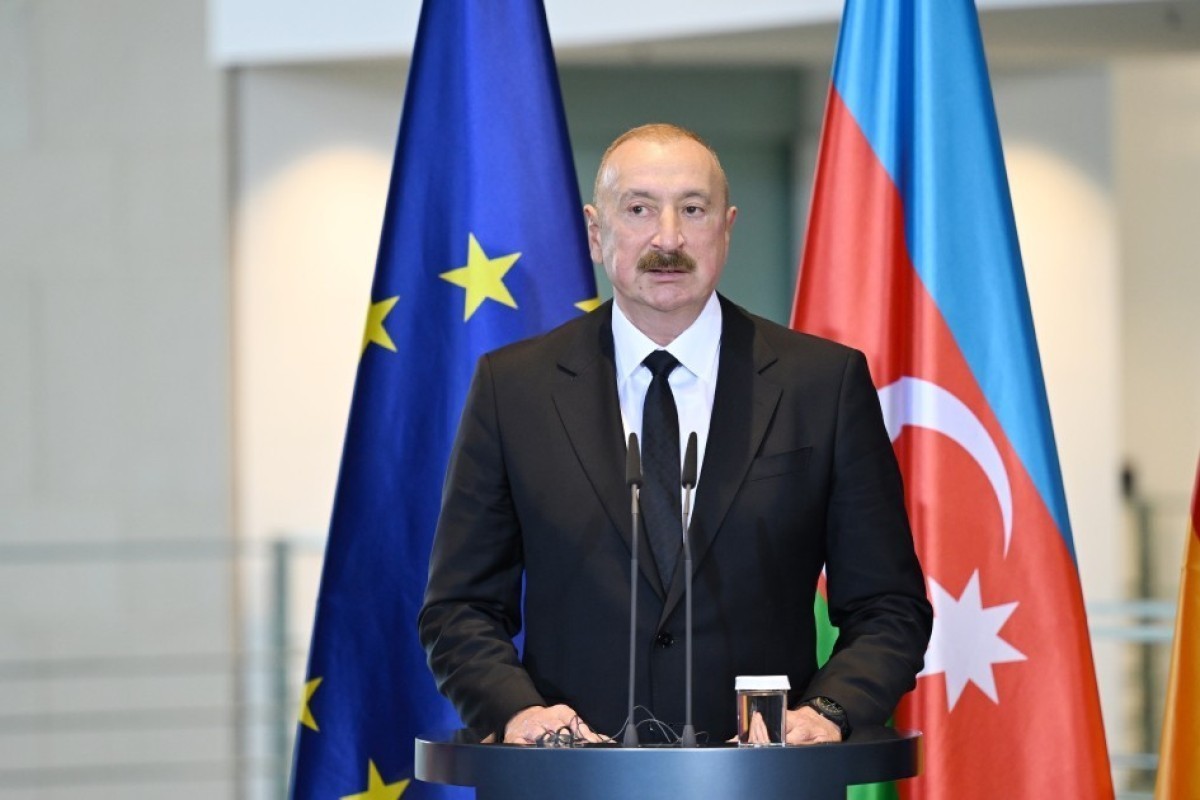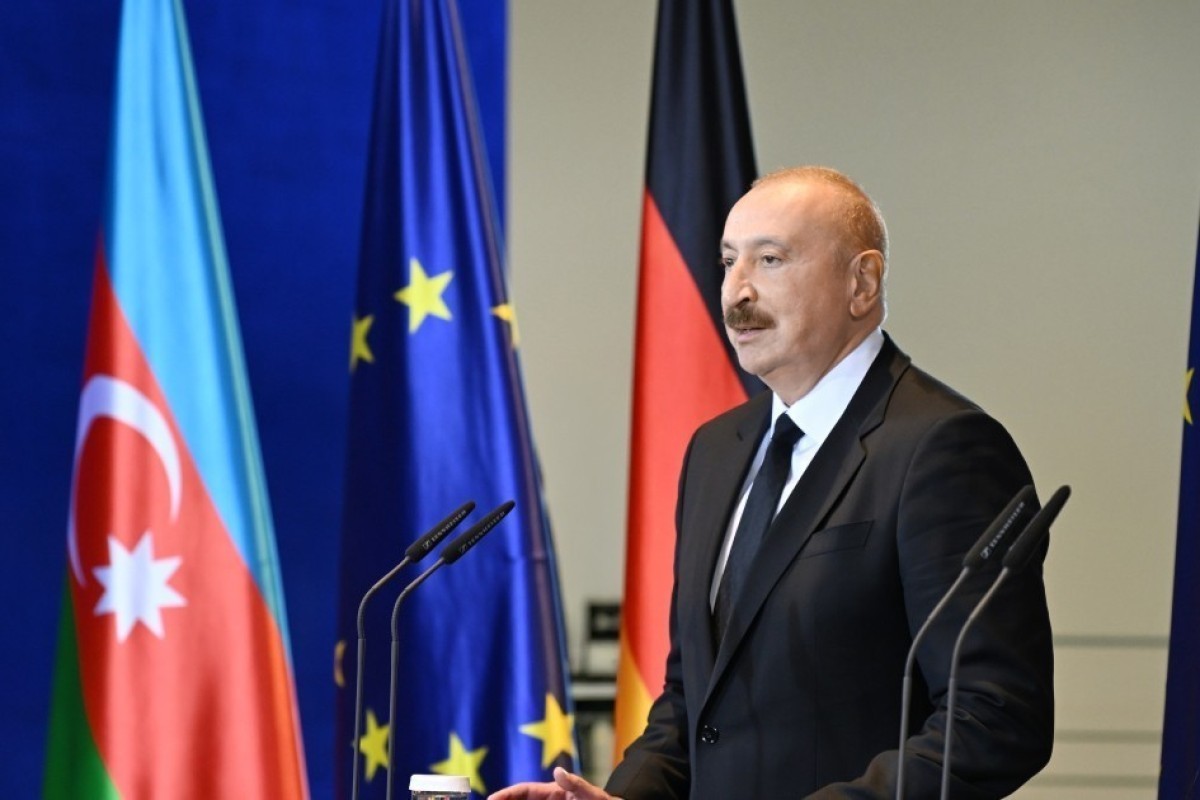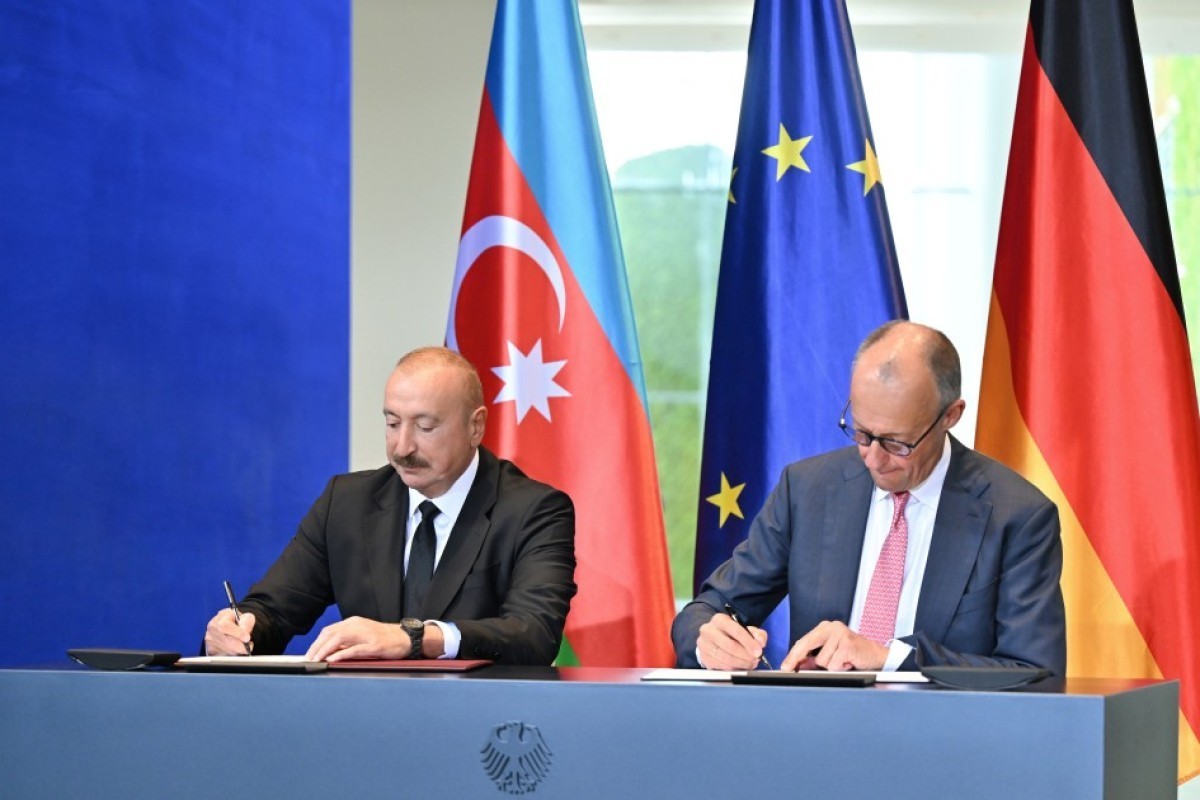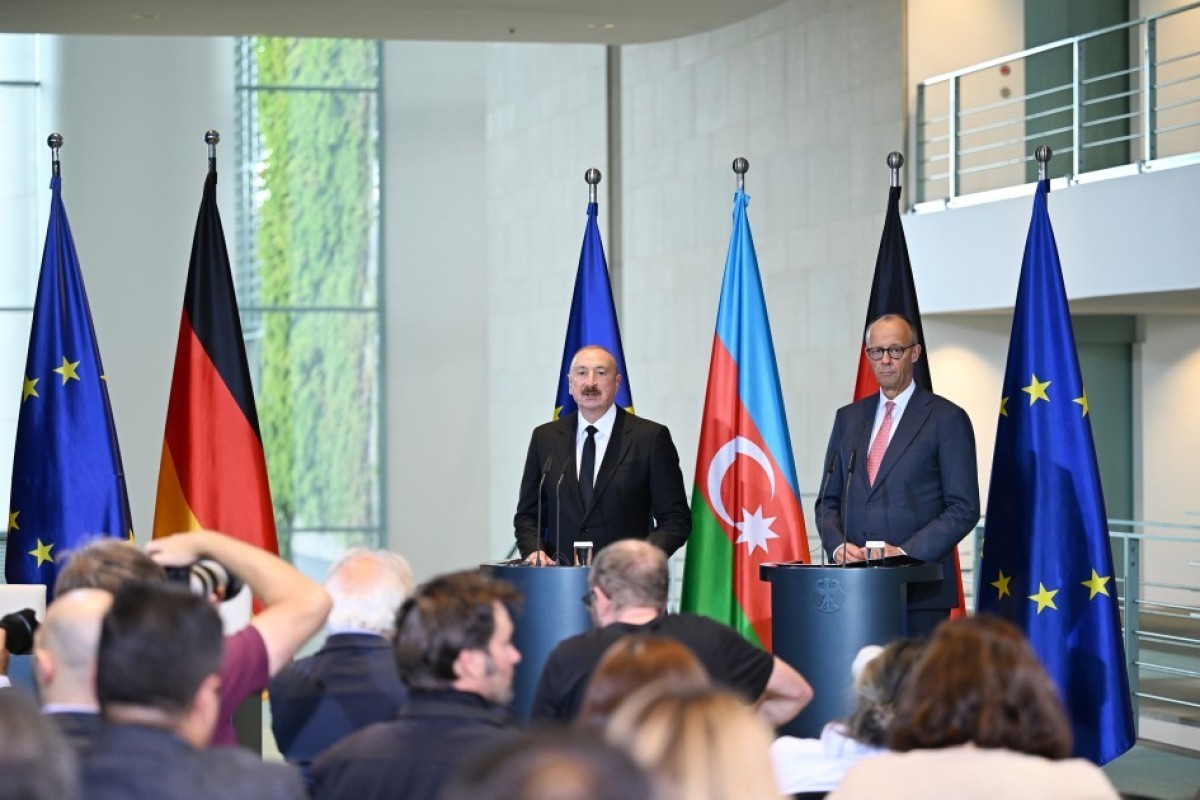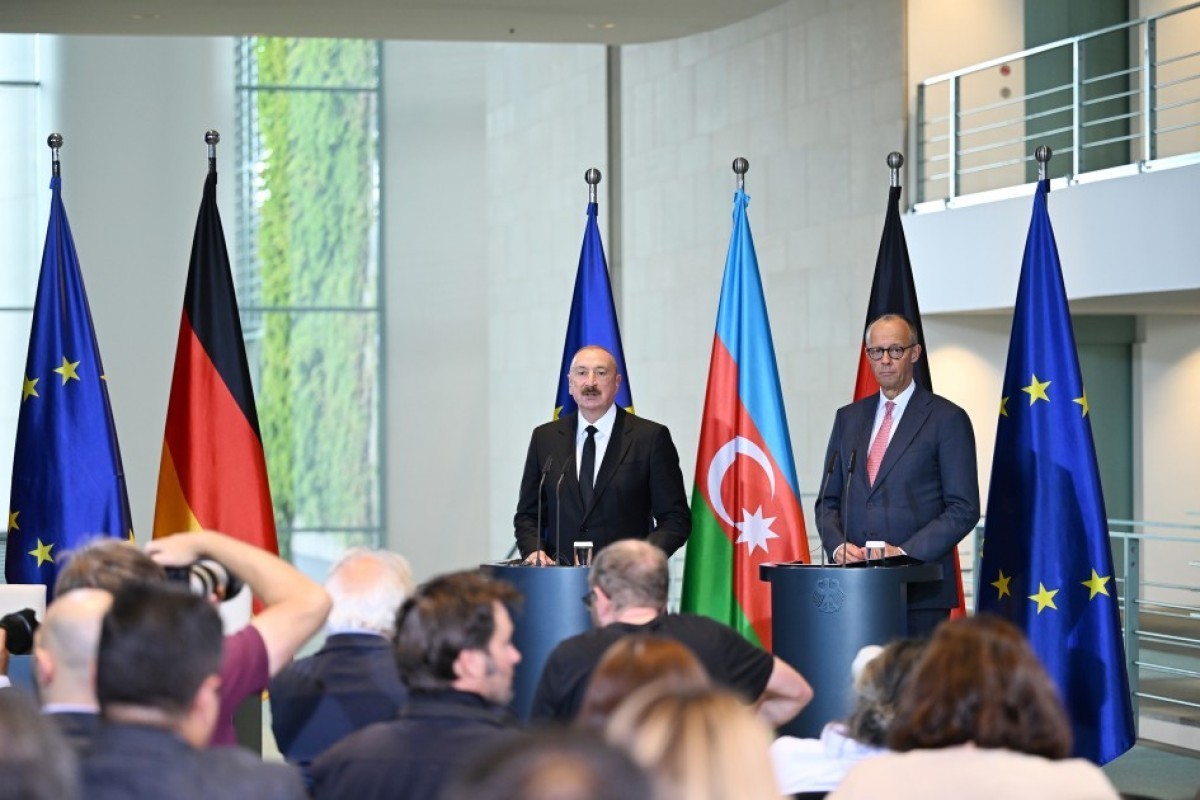

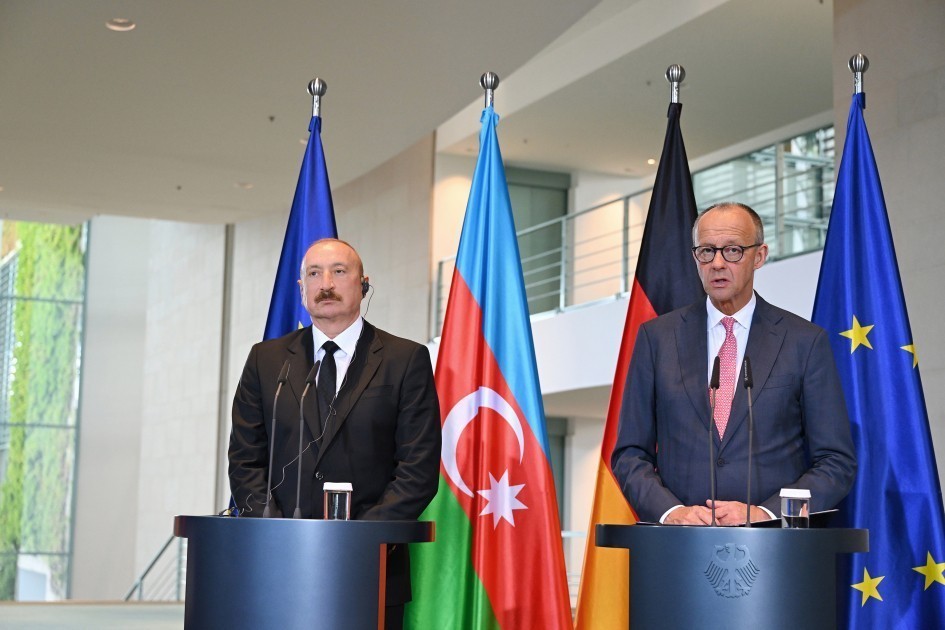
President of the Republic of Azerbaijan Ilham Aliyev and Federal Chancellor of the Federal Republic of Germany Friedrich Merz made press statements and answered journalists' questions in Berlin, APA reports.
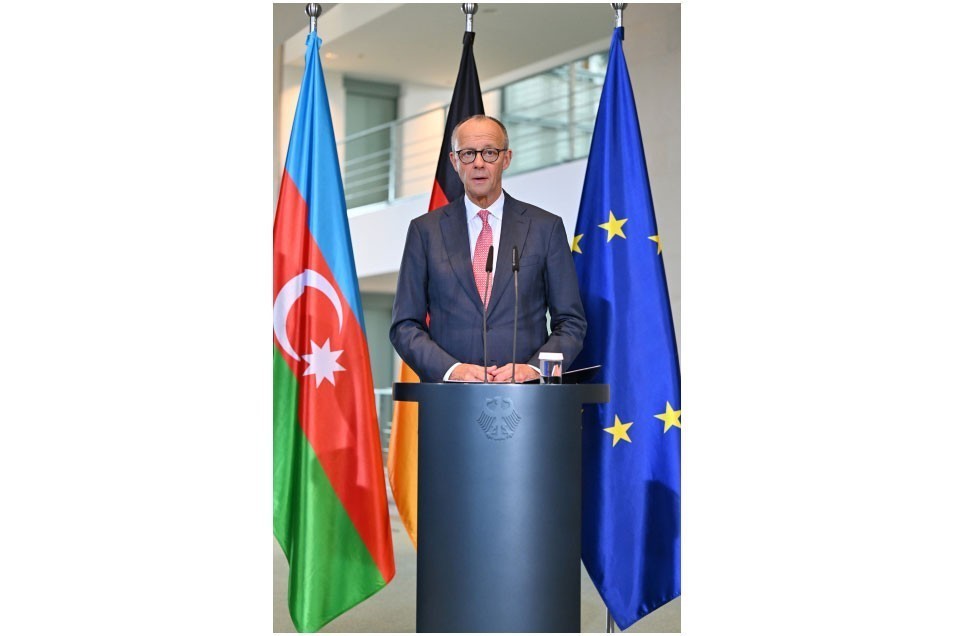
First, the Federal Chancellor of Germany made his statement.
Statement by
Chancellor Friedrich Merz
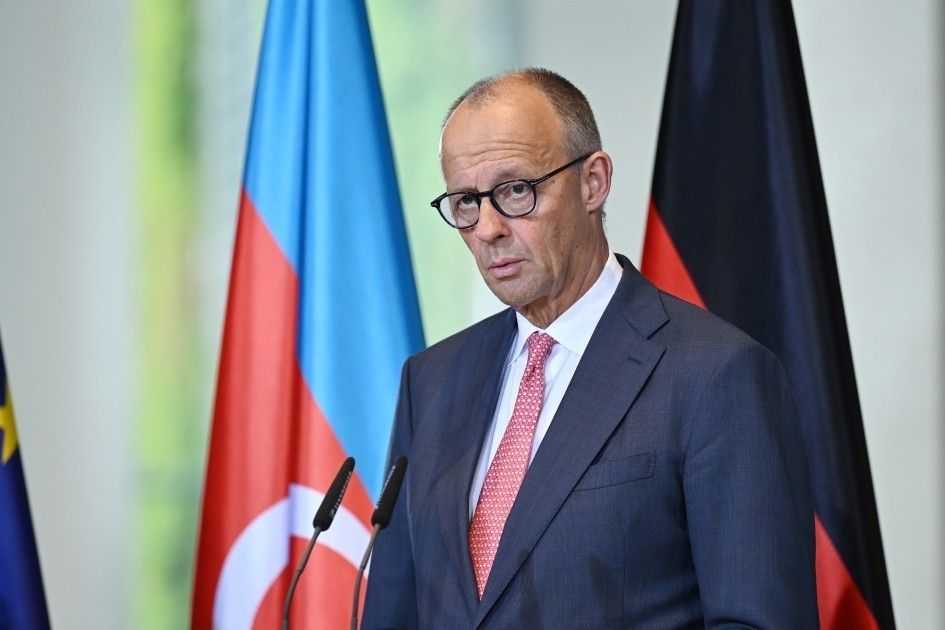
- Ladies and gentlemen, welcome.
I am extremely pleased to welcome President of Azerbaijan Ilham Aliyev to Berlin today. Today, we are hosting the visit that was originally scheduled for March. However, we had to postpone the visit due to the war involving Iran.
Nevertheless, this visit also demonstrates that our countries cannot remain unaffected by the major crises and wars of today. This applies both to the Middle East and to Russia's war of aggression against Ukraine. Those wars have had a major impact on Germany and Azerbaijan in terms of their security and economic interests. Although both conflicts may differ in their details, in any case, we promote negotiated solutions. We are united by the shared conviction that, ultimately, only a negotiated settlement can bring long-term peace, security, and stability.
Mr. President, peace, security, and stability in the South Caucasus are also essential for us. Germany and the European Union are very interested in achieving lasting peace in that geopolitically vital region. For this reason, Mr. President, we are particularly pleased to welcome you to Germany. We congratulate you on the initialing of the peace treaty between Azerbaijan and Armenia. This is a historic agreement. Thanks to it, an opportunity has arisen to overcome a conflict that has lasted for decades. We would be glad to do whatever we can from a German and European perspective.
Greater stability in the region also creates new opportunities for broad economic cooperation between our countries. I am very glad that relations between our countries are developing steadily. In the spring of 2025, President Steinmeier became the first German head of state to visit Azerbaijan. This year, there have also been intensive exchanges between our parliaments. Today, by signing the Joint Declaration, we have laid the foundation for the further expansion of our bilateral relations. As you also witnessed during the ceremony, an agreement was reached on the establishment of the Azerbaijan-Germany Business Council.
This is an important signal to companies in both countries. We are serious about expanding relations between Germany and Azerbaijan. During the current crisis, cooperation in the supply of crude oil, as well as natural gas through the Southern Gas Corridor, is of particular importance. Mr. President, we discussed these matters in detail. We wish to further diversify our energy supply through cooperation with Azerbaijan. Today, we also discussed expanding the use of renewable energy and hydrogen.
We are also holding constructive discussions regarding Azerbaijan's proposal on an investment program. This program could open up new opportunities for German companies operating in Azerbaijan. The importance of the South Caucasus as a bridge between Europe and Asia is also growing. New transport and trade corridors create economic potential that we want to utilize jointly. Mr. President, as you know, it is often not easy for small and medium-sized enterprises to invest over long distances. Suitable framework conditions on the ground are always extremely important.
We discussed those issues today. With the two declarations signed today, we have taken a major step forward. Mr. President, I express my deep gratitude to you once again for visiting Berlin. I look forward to continued productive cooperation between Azerbaijan and Germany.
x x x
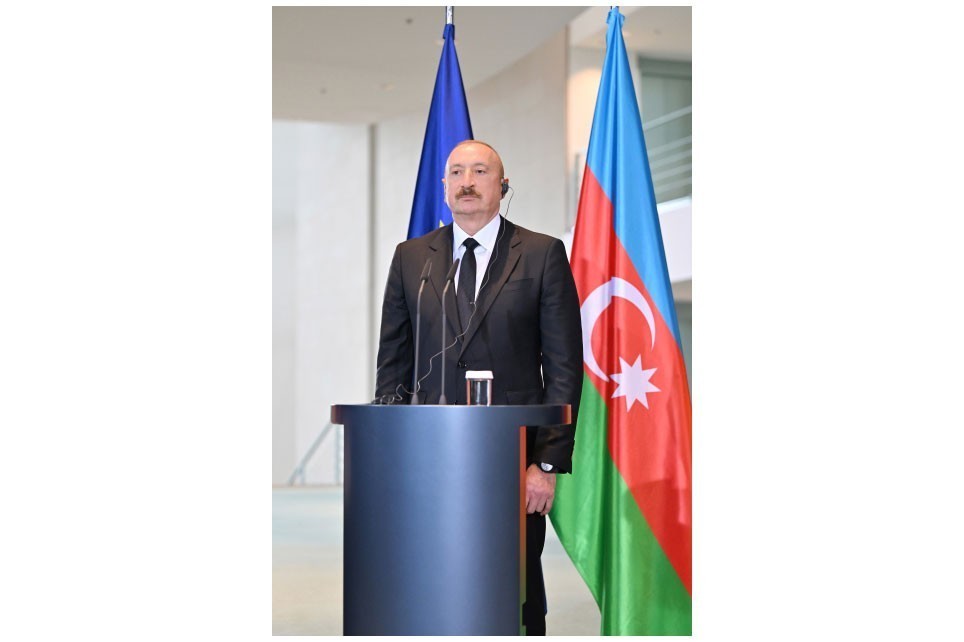
Then, the President of Azerbaijan made the statement.
Statement by
President Ilham Aliyev
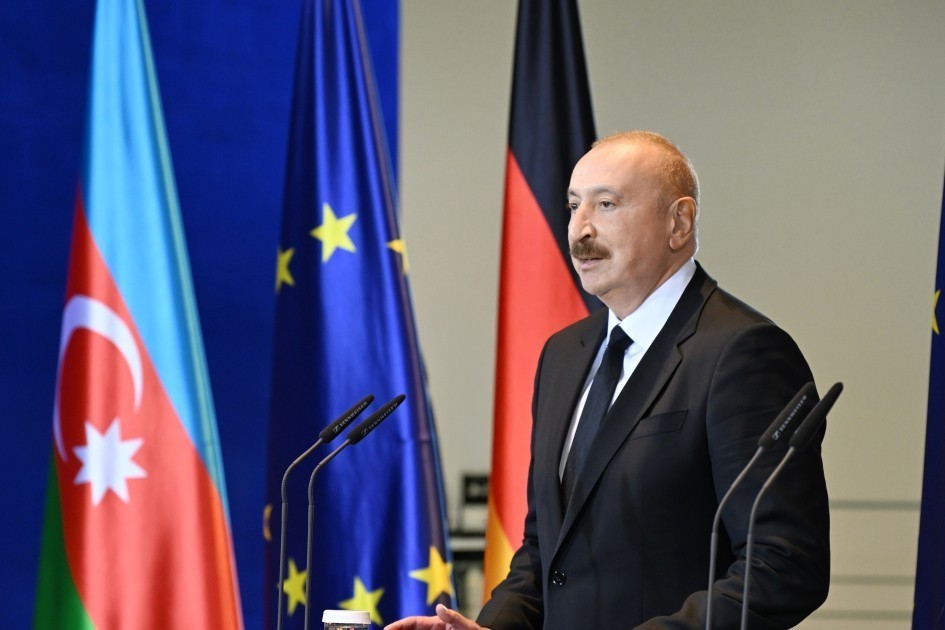
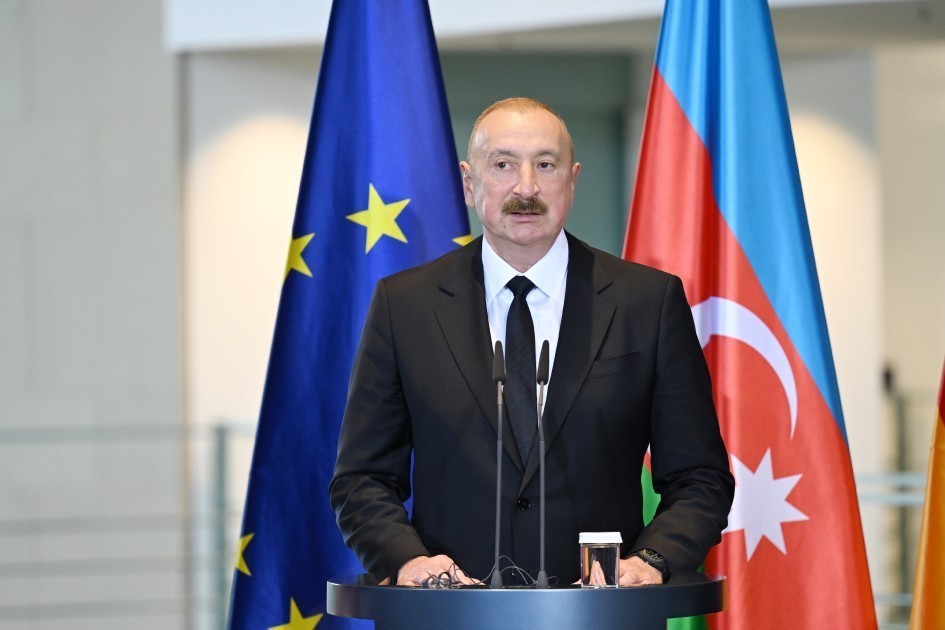
- Thank you, Mr. Chancellor. First of all, I would like to express my gratitude to you for the hospitality extended to me and for the invitation to pay an official visit. I am very pleased to be in your country once again. I am confident that the documents signed today will elevate our relations to a new level. We have long wished to initiate a strategic dialogue, and we have now achieved this. At the same time, I am certain that the Joint Declaration signed today on expanding economic ties will function as an active framework and yield good results.
Our bilateral agenda is quite extensive. We exchanged views on this during both our one-on-one meeting and the meeting in an expanded format. As a leading country in the European Union, Germany is increasing its influence in the South Caucasus. Azerbaijan–Germany ties will contribute not only to bilateral relations but also to cooperation, peace, and stability across our entire region.
Many German companies operate successfully in Azerbaijan. The number of companies actively operating in the country exceeds 200. I am confident that following today's visit, their number will increase even further. Matters regarding mutual investment are being discussed, and concrete proposals have been put forward for German companies to operate on a broader scale in Azerbaijan.
You touched upon cooperation in the energy sector. There are positive results in this area as well. Starting this year, Azerbaijan has begun exporting its natural gas to Germany. Thus, our gas is currently delivered to 10 European Union member countries, which undoubtedly makes a major contribution to energy security. Considering that Azerbaijan also exports its oil to Germany and is determined to deliver its green energy to Europe in the future, cooperation in the energy field will be very large-scale.
Azerbaijan–Germany cooperation is also of paramount importance in terms of connectivity and transit opportunities, as German companies have achieved great success in this field. Azerbaijan continues to modernize its transport infrastructure. By becoming a full member of the Central Asian Consultative Meetings format last year, Azerbaijan serves as a bridge between Central Asia and Europe—a role that will steadily expand. Concrete action plans are envisaged across various areas. Specific proposals were put forward during our exchange of views on the implementation of the Declaration signed today. Several working groups will be established to ensure that the documents signed today are swiftly translated into practical results.
At the same time, I would like to express my gratitude to you for Germany's contribution to the peace process in the South Caucasus. After many years, the normalization of Armenia–Azerbaijan relations and the initialing of the peace treaty—along with the signing of the Joint Declaration at the White House in Washington with the participation and signature of President Trump—effectively brought an end to the 30-year-long conflict. Immediately after this agreement, Azerbaijan proceeded to take practical steps. Today, petrol and diesel fuel supplied by Azerbaijan are making a significant contribution to Armenia's energy security, particularly given the current difficulties affecting the export and import of petroleum products. At the same time, the transit of cargo to Armenia through the territory of Azerbaijan has also gathered momentum. To date, more than 40,000 tonnes of transit cargo have passed through Azerbaijani territory.
In other words, we are witnessing a truly historic era. Azerbaijan, whose territories remained under occupation for many years, ended the occupation through its own strength, restored its territorial integrity and sovereignty. It fulfilled four UN Security Council resolutions on its own, offered peace to Armenia, and received a positive response. Therefore, I reiterate that we highly appreciate the role of the German government in this domain. Meetings were also held in Germany at the level of foreign ministers during the negotiation process.
Finally, I would like to touch upon European Union–Azerbaijan relations. This year, we have witnessed visits to Azerbaijan by both the President of the European Council, Mr. Costa, and the President of the European Commission, Ms. von der Leyen. These visits carry profound political significance and will further strengthen ties between the European Union and Azerbaijan. As Germany is a leading nation among European Union member states, its role in this regard is naturally paramount, and I am confident that Germany will continue its efforts to foster future cooperation.
Once again, Mr. Chancellor, I would like to thank you for the invitation and hospitality, and I cordially invite you to pay an official visit to Azerbaijan at your convenience
x x x
Then, they answered the journalists’ questions.
Roman Goncharenko (Deutsche Welle): My question is regarding Russia's war against Ukraine. Mr. Federal Chancellor, a few days ago the German media reported that an informal German-Russian meeting took place in Baku. It was also noted that former high-ranking politicians from the parties in the governing coalition attended the meeting. No information was provided regarding the outcome of that meeting. In this regard, there are two opinions among experts here in Berlin. Some say that such behind-the-scenes meetings are useful and can do no harm. Others criticize them and contend that such meetings could be counterproductive because they might send a signal of weakness to Russia. How do you view this?
I also have a question for the President. Mr. President, you recently stated that relations between Azerbaijan and Russia have been fully normalized again. What would you advise Russian President Vladimir Putin to end Russia's war against Ukraine? Thank you.
Chancellor Friedrich Merz: I can give a very simple answer to this. I have no information about such a meeting. For months, we have been trying to persuade President Putin to initiate negotiations. At the European level, together with Ukraine, we have repeatedly put forward proposals for discussions. President Putin has refused to participate in such talks. Therefore, I unfortunately repeat over and over what I have been saying for the past 14 months.
Ending this war rests solely with the Russian government and the Russian President. Entering into talks and, if necessary, starting peace negotiations depends solely on him. He continues to refuse to do so. As long as this persists, there is no choice other than to support Ukraine in its fight for survival against Russian aggression. We will do this. We will do this in coordination at the European level. I am extremely grateful to President Aliyev for sharing a similar stance with us regarding that war, its causes, its course, and its possible conclusion. I have just expressed this as well.
President Ilham Aliyev: Regarding the meetings in Baku to which you referred, I can say that we learned about this information from The Times. We were unaware of it. Naturally, giving due consideration to an article published by such a reputable media outlet, we conducted an investigation. Yesterday, prior to my departure for Berlin, I requested information from the State Border Service of Azerbaijan to determine whether the individuals named in The Times had been in Azerbaijan at the same time. I can inform you that this information was confirmed. On July 12, two prominent individuals—one of whom is reported to have served as Chief of Staff to Chancellor Merkel—Mr. Pofalla and Mr. Platzeck, arrived in Baku on a Berlin–Baku flight and returned from Baku to Berlin on July 14. At the same time, on July 12, former Prime Minister of Russia Mr. Zubkov and Head of the Presidential Council for Civil Society of Russia Mr. Fadeyev arrived in Baku from Moscow; one departed Baku on July 13 and the other on July 14. We received no notification regarding this from either Germany or Russia. In short, our territory was simply utilized without our knowledge. As to whether such a meeting actually took place, I cannot say anything definitive because we did not witness it. However, the flight statistics I mentioned provide grounds to suggest that such a secret meeting was held in Baku. If this meeting serves to end the Ukrainian–Russian war, we, of course, welcome it.
As for the second question, you know, I offer advice only when I am asked for it. I recently answered a similar question at the Global Media Forum in Shusha, Garabagh, where I stated that, in any case, the war must be stopped immediately. Our primary goal is for this war to end and for peace to be secured in the region.
Vuqar Seyidov (AZERTAC): I represent the Azerbaijan State News Agency – AZERTAC. My question is for you, Chancellor Merz. The importance of the Middle Corridor as a trade route between Asia and Europe is steadily growing. Azerbaijan plays an important role in its development. Given Germany's leading economic weight in the European Union, how do you think the two governments can cooperate to strengthen infrastructure and logistics along this route? Thank you.
Chancellor Friedrich Merz: Thank you very much for the question. We discussed that exact issue in detail. We also made it a key subject of our Joint Declaration. President Aliyev provided me with interesting information regarding the expansion of that infrastructure. We wish to intensify our cooperation over the coming years, particularly in the area of energy supply. From Germany's point of view, we have a major interest in diversifying our imports, including gas imports.
I mentioned that issue in my statement. Azerbaijan is one of the few countries in the region that produces energy in surplus. This means Azerbaijan produces more energy than it consumes. In this regard, Azerbaijan is an attractive partner for us in securing Germany's energy supply. This applies especially to Southern Germany, as the infrastructure for transport to that region is already developed or can be expanded. Therefore, this was an engaging discussion that also opens up new prospects between Azerbaijan and Germany.
Andreas Rinke (Reuters): My question is for the President. Following up on what the Chancellor said, Mr. President, I would like to know what volume of gas and oil Azerbaijan is prepared, able, and willing to supply to Germany? Supplies began at the beginning of this year, but perhaps there is still significant additional potential. What volume do you have in mind?
President Ilham Aliyev: As for oil supplies, I can say that our total trade turnover with Germany last year was around $1.5 billion. A large portion of this consists of Germany's exports to Azerbaijan, with the remainder accounted for by our exports. The main part of our exports is crude oil. That is, I estimate that Azerbaijan supplies crude oil worth around several hundred million dollars and can supply as much as is needed—both from domestic sources and through the trading division of our energy company, SOCAR. So, there are no issues here.
As for natural gas supplies, as I mentioned, starting this year, we have begun selling natural gas to Germany. Last year, our total gas exports reached 25 billion cubic meters, half of which was exported to European Union countries. As far as I know, a 10-year contract has been signed with German companies, with an initial volume of 1.5 billion cubic meters. However, this volume could naturally increase. For this to happen, several issues must be resolved. First, a request must be made to us to increase the volumes. Second, the existing gas infrastructure must be expanded, because today both TANAP and TAP are operating at full capacity, leaving no spare capacity in these pipelines. New interconnectors are needed within Europe, and that, of course, requires funding. One of the main issues is that European banks, particularly the European Investment Bank, have halted financial support for oil and gas projects due to the green agenda. Consequently, to expand the infrastructure for supplying gas to Europe today, we must secure loans from other sources. It would be desirable for European banks to reconsider their decisions, especially considering that the crisis in the Middle East is, regrettably, deepening and traditional supply chains have been disrupted. Furthermore, due to the disabling of Russian oil refineries, Russia is unable to export as much petroleum products as it would like to its traditional customers. All these developments are ongoing, with no end in sight. Therefore, I believe these matters can be revisited—while taking the green agenda into account—so that European banks allocate funds to the development of oil and gas projects, as well as to the construction and expansion of oil and gas infrastructure. In that case, Azerbaijan could significantly increase its gas exports to Europe, including Germany.
Orkhan Amashov (AnewZ): My question follows on from the previous question and concerns energy cooperation between Azerbaijan and Germany. Specifically, Azerbaijan began supplying natural gas to Germany this year. Chancellor, how do you assess Azerbaijan’s role in Europe’s energy security in terms of gas supplies to Europe? Thank you very much.
Chancellor Friedrich Merz: I am pleased to answer that. After halting gas imports from Russia four and a half years ago, we naturally began looking for new sources of supply, and Azerbaijan plays an important role in this regard. From an economic perspective, this is an attractive prospect for us. We have also sought and identified other supply sources. In this respect, I thank President Aliyev once again for enabling us to discuss this matter today and explore the possibilities of obtaining larger volumes of gas from Azerbaijan. This is also part of our joint agreement and will remain a topic for our upcoming discussions with Azerbaijan.
***21:38
President of the Republic of Azerbaijan Ilham Aliyev and Federal Chancellor of the Federal Republic of Germany Friedrich Merz made press statements and answered journalists' questions in Berlin, APA reports.
First, Federal Chancellor of Germany made his statement.
Statement by
Chancellor Friedrich Merz
- Ladies and gentlemen, welcome.
I am extremely pleased to welcome President of Azerbaijan Ilham Aliyev to Berlin today. Today, we are hosting the visit that was originally scheduled for March. However, we had to postpone the visit due to the war involving Iran.
Nevertheless, this visit also demonstrates that our countries cannot remain unaffected by the major crises and wars of today. This applies both to the Middle East and to Russia's war of aggression against Ukraine. Those wars have had a major impact on Germany and Azerbaijan in terms of their security and economic interests. Although both conflicts may differ in their details, in any case, we promote negotiated solutions. We are united by the shared conviction that, ultimately, only a negotiated settlement can bring long-term peace, security, and stability.
Mr. President, peace, security, and stability in the South Caucasus are also essential for us. Germany and the European Union are very interested in achieving lasting peace in that geopolitically vital region. For this reason, Mr. President, we are particularly pleased to welcome you to Germany. We congratulate you on the initialing of the peace treaty between Azerbaijan and Armenia. This is a historic agreement. Thanks to it, an opportunity has arisen to overcome a conflict that has lasted for decades. We would be glad to do whatever we can from a German and European perspective.
Greater stability in the region also creates new opportunities for broad economic cooperation between our countries. I am very glad that relations between our countries are developing steadily. In the spring of 2025, President Steinmeier became the first German head of state to visit Azerbaijan. This year, there have also been intensive exchanges between our parliaments. Today, by signing the Joint Declaration, we have laid the foundation for the further expansion of our bilateral relations. As you also witnessed during the ceremony, an agreement was reached on the establishment of the Azerbaijan-Germany Business Council.
This is an important signal to companies in both countries. We are serious about expanding relations between Germany and Azerbaijan. During the current crisis, cooperation in the supply of crude oil, as well as natural gas through the Southern Gas Corridor, is of particular importance. Mr. President, we discussed these matters in detail. We wish to further diversify our energy supply through cooperation with Azerbaijan. Today, we also discussed expanding the use of renewable energy and hydrogen.
We are also holding constructive discussions regarding Azerbaijan's proposal on an investment program. This program could open up new opportunities for German companies operating in Azerbaijan. The importance of the South Caucasus as a bridge between Europe and Asia is also growing. New transport and trade corridors create economic potential that we want to utilize jointly. Mr. President, as you know, it is often not easy for small and medium-sized enterprises to invest over long distances. Suitable framework conditions on the ground are always extremely important.
We discussed those issues today. With the two declarations signed today, we have taken a major step forward. Mr. President, I express my deep gratitude to you once again for visiting Berlin. I look forward to continued productive cooperation between Azerbaijan and Germany
x x x
Then, the President of Azerbaijan made the statement.
Statement by
President Ilham Aliyev
- Thank you, Mr. Chancellor. First of all, I would like to express my gratitude to you for the hospitality extended to me and for the invitation to pay an official visit. I am very pleased to be in your country once again. I am confident that the documents signed today will elevate our relations to a new level. We have long wished to initiate a strategic dialogue, and we have now achieved this. At the same time, I am certain that the Joint Declaration signed today on expanding economic ties will function as an active framework and yield good results.
Our bilateral agenda is quite extensive. We exchanged views on this during both our one-on-one meeting and the meeting in an expanded format. As a leading country in the European Union, Germany is increasing its influence in the South Caucasus. Azerbaijan–Germany ties will contribute not only to bilateral relations but also to cooperation, peace, and stability across our entire region.
Many German companies operate successfully in Azerbaijan. The number of companies actively operating in the country exceeds 200. I am confident that following today's visit, their number will increase even further. Matters regarding mutual investment are being discussed, and concrete proposals have been put forward for German companies to operate on a broader scale in Azerbaijan.
You touched upon cooperation in the energy sector. There are positive results in this area as well. Starting this year, Azerbaijan has begun exporting its natural gas to Germany. Thus, our gas is currently delivered to 10 European Union member countries, which undoubtedly makes a major contribution to energy security. Considering that Azerbaijan also exports its oil to Germany and is determined to deliver its green energy to Europe in the future, cooperation in the energy field will be very large-scale.
Azerbaijan–Germany cooperation is also of paramount importance in terms of connectivity and transit opportunities, as German companies have achieved great success in this field. Azerbaijan continues to modernize its transport infrastructure. By becoming a full member of the Central Asian Consultative Meetings format last year, Azerbaijan serves as a bridge between Central Asia and Europe—a role that will steadily expand. Concrete action plans are envisaged across various areas. Specific proposals were put forward during our exchange of views on the implementation of the Declaration signed today. Several working groups will be established to ensure that the documents signed today are swiftly translated into practical results.
At the same time, I would like to express my gratitude to you for Germany's contribution to the peace process in the South Caucasus. After many years, the normalization of Armenia–Azerbaijan relations and the initialing of the peace treaty—along with the signing of the Joint Declaration at the White House in Washington with the participation and signature of President Trump—effectively brought an end to the 30-year-long conflict. Immediately after this agreement, Azerbaijan proceeded to take practical steps. Today, petrol and diesel fuel supplied by Azerbaijan are making a significant contribution to Armenia's energy security, particularly given the current difficulties affecting the export and import of petroleum products. At the same time, the transit of cargo to Armenia through the territory of Azerbaijan has also gathered momentum. To date, more than 40,000 tonnes of transit cargo have passed through Azerbaijani territory.
In other words, we are witnessing a truly historic era. Azerbaijan, whose territories remained under occupation for many years, ended the occupation through its own strength, restored its territorial integrity and sovereignty. It fulfilled four UN Security Council resolutions on its own, offered peace to Armenia, and received a positive response. Therefore, I reiterate that we highly appreciate the role of the German government in this domain. Meetings were also held in Germany at the level of foreign ministers during the negotiation process.
Finally, I would like to touch upon European Union–Azerbaijan relations. This year, we have witnessed visits to Azerbaijan by both the President of the European Council, Mr. Costa, and the President of the European Commission, Ms. von der Leyen. These visits carry profound political significance and will further strengthen ties between the European Union and Azerbaijan. As Germany is a leading nation among European Union member states, its role in this regard is naturally paramount, and I am confident that Germany will continue its efforts to foster future cooperation.
Once again, Mr. Chancellor, I would like to thank you for the invitation and hospitality, and I cordially invite you to pay an official visit to Azerbaijan at your convenience
x x x
Then, they answered the journalists’ questions.
***16:24
President of the Republic of Azerbaijan Ilham Aliyev and Federal Chancellor of the Federal Republic of Germany Friedrich Merz made press statements and answered journalists' questions in Berlin, APA reports.
***
15:49
President of the Republic of Azerbaijan Ilham Aliyev and Federal Chancellor of the Federal Republic of Germany Friedrich Merz are holding a joint press conference in Berlin, APA's correspondent dispatched to Berlin reports.


 Follow us on Telegram
 t.me/apanewsaz
 Follow us on Instagram
 Follow us on TikTok
 Follow us on Facebook
 Follow us on X