













Baku – APA. As Japan works to recover from its greatest natural disaster in modern times, attention remains focused on the evolving situation at the crippled Fukushima Daiichi nuclear power plant, APA reports quoting BBC.
Despite efforts by Tokyo Electric Power Company’s (Tepco) engineers, the Self-Defence Forces, police and firemen, conditions there appear to have grown steadily worse.
On 1 April, Prime Minister Naoto Kan admitted that the plant had not yet been "sufficiently stabilised", acknowledging it would be a "long-term battle".
Since the beginning, one of the unanswered questions has been: "Who is in charge?"
A Japanese law laying out measures to be taken by the government in case of a nuclear energy disaster dictates that when a nuclear accident happens, an atomic power disaster response headquarters headed by the prime minister is to be established.
This ad hoc headquarters is expected to take charge of setting out the government’s response and facilitating necessary inter-agency co-ordination within the government.
As the head of the disaster response headquarters, the prime minister has the authority to direct relevant government agencies as well as private companies that are involved in responding to the disaster.
He has two entities from which to draw expert opinions to assist him in decision-making: the Nuclear and Industrial Safety Agency (Nisa, an agency within the Ministry of Economy, Industry and Trade (Meti)) and the Nuclear Safety Commission, an advisory panel made up of non-government experts.
So, legally speaking, the prime minister of Japan is in charge. Or he is supposed to be.
Advisers
So what of Mr Kan’s leadership to date? On the one hand, it has been clear that he wants to appear in charge: he wanted to "speak directly to the Japanese people" in the immediate aftermath of the earthquake.
He issued a press statement immediately after the disaster, and so far has made five televised addresses, most recently on 25 March. Four days after the quake, amid confusion over the situation at the plant, he was overheard by journalists asking Tepco executives: "What the hell is going on?"
Demonstrating his distrust in Tepco and Meti, he has appointed a number of non-government experts in addition to those who are already in advisory roles. As of 29 March, 5 out of 15 advisers were appointed specifically to advise on the situation at the plant.
Yet despite his efforts, as more time passes he appears less in charge. In terms of media questions, he has for the most part left the top government spokesman, Chief Cabinet Secretary Yukio Edano, and Tepco executives in the hot seat.
Too many advisers around Mr Kan have created confusion in the communication process within government, making it harder, not easier, for him to make decisions.
Instead, we have witnessed finger-pointing, primarily at Tepco and also at Nisa. In fact, the idea of separating Nisa from Meti and making it an independent agency has already been floated as one of the lessons learned from the situation.
This is because the Kan government feels that Meti has been in too cosy a relationship with Tepco - to the extent that it has not exercised proper supervisory authority over the power giant and its response to the plant situation.
’Too big to fail’
Certainly, Tepco deserves the criticism that it has been receiving. For one thing, Tepco does not have a good record of managing nuclear accidents. Its responses to previous incidents have been severely criticised as "tardy" and "not forthcoming with timely information".
In 2002 it was also revealed that Tepco had been forging safety inspection records of some of its nuclear power plants. This time, Tepco has been severely criticised as it may have underestimated the gravity of the situation in the first several days.
In addition, it has been castigated by the government for not only not being forthcoming with critical radiation information, but also providing incorrect radiation readings from the plant.
As a power company with a monopoly in providing electricity to Tokyo and eight prefectures in eastern Japan, no one can deny that Tepco has been plagued with a "We are too big to fail" mentality, making it less proactive about emergency planning.
The decades-long tradition of close co-operation between big businesses and the government agencies that have regulatory and supervisory authority over them has certainly contributed to lapses in oversight.
It also, in part, has made the government dependent on these businesses for technical expertise.
Shut out
That said, Mr Kan’s performance in responding to the accident at the plant is also illustrative of the fundamental problem in the governance style of his Democratic Party of Japan (DPJ).
The DPJ-led government was elected in August 2009, ending more than five decades of almost unbroken rule by the Liberal Democratic Party (LDP).
Even before this crisis hit, the DPJ’s insistence on "leadership by politicians" - compared to the consensus, bottom-up style adopted by the LDP - had created problems.
The DPJ’s deep mistrust in the bureaucracy has driven them to go outside existing government frameworks to look for solutions rather than attempting to effectively utilise the bureaucracy.
By alienating the bureaucracy in the decision-making process, the relationship between DPJ political leaders and the bureaucrats has been greatly soured. Its approach also prevented the DPJ from learning how to maximise bureaucrats’ policy and technical expertise.
Given that the magnitude of the disaster that Mr Kan and his government face is unprecedented, there is no guarantee that an LDP government would have been able to respond to the crisis any better.
Even so, Mr Kan’s instinct to look outside the government for counsel without tapping into the knowledge of the bureaucracy has created a situation in which he has essentially excluded the bureaucrats as a source of information.
This is critically disadvantageous, as the prime minister’s chosen advisers - despite being experts in their field - will not have the same level of on-the-ground information.
Without better utilising the expertise that already exists in the bureaucracy, we will continue to see Mr Kan and his government fall behind the curve in its response.


 Follow us on Telegram
 t.me/apanewsaz
 Follow us on Instagram
 Follow us on TikTok
 Follow us on Facebook
 Follow us on X
Incident
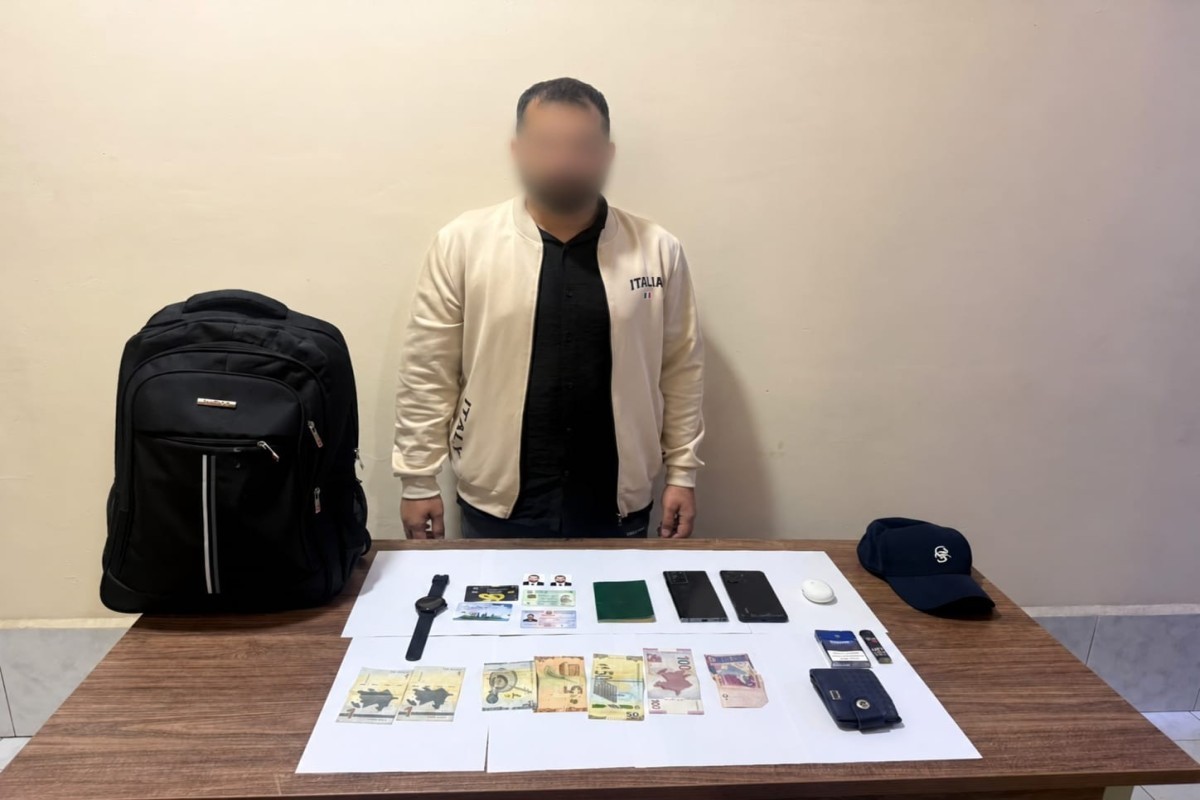
Pakistani citizen detained while attempting to cross Azerbaijan-Russia border illegally - PHOTO
 13:11
13:11
 20 October 2026
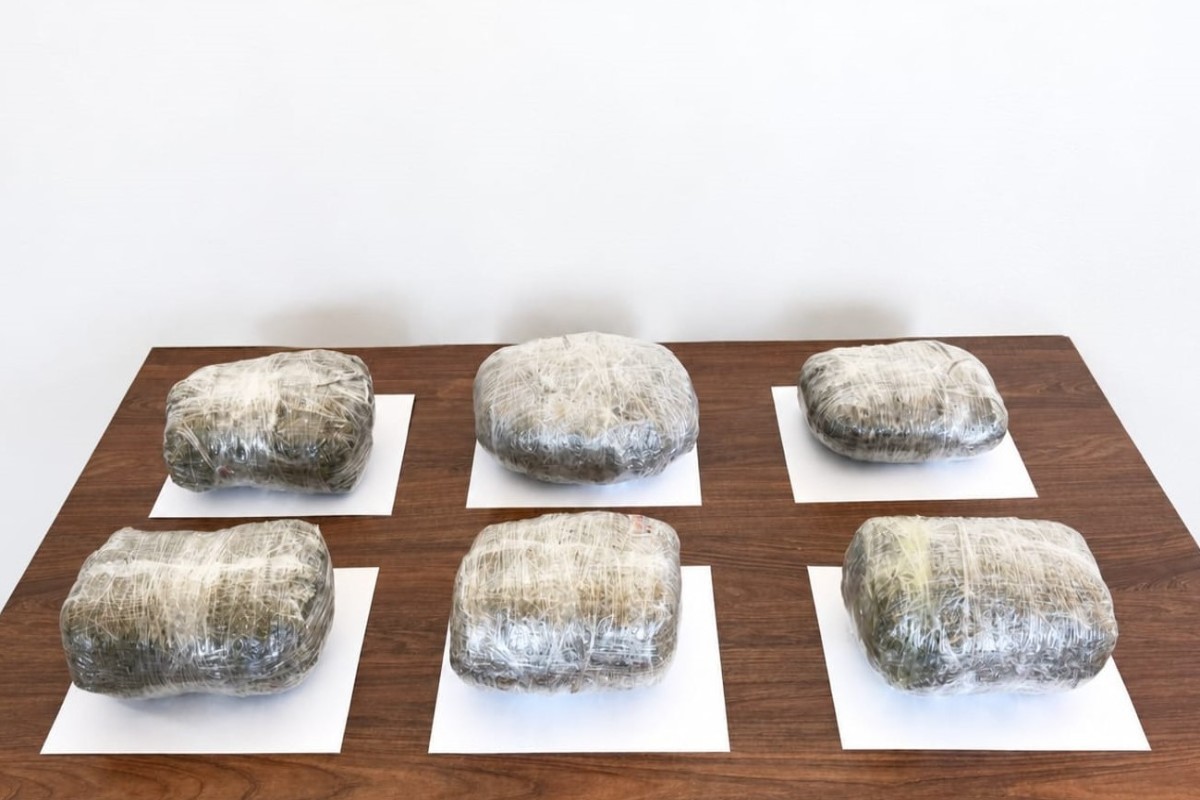
Drug smuggling from Iran into Azerbaijan prevented - PHOTO
11:23
20 October 2026

SWISS flight aircraft en route Zurich-Shanghai made emergency landing in Baku
20:45
19 October 2026
Seven people suspected of calling for violent seizure of power in Azerbaijan placed on international wanted list
18:28
19 October 2026

NEWS FEED
Fenerbahce throw away two-goal lead in 2-2 Champions League draw with Slavia Prague
00:35
21 October 2026
US to offer Putin meeting with Trump, Zelenskyy
00:18
21 October 2026
Qatar and Pakistan have offered to transfer interest on $6 billion to Iran
23:52
20 October 2026
Trump: Ukraine and Zelenskyy must strive to resolve the conflict
23:20
20 October 2026
IRGC Navy says supertanker exploded after hitting mine south of Hormuz
22:55
20 October 2026
UEFA Champions League: Germany’s Borussia Dortmund defeat Azerbaijan’s FC Sabah
22:39
20 October 2026
Witkoff’s plans to visit Russia on October 21 confirmed
22:36
20 October 2026
Iranian President: United States must lift pressure, threats and sanctions before any negotiations
22:32
20 October 2026
Ghalibaf rejects change in demands during talks with Pakistan army chief
22:03
20 October 2026
Russia ready to listen to US proposals, rules out political concessions — Lavrov
21:31
20 October 2026
Kallas claims that the US has been "pushing Ukraine toward capitulation" for 1.5 years
21:13
20 October 2026
Iran tells Munir it won't allow any enriched nuclear material to leave country
21:09
20 October 2026
Ambassador: Hungarian companies have invested USD 2 billion in Azerbaijan's economy
20:50
20 October 2026
Baku hosted event on the occasion of National Day of Hungary-PHOTO
20:42
20 October 2026
Day of Zangilan City celebrated in the city for first time -PHOTO-UPDATED
20:36
20 October 2026
Families of missing Azerbaijanis held protest in front of the European Parliament-PHOTO
20:28
20 October 2026
Turkish Presidency: Claims of attempt to lower Turkish flag in Azerbaijan are disinformation
19:53
20 October 2026
Kremlin considers Trump's actions a step toward Russia's victory over Ukraine
19:42
20 October 2026
Tanker violating regulations catches fire in southern corridor of Strait of Hormuz
19:07
20 October 2026
BP: Offshore construction work begins on Shah Deniz Compression project
18:51
20 October 2026
Azerbaijan urges citizens to avoid travel to France amid widespread unrest
18:31
20 October 2026
MAMA “Mother Nature” international art exhibition opens in Ashgabat - PHOTO
18:23
20 October 2026
Leyla Aliyeva visits Turkmen Carpet Museum in Ashgabat
18:21
20 October 2026
Political consultations held between Azerbaijan and Croatia
18:14
20 October 2026
Katz: Hezbollah will be dealt a heavy blow if it joins Iran's attack on Israel
18:14
20 October 2026
Azerbaijani parliament announces date and agenda of next session
18:06
20 October 2026
Zelenskyy: "Putin’s emergence from isolation has already begun"
17:45
20 October 2026
Zelenskyy says Ukraine may accept an alternative to NATO, but only under one condition
17:27
20 October 2026
TRIPP Fund director: US company acquires Armenia's second-largest copper mine
17:24
20 October 2026
Russia-Türkiye consultations held in Moscow
17:20
20 October 2026
UK to deploy Typhoon jets to help defend Saudi Arabia from Houthi attacks
17:10
20 October 2026
12 killed, 30 injured in bus-truck collision in Egypt
17:05
20 October 2026
Israel and Lebanon to hold ‘working level’ talks in Florida today, US official says
16:36
20 October 2026
Azerbaijani Parliament speaker addresses TURKPA meeting
16:29
20 October 2026
149 people sentenced to prison for participating in riots in France
16:25
20 October 2026
Moscow confirms dialogue with Washington on prisoner releases
16:23
20 October 2026
Moscow condemns US arrest warrant for Raul Castro
16:16
20 October 2026
Reuters: Witkoff travels to Norway for talks on Ukraine
16:13
20 October 2026
Memorandum of Understanding between Azerbaijan and UN approved
16:00
20 October 2026
Iran prolongs talks in stalemate to influence US midterms, officials say
15:57
20 October 2026
Ganja Memorial Complex established under Ministry of Culture
15:55
20 October 2026
Karabakh National Park established - ORDER
15:53
20 October 2026
Swedish ambassador meets with Hikmat Hajiyev
15:38
20 October 2026
Russia to increase penalties for calls for mass riots
15:34
20 October 2026
“Falcons Meet – 2026” exercise holds Distinguished Visitors’ Day - VIDEO
15:32
20 October 2026
Armenia could lose more than half of remittances from Russia
15:22
20 October 2026
Armenia's trade turnover with EAEU countries could fall by 55.6% if membership is suspended
15:13
20 October 2026
Azerbaijan adopts new state standards for railway and road transport
15:03
20 October 2026
Armenia's gas import costs could rise by 69% if it leaves EAEU
14:55
20 October 2026
Türkiye appoints Sergen Yalcin as national football team coach
14:50
20 October 2026


