












Baku – APA. Seventeen of Chile’s 33 trapped miners were hoisted to safety in a cramped rescue capsule on Wednesday, punching the air and hugging their families in a triumphant end to their two-month ordeal, APA reports quoting “Reutersâ€.
One by one, the miners climbed into the steel cage, which is barely wider than a man’s shoulders and equipped with a gas mask and escape hatches, and took a roughly 15-minute journey through 2,050 feet of rock to freedom.
The rescue operation advanced rapidly without hitches and officials hoped to have the remaining 16 miners out by the end of the day instead of taking 48 hours.
Scenes of jubilation erupted every time a miner arrived at the surface of the San Jose gold and copper mine in Chile’s northern Atacama desert.
While the first miners to be rescued were in good shape, some have been struggling with illness and are more fragile, so medical teams were on hand to treat them.
Mario Gomez, at 63 the oldest of the men and a miner for 50 years, suffers from silicosis and was breathing from an oxygen mask as he reached the surface. He was helped out of the capsule, and immediately dropped to his knees to pray with his yellow hard hat still perched on his head.
Euphoric rescuers, relatives and friends broke into cheers -- and tears -- as the miners emerged to breathe fresh air for the first time since the mine caved in on Aug 5.
"This is a miracle from God," said Alberto Avalos, the uncle of Florencio Avalos, a father of two who was the first to emerge, shortly after midnight.
The miners have spent a record 69 days in the hot, humid bowels of the collapsed mine and, for the first 17 days, they were all believed to be dead.
Their story of survival and the extraordinary rescue efforts have captured the world’s attention.
The operation was executed almost flawlessly through the night and included dramatic live images of miners hugging rescuers in their tunnel deep inside the mine. An estimated 1,500 journalists were at the mine to report on the rescue and images were beamed live around the world.
The rescue was a big success for Chilean President Sebastian Pinera, who waited at the mouth of the rescue shaft to greet and hug the men as they emerged.
"Each rescue is taking 40 minutes ... it could be completed today," said a beaming Pinera, who planned to stay until the last man was out.
’GOD AND THE DEVIL’
Mario Sepulveda, the second miner to escape, had everyone laughing when his whoops of joy resounded on the surface even before he arrived. He then stepped out of the capsule, opened up a yellow bag, pulled out souvenir rocks from below and began handing them out to the rescuers and even Pinera.
"I’m so happy!" Sepulveda yelled, grinning, punching his fist in the air and hugging everyone in sight.
However, he also sounded a darkly serious note.
"I have been with God and I’ve been with the devil," he later said in an interview, calling for deep change to protect workers’ rights.
Each of the miners wore dark glasses to protect their eyes after spending so long in the dimly lit tunnel below.
Rescuers were finally able to deploy the capsule, dubbed "Phoenix" after the mythical bird that rose from the ashes, on Tuesday after drilling a narrow escape shaft down to the miners and reinforcing it with metal casing to prevent rocks from falling and blocking the exit.
Each man’s journey to safety takes about 15 minutes. The capsule travels at about 3 feet (1 meter) per second, or a casual walking pace, and can speed to 10 feet per second if the miner being carried gets into trouble.
The miners can communicate with rescue teams using an intercom in the capsule. As they emerge, they are being put under observation at a nearby hospital for two days.
UMBILICAL CORD
Rescuers originally found the men, miraculously all alive 17 days after the mine collapsed, with a bore hole the width of grapefruit. It then served as an umbilical cord used to pass hydration gels, water and food, as well as letters from their families and soccer videos to keep their spirits up.
Medics say some of the men are psychologically fragile and may struggle with stress for a long time after their rescue.
Pinera ordered an overhaul of Chile’s mine safety regulations after the accident. His popularity ratings have surged and his government has won strong praise for its handling of the crisis.
Thirty-two of the miners are Chilean but the other is from neighboring Bolivia and the rescue has even helped improve ties between the two countries, locked in a bitter dispute for more than a century over Bolivian access to the Pacific.
Bolivia’s President Evo Morales was at the mine to welcome the Bolivian miner, Carlos Mamani, as he was lifted to safety and he thanked Pinera and his government for rescuing him.
"I and the Bolivian people will never forget this great effort," Morales said as he appeared with Pinera at a news conference, adding that the rescue will create greater confidence between the two countries.
The mining industry has played a central and often tragic role in Latin American history, starting with the hunger for gold and silver that drove the Spanish conquest and led to the enslavement of indigenous peoples.
For centuries, conditions in Latin American mines were miserable but they have improved dramatically in recent decades and the industry has over the last 10 years helped fuel a boom in some of the region’s economies, including Chile.


 Follow us on Telegram
 t.me/apanewsaz
 Follow us on Instagram
 Follow us on TikTok
 Follow us on Facebook
 Follow us on X
Incident
SWISS flight aircraft en route Zurich-Shanghai made emergency landing in Baku
 20:45
20:45
 19 October 2026
Seven people suspected of calling for violent seizure of power in Azerbaijan placed on international wanted list
18:28
19 October 2026
State Security Service detains organizer of car arson attacks in Masazir abroad
17:38
19 October 2026
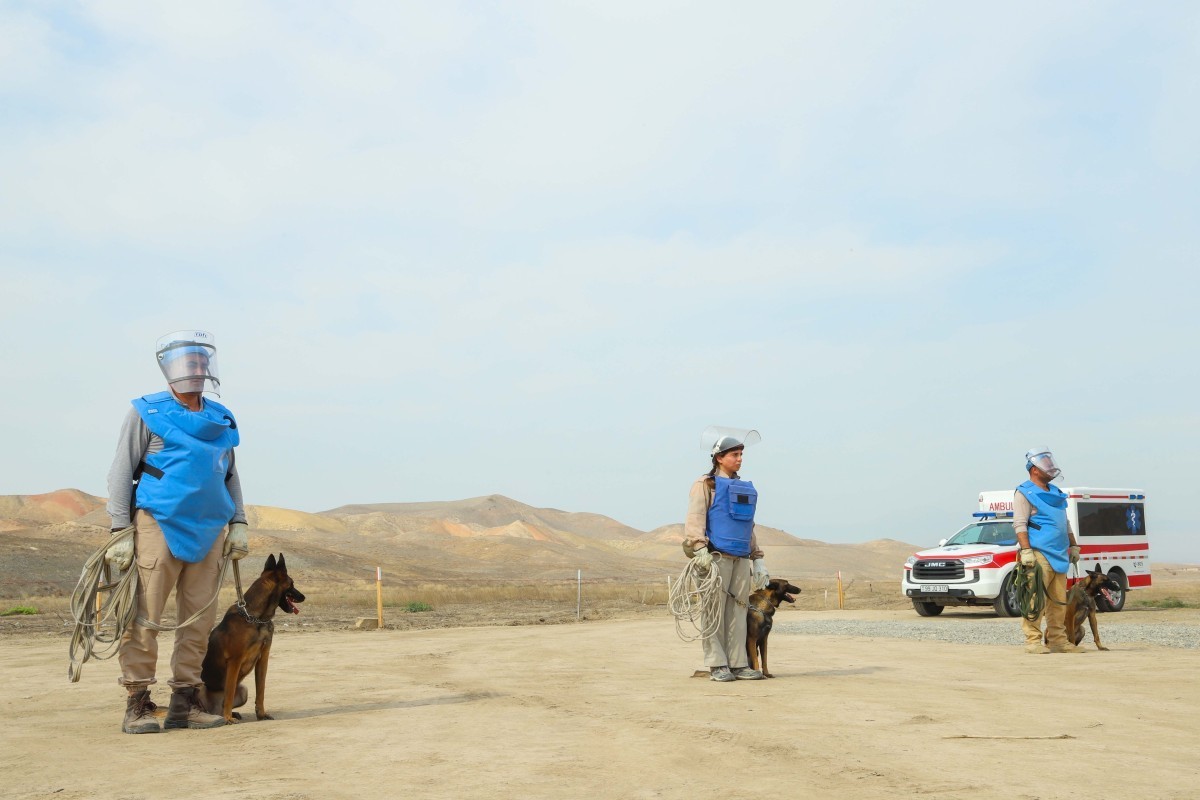
308,945 hectares cleared of mines in Jabrayil, Gubadli and Zangilan
15:37
19 October 2026

NEWS FEED
At least nine people have died in mine collapse in Colombia
02:19
20 October 2026
Shooting occurred at mosque in Ohio
02:00
20 October 2026
Trump says he will tighten sanctions against Russia at any moment
01:45
20 October 2026
FT: Protests in France have exposed the authorities' impotence
00:56
20 October 2026
US President says he is open to joining trilateral meeting with Xi, Putin
00:31
20 October 2026
Trump: It's time for Ukraine to put someone in the negotiating chair instead of Zelenskyy
00:18
Audio
20 October 2026
Azerbaijan marks six years since liberation of Zangilan city
00:00
20 October 2026
Pope calls Zelenskyy following talks with Putin, details of discussion emerge
23:38
19 October 2026
Ashgabat hosts concert of State Symphony Orchestra of Turkmenistan
23:19
19 October 2026
Pakistan's top general to visit Tehran on Tuesday - IRGC
23:03
19 October 2026
Leyla Aliyeva watches performance of Turkmen iconic Galkynysh national equestrian group in Arkadag city
22:52
19 October 2026
Leyla Aliyeva visits Children’s Health and Rehabilitation Center in Arkadag city-PHOTO
22:46
19 October 2026
Leyla Aliyeva meets with Oguljahan Atabayeva in Arkadag
22:40
19 October 2026
Uzbekistan, U.S. sign agreements worth $12 bln
22:04
19 October 2026
BFMTV: France imposes curfew on several streets in Paris
21:46
19 October 2026
Houthis claim strikes on Aramco site, Saudi oil field
21:36
19 October 2026
President: We did not stoop to the level of the barbarians and child-killers who caused so much suffering for our people
21:10
19 October 2026
Iranian president holds meeting with Russian foreign minister
21:00
19 October 2026
SWISS flight aircraft en route Zurich-Shanghai made emergency landing in Baku
20:45
19 October 2026
Russia, Iran discuss cooperation between Tehran and EAEU
20:21
19 October 2026
US court issues arrest warrant for former Cuban leader Raul Castro
19:51
19 October 2026
Russian strike on park in Kharkiv region kills six - UPDATED
19:37
19 October 2026
13-year-old boy suspected of stabbing teacher and pupil in Romania after TikTok posts
19:24
19 October 2026
Azerbaijan and UAE Air Force Commanders meet - PHOTO
19:13
19 October 2026
Five cases of mpox confirmed in St. Petersburg
18:56
19 October 2026
Ukrainian army strikes Russian radar station and ammunition depots
18:38
19 October 2026
Lavrov: Russia ready to help find solutions to Iran-US conflict
18:29
19 October 2026
Seven people suspected of calling for violent seizure of power in Azerbaijan placed on international wanted list
18:28
19 October 2026
Russia’s Lavrov discusses US war and regional security during Tehran visit
18:22
19 October 2026
Leyla Aliyeva pays visit to Turkmenistan
18:08
19 October 2026
Difficult tactical manoeuvres are performed during “Falcons Meet – 2026” exercise - VIDEO
18:06
19 October 2026
Ukrainian children brought to Azerbaijan visit Gabala and Sheki
18:03
19 October 2026
Azerbaijan-UAE military cooperation is discussed
18:02
19 October 2026
Houthis launch missile strike on military camp in Yemen, killing 53 - UPDATED
18:00
19 October 2026
Araghchi discusses regional and international issues with Lavrov
17:59
19 October 2026
Japanese ambassador to Azerbaijan completes diplomatic mission
17:53
19 October 2026
State Security Service detains organizer of car arson attacks in Masazir abroad
17:38
19 October 2026
Azerbaijan extends deadline for obtaining a construction permit for a solar power plant in Fuzuli
17:14
19 October 2026
Azerbaijan Press Council issues appeal to Turkish media outlets
17:13
19 October 2026
Next Global Assessment of Azerbaijan's National Statistical System underway
17:10
19 October 2026
Azerbaijan expands telecommunications infrastructure in Aghdara
17:09
19 October 2026
CBA and National Bank of Slovakia sign MoU
17:01
19 October 2026
Car exports from Georgia to Azerbaijan decline by 32%
16:46
19 October 2026
Swedish Embassy: Military cooperation between NATO and Azerbaijan is developing
16:42
19 October 2026
Georgia's trade turnover with Azerbaijan exceeds $1 billion this year
16:30
19 October 2026
Iranian and Russian foreign ministers meet in Tehran
16:28
19 October 2026
ANAS to consider removing Ramiz Mehdiyev from full membership - ANAS President
16:20
19 October 2026
Germany summons Iranian envoy over alleged attack plots against pro-Israel figures
16:16
19 October 2026
Azerbaijani citizens purchase 70 apartments in Türkiye last month
16:12
19 October 2026
Fitch Ratings CEO: Azerbaijan's financial resources support stability of manat exchange rate - INTERVIEW
16:09
19 October 2026


