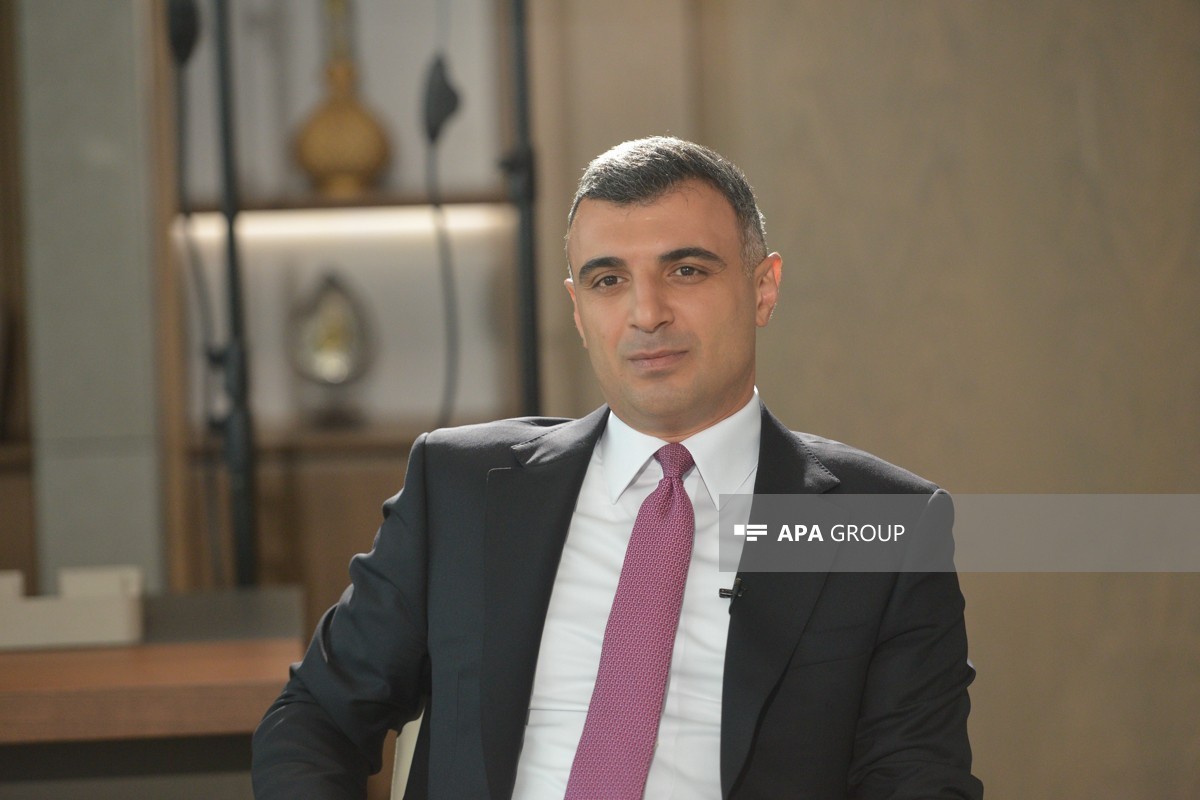








Erich Arispe Morales, CEO and Head of the Sovereign Ratings Group for Eastern Europe at Fitch Ratings, answered questions from APA-Economics regarding Azerbaijan's credit rating, the country's financial reserves, the stability of the manat exchange rate, and other economic issues.
– Azerbaijan has a strong sovereign balance sheet, low public debt, and significant external assets. What else needs to change for Azerbaijan's rating to be upgraded to "BBB"? Do you consider such an upgrade realistic within the next one or two years?
– As you know, our current outlook on Azerbaijan's rating is "Stable." This indicates that upward and downward pressures on the rating are balanced.
Azerbaijan's credit profile has clear strengths in terms of external and fiscal indicators. We expect the country's sovereign external assets, including those of the Central Bank and the State Oil Fund, to amount to approximately USD 91 billion in 2026. We forecast net sovereign external assets to reach around 73% of GDP.
Azerbaijan's public debt is below 20% of GDP. By comparison, the median for countries in the "BBB" rating category is approximately 57%.
These indicators demonstrate the strength of Azerbaijan's sovereign balance sheet. However, one of the factors we consider important for upgrading Azerbaijan's credit rating is further improving the effectiveness of economic and financial policies in the country.
This includes increasing the credibility and predictability of monetary policy, improving the transmission mechanism, and strengthening consistency between fiscal and monetary policies. The aim is to prevent macroeconomic imbalances and keep inflation low.
Another important area is the further improvement of Azerbaijan's economic and institutional indicators. Azerbaijan has room for improvement compared with other investment-grade countries in indicators such as governance quality and GDP per capita.
Reforms in these areas could contribute both to improving the indicators taken into account in assessing the country's credit rating and to accelerating economic growth and expanding private investment.
– The exchange rate of the Azerbaijani manat has remained stable for many years. Does Fitch consider the current exchange rate sustainable in the medium term?
– We currently believe that the government's decision to maintain the existing exchange rate of the manat against the US dollar is appropriate for the economic conditions. When we upgraded Azerbaijan's credit rating back to investment grade in 2024, we also took into account the country's strong financial reserves. These reserves make it possible to mitigate the effects of a potential decline in oil and other commodity prices.
In addition, Azerbaijan has expanded its ability to manage the impact of oil price fluctuations on the economy in recent years. This also helps maintain the stable exchange rate of the manat against the dollar. Currently, the country's financial reserves, the Central Bank's monetary policy, and the government's fiscal policy support the maintenance of the manat's existing exchange rate.
Azerbaijan's strong external financial position is also an important factor. We believe that even if oil and gas prices decline, the country's revenues from foreign trade and other international transactions will continue to exceed its expenditures.
According to our forecast, Azerbaijan's current account surplus will amount to approximately 11% of GDP in 2026.
– What is the most important institutional reform needed to address the factors limiting an upgrade of Azerbaijan's sovereign rating?
– First and foremost, it is important to establish a longer track record. We have observed progress in liquidity management in recent years. One of the main questions now is how sustainable this progress will be.
At the same time, it is important for the Central Bank to strengthen its monetary policy transmission mechanism. Monetary policy decisions need to have a broader impact on the economy, as they do in other investment-grade countries. This concerns their impact on domestic financing costs, deposit rates, and lending rates. This is challenging in an environment of low financial intermediation and high dollarization. Any progress toward increasing the independence of the Central Bank would also be welcomed.
In addition, we would like to see a more consistent approach to coordinating fiscal and monetary policies. Inflation is another indicator we monitor. We expect average annual inflation in Azerbaijan to be approximately 6.1% in 2026 and 5.6% in 2027. These figures are high compared with countries with similar ratings. Bringing inflation down to a lower level remains one of the important economic policy issues. What matters is whether the changes we have observed over the past few years truly represent a sustainable policy shift.
In fiscal policy, we are observing steps toward reducing dependence on transfers from the State Oil Fund and oil revenues, as well as consolidating the non-oil primary deficit. At the same time, increasing investment levels and private sector participation in the investment process is also important for supporting economic growth.
– Azerbaijan has substantial financial reserves, and the government aims to increase them further. In your opinion, as dependence on oil revenues decreases, will the country be able to preserve these reserves while maintaining economic growth?
– We do not make such calculations regarding how many years the financial buffers would be sufficient. This is because the main issue to consider here is the government's current policy. At present, the government's objective is to increase these financial buffers further.
For example, the government has a target of increasing the State Oil Fund's assets to USD 100 billion. This demonstrates that there is a policy approach aimed at preserving financial buffers.
Azerbaijan's fiscal position is currently strong. We expect a consolidated budget surplus of approximately 3.7% of GDP in 2026. However, I believe the more important issue here is economic diversification.
If the government reduces the impact of budget spending on the economy, the main question is what sources will drive economic growth. Theoretically, the government could pursue a more aggressive fiscal policy using its financial buffers to stimulate economic growth. However, this would not be sustainable and would eventually lead to a reduction in financial buffers.
Given the government's decision to preserve or further strengthen these buffers, the key issue for us is what policy measures will be taken to enable the private sector to play a greater role in supporting economic growth and to what extent the private sector will be capable of doing so.
– How do you assess the current state of Azerbaijan's banking sector?
– We have observed significant progress in recent years. The banking sector has seen digitalization, reduced dependence on external financing, the establishment of adequate capital buffers, and improvements in asset quality.
For example, work is underway toward transitioning to Basel III standards in terms of reporting standards and prudential buffers. The banking sector is currently not one of the main sources of concern regarding Azerbaijan's sovereign rating.
The current international environment is characterized by high volatility, increased risk aversion, and higher yields in developed economies. Nevertheless, we believe Azerbaijan is somewhat insulated from these external influences. The banking sector has also managed to reduce some of its vulnerabilities.
However, there is still potential to expand the banking sector's role in financing economic growth. There is liquidity in the banking system, and banks are in good financial condition. However, for business lending to expand more rapidly, it is important that there are sufficient projects and demand for credit in the private sector.


 Follow us on Telegram
 t.me/apanewsaz
 Follow us on Instagram
 Follow us on TikTok
 Follow us on Facebook
 Follow us on X