












According to the APA European bureau, the Court noted that it had found it as violation of the applicant’s rights and demanded Azerbaijan to release the applicant immediately and to pay Fatullayev 25,000 euros (EUR) in respect of non-pecuniary damage and EUR 2,822 in respect of costs and expenses. “The Court noted that the applicant was currently serving the sentence for the press offences in respect of which it had found Azerbaijan in violation of the Convention. Having considered unacceptable that the applicant still remained imprisoned and the urgent need to put an end to the violations of Article 10, the Court held, by six votes to one, that Azerbaijan had to release the applicant immediatelyâ€.
The Court said the applicant, Eynulla Fatullayev, the founder and chief editor of the newspapers Gündəlik Azərbaycan and Realny Azerbaijan, was sentenced to a total of eight and a half years’ imprisonment for defamation, threat of terrorism and incitement to ethnic hostility. Relying on Article 10 (freedom of expression) and Article 6 § 1 (right to a fair trial), he complains in particular about those convictions and the unfairness of the criminal proceedings brought against him.
Editor-in-chief of Gundalik Azerbayjan and Realny Azerbaydjan newspapers Eynulla Fatullayev was arrested by the decision of Yasamal district court on April 20, 2007. He was accused of insulting Khojaly residents in his series of articles “Karabakh diary†and sentenced to two-and-a-half-year imprisonment. Later, he faced additional charges and sentenced to eight-and-a-half-year imprisonment on October 30, 2007.
0.223 g heroin was found on Eynulla Fatullayev in jail #12 on December 30, 2009. He faced charges under Article 234 (illegal manufacturing, purchase, storage, transportation, transfer or selling of narcotics, psychotropic substances) of the Criminal Code.
As a result of biological-chemical examination, heroin and a psychotropic substance were found in Fatullayev’s blood and urine examples.
The journalist’s case is judged by the Garadagh district court of Azerbaijan.
The Azerbaijani Government Agent at the European Court of Human Rights Chingiz Asgarov issued a statement with regard to the European Court’s judgement in the Fatullayev case. “The European Court of Human Rights in its judgements has examined complaints concerning different rights and freedoms set forth in the European Convention. To date, violation of human rights and freedoms has been established in the Court’s 21 final judgements in respect of Azerbaijan. Majority of these are the judgements concerning violation of Article 6 of the European Convention, i.e. of the right to fair trial. However, this does not mean that in all these cases there were violations of individuals’ procedural rights during trialâ€, -said Asgarov in his statement. “It is to be noted that the issue of execution of judgements of the domestic courts is also covered by Article 6 of the Convention. In a number of cases, domestic courts and subsequently the European Court found violations of the applicants’ property rights by people who became refugees and IDP’s as a result of Armenian aggression against Azerbaijan. Non-execution of judgements in these cases has created certain problems for our country in the light of Article 6 of the Convention. At the same time, huge work has been done in recent years in providing the refugees and IDP’s with new and well-equipped houses, and in the nearest future the problem related to execution of judgements in this field will be completely lifted. I should also say that in its judgements concerning such cases the European Court has recommended the Government of Azerbaijan a number of possible solutions for restoration of individuals’ rights. In general, such instructions given by the European Court to the States are disputable. The European Court in its judgements merely finds violation of a right, and the Committee of Ministers of the Council of Europe – the body supervising the execution of the Court’s judgements – defines the measures to remove those violationsâ€.
Regarding the European Court’s judgement in the Fatullayev’s case, Asgarov said: “Indeed, the Court has held in this case that the respondent State shall secure the applicant’s immediate release. Putting matter in such way is inadmissible taking account of both the provisions of the European Convention on Human Rights and the Azerbaijani legislation. You are aware that the European Convention is a multilateral agreement concluded by sovereign States and, therefore, the European Court established by the Convention has a subsidiary role, i.e. appears as an additional mechanism for protection of human rights and fundamental freedoms. It means that the European Court cannot take the place of the respondent-State’s judicial, administrative or other authorities and consequently appear as the court of fourth instance in respect to domestic courts. According to the Court’s judgements, even if it finds violation in a certain case, its judgements have primarily declarative nature and the selection of means necessary to restore the rights is in general the State’s duty.
At the same time it has to be noted that the Committee of Ministers of the Council of Europe in the Interlaken Declaration adopted in February 2010 invited the Court to avoid reconsidering questions of fact or national law that have been considered and decided by national authorities, in line with its case-law according to which it is not a fourth instance court; and to apply uniformly and rigorously the criteria concerning admissibility and jurisdiction and take fully into account its subsidiary role in the interpretation and application of the Convention.
On the other hand, legislation of the Republic of Azerbaijan does not provide for any legal grounds for implementation of the Court’s this instruction in the Fatullayev case. The European Court did not examine the question of how this instruction can be implemented by the Azerbaijani Government. The Court could establish that, according to the Code of Criminal Procedure of Azerbaijan, where the European Court finds a violation of the Convention provisions the matter can be considered by the Plenum of the Supreme Court and the case be remitted to the court of lower instance. The Azerbaijani legislation does not provide for release of the convicted person based solely on the European Court’s judgement. In general, the practice adopted in the European States is that the Court’s judgements and decisions are applied as an interpretation of the Conventional provisions. In short, the situation where the European Court instructs domestic courts of this or another State to take certain decisions is groundless and unacceptable.
By leaving no choice as to measures to restore the violated rights and by giving direct instructions to the courts of the member-State of the Council of Europe, the European Court turned to be the court of fourth instance and overstepped its competences provided for by the Convention.
A judgment of a Chamber of the European Court becomes final three months after the date of the judgment, if reference of the case to the Grand Chamber has not been requested.
In these circumstances, we will request that the case be referred to the Grand Chamber of the European Court in order to defend interests of the Republic of Azerbaijan in the European Court of Human Rights and to secure the uniform practice of application of the Conventionâ€, said Asgarov in his statement.
Azerbaijan’s representative to European Court: “The case of Eynulla Fatullayev will be sent to the Grand Chamber of the European Court of Human Rightsâ€

 22 April 2010 13:11 (UTC +04:00)



 İDMAN XƏBƏR
 Follow us on Telegram
 t.me/apanewsaz
 Follow us on Instagram
 Follow us on TikTok
 Follow us on Facebook
 Follow us on X
Incident
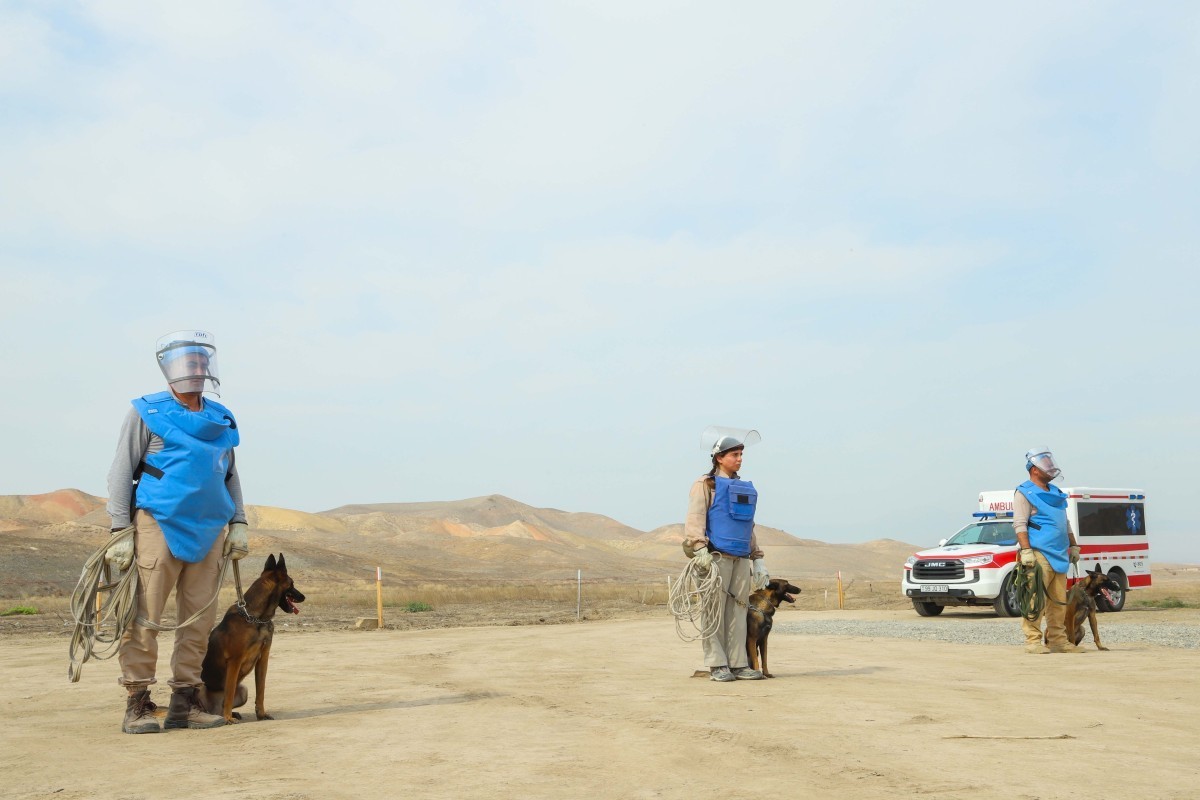
308,945 hectares cleared of mines in Jabrayil, Gubadli and Zangilan
15:37
 19 October 2026
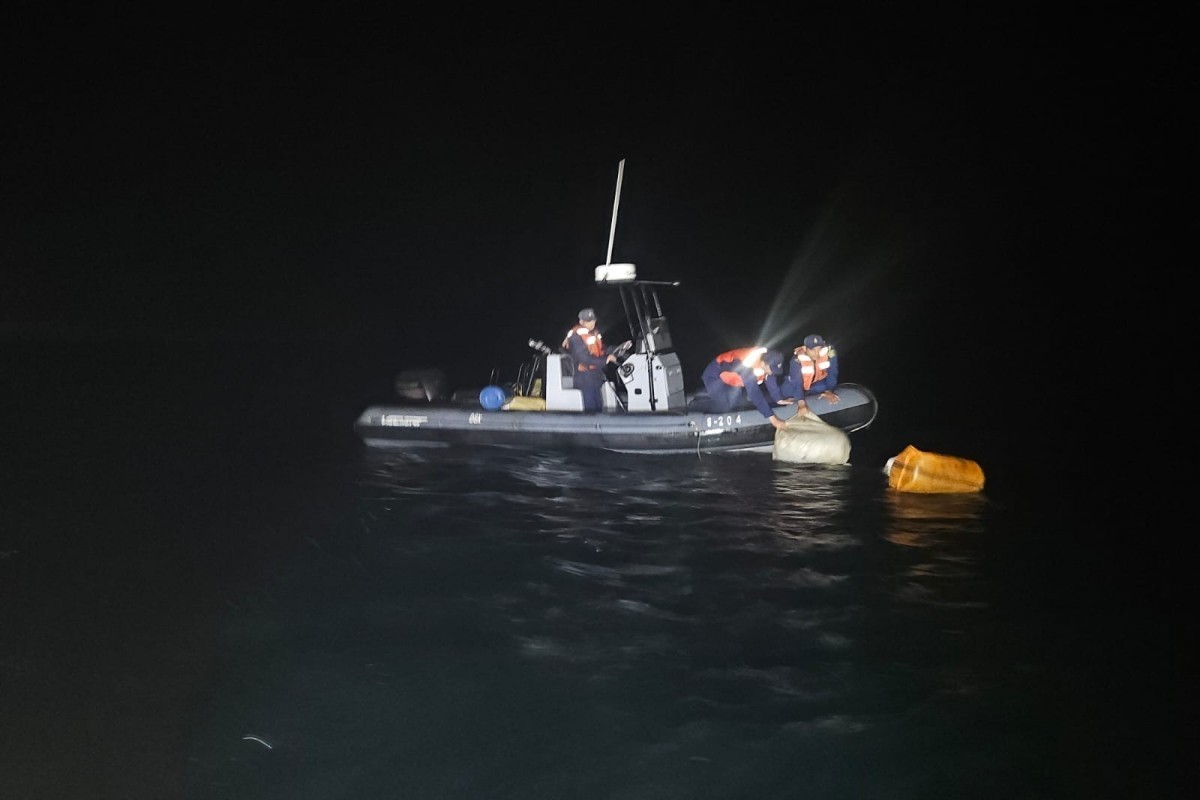
Contraband discovered in Azerbaijani sector of Caspian Sea - PHOTO
14:58
19 October 2026
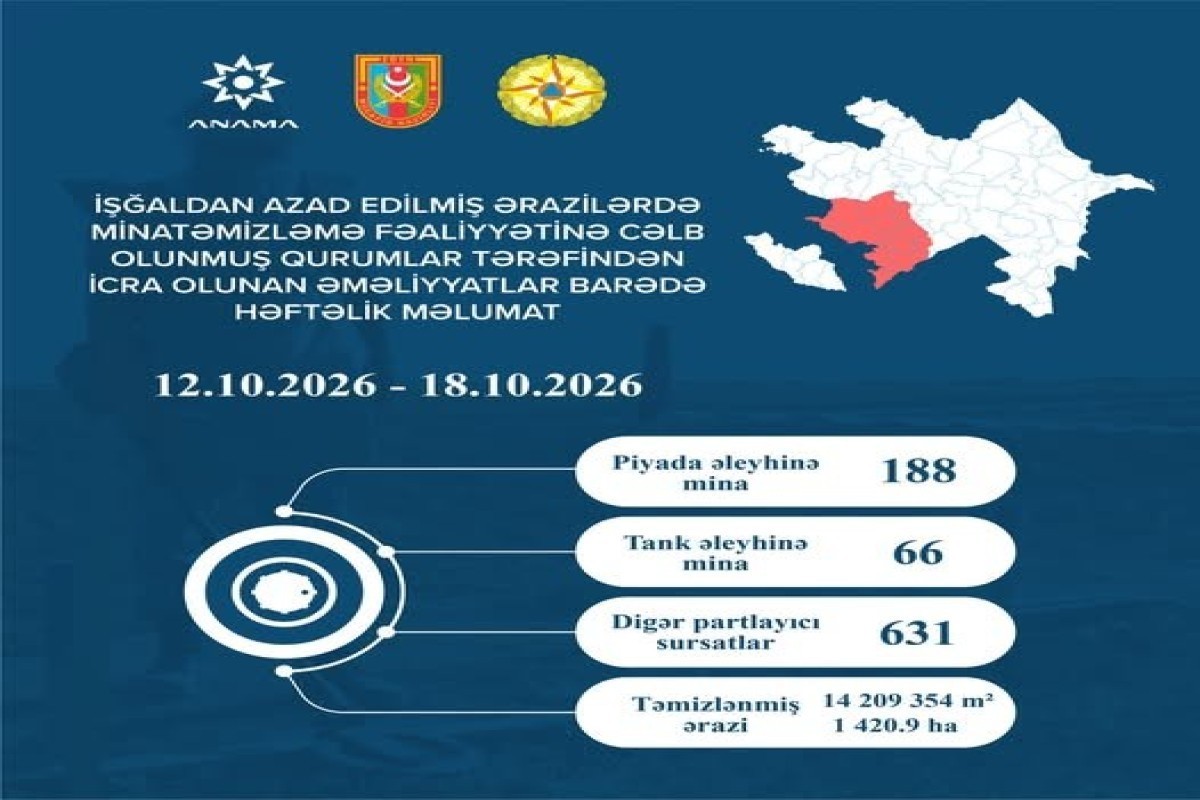
Azerbaijan discovers 254 mines and 631 UXO in liberated territories
14:32
19 October 2026

Earthquake hits Azerbaijan's Ismayilli district
12:26
19 October 2026

NEWS FEED
308,945 hectares cleared of mines in Jabrayil, Gubadli and Zangilan
15:37
19 October 2026
Around 40 killed, injured in Houthi missile attack in Yemen’s Shabwa - UPDATED
15:36
19 October 2026
Working Group on mine and unexploded ordnance clearance holds meeting in Jabrayil
15:32
19 October 2026
French premier calls for localized curfews starting Monday evening amid unrest
15:28
19 October 2026
Lavrov visits Iran
15:12
19 October 2026
Azerbaijani Parliament speaker meets Kyrgyz parliament speaker - PHOTO
15:02
19 October 2026
Contraband discovered in Azerbaijani sector of Caspian Sea - PHOTO
14:58
19 October 2026
OIC updates four resolutions on Azerbaijan, Baghdad Declaration reflects normalization with Armenia
14:45
19 October 2026
Official Moscow: Unrest in Europe is heading towards chaos
14:39
19 October 2026
Inclusive Training and Education Center opens in Baku - PHOTO
14:34
19 October 2026
Azerbaijan discovers 254 mines and 631 UXO in liberated territories
14:32
19 October 2026
Peskov: Final agreement cannot be reached without Kyiv's participation
14:29
19 October 2026
Peskov says possible meeting between Putin, Trump and Xi Jinping has not been discussed in detail
14:22
19 October 2026
Number of Azerbaijani-invested companies in Georgia exceeds 5,500
14:20
19 October 2026
President Ilham Aliyev awards group of energy sector workers
14:18
19 October 2026
Cinema Agency warns: Those who record "44" film without permission may face legal liability
14:12
19 October 2026
Azerbaijan earns over $400,000 from silk exports this year
14:06
19 October 2026
Sybiha comments on Putin's proposal to meet with Trump and Xi Jinping to discuss war
13:35
19 October 2026
Death toll from floods in Türkiye rises to 9
13:33
19 October 2026
Twelve migrants, including infant, drown as boats capsize off Greek islands - UPDATED
13:24
19 October 2026
Georgia proposes establishing joint expert group with Azerbaijan
12:37
19 October 2026
Russian plane that issued distress signal over Kazakhstan lands at Omsk airport - UPDATED
12:29
19 October 2026
Earthquake hits Azerbaijan's Ismayilli district
12:26
19 October 2026
Georgian Patriarchate: Our relations with Azerbaijan are based on mutual respect
12:21
19 October 2026
Zelenskyy: We received no early warning from our partners about Russia's attacks last night
12:01
19 October 2026
Georgian analyst: Tbilisi and Baku should turn the region into a capable geopolitical player
11:59
19 October 2026
Qatar to announce new regional military partnership
11:58
19 October 2026
Earthquake occurs in Caspian Sea
11:56
19 October 2026
Ambassador: Strong political dialogue established between Azerbaijan and Georgia
11:30
19 October 2026
President Ilham Aliyev appoints Anar Bayramov as Azerbaijan's health minister
11:28
19 October 2026
Azerbaijan dismisses Health Minister Teymur Musayev
11:26
19 October 2026
Azerbaijan transfers TABIB to Ministry of Health
11:22
19 October 2026
France's Macron declines interior minister's offer to resign
11:21
19 October 2026
Reshuffle expected in Russian government
11:16
19 October 2026
Azerbaijan exports nearly $9 billion worth of oil to more than 10 countries this year - LIST
11:08
19 October 2026
Azerbaijan imports nearly 700 electric vehicles in nine months
11:05
19 October 2026
Araghchi urges Macron to listen to French public's demands for change
11:01
19 October 2026
Azerbaijan's total exports to Armenia over nine months revealed
10:54
19 October 2026
World Bank to increase funding for Baku to $500 million
10:48
19 October 2026
Azerbaijan's foreign trade surplus increases nearly sixfold
10:43
19 October 2026
Latvia bans import of green tea to EU from Armenia
10:41
19 October 2026
Rubio explains why US suspended sanctions against Russia
10:13
19 October 2026
Gold and silver prices rise on commodity markets
10:05
19 October 2026
Rubio says Ukraine and Russia should be focused on ending the war
10:04
19 October 2026
Natural gas prices decline on New York exchange
09:59
19 October 2026
Oil prices decline on global markets
09:43
19 October 2026
US resumes intelligence-sharing with Ukraine after pause, Zelenskyy says
09:09
19 October 2026
Sergey Lavrov to meet Iranian foreign minister in Tehran
08:55
19 October 2026
Bitcoin price exceeds $82,000
08:52
19 October 2026
Oil tanker catches fire south of Strait of Hormuz after reported mine strike
07:39
19 October 2026


