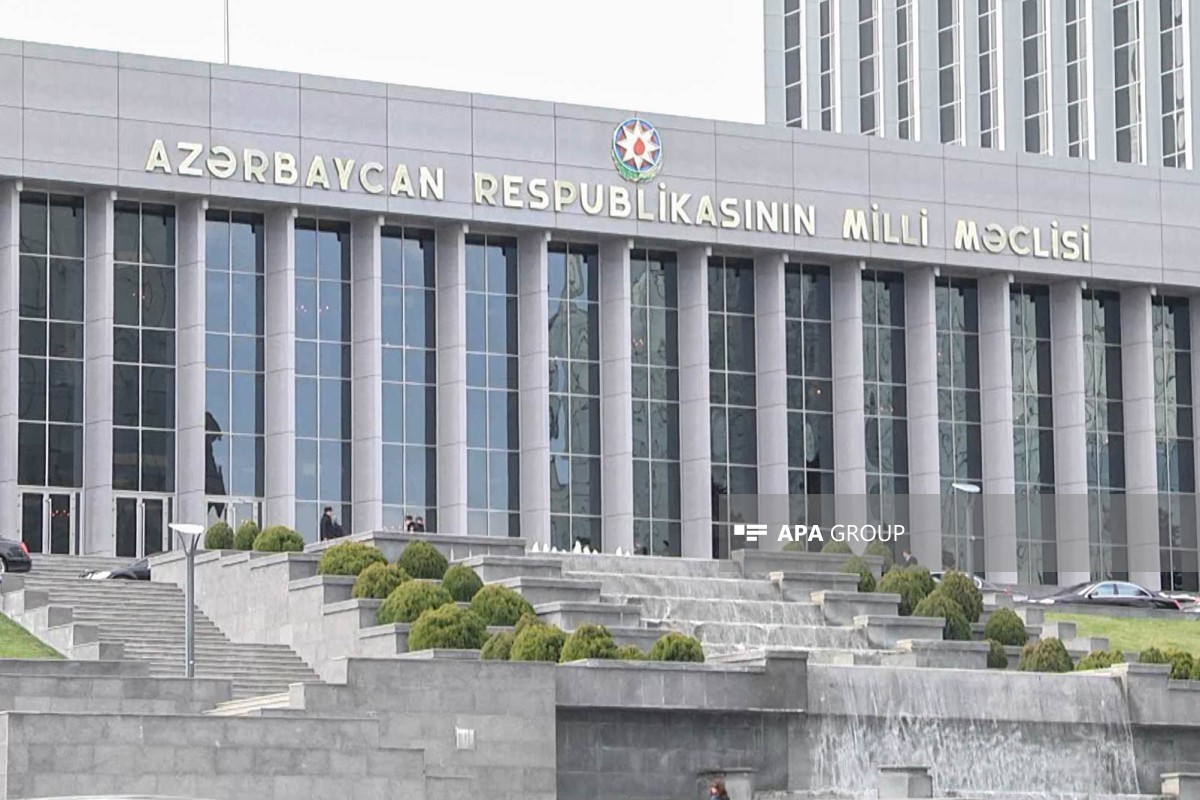


The activities of the French Republic against the Republic of Azerbaijan, which contain a broad spectrum of hybrid threat components, are still ongoing, according to a statement by the Temporary Commission of the Milli Majlis against Foreign Interference and Hybrid Threats, APA reports.
The statement noted that, particularly after Azerbaijan's victory in the 2020 Patriotic War, the French side has gone beyond the diplomatic framework and has sought to create hybrid threats against Azerbaijan through various means, platforms, and instruments in order to secure its interests in the region that run counter to international law.
It was stated that allegations undermining the currently fragile peace process between Azerbaijan and Armenia, one-sided positions voiced in international institutions, and ongoing trends in the French media and judicial system indicate that these threats are aimed at interfering in Azerbaijan's internal affairs, influencing its foreign policy course, weakening its position in the international arena, and disrupting stability in the region.
The statement emphasized that hybrid threats by the French state and actors affiliated with it mainly cover the following areas:
“Lawfare”, that is, exerting pressure through legal means, the adoption by both chambers of the French Parliament (the Senate and the National Assembly), since November 2020, of resolutions repeatedly targeting Azerbaijan and opposing our country's sovereignty and territorial integrity;
Although the legal force of these documents used as instruments of diplomatic and political pressure is limited, they are adopted with the aim of shaping similar approaches toward Azerbaijan in other countries where France's sphere of influence and the Armenian lobby are strong. Such one-sided and biased documents of parliaments serve to create a negative image of our country in the international arena, weaken our legitimate position, and create artificial tensions instead of contributing to peace and stability in the region.
Conducting active anti-Azerbaijan activities in international organizations and institutions, and regional platforms;
After the Second Karabakh War, certain French state officials, diplomats, parliamentarians and public figures attempted to secure the adoption of decisions and documents contrary to Azerbaijan's interests by using platforms such as the UN and its agencies, institutions of the European Union (particularly the European Parliament), the Council of Europe, PACE, the OSCE, as well as the International Organisation of La Francophonie. These steps were taken with the aim of isolating Azerbaijan, discrediting it and excluding it from certain international cooperation frameworks, despite our country's actions being in line with international law.
Creating a negative image of Azerbaijan in the French media;
The large-scale creation of a negative image of Azerbaijan in the French media has already become systematic. The publication of nearly 40 anti-Azerbaijan articles and the preparation of dozens of television reports in the French media during May and June alone demonstrate the intensity of the negative propaganda. By spreading biased, distortion-based and disinformation-oriented information about Azerbaijan, the French media has become an important front of hybrid threats.
Direct interference in Azerbaijan's internal affairs by providing a one-sided platform to radical opposition figures in the French media;
Extensive space is provided in the French media for articles and interviews of certain radical opposition representatives who have no political weight either inside or outside Azerbaijan, creating conditions for appeals aimed at distorting the real situation in our country and misleading the French public.
Under the guise of media freedom, these steps, calculated to stimulate the activities of radicals against Azerbaijani statehood, serve the purpose of undermining internal stability, as well as creating social discontent and polarization in the country. Contrary to the principles of objective journalism, the failure to provide space in such materials for the official position of the Azerbaijani state or alternative opinions once again proves that these activities are deliberately carried out to form a negative opinion about our country within French society.
Using radical individuals of Azerbaijani origin who have settled in France under the name of political asylum as tools of hybrid threats;
The sole purpose of the continuous support provided to such individuals by France's official and unofficial circles, the artificial and long-term promotion of their "violated rights" through various means, and the highlighting of politically motivated claims under the cover of democratic values is to present our state as a "repressive regime" before the international community and undermine its credibility.
Conducting anti-Azerbaijan activities coordinated by the Armenian lobby;
The anti-Azerbaijan activities of certain state officials, parliamentarians and heads of local government bodies (mayors) in France who are under the influence of the powerful Armenian lobby are systematic in nature. French politicians frequently take pro-Armenian positions under the influence of the Armenian lobby, which possesses strong political and economic ties, and conduct coordinated anti-Azerbaijan activities within the EU and international organizations. These activities are aimed at violating Azerbaijan's internationally recognized sovereignty and territorial integrity and create significant tension in bilateral relations with France.
Managing campaigns by pro-Armenian groups, internationally funded NGOs, “human rights” organizations and networks of “investigative journalists”;
One of the most widespread and effective elements of hybrid threats is information campaigns conducted through media and social media.
The aforementioned groups, supported by France either directly or indirectly, conduct large-scale campaigns against Azerbaijan on various issues across online platforms. Through these campaigns, fake news, distorted facts and provocative information are disseminated. The aim is to damage the country's international image and create distrust toward Azerbaijan's state institutions. Bot networks and fake profiles also join these campaigns in an attempt to manipulate international public opinion regarding Azerbaijan.
French espionage activities in Azerbaijan;
As an important part of its hybrid threat strategy, France has also engaged in espionage activities aimed at undermining relations between our countries. This illegal activity was aimed at influencing developments in the region, studying Azerbaijan's domestic political situation, economic development, military potential and strategic interests, as well as establishing agent networks consisting of Azerbaijani and foreign citizens. Among the objectives were spreading disinformation within the country, creating dissatisfaction among certain groups and carrying out other operations that would undermine stability.
Arms sales to Armenia and support for the European Union Mission in Armenia (EUMA);
France's active transfer of weapons to Armenia and its direct support for EUMA, which is mainly engaged in intelligence activities in the region, effectively turning it into its own instrument, are regarded as steps aimed at changing the military balance in the South Caucasus, increasing tensions and obstructing the peace process. Extensive information on the matter was provided in the Commission's special report titled "A Hybrid Attack on Stability in the South Caucasus Under the Name of a 'Peace Mission'" presented on April 24, 2025. (https://meclis.gov.az/documents/EUMA_aprel_2025.pdf).
It was also noted that the Commission against Foreign Interference and Hybrid Threats continues to successfully implement countermeasures, in coordination with relevant state institutions, aimed at neutralizing the impact of France's hybrid threats:
"It is precisely as a result of these measures and France's unsuccessful attempts that the other side resorts each time to new unfriendly actions against Azerbaijan and puts forward fabricated accusations through various platforms.
Taking the above into account, the Commission considers it necessary to address not the state and government officials of France, but directly the French people.
The listed facts also show that a number of French politicians and state structures prefer to create the image of an 'external enemy' in the face of Azerbaijan in order to conceal society's distrust of political governance and divert attention from the severe socio-economic difficulties within the country, while carrying out activities against our state that are incompatible with legal and ethical norms within the framework of non-transparent relations with the Armenian lobby.
The Azerbaijani people have always considered the French people their friends and will continue to do so. Throughout its history of independence, our state has always declared its readiness to build relations with the French Republic based on friendship, cooperation and mutual respect.
French society should know that such unfriendly actions and foreign policy moves by its government, instead of bringing political and economic dividends to France, further damage its international image by tarnishing it."


 Follow us on Telegram
 t.me/apanewsaz
 Follow us on Instagram
 Follow us on TikTok
 Follow us on Facebook
 Follow us on X