

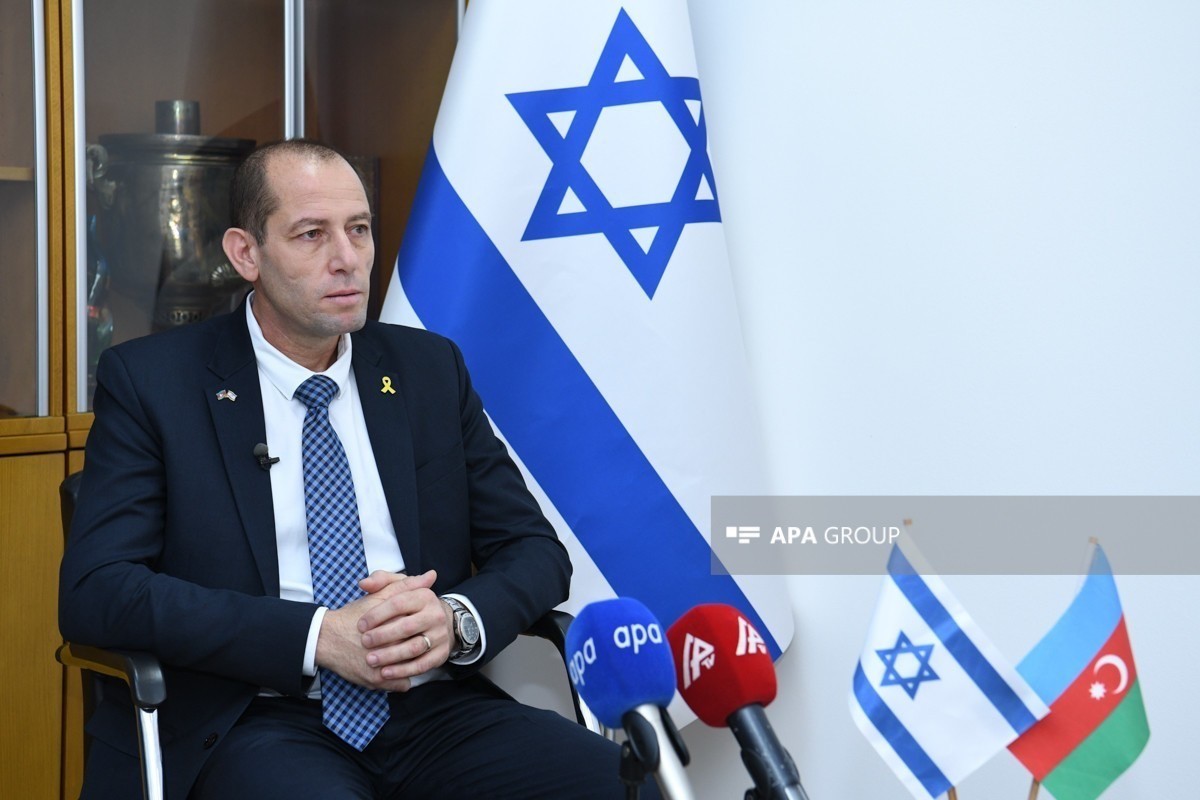

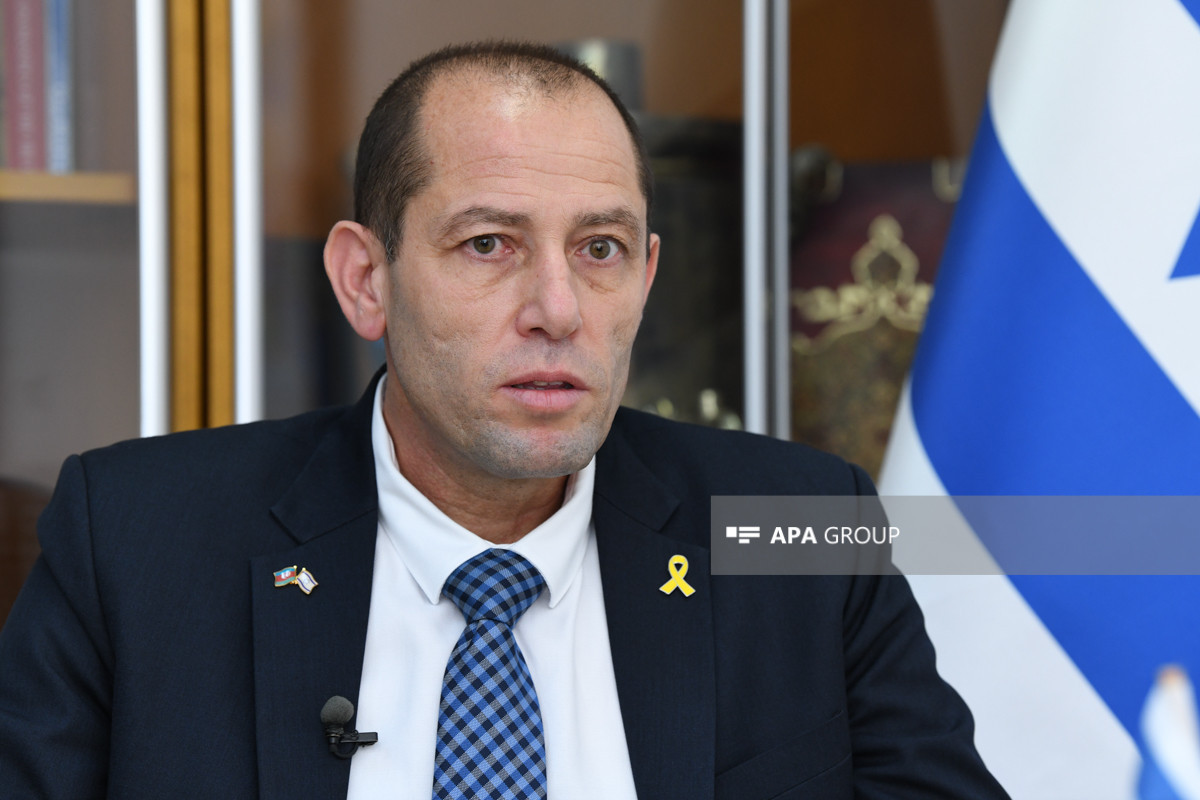
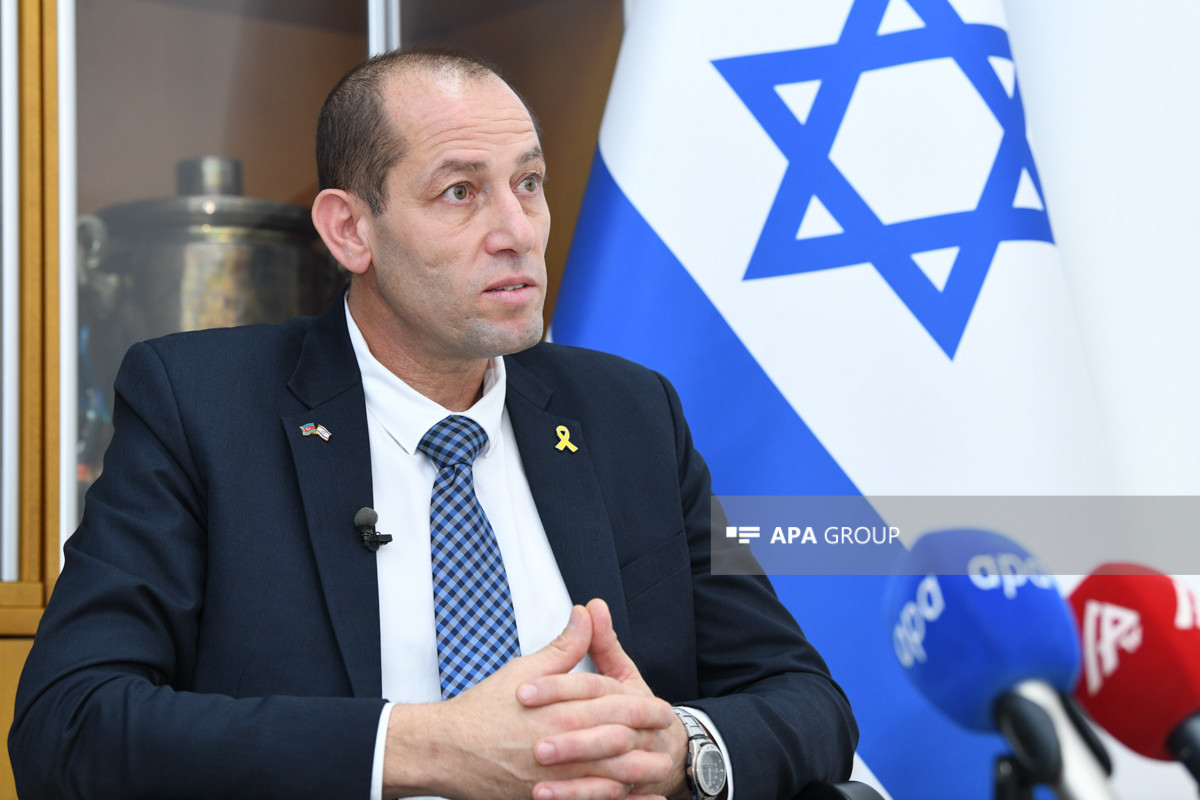
The Ambassador of the State of Israel to Azerbaijan, Ronen Krausz, gave an interview to APA. In the interview, the Ambassador discussed the ongoing developments in the Middle East, Israel’s military operations in Iran, the ceasefire between the United States and Iran, and the continuing ground operations against Hezbollah in Lebanon.
Ceasefire with Iran is the result of coordinated efforts by the US and Israel
Question: Mr. Ambassador, what is Israel’s definitive stance regarding the announced ceasefire agreement between the United States and Iran? Furthermore, do you believe this ceasefire aligns with Israel’s national security interests?
Ambassador Krausz: Indeed, the ceasefire was announced several days ago and is the direct result of coordinated efforts between the United States and Israel. Consequently, this development came as no surprise to Israel. I believe the timing of the ceasefire was specifically calibrated to align with the military milestones achieved over the past month.
My view is that if an opportunity has now emerged for productive and transparent negotiations with the Iranians—and if these talks yield tangible outcomes that substantively address both U.S. and Israeli requirements—it will serve the best interests of the world, including Israel, the Iranian people, and the region as a whole.
As long as Iran adheres to the ceasefire and refrains from military actions against Israel, American interests in the region, and neighboring countries—while also engaging in negotiations in good faith—we will reach an agreement that neutralizes the threat Iran poses to the region and the world. This is my hope. Such an accord would address the core concerns we have articulated from the outset. These include the military nuclear capabilities Iran seeks to acquire, its stockpiles of enriched uranium, and a ballistic missile program that threatens not only Israel and the region but also Europe. Furthermore, it encompasses Tehran’s support for various proxy groups, specifically Hezbollah and the Houthis. A critical issue remains Hezbollah, which continues to pose a threat to the State of Israel and persists in conducting military operations. I hope that these negotiations will yield positive results.
If we examine the list of achievements secured alongside the United States, it becomes evident that we have realized many of our primary objectives
Question: Israeli opposition leader Yair Lapid has asserted that the government failed to achieve its goals in the war with Iran. In your view, has Israel succeeded in reaching its strategic targets in this confrontation?
Ambassador Krausz: If we examine the list of achievements secured in coordination with the United States over the past 34–35 days, it becomes evident that we have realized many of our primary objectives.
Allow me to provide a summary. The Supreme Leader and dozens of high-ranking figures from the Islamic Revolutionary Guard Corps, the government, the army and the Iranian leadership in general have been eliminated. Approximately 90% of their naval fleet, exceeding 150 vessels, has been destroyed. Simultaneously, their Air Force and Air Defense systems have been systematically disabled. Dozens of aircraft and helicopters utilized for transporting weapons, missiles, and funding—primarily to Lebanon and various proxy forces—have been intercepted and destroyed. While not exhaustive, the majority of the underground ballistic missile infrastructure has been neutralized. Consequently, Iran’s capacity to launch strikes against Israel, neighboring countries, and even Europe has been significantly diminished.
Furthermore, Iran’s capacity to manufacture new missiles and drones has been severely constrained. This implies that replenishing destroyed stockpiles will prove exceedingly difficult. Our assessment includes the significant degradation of the metallurgical industry, damage to national infrastructure—including railways and bridges—and strikes against dozens, if not hundreds, of police stations and precincts. Numerous military installations, IRGC bases, and airfields were also targeted. Additionally, approximately 10,000 members of various forces, who posed a threat to the Iranian people themselves, were neutralized.
Consequently, when evaluating the overall outcome, while it may not be characterized as 100% successful—as total destruction was not achieved—I believe the accomplishments are both substantial and highly significant.
I believe we should take pride in our achievements
Question: Mr. Ambassador, in that case, has Yair Lapid resorted to exaggeration in his statements?
Ambassador Krausz: I do not wish to comment specifically on Mr. Lapid’s remarks. I will reiterate that Israel is a democratic nation, and its citizens—particularly members of the government and the opposition—have the right to voice their opinions and express their thoughts. This is an integral part of Israeli democracy.
However, I believe that if one objectively evaluates the achievements secured by Israel during this latest military campaign, it is impossible to ignore the substantial figures and the impressive successes we have realized. I reiterate: it is not a 100% result; not every objective has been fully attained. I am certain that had there been more time, further achievements could have been added to the list. Nevertheless, I believe we should take pride in our outcomes.
If someone wishes to claim that Lebanon is part of the ceasefire, they are effectively conceding that Lebanon is under the patronage of Iran
Question: A number of countries say that the ceasefire should also include Lebanon and call on Israel to end military operations there. Iranian officials and the Prime Minister of Pakistan have stated that the articles of the ceasefire agreement also include Lebanon. How does Israel respond to these calls?
Ambassador Krausz: I believe we saw and heard the U.S. President, the Vice President, and the White House spokesperson specifically address the Lebanon factor yesterday. They stated unequivocally that Lebanon is not a party to the ceasefire. Consequently, we are maintaining our operations against threats emanating primarily from Hezbollah.
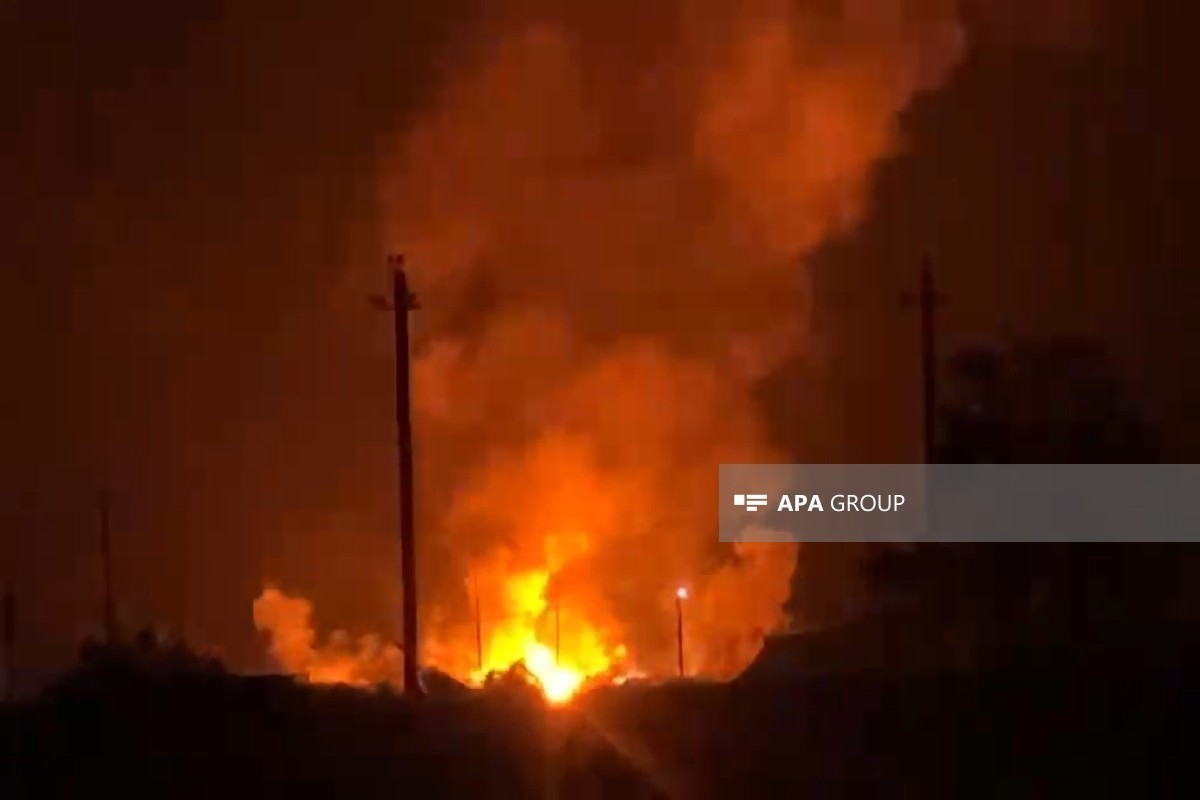
Yesterday alone, within a span of just ten minutes, the Israeli military struck and destroyed over 100 Hezbollah targets in Lebanon, including headquarters and weapon depots.
It was Hezbollah’s own decision to join Iran’s campaign and launch attacks against Israel just days after hostilities commenced. If someone wishes to claim that Lebanon is part of the ceasefire, they are effectively conceding that Lebanon is under the patronage of Iran. If a ceasefire declared with Iran were to automatically encompass Lebanon, it would imply that Lebanon is an extension of Iranian territory. I do not believe this to be the case. Lebanon is a sovereign country, and its government has already declared that it does not recognize Hezbollah as a legitimate force. This places the responsibility on the Lebanese government to halt and dismantle any activities carried out by Hezbollah; as long as they fail to do so, Israel will take those measures itself.
We will not tolerate the reality we have faced over the past several weeks. Israel’s northern regions are being targeted by hundreds of rockets, anti-tank missiles, and drones, creating an untenable situation. The Israeli military will continue its operations to eliminate any threat emanating from Lebanon. Naturally, we are doing our utmost to prevent any strikes or harm to civilians.
I must emphasize that the Lebanese people are not the target. Our objective is strictly to target members of Hezbollah. To that end, we have issued evacuation orders for various villages to ensure that the civilian population is not harmed during military operations.
Nevertheless, as of today, anyone situated south of the Litani River is considered a combatant and will be targeted by the Israeli military. Regrettably, we have not witnessed the implementation of UN Security Council Resolution 1701. Resolution 1701 explicitly mandated the removal of Hezbollah’s presence south of the Litani River—specifically between the 'Blue Line' and the river—yet it remained unfulfilled. Therefore, as long as the Lebanese government and the Lebanese military fail to assert control over the territory, Israel will undertake this task itself.
Should Iran claim that any attack against Israel is a response to strikes on Hezbollah in Lebanon, Israel will react immediately
Question: Could Israel independently resume military operations in Iran in the future if it deems it necessary? What factors could influence such a decision?
Ambassador Krausz: s I previously noted, for the time being, we are affording a chance to the ceasefire and the scheduled negotiations set to begin in Islamabad tomorrow. It is my hope that Iran will approach the negotiating table in good faith and engage in discussions to reach an agreement that supports the security requirements of the region, Israel, the U.S., Europe, and the world, as well as the Iranian people. If we observe that they are participating sincerely in negotiations that lead to the signing of a consensus document, I believe that would be the optimal resolution.
However, should Iran persist in its previous activities—expending time and capital to reconstruct its missile industry, providing support to proxy forces hostile to Israel in Lebanon or elsewhere, or if an attack originates from Iran for any reason—Israel will defend itself, react, and launch a counter-offensive. Despite Iran’s claims, Lebanon is not a party to the ceasefire. Should Iran assert that any strike against Israel is a retaliation for the targeting of Hezbollah in Lebanon, Israel will issue an immediate response. Nevertheless, I strive to remain optimistic and hope that the efforts invested in negotiations over the next week or two will yield a solution satisfactory to all parties. I think everyone should thank the United States and Israel for the great efforts they have made to achieve this result.


 Follow us on Telegram
 t.me/apanewsaz
 Follow us on Instagram
 Follow us on TikTok
 Follow us on Facebook
 Follow us on X