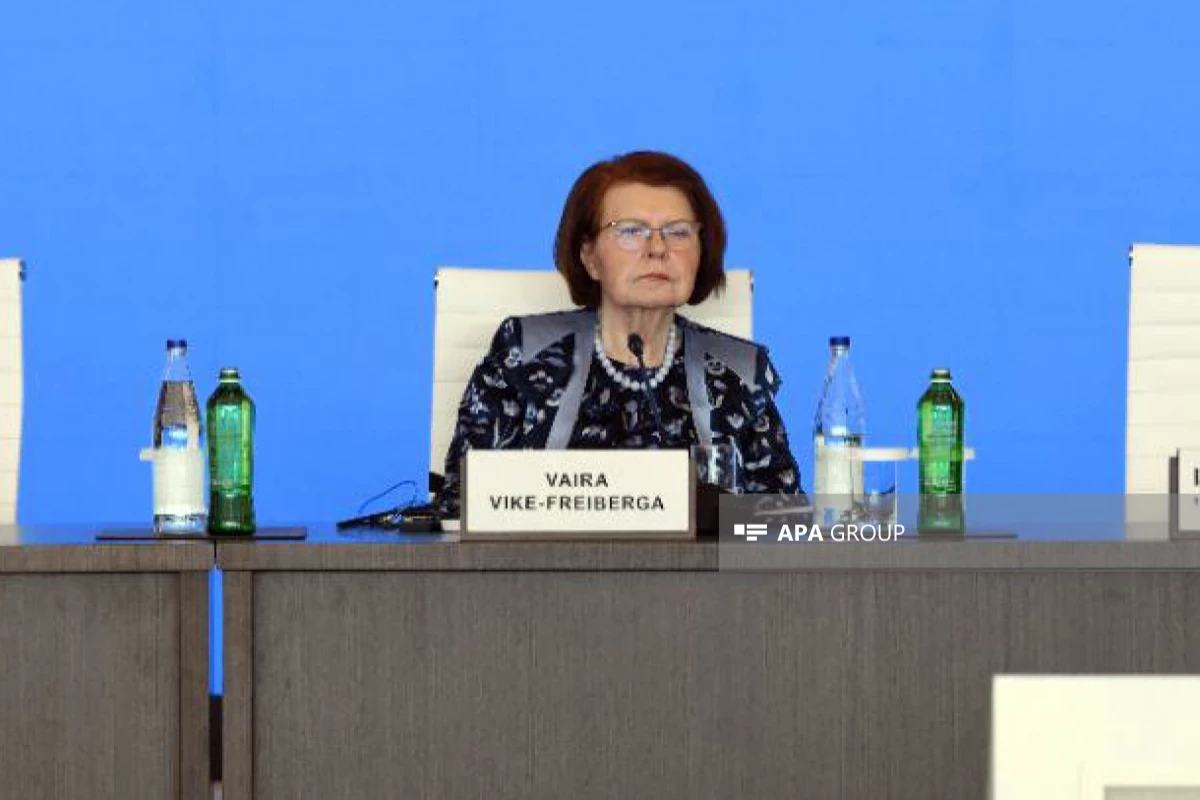

"There is a certain contradiction in the structure of the United Nations," Co-Chair of the Nizami Ganjavi International Center and former President of Latvia Vaira Vike-Freiberga said at the opening ceremony of the 13th Global Baku Forum, APA reports.
“Many people regretfully note that the principles that formed the basis for the establishment of the UN after World War II — a rules-based world order — have lost their influence. This order was based on certain rules, and there was a shared understanding of what was right and wrong, what was acceptable and what was unacceptable. These principles were meant to be applied both in domestic governance and in international relations. Observers from some continents note that these rules were largely shaped in the Western world. Indeed, these principles developed in the Western world over centuries, despite great resistance. In fact, before World War II, Europe was not a model of peace and prosperity. When I was a child, I lived in refugee camps in Germany, and after the war we grew up for many years in hunger and hardship until various countries began accepting refugees. At that time, there was no rule of law. In Nazi Germany, a dictator and his system had been defeated, but another dictator — Joseph Stalin and the Soviet Union — remained in power. The idea of justice for all seemed very distant. However, there is a certain contradiction in the structure of the United Nations. On the one hand, there is the principle of recognizing the sovereign rights of every state that is a member of the organization, which states that countries must adhere to international law. On the other hand, the structure of the Security Council — with five permanent members holding veto power — contradicts this principle to some extent. This system grants greater authority to the victors of World War II, even though the distribution of the world’s population and economic power is now different,” she emphasized.


 Follow us on Telegram
 t.me/apanewsaz
 Follow us on Instagram
 Follow us on TikTok
 Follow us on Facebook
 Follow us on X