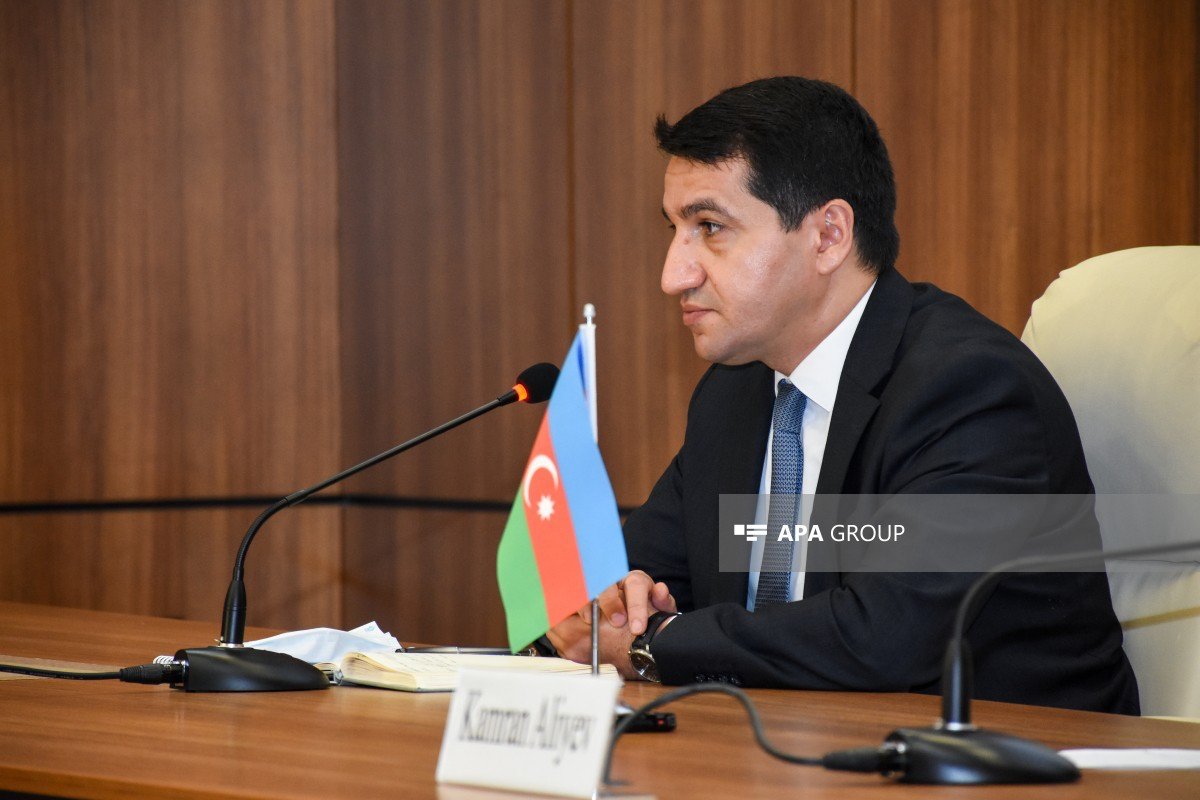


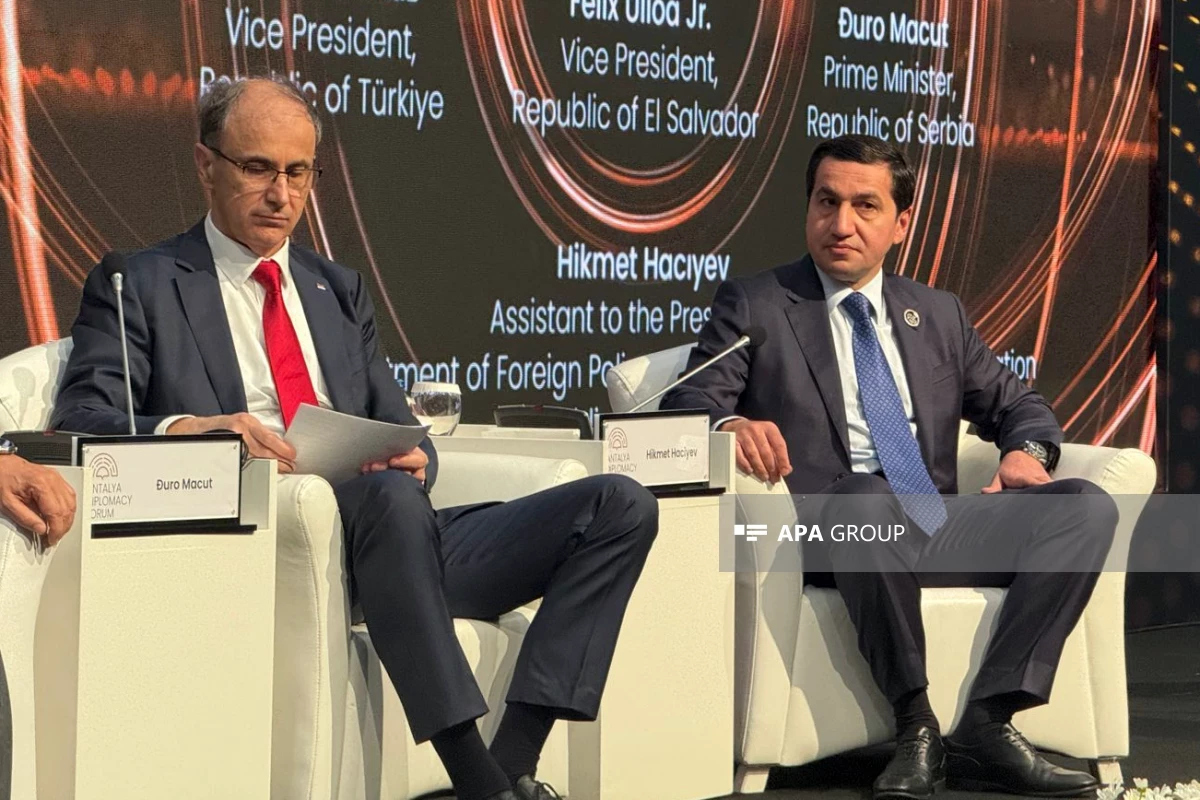

The South Caucasus has already entered a phase of peace, Assistant to the President of the Republic of Azerbaijan and Head of the Foreign Policy Affairs Department of the Presidential Administration, Hikmat Hajiyev, said during his speech at the 5th Antalya Diplomacy Forum, APA’s correspondent dispatched to Antalya reports.
Hikmat Hajiyev stated that energy projects implemented at Azerbaijan’s initiative today serve global energy security and, at the same time, ensure the interests of the countries in the region.
He noted that the resolution of the Armenia–Azerbaijan conflict is of particular importance from a regional perspective: “Azerbaijan has demonstrated leadership in this process, and the conflict is now in the past. Our country has fully restored its territorial integrity and sovereignty through political, military, and military-political means.”
The presidential aide emphasized that Azerbaijan is taking steps toward normalizing relations with Armenia, and that the relevant agreement was initially initialed in August last year with the participation of the U.S. leadership.
Hikmat Hajiyev stated that the solution model imposed on the region from outside by the OSCE Minsk Group over 30 years remained ineffective: “This once again shows that real results in the region can only be achieved through local ownership and leadership.”
He added that a new status quo has now formed in the region and that the South Caucasus has entered a phase of peace. At the same time, Hikmat Hajiyev noted that new conflict hotspots are emerging in the broader surrounding region.
Hikmat Hajiyev also touched upon the importance of regional connectivity projects, stating that Azerbaijan, together with Central Asian countries, is developing Trans-Caspian transport projects.
According to him, the Baku–Tbilisi–Kars railway plays an important role in this direction, and the Zangezur corridor may create additional opportunities.
The presidential aide emphasized that regional ownership does not mean isolation; on the contrary, this approach creates a broad platform for cooperation with other regions.



 Follow us on Telegram
 t.me/apanewsaz
 Follow us on Instagram
 Follow us on TikTok
 Follow us on Facebook
 Follow us on X