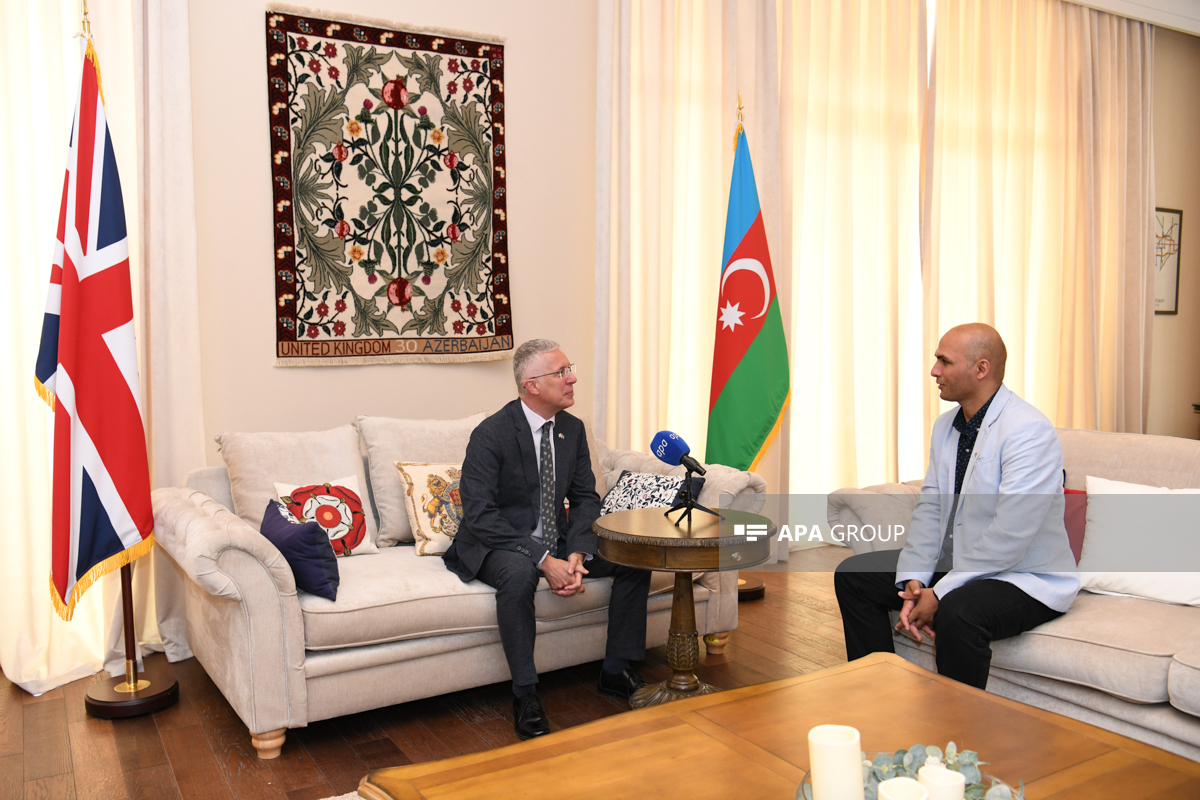
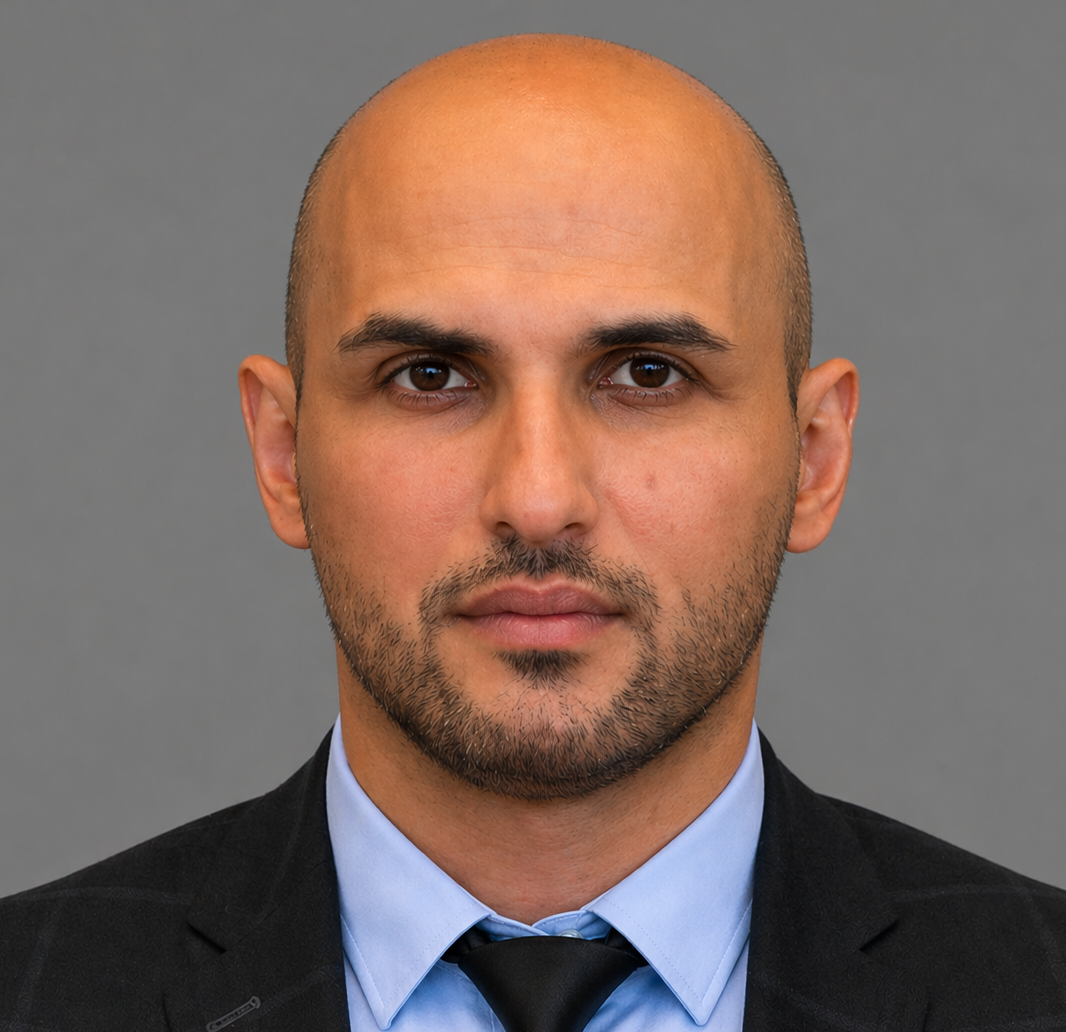
His Excellency Mr. Fergus Auld, Ambassador Extraordinary and Plenipotentiary of the United Kingdom of Great Britain and Northern Ireland to the Republic of Azerbaijan, has given an interview to APA Agency.
– How do you assess the political, economic, and cultural relations between the United Kingdom and Azerbaijan, and what prospects do you see for strengthening this partnership in the future?
– The UK’s relationship with Azerbaijan is one of our most successful in this region, built on mutual respect and shared interests. With over £84 billion invested, the UK remains Azerbaijan's largest foreign investor, demonstrating long-term confidence in Azerbaijan's potential.
What began over three decades ago with the Contract of the Century, the British Council and a small Embassy has transformed into a broad and deep strategic relationship, with Azerbaijan emerging as a key regional and now global player.
My proudest moment in three years as Ambassador was the first-ever visit to Azerbaijan by a British Prime Minister, Sir Keir Starmer, for COP29. Here, the UK and Azerbaijan were working together on the biggest issue on the global stage. Azerbaijan played the role of hosts brilliantly, and the UK did everything we could to support this and co-create successful outcomes. The Prime Minister and His Excellency President Aliyev agreed that there was still room for the relationship to grow.
Earlier this year, we held the 7th session of our Joint Intergovernmental Commission, co-chaired by Energy Minister Parviz Shahbazov, who led the largest-ever cross-government delegation to the UK, and our Business and Trade Minister, Gareth Thomas.
We are now looking forward to a Ministerial visit for our annual Strategic Dialogue by Steven Doughty, Minister of State for Europe, North America and Overseas Territories in our Foreign, Commonwealth & Development Office. Later in the year, we should welcome the UK Trade Envoy to Azerbaijan and Central Asia, Lord Alderdice.
But while Government-to-Government structures are important, it’s people-to-people relationships that I get most excited about as Ambassador here – and with all the talented young Azerbaijanis studying in the UK right now, I am sure that the best is yet to come.
– What is the United Kingdom’s position on the Azerbaijan–Armenia peace process, and what role can London play in the signing of a peace agreement and in the subsequent reconstruction phase?
– The UK welcomes the significant progress in Azerbaijan-Armenia negotiations and recognises this as a historic opportunity for lasting regional peace. We stand ready as a practical partner to support both countries in implementing any agreement, particularly in areas where the UK has proven expertise.
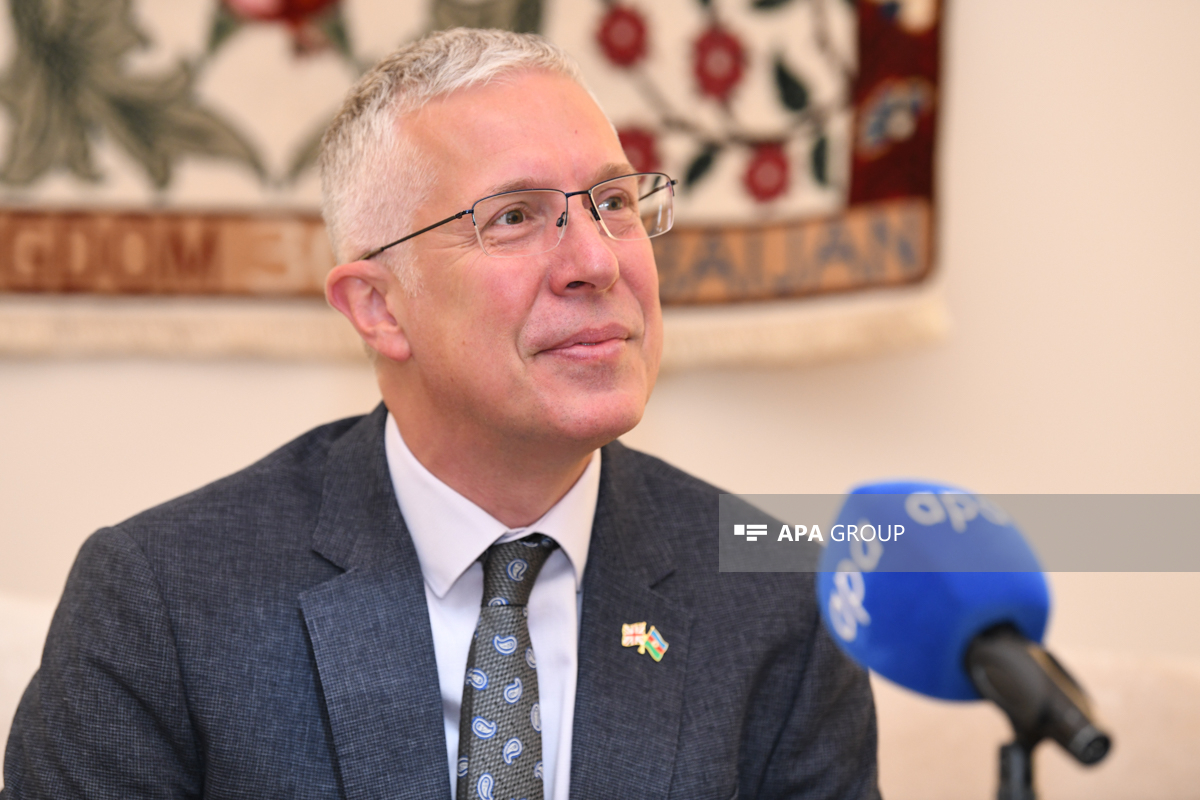
Peace between Azerbaijan and Armenia represents a transformative moment for the South Caucasus region. The UK has always believed that lasting peace comes through dialogue, mutual respect and practical cooperation between neighbours.
We can offer proven solutions: technical assistance for border demarcation; world-class mine clearance capabilities that will make communities safe and land productive; and support for economic connectivity projects.
We all know that a peace agreement is an important next step – but also just the beginning of what will be a decades-long process to bring former adversaries together at all levels. Our own experience of the Northern Ireland peace process may offer useful insights.
– What opportunities do UK educational programs, including Chevening and state scholarships, offer for Azerbaijani youth, and what further steps could be taken to expand cooperation in this field?
UK-Azerbaijan educational ties are extraordinary and still growing, built on three decades of collaboration since the British Council began operations here in 1993. I’m constantly meeting new people who have benefited from these ties.
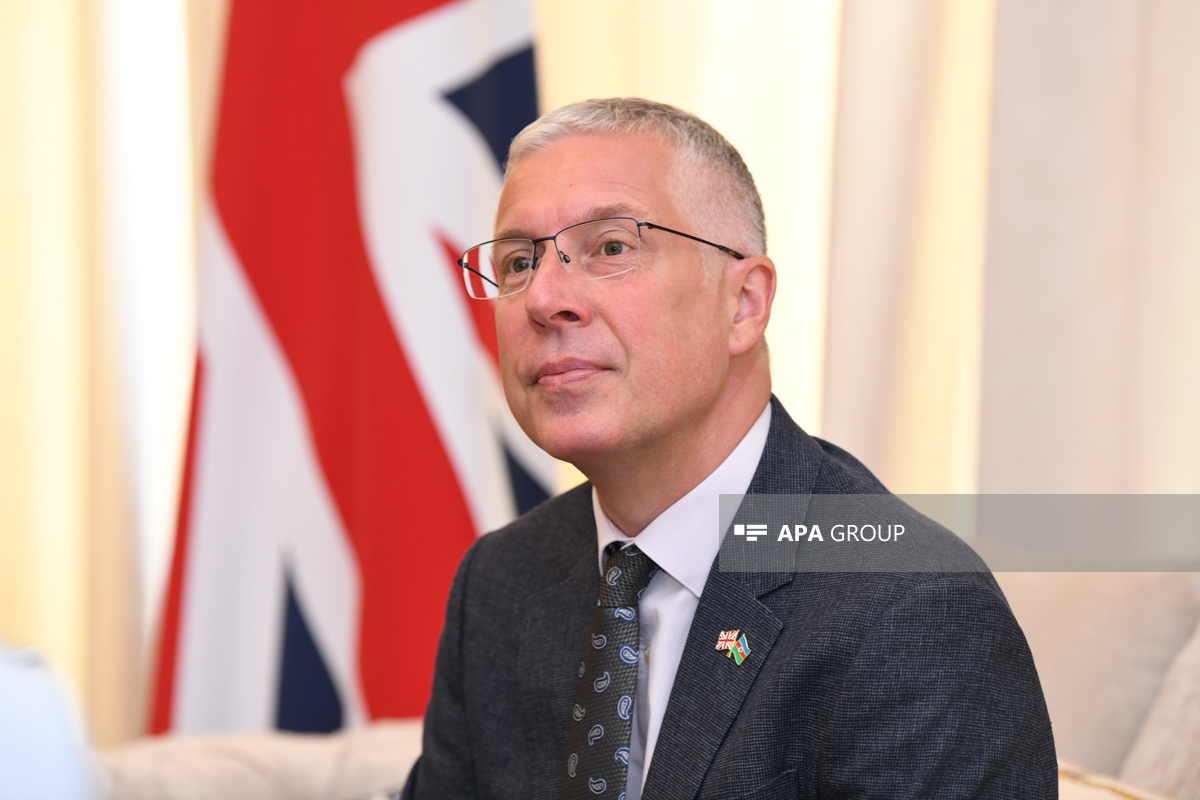
Today, UK-educated Azerbaijani professionals hold senior positions across both public and private sectors, demonstrating the lasting value of this investment in human capital. Through programmes like Chevening and the John Smith Trust, we continue expanding opportunities for Azerbaijani students. Even more important in terms of scale is Azerbaijan's State Scholarship Programme. Over half of Azerbaijani students choose to study in UK universities every year. This shows that talented young Azerbaijanis know a British education will help them develop themselves and build their career opportunities – and that they recognise that they will be warmly welcomed across the UK.
Moving forward, we're exploring enhanced cooperation through initiatives like the ASOIU-Warwick dual degree programme, which could serve as a model for broader institutional partnerships.
– How do you evaluate the prospects of UK-Azerbaijan trade relations? Considering that your country is the largest foreign investor in Azerbaijan, what opportunities does this create for future projects?
I already mentioned the UK investment in Azerbaijan. This is now being reciprocated through increasing Azerbaijani investments into the UK, which has now comfortably exceeded $2 billion. Over 500 British companies operate across diverse sectors—from clean energy and infrastructure to healthcare and agriculture.
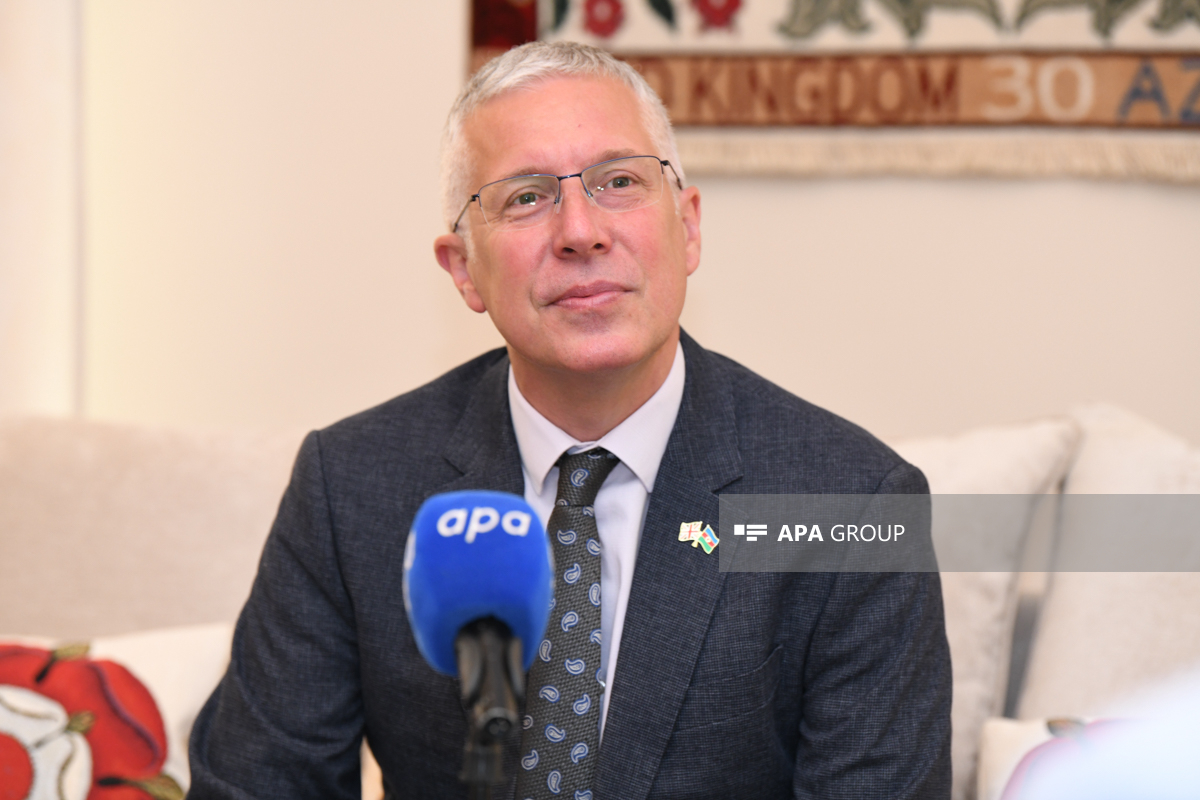
This diversification reflects Azerbaijan's economic development and the UK's confidence in Azerbaijan as a business destination. Our focus now is on identifying high-impact sectors where UK expertise and investment can accelerate Azerbaijan's transformation. We're particularly excited about opportunities in renewable energy, infrastructure, and professional services—all areas where the UK has a huge amount to offer.
– In light of the ongoing Russia–Ukraine war and tensions surrounding Iran, how does the United Kingdom view the prospects for cooperation with Azerbaijan in the fields of security and defence?
The UK values Azerbaijan as an important security partner in a complex region at a time of disruption. Our appointment of a resident Defence Attaché to Baku in March demonstrated our commitment to further strengthening bilateral defence cooperation, as well as Azerbaijan’s partnership with NATO. We recognise Azerbaijan's significant role in regional stability and appreciate Azerbaijan’s principled support for Ukraine's territorial integrity and its humanitarian and energy assistance.
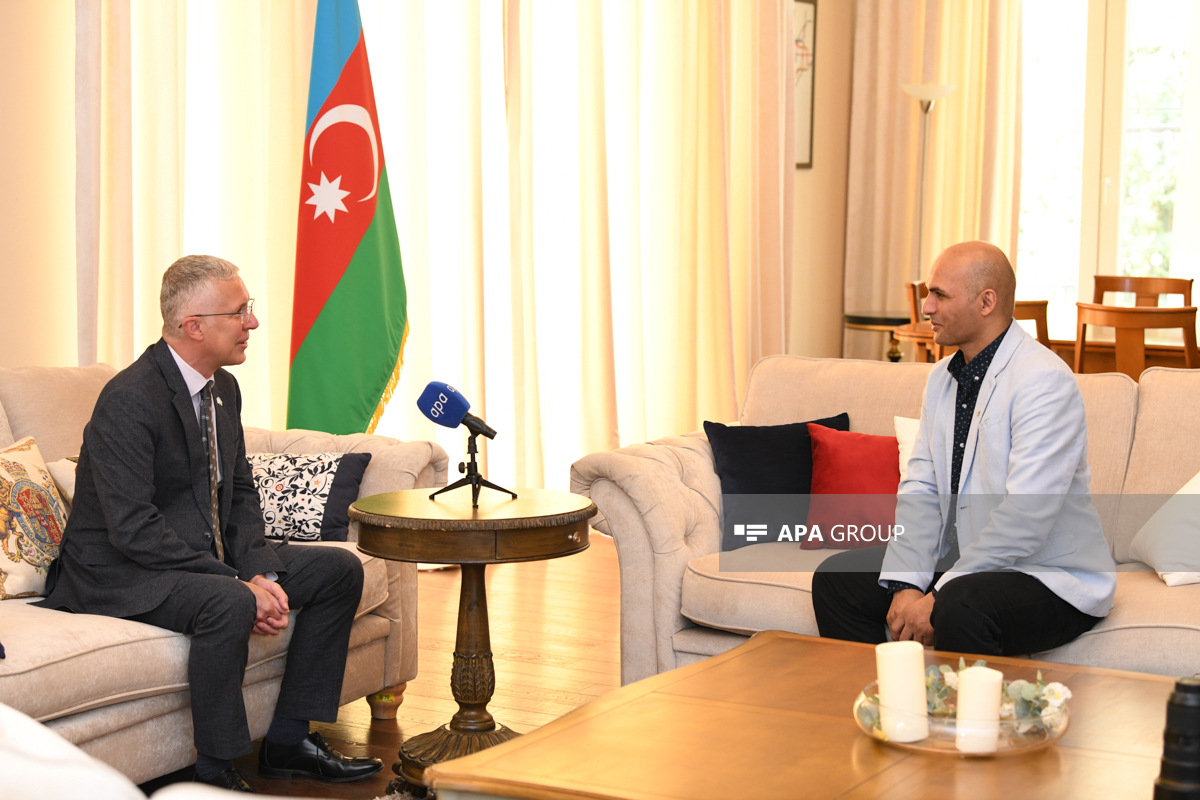
As Russia’s illegal and barbaric invasion of Ukraine continues, alongside its destabilising hybrid activity across Europe - including both in Azerbaijan and the UK - we stand in solidarity and work together with like-minded partners to build resilience.
Photo credit: APA/Ilkin Nabiyev


 Follow us on Telegram
 t.me/apanewsaz
 Follow us on Instagram
 Follow us on TikTok
 Follow us on Facebook
 Follow us on X