










Baku. Lachin Sultanova – APA. US Ambassador Anne Derse gives interview to APA
-What changes occurred in the relations between the two countries during your office in Azerbaijan?
- I came to Azerbaijan three years ago with a strong mandate from Washington to try to deepen our relations and expand as many areas as possible. And this is because the United States recognizes that Azerbaijan and the US share important interests in common. And strong relationship within the interests of both of our countries and I think we have had energy partnership for many years that dates back to the time of the Baku-Tbilisi-Ceyhan pipeline and the United States and Azerbaijan are really the partners that help to drive that project forward to reality. The development on the delivery of Azerbaijan’s oil and gas resources to the world markets is making an enormous contribution to Azerbaijan’s development and it is a significant contribution to the global energy security as well. Our partnership has begun to expand and develop well beyond just our excellent cooperation in energy. Notably we remember that Azerbaijan as one of the first countries called the United States and offered sympathy and support after September 11. We deepened our cooperation in fighting terrorism and we appreciate greatly Azerbaijan’s contributions in Iraq until recently, in Afghanistan still today and in Kosovo until recently. I am three years here and we work hard to deepen our cooperation in assisting Azerbaijan to meet the goals in its NATO IPAP like Individual Partnership Action Plan. And we deepened our cooperation in helping Azerbaijan strengthen its ability to protect Caspian maritime security. We established bilateral workfare to guide our military-to-military cooperation and the goals of network plan are tied to Azerbaijan’s-NATO IPAP process. And this year we had our first joint military exercises. In the context of Azerbaijan it is NATO IPAP process. We established in these past three years a new economic partnership commission to discuss how the US can support Azerbaijan’s continued economic development, to discuss how we can promote commercial relations. That commission had some good results already for example Azerbaijan is now eligible for our generalized system of preferences program, which is a program of trade preferences for exports to the United States. We intensified our technical assistance to assist Azerbaijan’s further economic development in areas of private sector competitiveness, financial sector reform, WTO jointly with the government of Azerbaijan. We signed an important MOU education cooperation last year and I knew that MOU would be sending additional students to the United States under the US Fulbright Program, which is our most important world-renowned educational exchange program. And also we actually have American students now coming to Azerbaijan to study Azerbaijani. The first eight students have come here under special program by the Department of State called the critical need language initiative. That is a part of US national program called “National Security Language Initiative†and Azerbaijani is listed as one of our critical needs languages now along with Arabic, Korean, Bengali, Russian and I am very pleased about that. And we expect many students coming to Azerbaijan to study Azerbaijani. We also have very active program of cultural exchanges and our first ever production of US play in Azerbaijani took place in Baku last year. We established Open World Program, which is the program owned by the US Congress of exchanges for citizens and professionals to help Azerbaijanis to visit and know the United States.
- What new did you learn about Azerbaijan and its people?
- I think I have mentioned before what wonderful surprise it was for me to come to Azerbaijan and discover its very rich, ancient and beautiful culture. I would say undiscovered treasure that the world should know more about. Before coming to Azerbaijan I knew that it is very strategic country located in a very strategically important part of the world, I knew that the critically important energy partner of the United States. I was aware of the tragic history of Nagorno Karabakh conflict, but I didn’t know that Azerbaijan has such rich history and music, mugham, ashug, mugham-jazz, which is I think very wonderful symbol of the partnership between the United States and Azerbaijan. I tried to learn Azerbaijani language and I have made some progress and it is giving me access to your literature, plays and poems, which are extraordinary beautiful.
- Do you read Azerbaijani pieces in original?
- My language teachers helped me because it is still difficult for me. Most recently I was reading a play by Jafar Jabbarli called “Sevilâ€. I have the text of the poems that my teachers have given me. It is difficult, but when I read some I can understand. That play is very interesting to me because it is discussing the issues of women and important point in Azerbaijan’s history.
-How do you find democratization process in Azerbaijan during your mission here?
- The United States believes that Azerbaijan’s choice, a choice that it made in its early days of independence to develop as a strong market-based democracy and to integrate into Euro-Atlantic institution. It is a wise choice in the terms of being the best way to secure Azerbaijan’s long-term independence, stability, security and prosperity. We understand that to be Azerbaijan’s goal. Of course the United States as a country we understand that no nation can impose a system of government on another nation. It is up to Azerbaijan to determine Azerbaijan’s future. We do believe that the best partners for the US are the partners that share our values. We believe that the governments more stable in the world and more secure over the long run are those governed by consensus of the people and by cohesion. And our governments have requested the world people and respect for human rights. We do recognize that it takes time to develop strong institutions of democracy and it takes time and it takes work and commit an effort by citizens and government and this is a process that never finishes. You are always working to refine democracy, including in the US today we are still working to refine our democracy. By the way I would say that July 4 (inaudible) this year we took giant step forward in perfecting our democracy with the election of the first Afro-American president which gives a life to our sounding idea of equality and freedom. But to go to my point about it takes time to go to the democratic institution, but you also have to stay on the path you have to keep working out it and you have to keep it in progress. We know that Azerbaijan is a country with enormous potential. (the rest is translated from Azeri because original is inaudible). We know that Azerbaijan can move on its way even faster. I should also talk about media freedom. There appear some difficulties, but because we are partners, we try to solve such divergences constructively. Our notion of democracy is that free media provides citizens with necessary information and keep the Government responsible before the citizens.
Journalists should not work in an atmosphere of fear, or should not be faced with violence, should not be threatened, beaten or arrested for political reasons.
We do not believe that cases of libel should be resolved within the framework of criminal law. There are very positive steps towards this. A few weeks ago, President Aliyev, in one of his speeches, said that journalists should not be arrested for slander and libel. Following this, we witnessed the release of journalists.
- Next week President Barack Obama is due to visit Russia. Will he discuss with his Russian counterpart the settlement of the Nagorno-Karabakh conflict and the issue of Gabala radar station?
- I am not aware of the details of this meeting. Currently, preparations are under way for the meeting. I think the two presidents will touch upon a set of issues related to inter-state. I would like to mention here that President Obama, when he took over his post, telephoned President Ilham Aliyev and expressed the United States’ intention to conduct a more intensive activity towqards finding a solution to the Nagorno-Karabakh conflict. Secretary of State Clinton also told this to President Aliev. With regard to the Gabala radar station, we have always said that this facility belongs to Azerbaijan, and if the United States and Russia decides to pursue the Gabala plan, they would consult with Azerbaijan on this issue.
-Why the United States as a member of the UN Security Council and co-chair of the OSCE Minsk Group doesn’t force Armenia to fulfill UN Security Council’s resolutions on Nagorno Karabakh?
- The Nagorno Karabakh conflict must be resolved peacefully. Return to the military operations can lead to the tragedy. I met with refugees for many times while working in Azerbaijan. I talked with the people suffered from the war during my visit to Alibeyli and Aghdam villages of Tovuz Region. I would like to emphasize again that the conflict must be resolved peacefully. Any military operation can lead to the great catastrophes. Both parts must reach an agreement and the United States will remain as a partner giving impetus to this agreement.
- Azerbaijani People asses the Congress’s direct assistance to Nagorno Karabakh as a support to the separatists. Will Washington reconsider this issue?
- Let me give you a little background on this issue, because I know that it is very sensitive in Azerbaijan and I have heard lot about it from many Azerbaijani colleagues. And I’ve got the latest information from Washington. At the direction of the US Congress, the US provides subsidence level humanitarian assistance to victims of the Nagorno Karabakh conflict residing there. Since 1998, the United States has provided over USD 30 million in assistance to Nagorno Karabakh. Since 2002, the US has provided approximately two million dollars per year for humanitarian projects and I really want to emphasize that this is subsidence level humanitarian assistance. The US humanitarian projects cover demining, housing, school repairs, primary health care and agriculture. But recent funding has focused demining and water supply. At this moment, right now with respect to legislation in the Congress we are waiting for the passage of Fiscal Year 2010 appropriations bill.
Anne Derse: “I learn Azerbaijani and it is giving me access to your literatureâ€â€“ INTERVIEW

 02 July 2009 17:50 (UTC +04:00)


 İDMAN XƏBƏR
 Follow us on Telegram
 t.me/apanewsaz
 Follow us on Instagram
 Follow us on TikTok
 Follow us on Facebook
 Follow us on X
Foreign
Turkmen President receives delegation led by Mikayil Jabbarov
18:28
 8 July 2026
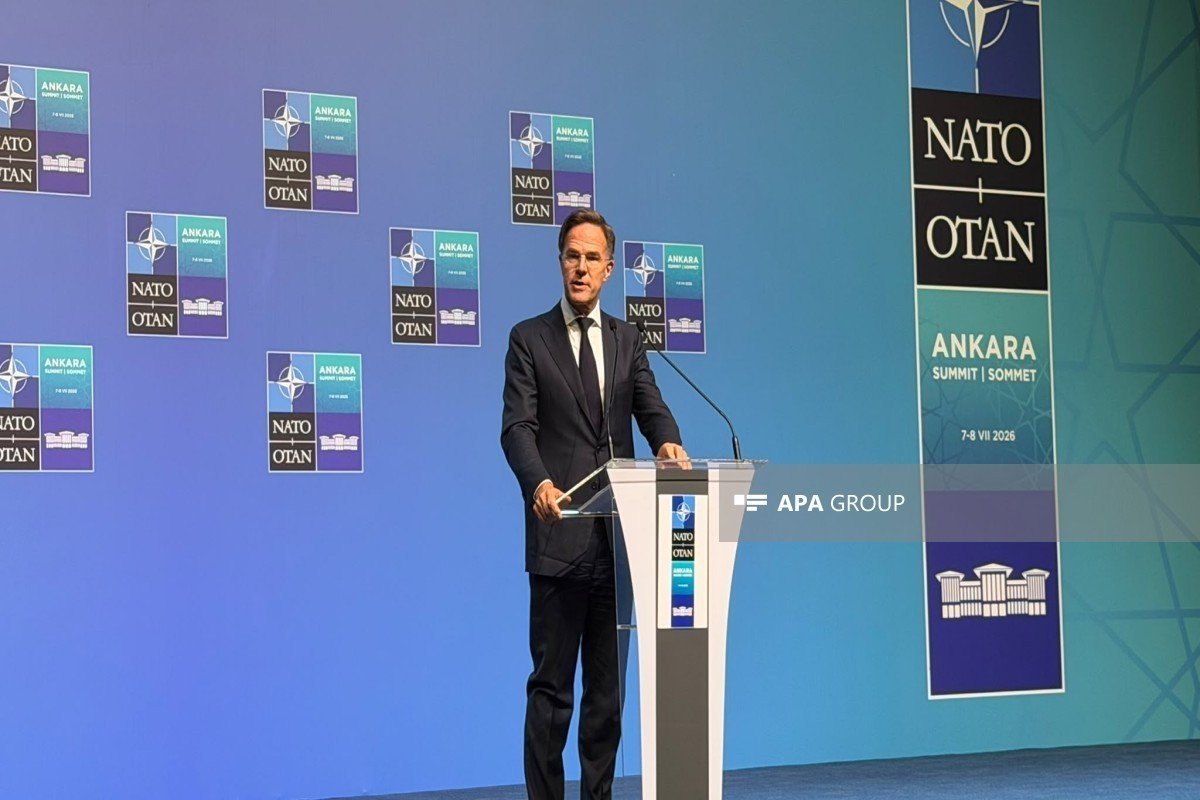
Rutte: NATO to provide at least EUR 70 billion in military aid to Ukraine next year
17:28
8 July 2026
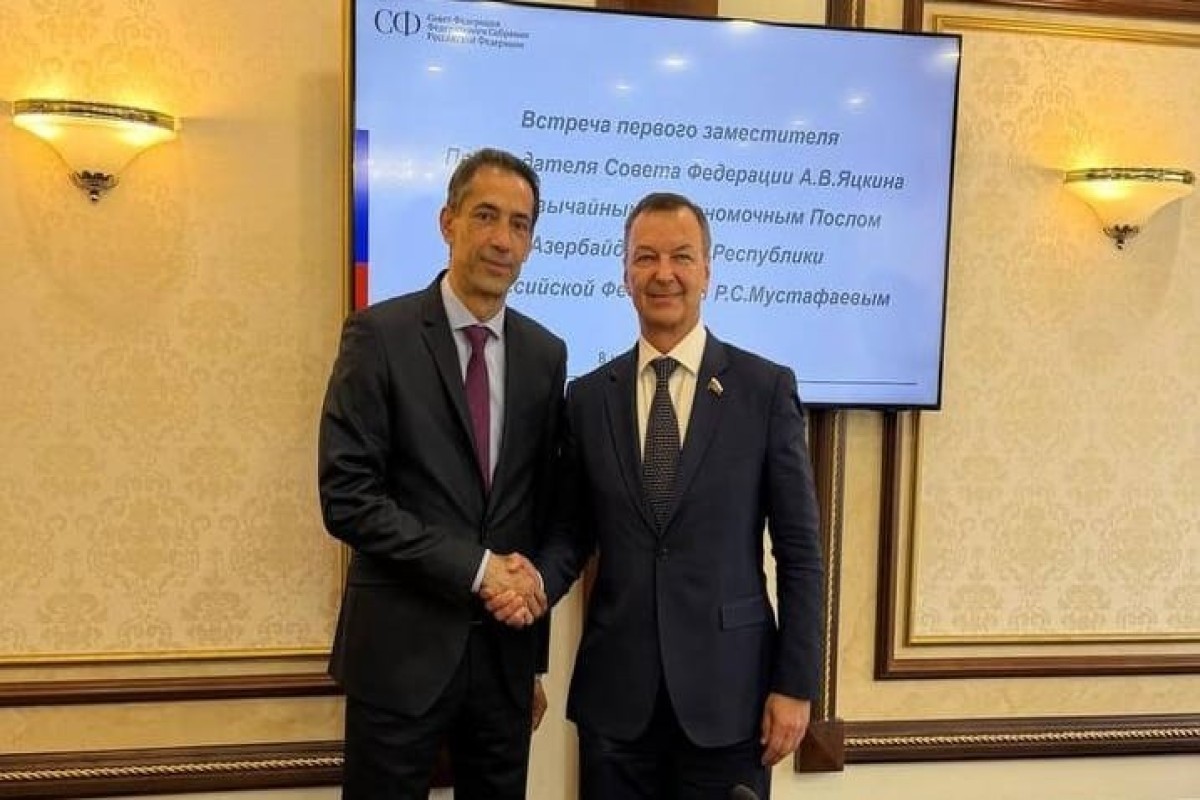
Azerbaijani ambassador meets First Deputy Speaker of Russia's Federation Council
15:52
8 July 2026
Co-chair of Azerbaijan-Czech Joint Commission changed
15:49
8 July 2026

NEWS FEED
Iran’s parliament speaker says Strait of Hormuz to open only under ‘Iranian arrangements’
09:08
9 July 2026
Iran warns of attacks on more U.S. bases in region
06:44
9 July 2026
Trump: US prepared to respond to every Iranian attack with 20 strikes
05:15
9 July 2026
US military says it struck more than 80 Iranian targets
04:14
9 July 2026
Trump: This is a response to Tehran's bombing of ships yesterday
03:11
9 July 2026
Iran says US has stuck a railway bridge in northeastern Iran
02:42
9 July 2026
Justin Bieber to co-headline stacked 2026 World Cup final halftime show
01:24
9 July 2026
Iranian port city hit by power cuts amid fresh US strikes
00:53
9 July 2026
US Central Command issues statement on strikes against Iran
00:48
9 July 2026
Rutte: Next NATO Summit to be held in Albania
00:34
9 July 2026
Explosions reported in several parts of Iran
00:32
9 July 2026
US conducting new strikes in Iran after Trump said ceasefire is ‘over’
00:31
Audio
9 July 2026
President Erdogan meets EU leaders during NATO summit in Ankara
00:11
9 July 2026
Rubio: US begins process of removing Syria from list of state sponsors of terrorism
00:04
9 July 2026
Erdogan: Trump is positive about F-35 fighter jets being delivered to Türkiye
22:19
8 July 2026
Turkish, US Presidents did not hold discussion on South Caucasus
21:55
Audio
8 July 2026
Erdogan calls for barrier-free NATO defense cooperation
21:45
Audio
8 July 2026
US leader believes he could be the victim of an assassination attempt by Iran
21:20
Audio
8 July 2026
Trump is confident that all NATO countries will soon increase defense spending to 5% of GDP
20:35
8 July 2026
Trump says Iran's new leadership "may be gone," after breakdown in peace negotiations
20:30
Audio
8 July 2026
Türkiye, UK set to sign major defense partnership at NATO summit
20:19
8 July 2026
Putin holds meeting on fuel crisis after Ukraine’s drone attacks
19:40
8 July 2026
Russia bans diesel exports after Ukraine’s refinery attacks
19:14
8 July 2026
Media: Iran announces suspension of talks with the US on final agreement
19:02
8 July 2026
Turkmen President receives delegation led by Mikayil Jabbarov
18:28
8 July 2026
Trump does not rule out closing Ukraine's airspace by the US
18:02
8 July 2026
40 people readmitted to Azerbaijan last month
17:55
8 July 2026
Interior Ministry conducts operation against "Any Unboxing" fraud pyramid created by Malaysian citizens - VIDEO
17:54
8 July 2026
Iran: Acknowledgment of cancellation of US-Iran memorandum fuels regional tensions
17:45
8 July 2026
Trump says he will speak with Putin today
17:44
8 July 2026
Rutte: NATO to provide at least EUR 70 billion in military aid to Ukraine next year
17:28
8 July 2026
Trump: Iran can be prevented from obtaining nuclear weapons even without an agreement
17:26
8 July 2026
Trump: Ukraine's strikes deep inside Russia could help end the war
17:23
8 July 2026
Trump says he will let Ukraine make Patriot Missiles
17:21
8 July 2026
NATO: Iran must never possess nuclear weapons, ensure free passage through Strait of Hormuz
17:10
8 July 2026
Trump told NATO leaders he wants to keep US in alliance, source says
17:03
8 July 2026
Trump: We could launch very heavy strikes on Iran tonight
17:03
8 July 2026
Russia tightens requirements for migrant workers: They will have to pay income tax
17:02
8 July 2026
EU discussing ways to support regional connectivity with Armenia and Azerbaijan, Grono says
17:00
8 July 2026
NATO to allocate EUR 70 billion to Ukraine this year
16:55
8 July 2026
NATO adopts Ankara Declaration
16:47
8 July 2026
Georgian Parliament Speaker criticizes Hague Declaration on Georgia
16:46
8 July 2026
Azerbaijan, Uzbekistan discuss expanding religious cooperation
16:36
8 July 2026
Four seriously wounded in shooting at Bavarian high school, suspect arrested
16:33
8 July 2026
Ukrainian Air Force downs Russian war aircraft
16:32
8 July 2026
Chevron tanker used for CPC oil hit by drone in Black Sea
16:20
8 July 2026
bp and its co-venturers spend over $115 million on social projects in Azerbaijan
15:56
8 July 2026
Azerbaijani ambassador meets First Deputy Speaker of Russia's Federation Council
15:52
8 July 2026
Co-chair of Azerbaijan-Czech Joint Commission changed
15:49
8 July 2026
Composition of Azerbaijan-Algeria Joint Commission approved
15:37
8 July 2026


