










Baku-APA. After 17 months of violence and an estimated 17,000 people killed, a lightning-quick turnaround in the momentum of the civil war has put President Bashar Assad’s forces on the defensive, a sign that his once-impenetrable family dynasty is wobbling, APA reports quoting Associated Press.
For the first time, the rebels have brought a sustained fight to Damascus, the seat of Assad’s power, in a powerful signal that the regime cannot protect its own capital. On Friday, reports of intense fighting in Aleppo, Syria’s second city, suggest the rebels are making a run on another major government stronghold.
And now, more than ever before during the four-decade Assad dynasty, there are signs that the inner circle is unraveling. A stunning rebel bombing that killed four of Assad’s top lieutenants Wednesday was a strike that almost certainly involved the hand of a trusted insider.
The coming days will be crucial to determining whether the regime can recover from blow after devastating blow, which have eviscerated any sense that the head of one of the Middle East’s most autocratic states can hold on indefinitely.
Trying to retain their grip on power, regime forces are stretched to the limit. The government is pulling its most powerful troops from around the country to reinforce Damascus, which allows rebels to swoop in and take over key areas after the soldiers abandon their positions or leave them only lightly guarded.
In the past two days, rebels seized border crossings in Iraq and Turkey, ushering in scenes of bloody chaos. Truck driver Ahmet Celik said Friday he was nearly killed near the Bab al-Hawa crossing in Turkey when rebels fought for control.
"The gunfire lasted till the morning," Celik said. "We barely survived."
A stream of high-level defections points to growing unease among the most privileged classes who count on the regime for their livelihoods and perks. Brig. Gen. Manaf Tlass, an Assad confidant and son of a former defense minister, defected to France earlier this month.
Although the government still has the firepower to hang on — possibly for months or more — the future is bleak.
The increasingly sectarian overtones to much of the violence suggest any power vacuum will usher in a bloodbath pitting Syria’s majority Sunni population against the Assad family’s minority Alawite sect, which is an offshoot of Shiite Islam.
Sunnis make up most of Syria’s 22 million people, as well as the backbone of the opposition. But Assad is relying heavily on his Alawite power base to crush the uprising, prompting revenge attacks and fear among other minorities that they face retribution if the regime falls.
The opposition, which is fractious and lacks any real central command, has no hope of pacifying the country. There is no clear candidate to step in and lead should Assad go. And the violence has become far more unstable than many had ever imagined, with al-Qaida and other extremists joining the ranks of those fighting to topple the regime.
Thousands of Syrians are not waiting around to find out what comes next.
Families are fleeing into Lebanon, arriving in packed buses, taxis and private cars. Iraq is sending planes to evacuate its residents, and Capt. Saad al-Khafaji of the state-owned Iraqi Airways promised to "continue the flights until there are no Iraqis left" in Syria.
The idea of Iraqis fleeing Syria would have been unthinkable in recent years — thousands of them fled to Syria to escape widespread sectarian fighting during the worst of violence in their homeland between 2005 and 2007.
Now, the traffic is going the other way, with Iraqis and Syrian refugees heading east.
Despite the rebel gains, the battle for Syria is not over yet. Although the rebels appear more powerful than at any stage of the uprising, their small-caliber weapons and rampant disorganization will make it all but impossible to defeat the regime in direct battle.
The rebels also have failed to hold territory for any significant amount of time, which prevents them from carving out a zone akin to Libya’s Benghazi, where opponents of Moammar Gadhafi launched their successful uprising last year.
Already, Syrian government forces are starting to drive the rebels out of pockets of Damascus. On Friday, government forces showed off a battle-scarred neighborhood of the capital that they say has been "cleansed" of fighters, but rebels say it was a tactical retreat that will allow them to expand their guerrilla war in the coming days and weeks.
The regime has tried to portray a sense of calm control — but the country is in a state of profound unease. Assad has not spoken to the public and he was a no-show Friday at the funerals for the security officials killed by the Wednesday bombing.
The only sign of Assad since the attack was a brief, soundless video clip on state TV.
The dire situation for the Assad government is unprecedented. The president took power upon his father’s death in 2000, inheriting a brutal legacy.
Assad’s father, Hafez, crushed a Sunni uprising in 1982 by shelling the town of Hama. Amnesty International has claimed that 10,000-25,000 were killed, though conflicting figures exist and the Syrian government has made no official estimate.
Hafez Assad ruled the country for the next two decades until his death, and the massacre was seared into the minds of Syrians. As the uprising began to take shape last year, Assad immediately fell back on the tactics that have kept his family in power.
But the onslaught has failed to crush the rumblings of dissent, and now it seems everyone is preparing for the worst — a future of revenge killings and chaos, more scenes of desperate violence and a spate of bloody anarchy akin to Iraq after Saddam Hussein’s fall in 2003.


 Follow us on Telegram
 t.me/apanewsaz
 Follow us on Instagram
 Follow us on TikTok
 Follow us on Facebook
 Follow us on X
Asia
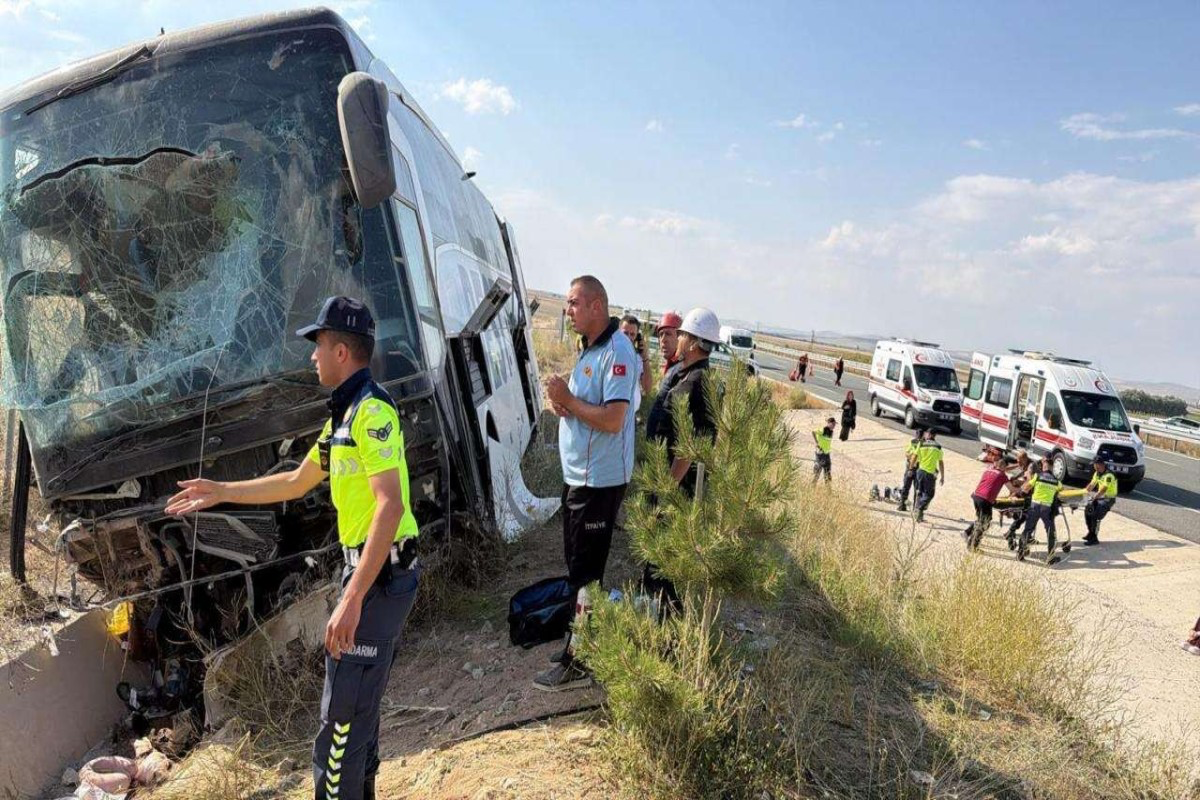
40 people injured in bus accident in Türkiye
 22:51
22:51
 3 July 2026

Netanyahu and Trump speak, agree to meet "soon" in the US, Israel says
22:04
3 July 2026
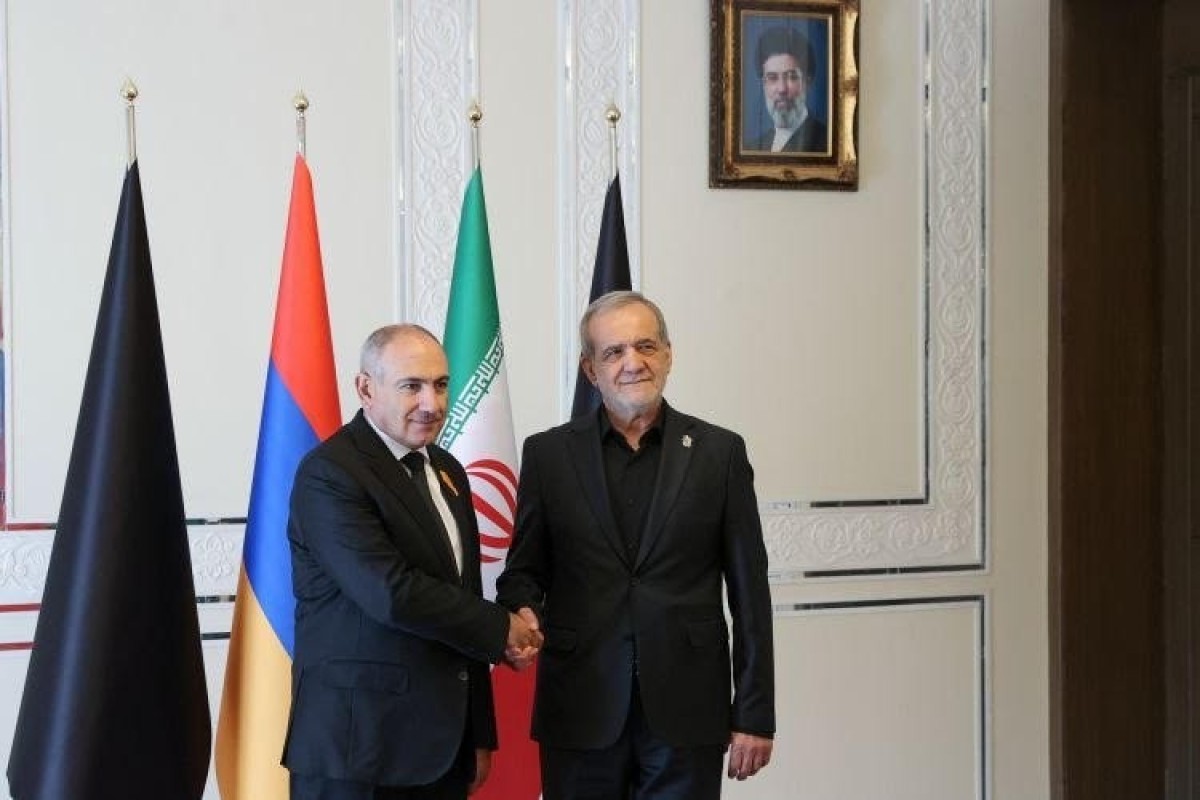
Iranian President Masoud Pezeshkian meets Armenian PM Nikol Pashinyan in Tehran
12:08
3 July 2026
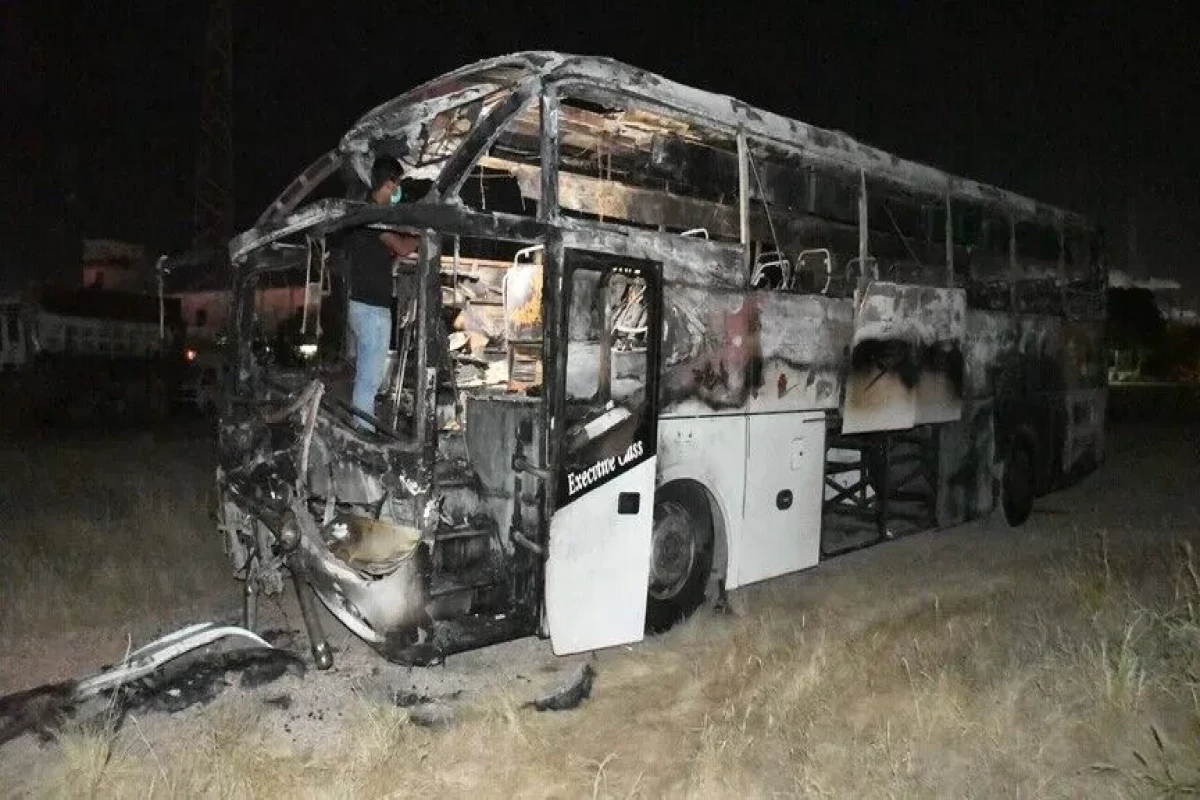
At least 40 killed after bus falls into ravine in Pakistan
11:37
3 July 2026

NEWS FEED
Brazil's Bolsonaro to remain under house arrest
02:13
4 July 2026
France and UK ready to deploy militaries to support transit in Strait of Hormuz
01:45
4 July 2026
Police investigate a shopping mall shooting that left 2 dead in suburban Detroit
01:33
4 July 2026
Death toll of Venezuela earthquakes rises to 2,645
01:17
4 July 2026
Egyptian national team has reached the 1/8 finals of the World Cup
00:57
4 July 2026
Trump pardoned six US citizens convicted under Biden administration
00:45
4 July 2026
Lewis Hamilton eyes British Grand Prix Sprint victory
00:12
4 July 2026
Workers protest Mercedes-Benz cost-cutting
23:45
3 July 2026
Merz: Germany will take on more responsibility in security matters
23:28
3 July 2026
Hungary greenlights another cluster in Ukraine's EU accession talks
23:12
3 July 2026
40 people injured in bus accident in Türkiye
22:51
3 July 2026
Assistant to Azerbaijani President congratulates US on occasion of Independence Day
22:36
Audio
3 July 2026
Remains of Bahadur Kamalov, a martyr of the First Karabakh War, were buried in Kalbajar
22:12
3 July 2026
Netanyahu and Trump speak, agree to meet "soon" in the US, Israel says
22:04
Audio
3 July 2026
Azerbaijan’s Speaker attends farewell ceremony for Ayatollah Seyyed Ali Khamenei in Tehran-PHOTO
19:30
Audio
3 July 2026
Court considers defendants' motions during appeal hearing of Armenian nationals
19:06
Audio
3 July 2026
Missing First Karabakh War martyr Madina Babayeva laid to rest in Kalbajar 33 years later - PHOTO
18:56
3 July 2026
Media: NATO summit to approve €140 billion military aid package for Ukraine
18:45
3 July 2026
ADY discusses expansion of Railway Cooperation with Russia and Iran
18:21
3 July 2026
ICDO Secretary General meets Sudan's foreign minister to discuss humanitarian cooperation
18:18
3 July 2026
In riposte to Trump, Merz says Germany can defend its military spending push
17:48
3 July 2026
Nakhchivan's electricity demand fully met by renewable energy for over two months
17:28
3 July 2026
Armenian parliament approves new voter eligibility requirements
17:25
3 July 2026
Mass graves acknowledgment: ICMP Director-General confirms what Azerbaijan has asserted for years - ANALYSIS
17:25
3 July 2026
European Parliament staff were staying at the hotel in Kyiv that was attacked by Russia
17:20
3 July 2026
Poland's Tusk says Ukraine wants to lower tension, should confront history
17:04
3 July 2026
EU issues sanctions against six people involved in death of Navalny
16:41
3 July 2026
Turkish National Defense University delegation continues its visit to Azerbaijan
16:31
3 July 2026
New York Times: US dissuaded Israel from plot to assassinate Iranian negotiating delegation
16:24
3 July 2026
WSJ: Rubio blocked Hegseth's plan to cut US troop presence in Europe
16:01
3 July 2026
Death toll linked to extreme heat in France rises to 2,025
15:46
3 July 2026
Magnitude 6.2 earthquake strikes off eastern Indonesia: USGS
15:04
3 July 2026
Five killed, 18 injured in reported Ukrainian drone strike on Tokmak market
14:37
3 July 2026
Remains of First Karabakh War missing martyr Moysum Aliyev laid to rest in Fuzuli
14:29
3 July 2026
Azerbaijani delegation arrives in Tehran for Ayatollah Ali Khamenei's farewell ceremony - PHOTO
14:28
Audio
3 July 2026
US withdrew forces from Nigeria after operation against ISIS, AFRICOM chief says
13:47
3 July 2026
Remains of First Karabakh War serviceman Rauf Ahmadov laid to rest in Goranboy - PHOTO
13:24
3 July 2026
TuranBank conducts beach cleanup campaign on the Caspian coast in cooperation with the Ministry of Ecology and Natural Resources
13:11
3 July 2026
Date and agenda of next Milli Majlis session revealed
12:55
3 July 2026
Hikmat Hajiyev meets with economist Jeffrey Sachs in Baku
12:48
3 July 2026
Remains of missing First Karabakh War martyr laid to rest in Ujar - PHOTO
12:42
3 July 2026
At least 3,700 excess deaths reported during heatwave in France, Belgium and Netherlands
12:38
3 July 2026
Ruben Rubinyan says he will step down as Armenia's special envoy to Türkiye if elected parliament speaker
12:16
3 July 2026
Iranian President Masoud Pezeshkian meets Armenian PM Nikol Pashinyan in Tehran
12:08
3 July 2026
SBU has opened a case against Russian Chief of the General Staff Gerasimov
11:59
3 July 2026
14 railcars of wheat shipped from Russia to Armenia via Azerbaijan - PHOTO
11:57
Audio
3 July 2026
Armenian Prime Minister Nikol Pashinyan to visit Yekaterinburg for Innoprom 2026
11:50
3 July 2026
At least 40 killed after bus falls into ravine in Pakistan
11:37
3 July 2026
Volume of gas exported to Türkiye via Baku-Tbilisi-Erzurum pipeline revealed
11:36
3 July 2026
President Ilham Aliyev congratulates Belarus President on Independence Day
11:33
3 July 2026


