










Baku – APA. The last American soldier left the base here Wednesday, surrounded by tall cedar trees and high mountains, a place that came to be called the Valley of Death, APA reports quoting “The New York Timesâ€.
The near daily battles here were won, but almost always at the cost of wounded or dead. There were never enough soldiers to crush the insurgency, and after four years of trying, it became clear that there was not much worth winning in this sparsely populated valley.
Closing the Korangal Outpost, a powerful symbol of some of the Afghan war’s most ferocious fights, and a potential harbinger of America’s retreat, is a tacit admission that putting the base there in the first place was a costly mistake.
It is also part of a new effort by Gen. Stanley A. McChrystal, commander of forces here since last summer, to consolidate and refocus his forces in places where they might change the momentum of what had become a losing contest.
Fighting for isolated mountain valleys like this one, even if they are hide-outs for clusters of Taliban, was no longer sustainable. It did more to spawn insurgents than defeat them. Better to put those soldiers in cities and towns where they could protect people and help them connect to the Afghan government, he reasoned.
“There’s never a perfect answer,†General McChrystal said as he visited this outpost on April 8 for a briefing as the withdrawal began. “I care deeply about everybody who has been hurt here, but I can’t do anything about it. I can do something about people who might be hurt in the future.
“The battle changes, the war changes,†he added. “If you donâ€t understand the dynamics you have no chance of getting it right. We’ve been slower here than I would have liked.â€
Forty-two American service men died fighting in the Korangal and hundreds were wounded, according to military statistics. Most died in the three years from 2006 to 2009. Many Afghan soldiers died there as well and in larger numbers since they had poorer equipment. In a war characterized by small, brutal battles, the Korangal had more than its share, and its abandonment now has left soldiers who fought there confronting confusion, anger and pain.
“It hurts,†said Spc. Robert Soto of Company B, First Battalion, 26th Infantry, who spent 12 months in the Korangal Valley from 2008 to 2009. “It hurts on a level that — three units from the Army, we all did what we did up there. And we all lost men. We all sacrificed. I was 18 years old when I got there. I really would not have expected to go through what we went through at that age.â€
During the period Specialist Soto served there half of his platoon was wounded or killed, according to the unit’s commanding officer. “It confuses me, why it took so long for them to realize that we weren’t making progress up there,†he said.
The Korangal Outpost was the third area of eastern Afghanistan where combat outposts closed: In 2007 and 2008 two posts and a smaller satellite base were closed in Kunar’s Waygal Valley, and in 2009 two posts were closed in Nuristan Province’s Kamdesh region. Along with the main Korangal outpost, five small satellite bases have closed, at least two of them, Restrepo and Vimoto, were named for soldiers who died there.
Perched on a steep hillside, scattered with gnarly trees, the Korangal outpost consists of little more than a dozen structures made of stone and wood and is heavily sandbagged. It is a primitive-looking place built into the hillside, like the nearby villages. Further down the valley tower the Deodar cedars, which the Korangalis cut down to make their living.
The vulnerability of these combat outposts was hardly surprising. Though sparsely populated, Kunar and Nuristan Provinces have a long history of strident resistance to outsiders. Kunar was the first places to rise up against the Soviet occupation in the 1980s, giving the area the moniker “cradle of jihad.â€
Much of the American mission in the last couple of years has centered on trying to get the reclusive people who live here to recognize the Afghan government and work with it. In some places that is reaping modest results. Not so in the Korangal.
The Korangalis speak a language unrelated to Pashto and Dari, the two main Afghan tongues; they practice a conservative brand of Islam; and they have repeatedly rebuffed American offers of aid.
The area remains under the influence of a Taliban shadow governor along with two Taliban leaders, Haji Mateen and Nasrullah, who make their money off the valley’s lumber.
The sawmill and lumberyard run by Haji Mateen was seized by Marines to build the Korangal outpost in April 2006. The troops had set out to penetrate the six-mile-long valley, but never made it more than halfway.
There have been only two missions to the valley’s southern end since 2005, said Maj. Ukiah Senti, the executive officer of Second Battalion, 12th Infantry Regiment Task Force Lethal, which oversees Korangal and neighboring areas. He said the antagonism from local Taliban and insurgents was so great that it would take a battalion-sized force to make a foray there.
The Korangal Outpost was opened to root out Taliban fighters who were hiding deep in the mountains, according to soldiers who fought there. Even before then, it was apparent the valley’s inhabitants were hostile to outsiders.
In June, 2005 a four-man team of Navy SEALs was ambushed on a ridge above the valley; three were killed and a helicopter sent to rescue them was shot down, killing eight more Navy SEALS and eight other servicemen, making it one of the worst single losses of the war.
While there were Taliban in the valley and Qaeda operatives passed through the area, Korangal was not a major haven, said Maj. James Fussell, a former Army Special Forces soldier who spent nearly two years fighting here, from 2004 to 2005 and again from 2008 to 2009. He recently co-authored a detailed analysis of the mission in Kunar and Nuristan for the Institute for the Study of War.
“Occasionally a Taliban or Al Qaeda member was transiting through that location, but the Korangalis were by no means part of the insurgency,†he said. “Unfortunately, now they are because they were willing to accept any help to get us out.â€
American commanders sporadically discussed closing the base almost since it was put there, but over the last 18 months the plan was pushed by Col. Randy George, who commands Task Force Mountain Warrior, which is responsible for the four easternmost Afghan provinces: Kunar, Nuristan, Nangarhar and Laghman.
“We’re not going to go deep into these valleys and bring them into the 21st century in a couple of months,†said Colonel George, who determined early on that keeping forces in the Korangal and in the Kamdesh region of Nuristan was not an effective way to use resources or win over locals.
Major Senti concurred. “Realistically no one needs to be there,†he said. “We’re not really overwatching anything other than safeguarding ourselves.â€
The current company commander, Capt. Mark Moretti, Company B, Second Battalion, 12th Infantry regiment, said he still hopes that his efforts to connect the Korangal elders to the district center in Nangalam, will bear fruit, but other soldiers expressed skepticism.
“They are connected to the district government now a little bit,†said First Sgt. Bryan Reed, Company B, Second Battalion, 12th regiment. “But it’s not one of their priorities.â€
Looking back, soldiers say the effort shows how choices made from a lack of understanding or consultation with local people can drive them into the arms of the insurgents.
“We had the best intentions, but when you don’t fully understand the culture†it is impossible to make the right choices, said Major Fussell.
A number of the infantrymen who fought here ruefully accept that the time has long passed for the military to spend lives and resources in a small and isolated valley that could not have been won without many more troops.
“It is frustrating, because we bled there and now we’re leaving,†said Capt. John P. Rodriguez, who as a first lieutenant served there with Company B, First Battalion, 26th Marines.
“So you question: were those sacrifices worth it? But just because you lost guys in a place, doesn’t mean you need to stay there.â€


 Follow us on Telegram
 t.me/apanewsaz
 Follow us on Instagram
 Follow us on TikTok
 Follow us on Facebook
 Follow us on X
Asia
Iran, Oman stress need for coordination on Strait of Hormuz traffic in foreign minister call
 16:44
16:44
 25 June 2026

Ghalibaf criticizes US over claims regarding Iran's unfrozen assets
16:43
25 June 2026

Iraqi Oil Ministry denies reports of potential OPEC exit, urges output quota reassessment-UPDATED
16:39
25 June 2026
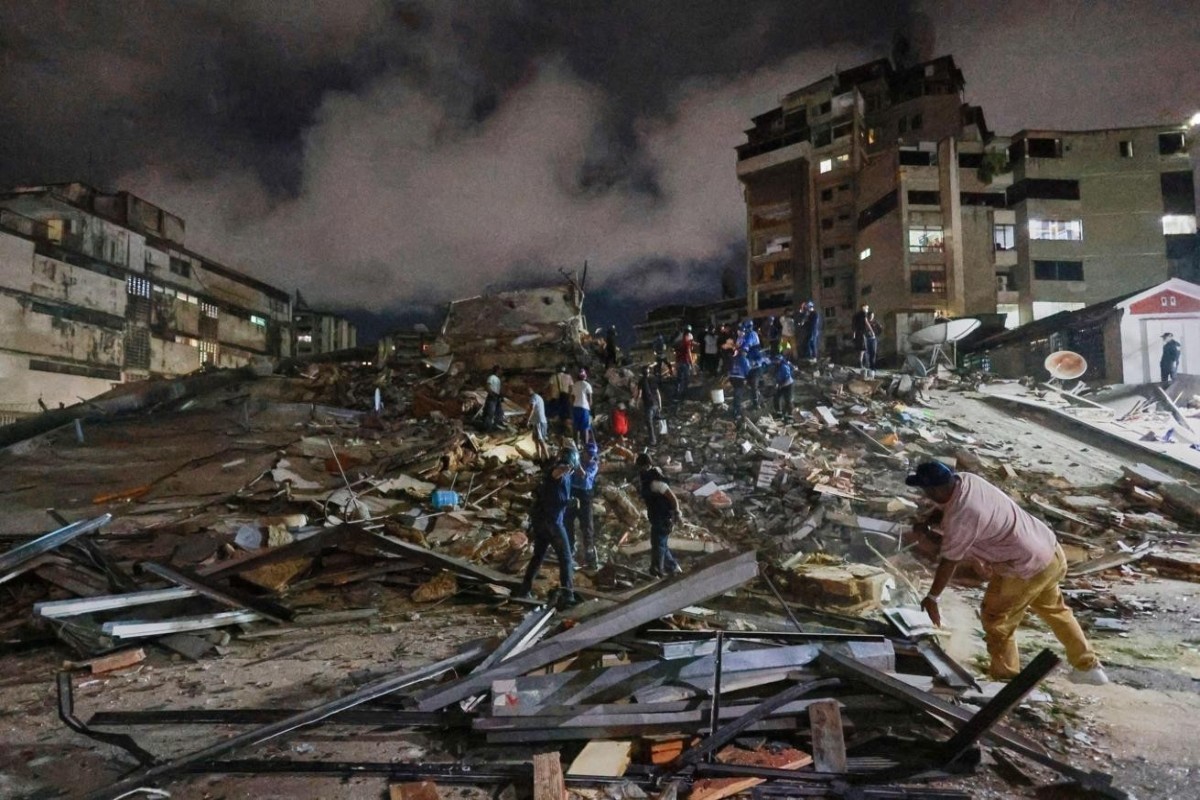
Death toll from Venezuela earthquake rises to 164 - UPDATED - 1 - VIDEO
14:52
25 June 2026

NEWS FEED
Apple says removal of VK apps from App Store is due to sanctions compliance
19:34
25 June 2026
Ruben Rubinyan elected as candidate for Speaker of the National Assembly of Armenia
19:26
25 June 2026
Missile alert declared in Moscow region-UPDATED
19:16
25 June 2026
Hikmat Hajiyev discusses Azerbaijan–NATO partnership with Secretary General's Special Representative
18:59
25 June 2026
Armenian Prosecutor General's Office petitions CEC to authorize criminal prosecution of Gagik Tsarukyan
18:55
25 June 2026
Venezuela's foreign minister thanks Azerbaijan for solidarity following earthquake
18:16
25 June 2026
Azerbaijan and Kazakhstan agree on full transition to electronic permit system
18:10
25 June 2026
Rubio believes no final agreements reached in Anchorage
18:10
25 June 2026
US, Iran agree in principle to establish direct military communication channel, Vance says
18:09
25 June 2026
Rubio believes no final agreements reached in Anchorage
18:03
25 June 2026
Azerbaijan Army servicemen participate in Anatolian Eagle-2026 International Exercise-VIDEO
18:01
25 June 2026
Leadership of the Ministry of Defense visits Central Clinical Hospital - PHOTO
17:52
25 June 2026
Eight Azerbaijani cities to host military marches marking Armed Forces Day
17:45
25 June 2026
Azerbaijan MFA: Existing opportunities should be used to finalize peace process with Armenia
17:30
25 June 2026
Rubio says Israel, Lebanon close to commitment of intent
17:18
25 June 2026
Lukashenko: Peoples of Belarus, Russia, and Ukraine will be together sooner or later
17:09
25 June 2026
Romanian ambassador leaves Russian Foreign Ministry without comment
17:08
25 June 2026
Rubio: Iran's support for regional proxies should be addressed in memorandum talks
17:07
25 June 2026
Azerbaijan and Ukraine discuss current cooperation agenda
17:06
25 June 2026
Azerbaijan-Israel innovation dialogue held at Shimon Peres Center - PHOTO
17:02
25 June 2026
Iran, Oman stress need for coordination on Strait of Hormuz traffic in foreign minister call
16:44
25 June 2026
Ghalibaf criticizes US over claims regarding Iran's unfrozen assets
16:43
25 June 2026
Iraqi Oil Ministry denies reports of potential OPEC exit, urges output quota reassessment-UPDATED
16:39
25 June 2026
President Ilham Aliyev signs order awarding Defense Ministry servicemen
16:31
25 June 2026
Azerbaijan's President awards fallen servicemen posthumously
16:31
25 June 2026
Military Institute named after Heydar Aliyev holds another graduation ceremony - PHOTO - VIDEO
16:26
25 June 2026
Azerbaijan establishes "Intellectual Customs" information system
16:24
25 June 2026
President Ilham Aliyev awards major general rank to five Defense Ministry servicemen
16:23
25 June 2026
Ashura blood donation campaign concludes in Azerbaijan, 1,269.45 liters of blood collected -PHOTO-UPDATED-1
16:21
25 June 2026
Rubio: No Gulf country supports charging fees for passage through the Strait of Hormuz
16:14
25 June 2026
Hikmat Hajiyev, Macron's adviser review state of Azerbaijan-France relations
16:10
25 June 2026
Azerbaijani cadet awarded Italy's "Sword of Honor"
16:00
25 June 2026
Azerbaijan establishes budget-funded organizations based on several public legal entities - DECREE
16:00
25 June 2026
Defense minister: Azerbaijani Armed Forces are among the strongest militaries in the region
15:56
25 June 2026
US sends search and rescue teams to Venezuela after deadly earthquake
15:55
25 June 2026
Citizens of Kyrgyzstan and Tajikistan graduate with honors from Heydar Aliyev Military Institute
15:53
25 June 2026
More than 90 kg of marijuana found in truck carrying cauliflower from Iran to Russia - PHOTO
15:47
25 June 2026
Azerbaijan's Foreign Minister attends Ukraine Recovery Conference in Poland
15:38
25 June 2026
Azerbaijan joins International Convention on the Control of Harmful Anti-Fouling Systems on Ships
15:25
25 June 2026
Charter of the State Medical Insurance and Expertise Agency approved-DECREE
15:24
25 June 2026
Azercell launches “Əsgərcell” offer on the occasion of 26 June – Armed Forces Day
15:23
25 June 2026
Financial results of "AzerGold" CJSC and its subsidiaries for year-end 2025 announced
15:14
25 June 2026
Azerbaijan recalls ambassador to Uzbekistan
15:14
25 June 2026
Azerbaijani delegation explores advanced pediatric rehabilitation practices in Israel
15:08
25 June 2026
Kremlin urges Russians to switch to Android and "national systems" after VK app removed from App Store
15:06
25 June 2026
Russia says nearly 170,000 Ukrainian drones shot down since war began
14:57
25 June 2026
Kremlin comments on Zelenskyy's statement about Belarusian retransmitters
14:54
25 June 2026
Azerbaijani Parliament reveals date and agenda of its next session
14:52
25 June 2026
Death toll from Venezuela earthquake rises to 164 - UPDATED - 1 - VIDEO
14:52
25 June 2026
French navy has intercepted another Russian 'shadow fleet' tanker, Macron says
14:51
25 June 2026


