











Baku-APA. A judge rules that the ousted president’s name be removed from all public institutions. But when the letters are removed, a mark often remains, just as his imprint lingers in the words of those tortured by his police and in allegations of corruption, APA reports quoting Los Angeles Times.
They say he dyes his hair no more, jet-black sheen turning white. He lies in a hospital bed. Out of view so long that he seems to have become invisible. But it is his name they want to erase, as if it had never been painted on signs, chiseled into marble, whispered in fear.
This is what they say when the train leaves the station once named for him. It is now called the Martyrs stop in honor of those killed when he, like the desert air or the hiss of a berating father, was everywhere.
"He never cherished us," says Amir Sanad, reading his leather-bound Koran on the platform, "and now we don’t cherish his name."
Hosni Mubarak is evaporating from a nation that until a few months ago was awash in his image. An Egyptian court has ordered that the former president’s name be peeled and scraped from hundreds of highways, schools, hospitals, institutions and other structures his wheedling minions consecrated in his honor. His pictures have been burned and his face — isn’t it strange how he never seemed to age? — no longer gazes upon the Nile.
The Hosni Mubarak Experimental School is now the Experimental School. The towering letters that spelled out his name at the police academy have been yanked down. The Hosni Mubarak Library is the Revolution Library.
When his name is removed there is often a discoloration, a change in the pattern of things, that suggests something resided here once but is no more.
It will be trickier, however, to blot out his likeness from war museum murals that depict him, an air force commander, among the heroes in Egypt’s 1973 war against Israel. Many of the country’s heroes have been flawed, Egyptians say, but Mubarak, unlike the others, lost his way and drifted further from his people.
"He should disappear from everything," says Abden Nasser Hassan, a driver for an oil company, waiting for a noontime train. "He was the worst thing in our history. I was only 11 years old when he came to power and even then he made me unhappy."
Mubarak’s nearly three-decade rule ended in February in a protest movement that swelled through Cairo’s Tahrir Square and then across the region. He left his palace for a hospital bed in a Red Sea resort. Officials say he has a bad heart, but that may be a ploy to keep him from prison or save him from more disgrace. His sons are in jail, and few speak kindly of his wife, Suzanne, and her craving for trinkets. Some newspapers report that he is a broken man, others that he brims with vigor.
"How can we know?" says Hassan. "Should he go to jail? Well, if a poor man who steals to feed his family is left to die in peace, then Mubarak should be able to die in peace too. But Mubarak put the poor man in prison, and that’s where we should put him."
Scrubbing away a name does not expunge a legacy. Mubarak is gone but his imprint lingers in the words of those tortured by his police and in allegations of corruption that led to bank accounts in Switzerland and other countries where not many people live on $2 a day or less. Egyptians are incensed that a man who referred to himself as a simple soldier and a patriot amassed at least $470 million.
In the ruling to strike Mubarak’s name from public institutions, Judge Mohammed Hassan Omar said the extent of the former president’s corruption defied imagination. The stain spread to Mubarak’s family. His wife’s name has been excised from more than 150 schools, including the Suzanne Mubarak School for Girls in Asyut, now called the Jan. 25 School for Girls to commemorate the revolution. Many buildings are likely to be renamed by local officials along similar lines, the date of the rebellion, the memory of a martyr or with the simple word "freedom."
Amid this robust purge, loyalists, who refuse to forsake the man they love, gather on corners and in front of Cairo’s state television building, holding up his pictures and clashing with crowds of anti-Mubarak protesters. They are a small, passionate army clinging to a vanishing era, eclipsed by scenes of gold-framed portraits of their leader bobbing through government corridors toward a basement or a waiting fire.
"His name has been washed away as a symbol, but we just can’t change the name of a metro station or a school. We have to change a way of life," says Mohammed Ibrahim, a 22-year-old law student sitting beneath the Martyrs station sign, ear buds dangling from his music player. "I’ve changed a lot since the revolution."
He reaches into his computer bag and pulls out a candy wrapper. He waves it, suggesting that before, he would have tossed it on the ground, but now he’ll wait until he finds a garbage can. A small gesture but a telling shift in attitude in a city where trash flies out car windows and tumbles along riverbanks.
"This is our home now and we need to keep it clean," he says. "When Mubarak was in power, I felt like a visitor, as if he wouldn’t allow Egypt to be mine."
A train arrives and men hurry to prayer, boys slip by in boisterous knots, women fill the ladies cars. Then the tunnel, which has quieted briefly, like an old man in repose, blossoms again with clamor as another train pushes cool air toward the platform.
But how to move on?
"He never talked to us, his people. He was distant," says Mahassen Hussein, a science lab instructor standing outside the train station. "I struggled to find a job under him. People reached their 40s and still couldn’t afford to get married. Still, we should show him a bit of sympathy.... He was our leader once. It’s like when you have a problem with someone in your family. They might be hard on you, but they’re your blood."
The Martyrs stop unfolds beneath Ramses Square, named for Ramses II, the great pharaoh of more than three millenniums ago. His statues and legacy have survived the ages. Two subway stops away is Nasser station, named for Gamal Abdel Nasser, the young officer who led the 1952 coup that liberated Egypt. After that, Sadat station, named for President Anwar Sadat, assassinated in 1981 after making peace with Israel.
But Mubarak seemed a man afraid to dream. The generals are in charge now; parliamentary elections will come in September and after that the presidential election before year’s end. Who would have imagined that he would be gone, replaced by humiliating caricatures peeking out from newsstands and bookshop windows?
A judge has said Mubarak was at least indirectly responsible for the killing of more than 800 protesters during the revolution that toppled him in February. He could face the death penalty. News of this came just before his 83rd birthday last week; one newspaper reported that a cake and a barber were sent to the hospital.
"We don’t need to remember him," says Mustafa Okasha, a heavyset man in a summer shirt. "I teach high school and the first thing I did when Mubarak fell from power was to burn his picture at the school. I told my students, ’This is an unjust and corrupt man. You will have a better future now.’ They’re young and I tried to tell them they must fight for their rights now. This is the moment."
He pauses amid men selling sunglasses and boys hawking belts and key chains shaped like army boots and hieroglyphics. Another train arrives. A blur of changing faces.
"I teach history," Okasha says, "and I hope history doesn’t even mention him."


 Follow us on Telegram
 t.me/apanewsaz
 Follow us on Instagram
 Follow us on TikTok
 Follow us on Facebook
 Follow us on X
Africa
Two killed, five injured in shooting in S. Africa
 16:09
16:09
 14 October 2026
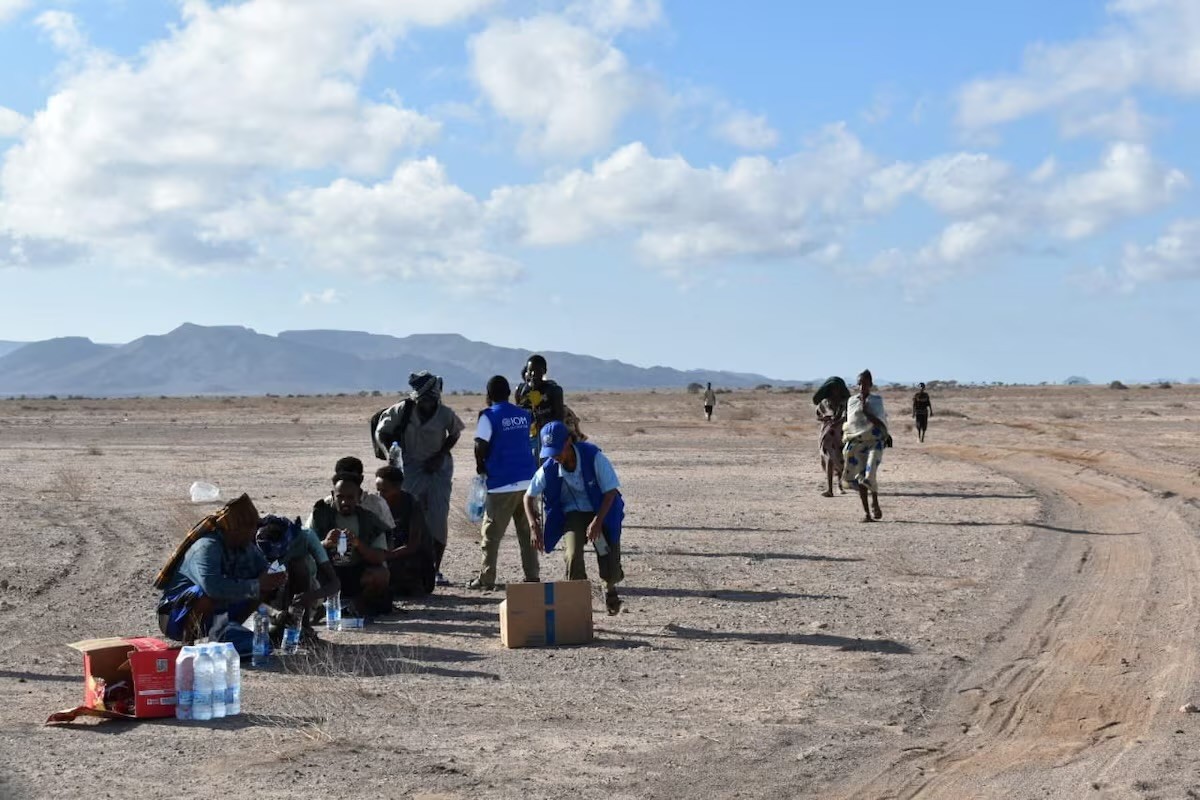
At least 139 migrants dead, including some children, after boat from Djibouti to Yemen capsizes, UN agency says
21:17
11 October 2026
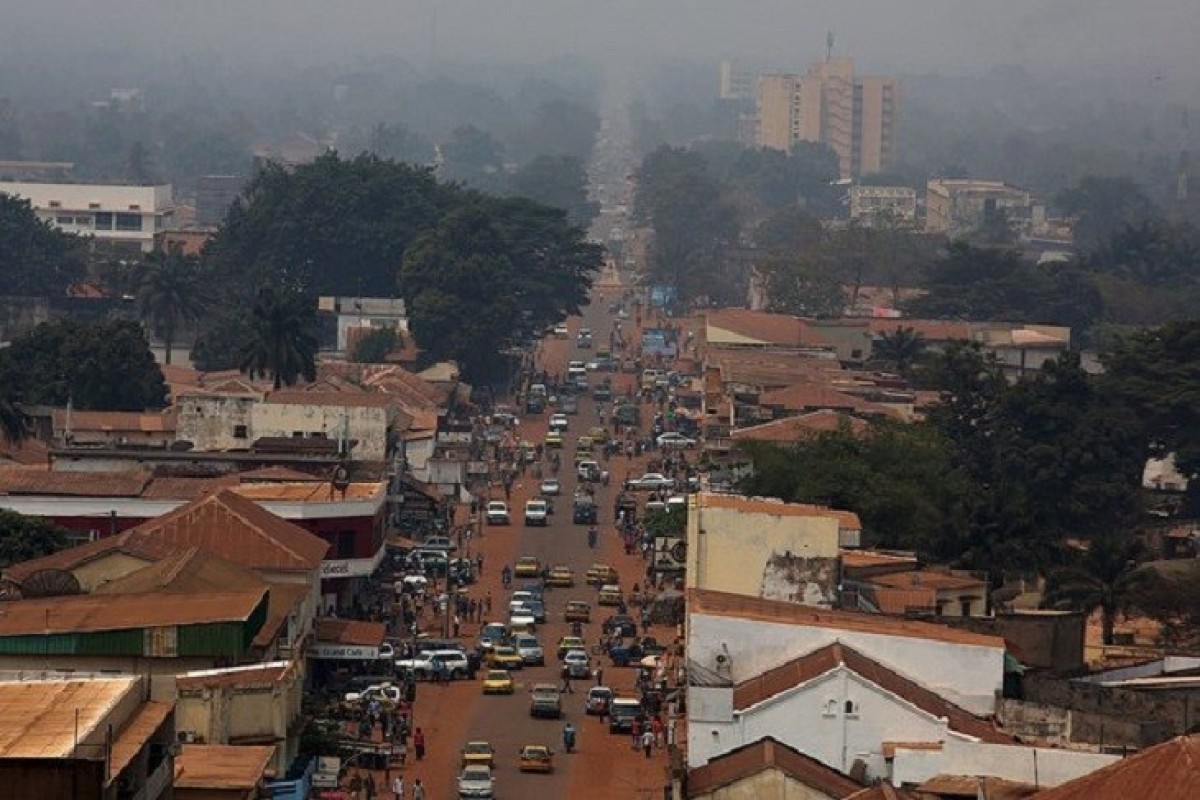
Central African Republic foils planned large-scale militant attack
07:04
11 October 2026
Rebel attack kills 11 civilians in DR Congo
05:16
11 October 2026

NEWS FEED
Conference League: Trabzonspor win as Ajax suffer defeat
03:14
16 October 2026
Europa League Matchday 2 round-up
01:05
16 October 2026
Train, bus collide in Channel Tunnel, injure 19
00:53
16 October 2026
China has not provided any military support to Iran since the beginning of the US operation
00:38
16 October 2026
Azerbaijani, Turkish FMs discuss relations between the two countries
00:10
16 October 2026
Azerbaijan's chairmanship of CICA extended until 2028
23:50
15 October 2026
Trump accused a Senate candidate of having ties to Muslim Brotherhood
23:27
15 October 2026
US: IRGC projectile hit civilian ship
22:50
15 October 2026
Putin: Ukrainian Armed Forces are again attempting to strike Russian oil refineries
22:23
15 October 2026
Ukraine not to be able to protect its infrastructure without PURL program — The Economist
22:10
15 October 2026
US has expanded sanctions against Iran
21:50
15 October 2026
UK provides Ukraine with additional long-range Storm Shadow missiles
21:20
15 October 2026
Video shared on President Ilham Aliyev’s social media accounts on his meeting with Amir of the State of Qatar Sheikh Tamim bin Hamad Al Thani
21:00
15 October 2026
President Ilham Aliyev’s social media accounts shared video on inauguration of Trans-Caspian Fiber-Optic Cable Line
20:55
15 October 2026
Baku hosted 7th CICA Summit, President Ilham Aliyev addressed the event - UPDATED-5
20:40
15 October 2026
Ukrainian President discusses air defense with NATO Secretary General
20:31
15 October 2026
Ukraine runs out of Patriot interceptor missiles as Zelenskyy and Trump clash over war
19:52
15 October 2026
Iran's navy says "violating" oil tanker caught fire east of Hormuz Strait
19:43
15 October 2026
White House official: Trump considering all options to keep Iran from nuclear weapon
19:37
15 October 2026
Houthis fire missiles at presidential palace in Yemen's Aden, officials say
19:00
15 October 2026
President Ilham Aliyev’s social media accounts shared video on 7th CICA Summit
18:28
15 October 2026
President Ilham Aliyev met with Amir of Qatar - UPDATED
18:12
15 October 2026
Armenian and Turkish businesspeople discuss joint cooperation
17:56
15 October 2026
Journalist Alexander Nevzorov added to Russia’s list of terrorists and extremists
17:53
15 October 2026
New head of Republic of Dagestan elected
17:46
15 October 2026
Kobakhidze visits Armenia
17:17
15 October 2026
Georgian opposition announces protest rallies
17:05
15 October 2026
Pashinyan establishes working group to resolve railway issues with Russia
17:02
15 October 2026
Pope Leo recovering as planned after lung cancer surgery, doctors say
16:58
15 October 2026
Papuashvili: EU takes disruptive stance in relations with Georgia
16:40
15 October 2026
Azerbaijan to chair CICA in 2026–2028
16:27
15 October 2026
UN considers CICA's role more important now than ever
16:26
15 October 2026
Meeting held with delegation of international and foreign national Paralympic committees
16:23
15 October 2026
President Ilham Aliyev received Türkiye’s Minister of Foreign Affairs
16:16
15 October 2026
7th CICA Summit concludes
16:12
15 October 2026
CICA Secretary General replaced
16:11
15 October 2026
Lavrov considers it appropriate to hold next "3+3" meeting in Azerbaijan
16:08
15 October 2026
Baku Declaration adopted following 7th CICA Summit
16:05
15 October 2026
Large amount of drugs prevented from being smuggled from Iran into Azerbaijan - PHOTO
16:02
15 October 2026
Signed documents exchanged between Azerbaijan and Kazakhstan
16:00
15 October 2026
Lavrov: Russia ready to participate in TRIPP, but has not yet received invitation
15:50
15 October 2026
Lavrov: Zelenskyy is challenging Trump, not interested in elections
15:47
15 October 2026
Presidents of Azerbaijan and Kazakhstan met in Baku and inaugurated Trans-Caspian Fiber-Optic Cable Line
15:44
15 October 2026
9th Congress of Azerbaijani Journalists to be held tomorrow, candidates for Press Council Board announced
15:43
15 October 2026
Gharibabadi: Current difficulties in Strait of Hormuz caused by military aggression and naval blockade against Iran
15:42
15 October 2026
ING: $10 rise in oil prices could increase Azerbaijan’s exports by 2–4% of GDP
15:39
15 October 2026
UAE Minister: Priorities set during Azerbaijan’s CICA chairmanship align with UAE’s vision
15:33
15 October 2026
Palestinian issue raised at CICA Summit
15:31
15 October 2026
Indian FM: Changing geopolitical landscape necessitates more active participation of Global South countries
15:15
15 October 2026
Azerbaijan takes over chairmanship of CIS Advisory Council on Labor, Employment and Social Protection
15:14
15 October 2026


