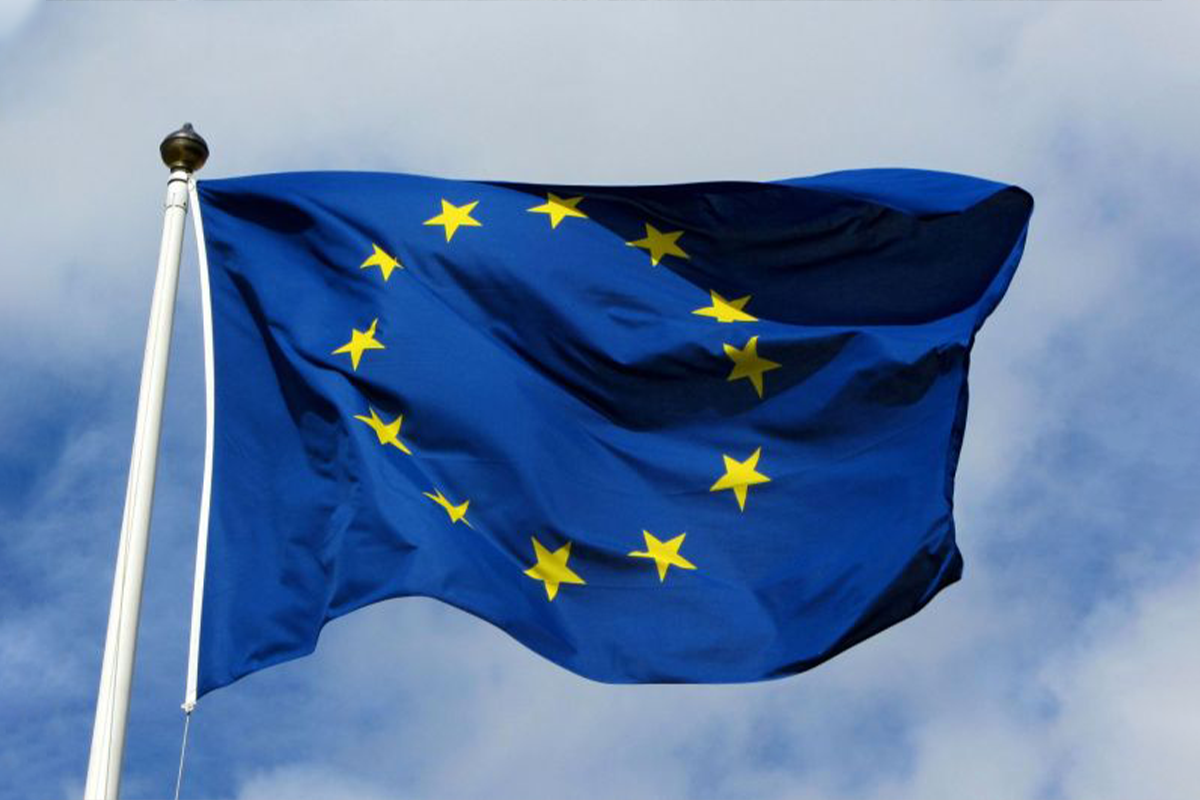


The European Union illegally funds the NGOs in Azerbaijan, APA reports.
According to the legislation, foreign institutions can allocate grants and donations to state bodies and non-governmental organizations in Azerbaijan based on the approval of the Ministry of Justice. However, experience shows that Western institutions do not follow legal procedures at all and allocate funds to NGOs, organizations, and platforms of unknown status in various ways.
The European Union also illegally finances NGOs in violation of Azerbaijan's laws.
It is interesting that recently, several projects directed against the state are implemented on the platform called "participation house". Research shows that the projects carried out in the "Participation House" are financed by Western circles - the US Embassy and European Union institutions.
The absolute majority of people who act as event organizers are ultra-liberal, LGBT, feminist, and "no war" people.
"participation house" is purposefully functioning as a platform that seeks to publicize the claims of "no war" supporters who oppose the Patriotic War, the views of LGBT activists, and raise their voices.
The illegal financing of such projects by the European Union naturally raises serious questions.
Yegane Hajiyeva, a member of the Board of the Press Council, who is engaged in investigative journalism, told APA that the European Union, especially for the countries included in the Eastern Partnership program - Azerbaijan, Ukraine, Moldova, Belarus, Georgia, and Armenia, in the field of democracy, human rights, and media announced grant projects that will support development: "Although the direction of the project covers democracy and the rights of faith, an item called "topics of public interest" has been added to it.
According to this clause, it is intended to finance the implementation of journalistic investigations on topics of public interest in the direction of the media.
It is precisely from this that the opinion leaders in the socio-political society were mobilized to form public interest trends based on the exported values.
I should note that for Azerbaijan in 2023, the European Union, the Council of Europe, the Embassy of the United States of America in Azerbaijan, numerous grant organizations, and USAID will provide more grants for the development of professional media, promotion of citizen journalism, assessment of media needs, and public interest. determined on the direction of action related to increasing social media activity on relevant topics.
The goals announced with the implementation of grants do not match.
New trends in topics of public interest publicize the views of LGBT activists, "no war" people, and support them by creating a picture of their participation in opinion formation in Azerbaijan's internet resources.
For example, let me mention that the Council of Europe is one of the active organizations in the list of public sector grant projects in Azerbaijan in 2023.
The Council of Europe allocated a total of 4.5 million euros to projects in social, economic, cultural and other directions. However, as I said, these are only known donors, and the number of unknown ones is greater."
According to Yegane Hajiyeva, the report on how 4.5 million funds were spent on the website of the Council of Europe contains only correct information about how half a million is distributed: "There is no information about how the remaining funds are distributed. Since 8 months of the year have already passed, the remaining 4 million have been distributed.
In such cases, experience shows that Western institutions usually export foreign interests, cultures, and values in the countries where they exist under the name of projects aimed at democratic development.
With funds intended for the democratization of society, they form communities that have lost their sense of responsibility and are deprived of national values. LGBT and radical feminism are among them.
They have been organizing them for several years now. Representatives of this community worked for the legitimization of the Armenian occupation, but after the 44-day Patriotic War, they are active in anti-militarist movements in the opposite direction.
On the other hand, they are doing things to discredit Azerbaijan's legitimate steps against Armenia's aggression, to tarnish and denigrate it in society, and to break the monolith of our society."
Yegane Hajiyeva noted that both LGBT and radical feminism are being advertised on social platforms in Azerbaijan today: "Finances allocated under the name of assistance to the democratization of societies are aimed at digesting the sense of defeat in our country while we are under occupation, and serve to stimulate the "nowar" movement.
Those working in our country under the pretense of investigating the facts of corruption, in reality, express the interests of transnational organizations known in corruption within our country and try to push them to cooperate with corrupt companies by putting pressure on them.
Yegane Hajiyeva also said that the media is one of the areas where LGBT, radical feminism, and national values have been lost in recent years. They are working towards discrediting the law on media.
In order to fight against disinformation, they were undermining the points provided by the legislation with unrealistic ideas such as limiting the freedom of expression, the media, and controlling the media.
For example, the European Union has allocated a total of 3 billion euros to combat disinformation on its territory and is waging a war by neutralizing foreign propaganda on Internet resources with special programs. This concept is the same in Russia and the United States. However, Western institutions describe even small initiatives in this field in Azerbaijan as pressure on media and freedom of expression.
In short, they are trying to "disarm" us through a network of NGOs, LGBT, and radical feminists operating with Western funding."
Yegane Hajiyeva noted that in addition to controlled grants, there are also non-controlled grants, and the grants of registered LGBT and radical feminists are very small compared to them: "Experience shows that the volume of registered grants is sometimes not even 1 percent. In registered grants, the intended direction for the expenditure of such funds may not coincide with the direction in which the actual funds are spent.
In most cases, the allocated funds are used in a different direction from the intended direction, mostly in unregistered grants.
After 2014, a specific window was opened in the Ministry of Justice and registrations are being carried out. However, many different projects are implemented under the guise of unregistered and registered projects."



 Follow us on Telegram
 t.me/apanewsaz
 Follow us on Instagram
 Follow us on TikTok
 Follow us on Facebook
 Follow us on X

 UPDATED'>