












Chairperson of the IPI Azerbaijan National Committee Umud Rahimoglu told APA that the state of freedom of press was a little improved. The report says that 51 journalists were killed during the 6 months. According to the report, 51 journalists have been killed so far in 2011. Sixteen of those journalists were killed in Latin America and 21 in the Middle East. Eight journalists were killed in Iraq.
Fifty four journalists were killed in the first six months of 2010, and 102 in the entire year. Pakistan, which was the world’s most dangerous country for journalists in 2010, saw four journalists lose their lives for doing their jobs, while five journalists were killed in Mexico, all in what appear to be targeted killings related to their work. Events in the Middle East and North Africa, the so-called Arab Spring revolutions, had profound implications for media in the region and beyond. “Throughout the region, a pattern of media repression has emerged,†says the IPI report. “Government leaders tried to hack or block electronic communications, particularly social media websites Facebook and Twitter, even resorting to the wholesale shutdown of the Internet and electricity, in Syria, to stop news from being transmitted. Throughout the region, journalists covering the unrest remain subject to threats and attacks, imprisonment on national security charges, or expulsion.†The repercussions of the Arab Spring movements had impacts in other parts of the world.
In President Teodoro Obiang’s Equatorial Guinea, there was a “total news blackout on the MENA events,†according to the Committee to Protect Journalists (CPJ). The group said that one state radio presenter was forced off the air by censors after referencing Libya in a live program, and later received an indefinite suspension. In the Gambia, Taranga FM was taken off the air because of a program that translated international news reports into the local language, journalists told IPI in January. It was allowed to resume broadcasts only after agreeing to cancel the program, IPI was told. In Sudan, protests against the Khartoum government in January were met with violence, and protestors were reportedly subjected to physical and sexual assault. Security forces confiscated copies of newspapers that reported on these attacks, and other sensitive matters, and journalists reporting on these issues face detention and criminal charges of defamation. In China, journalists were harassed, censored, imprisoned and denied visas in an effort to pre-empt a “jasmine revolution†inspired by anti-government protests in the Middle East.
Violence against journalists continued in other parts of the world. Censorship, harassment and impunity emerged the main problems facing journalists in many parts of Asia. Official censorship, arrest and detention continue to greatly hinder press freedom in significant parts of Asia, where non-democratic governments clamped down on independent media to retain their grip on power.
According to information, the report also touched the release of Azerbaijani journalist Eynulla Fatyullayev from jail in May. Impunity for attacks on journalists remained a major issue from Russia to the Balkans. Turkish and Belarusian governments were seriously criticized.
“Events in the Middle East have demonstrated that people want access to information and accountability from their leaders, and the lengths they will go to achieve these goals. A free media is integral to all of these, and to democracy as a whole, †said Alison Bethel McKenzie, IPI Director.
“However, these events have also demonstrated the lengths that governments will go to, to prevent damaging truths from emerging, and to clamp down on free speech. This report is proof that around the world, there remain many lessons to be learned about respecting free speech and defending a free media.â€
“We remain concerned about the number of deaths so far this year. In Iraq alone, eight journalists were killed in six months, as opposed to six in the whole of last year,†said Bethel McKenzie. “Based on the data so far, 2011 does not appear to be a good year for press freedom.â€
International Press Institute: “51 journalists killed this yearâ€

 15 July 2011 12:37 (UTC +04:00)



 İDMAN XƏBƏR
 Follow us on Telegram
 t.me/apanewsaz
 Follow us on Instagram
 Follow us on TikTok
 Follow us on Facebook
 Follow us on X
Media
Azerbaijani journalists’ congress postponed by one day
12:59
 7 October 2026
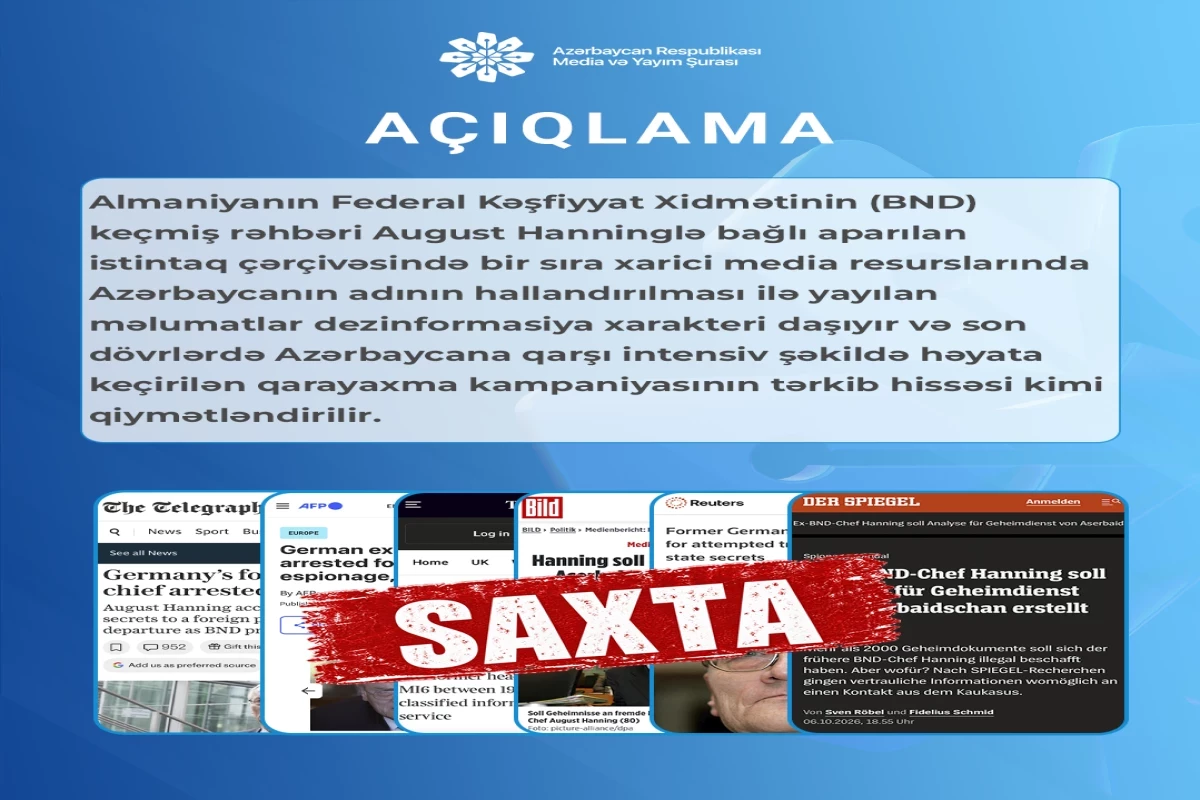
Media and Broadcasting Council: Linking Azerbaijan to former German intelligence chief is disinformation
10:25
7 October 2026
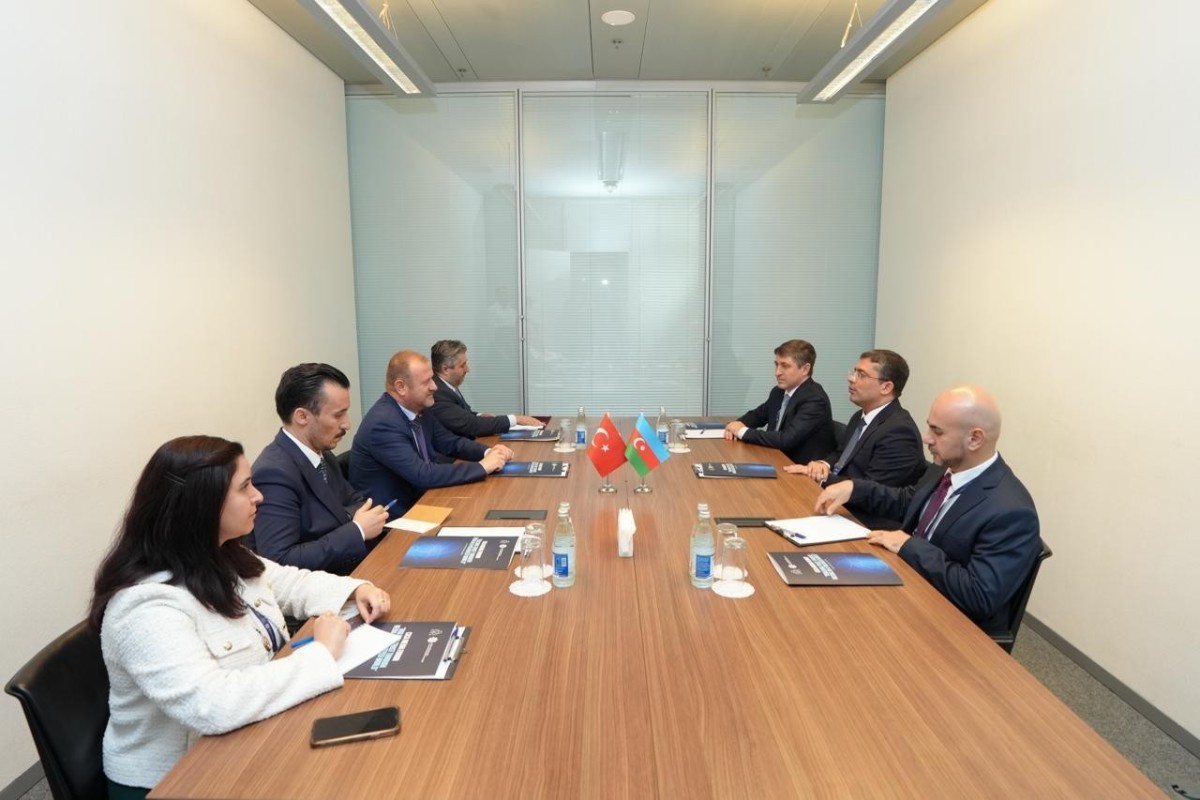
Ahmad Ismayilov meets RTÜK chairman
16:40
1 October 2026

US Embassy Chargé d’Affaires meets with representatives of leading media outlets in Baku
16:27
28 September 2026

NEWS FEED
Former Moldovan Prime Minister: Armenia should share information on missing persons
17:28
10 October 2026
Iranian army maintains over 50 units on border, identifies possible enemy entry points
17:08
10 October 2026
President Ilham Aliyev and Head of Chechen Republic of Russia have lunch together
16:34
10 October 2026
President Ilham Aliyev and Head of Chechen Republic of Russia visited Baku White City
16:06
10 October 2026
Ramzan Kadyrov once again offers condolences over Baku-Grozny plane crash
15:53
10 October 2026
President Ilham Aliyev received Head of Chechen Republic of Russia
15:47
10 October 2026
Participants of IV International Conference on Missing Persons Complete Visit to Karabakh
15:17
10 October 2026
Russian glide bomb attack on Zaporizhzhia kills at least 15 people
15:08
10 October 2026
Moldovan Ambassador: It is encouraging to see life being revived in Khojaly
15:06
10 October 2026
International travelers conclude visit to Karabakh and Eastern Zangezur - PHOTO
15:04
10 October 2026
Serviceman dies from gunshot wound in Armenia
14:08
10 October 2026
Russia Suspends Imports of Georgian Wine, Mineral Water and Other Products
14:01
10 October 2026
PM Shehbaz Sharif calls President Ilham Aliyev
13:58
10 October 2026
Kremlin says Putin relayed Iran's position on resolving conflict to Trump
13:30
10 October 2026
Azerbaijan’s revenue from cotton exports rises by more than 23%
13:00
10 October 2026
Pezeshkian: Regional diplomacy must become a tool to prevent expansion of conflict
12:59
10 October 2026
Five shot dead at residence in Georgia's Douglas, police says
12:48
10 October 2026
Russia made no concessions on Ukraine in exchange for diesel deal
12:35
10 October 2026
Ukraine strikes oil terminal, railway bridge and two vessels in Rostov region
12:34
10 October 2026
International travelers familiarize themselves with work carried out on Horadiz-Aghband highway - PHOTO - UPDATED
12:32
10 October 2026
Ambassador: No force can harm Azerbaijan-Türkiye brotherly relations, ties will further develop
12:15
10 October 2026
Kürşad Zorlu: No provocation aimed at undermining Türkiye-Azerbaijan relations will succeed
11:59
10 October 2026
Participants of international conference on missing persons visit Lachin - PHOTO
11:35
10 October 2026
Death toll from Russian strike on Zaporizhzhia rises to 8 - UPDATED
11:33
10 October 2026
Investment in fixed capital in Azerbaijan rises by nearly 11%
11:26
10 October 2026
American traveler: Restoration work in Karabakh is amazing
11:15
10 October 2026
Milli Majlis MPs appeal to US senators and members of House of Representatives
11:06
10 October 2026
Composition of State Commission on delimitation and demarcation of Azerbaijan-Georgia border amended
10:58
10 October 2026
Judges appointed to several courts of first instance
10:57
10 October 2026
Talks between Ukraine, Europe and the United States in Miami ended early
10:48
10 October 2026
JetSMART flight JA850 declares emergency and turns back toward Santiago
10:46
10 October 2026
Azerbaijani oil sells for $130.81
10:44
10 October 2026
American traveler: Large-scale construction underway toward Zangezur corridor
10:30
10 October 2026
United States threatened to leave Ukraine without intelligence over strikes on Russian oil refineries
10:11
10 October 2026
Latest on crypto market: Bitcoin rises
09:58
10 October 2026
Health Ministry: Average life expectancy in Azerbaijan exceeds 77 years
09:37
10 October 2026
Global stock market indices
09:35
10 October 2026
Oil prices rise on global markets
09:15
10 October 2026
Trump threatens Iran with destruction unless it accepts US terms
08:47
10 October 2026
Trump says he discussed resolution of Armenia-Azerbaijan conflict with Putin
07:48
10 October 2026
Ushakov: Timing of next Putin-Trump meeting has not been discussed
07:22
10 October 2026
Witkoff: Ukraine’s energy security and post-war recovery discussed in Miami
05:25
10 October 2026
Zelensky criticizes Trump over diesel deal with Putin amid Ukraine-US talks
03:19
10 October 2026
US talks on Ukraine address European security architecture — media
02:51
10 October 2026
Ushakov: Putin, Trump did not discuss new meeting
02:39
10 October 2026
Zelenskyy: Ukrainian negotiating team used as “smokescreen” amid US-Russia diesel deal
01:58
10 October 2026
Ukrainian President: Letting Russia sell fuel means investing in its war
01:46
10 October 2026
Russia ready to supply oil to US, global markets — Putin after call with Trump
01:00
10 October 2026
Russia begins lifting diesel exports restrictions immediately — deputy PM
00:43
10 October 2026
Magnitude 7.6 earthquake rocks Panama, tremors reach Colombia
00:22
10 October 2026


