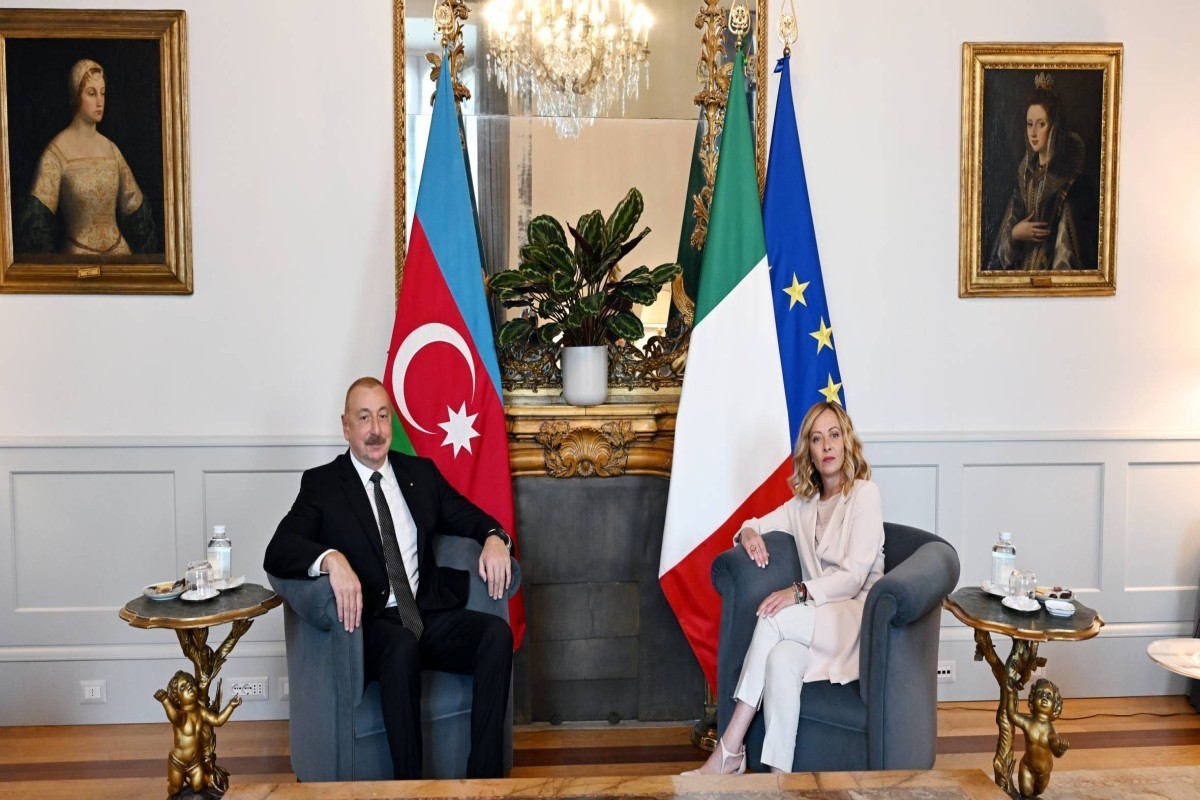
By restoring its territorial integrity, Azerbaijan made everyone acknowledge that it is a major player, said Georgian political analyst Gela Vasadze in a comment to APA’s Georgia bureau regarding the meeting between the leaders of Azerbaijan and Armenia in Abu Dhabi.
He noted that the Armenian leadership has come to understand that it has no choice but to accept the realities within the context of international law. The expert added that the two countries do not need a mediator to normalize relations.
“The geopolitical situation in the South Caucasus has changed. Azerbaijan wanted everyone to acknowledge that it is a major player in the region, and by restoring its territorial integrity between 2020 and 2023, it achieved this goal. Azerbaijan gave clear answers to many countries, including France. Recently, the French ambassador visited Shusha and even gave an interview there. President Ilham Aliyev also resolved issues with Iran, and President Pezeshkian visited Khankendi. The third issue was Russia, which is the biggest interested player in the region. Today, the problem in relations with Russia continues, but Russia has realized that it cannot do anything to Azerbaijan. Both Armenia and Prime Minister Pashinyan now understand that recognizing realities within international law is the only path forward. I believe we now have an opportunity to normalize the region, and the more Russia weakens, the greater this opportunity becomes. For centuries, Azerbaijan and Armenia lived side by side under various empires and within their own states. They never needed a mediator. However, Russia deliberately structured the situation to make the presence of a mediator necessary. Now, the South Caucasus is returning to a situation where countries no longer need external mediators to resolve issues. Azerbaijan's national interests align with those of both Armenia and Georgia. Therefore, we don’t need third-party involvement. Against this backdrop, we have also seen Russia grow more aggressive, but the Russian Empire is dead and gone. With its collapse, new challenges await us. Once peace is established between the two countries, the region will finally be able to breathe freely,” Vasadze said.
Political expert David Chikvaidze also noted that the Abu Dhabi meeting’s significance lies in the fact that it took place without a mediator, which demonstrates the South Caucasus countries’ ability to pursue independent policies. According to the expert, many major projects could be implemented in the region once peace is achieved.
“A meeting between these two countries without any mediator is a very positive development for the region. It is well known that mediators often act in their own interest. The meeting between Azerbaijan and Armenia was significant not just for the two countries but for the entire Caucasus. The fact that the meeting lasted about 4–5 hours shows that it wasn’t held just for formality — it demonstrates a genuine desire for peace, and there has been real progress in this process. Recently, we’ve seen significant economic growth in Georgia, Azerbaijan, and Armenia. There is no ongoing war in the region at the moment, which makes our countries and the region as a whole more attractive as reliable partners for the global community. Just recently, we saw a statement from Donald Trump, who emphasized that peace in the Caucasus is very important to the U.S. and that the U.S. should also be present in the region. However, in any case, issues in the Caucasus must be resolved by the Caucasus countries themselves. There is no need for third-party intervention. The fact that this meeting happened amid deteriorating relations between both Azerbaijan and Armenia with Russia shows that the South Caucasus countries are no longer under any foreign influence. Each state must be able to make decisions, pursue policies, and take actions independently, without being influenced by others, taking into account the well-being and development of its own people. This is how we should interpret the recent move by Armenia and Azerbaijan. Once peace is achieved, many major projects can be launched. China has already shown significant interest in our region and is trying to implement various initiatives. The absence of conflict between our countries will encourage China and others to invest in our region, leading to further development,” Chikvaidze said.
Political expert Zaal Anjaparidze also believes that although the West did not physically participate in the meeting, it played a crucial role in making it happen. He emphasized that Russia has now lost hope of mediating between Azerbaijan and Armenia and that its influence over these countries is diminishing. Anjaparidze added that by regaining its occupied territories, Azerbaijan has become an independent and strong player in the region.
"In meetings like this, the parties assess each other’s positions. There are reports that the meeting took place without any mediators, but I believe that even though they may not have physically participated, the U.S. and the EU stood behind the meeting. This is a factor that angers Russia. However, Russia's influence has already weakened, and the U.S. and the EU have taken the initiative in such processes in the Caucasus. In meetings like these, we now see that Armenia and Pashinyan are ready to make concessions and can agree on certain issues. One example of this was seen during Pashinyan’s visit to Türkiye. In conclusion, I believe that achieving peace will still take some time. We now see Azerbaijan as an independent player in the region. While the situation was different until recently, today, Azerbaijan has made its voice heard by reclaiming Karabakh and the occupied territories. A recent example is the developments in Yekaterinburg, Russia, and the events that followed in Russia-Azerbaijan relations, which confirm this. Russia itself seems to have lost hope of playing a mediating role between Azerbaijan and Armenia. If peace is achieved, a long-standing conflict in the Caucasus will be resolved, and this will help change the region’s status as a conflict zone. Moreover, resolving the existing conflict between the South Caucasus countries will spur serious economic development in the region and open new transit and transportation routes. However, the activation of a corridor like the Zangezur Corridor as an alternative to Georgia may negatively affect Georgia. Still, I believe that the parties can reach an agreement on this matter and overcome this minor issue. The opening of this new transportation route will stimulate the development of the Middle Corridor and reduce Russia’s influence in the Caucasus. I also believe it could lay a new economic foundation for resolving the existing conflict in Georgia—for example, the opening of the railway in the Abkhazia direction. It is a fact that one of the ways to resolve conflicts is economic cooperation, assuming Russia does not attempt any provocation. Today, we do not see any sound steps being taken by Russia in foreign policy, and it's hard to predict how they might respond. Russia is so deeply involved in the war in Ukraine that it is in no position to wage war on a second front, especially under Western sanctions. Let’s not forget that Türkiye stands by Azerbaijan, and if Russia attempts any provocation, it will be the losing side," said Zaal Anjaparidze.


 Follow us on Telegram
 t.me/apanewsaz
 Follow us on Instagram
 Follow us on TikTok
 Follow us on Facebook
 Follow us on X