










Baku – APA. STRATFOR global intelligence company analyzed the results of the visit of US Secretary of State Hillary Clinton to the South Caucasus. According to APA, it is analyzing the Secretary of State’s last visit from the different views in the analytics “The Caucasus Cauldronâ€.
“US Secretary of State Hillary Clinton visited some interesting spots over the July 4 weekend. Her itinerary included Poland and Ukraine, both intriguing choices in light of the recent Obama-Medvedev talks in Washington. But she also traveled to a region that has not been on the American radar screen much in the last two years – namely, the Caucasus – visiting Georgia, Azerbaijan and Armenia.
The stop in Poland coincided with the signing of a new agreement on ballistic missile defense and was designed to sustain US-Polish relations in the face of the German-Russian discussions we have discussed. The stop in Ukraine was meant simply to show the flag in a country rapidly moving into the Russian orbit. In both cases, the trip was about the Russians. Regardless of how warm the atmospherics are between the United States and Russia, the fact is that the Russians are continuing to rebuild their regional influence and are taking advantage of European disequilibrium to build new relationships there, too. The United States, still focused on Iraq and Afghanistan, has limited surplus capacity to apply to resisting the Russians. No amount of atmospherics can hide that fact, certainly not from the Poles or the Ukrainians. Therefore, if not a substantial contribution, the Secretary of State’s visit was a symbolic one. But when there is little of substance, symbols matterâ€.
“Clinton’s statements during the Caucasian leg of her visit were positive. She expressed her support for Georgia without committing the United States to any arms shipments for Georgia to resist the Russians. In Azerbaijan and Armenia, she called on both countries to settle the issue of Nagorno Karabakh, a disputed region within western Azerbaijan proper. Armenia took control of the region by force following the Soviet collapse. For Azerbaijan, the return of Nagorno Karabakh under a UN resolution is fundamental to its national security and political strategy. For Armenia, retreat is not politically possibleâ€.
This means Clinton’s call for negotiations and her offer of US help are not particularly significant, especially since the call was for Washington to help under the guise of international, not bilateral negotiations. This is particularly true after Clinton seemed to indicate that the collapse in Turkish-Armenian talks was Turkey’s responsibility and that it was up to Turkey to make the next move. Given that her visit to the region seems on the surface to have achieved little – and indeed, little seems to have been intended – it is worth taking time to understand why she went there in the first place, and the region’s strategic significanceâ€.
The part of the analytical article named “The Strategic Significance of the Caucasus†said that for most of the 19th century, Russia, Turkey and Iran dueled for dominance of the region. “This dispute froze during the Soviet period but is certainly in motion again. With none of these primary powers directly controlling the region, there are secondary competitions involving Armenia, Azerbaijan and Georgia, both among these secondary powers and between the secondary powers and the major powers. And given that the region involves the Russians, Iranians and Turks, it is inevitable that the global power would have an interest as well – hence, Hillary Clinton’s visit.
Of all the regions of the world, this one is among the most potentially explosive. It is the most likely to draw in major powers and the most likely to involve the United States. Seven players are involved in a very small space. Think of it as a cauldron framed by Russia, Iran and Turkey, occasionally stirred by Washington, for whom each of the other three major powers poses special challenges of varying degrees.
The Caucasus region dominates a land bridge between the Black and Caspian seas. The bridge connects Turkey and Iran to the south with Russia in the northâ€.
“After the fall of the Soviet Union, the three Caucasian republics broke free of Moscow. The Russian still maintained a position in the Caucasus, but their position was not secure. The northern portion of the Caucasus consisted of Chechnya, Ingushetia, Dagestan and others. If the Russian abandoned the northeastern Caucasus, their position was breached. But if they stood, they faced an interminable fight.
From the Georgian point of view, Russia represented a threat. But from the Russian point of view, Georgia represented a double threat. First, the Russians suspected the Georgians of supporting Chechen rebels in the 1990s – a charge the Georgians deny. The more important threat was that the United States selected Georgia as its main ally in the region. The choice made sense if the United States was conducting an encirclement strategy of Russia, which Washington was doing in the 1990s (though it became somewhat distracted from this strategy after 2001). In response to what it saw as US pressure around its periphery, the Russians courted in Georgia in 2008 to demonstrate US impotence in the region.
The Russians also maintained a close relationship with Armenia, where they continue to station more than 3000 troops. The Armenians and Turks were recently involved in negotiations over the normalization of relations, but these talks collapsed – in our view, because of Russian interference. The issue was further complicated when a US congressional committee passed a resolution in March condemning Turkey for committing genocide, infuriating the Turks.
One of the countercharges against Armenia is that it has conducted its own massacres of Azerbaijanis. Around the time of Soviet breakup, it conducted a war against Azerbaijan, replete with the ethnic cleansing of hundreds of thousands of Azerbaijanis in a region known as Nagorno Karabakh in western Azerbaijan, leaving Azerbaijan with a massive refugee problem. While the UN Security Council condemned the invasion, the conflict has been frozen, to use the jargon of diplomats.
The part named “The Importance of Azerbaijan†said that “Azerbaijan cannot afford to fight a war against Russian troops in Armenia while it also shares a northern border with Russia. Azerbaijan also faces a significant Iranian problem. There are more Azerbaijanis living in Iran that in Azerbaijan. Azerbaijan is profoundly different from Iran It is Muslim but heavily secular. It maintains close and formal relations with Israelâ€.
“Azerbaijan has long been a major producer of oil and has recently become an exporter of natural gas, exporting it to Turkey via a pipeline passing through Georgia. From the Turkish point of view, this provides alternative sources of energy to Russia and Iran, something that obviously pleases the United Statesâ€.
“The Russians have an interest, demonstrated in 2008, to move southward into Georgia. Obviously, if they were able to do this – preferably by a change in government and policy in Tbilisi – they would link up with their position in Armenia, becoming a force both on the Turkish border and facing Azerbaijan. The Russians would like to be able to integrate Azerbaijan’s exports into its broader energy policy, which would concentrate power in Russian hands and increase Russian influence on Russia’s periphery. This was made clear by Russia’s recent offer to buy al of Azerbaijan’s natural gas at European-level prices. The Turks would obviously oppose this for the same reason the Russians would want it. Hence, the Turks must support Georgia.
Iran has two reasons to want to dominate Azerbaijan. First, it would give Tehran access to Baku oil, and second, it would give Tehran strategic bargaining power with the Russians, something it does not currently have. In addition, talk of present unrest in Iran notwithstanding, Iran’s single most vulnerable point in the long term is the potential for Azerbaijanis living in Iran to want to unite with an independent Azerbaijani state.
Consider this from the American side. When we look at the map, we notice that Azerbaijan borders both Russia and Iran. That strategic position alone makes it a major asset to the United States. Add to it oil in Baku and investment by US companies, and Azerbaijan becomes even more attractive. Add to this that its oil exports support Turkey and weaken Russian influence, and its value goes up again. Finally, add to it that Turkey infuriated Azerbaijan by negotiating with Armenian without tying the issue of Nagorno Karabakh to any Turkish-Armenian settlement. Altogether, the United States has the opportunity to forge a beneficial relationship with Azerbaijan that would put US hands on one of Turkey’s sources of oil.
An American strategy should include Georgia, but Georgia is always going to be weaker that Russia, and unless the United States is prepared to commit major forces there, the Russians can act, overtly and covertly, at their discretion. A Georgian strategy requires a strong rear base, which Azerbaijan provides, not only strategically but also as a source of capital for Georgia. Georgian-Azerbaijani relations are good, and in the long run so is Turkey’s relation with these two countries.
For Azerbaijan, the burning issue is Nagorno Karabakh. This is not a burning issue for the United States, but the creation of a stable platform in the region is. Armenia, by far the weakest country economically, is allied with the Russians, and it has Russian troops on its territory. Given that the United States has no interest in who governs Nagorno Karabakh and there is a UN resolution on the table favoring Azerbaijan that serves as cover, it is difficult to understand why the United States is effectively neutral. If the United States is committed to Georgia, which is official policy, then it follows that satisfying Azerbaijan and bringing it into a close relationship to the United States would be beneficial to Washington’s ability to manage relations with Russia, Iran and Turkey.
US Defense Secretary Robert Gates visited Azerbaijan a month ago and Clinton visited this weekend. As complex as the politics of this region are to outsiders, they are clearly increasing in importance to the United States. We could put it this way: Bosnia and Kosovo were obscure concepts to the world until they blew up. Nagorno Karabakh, South Ossetia and Abkhazia are equally obscure now. They will not remain obscure unless strategic measures are taken. It is not clear to us that Clinton was simply making a courtesy call or had strategy on her mind. But the logic of the American position is that it should think strategically about the Caucasus, and in doing so, logic and regional dynamics point to a strong relations with Azerbaijanâ€.
STRATFOR: “Logic and regional dynamics point to a strong relationship between US and Azerbaijanâ€

 07 July 2010 15:29 (UTC +04:00)


 İDMAN XƏBƏR
 Follow us on Telegram
 t.me/apanewsaz
 Follow us on Instagram
 Follow us on TikTok
 Follow us on Facebook
 Follow us on X
Foreign
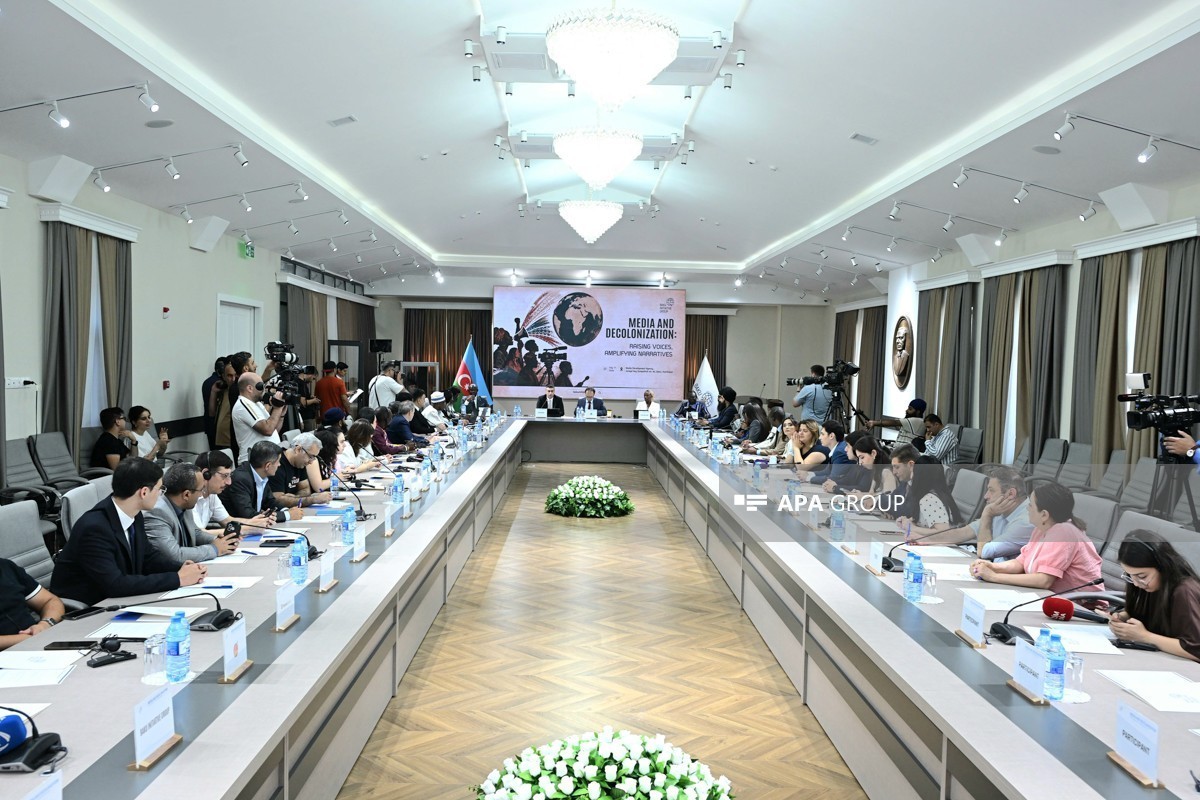
International conference on media and decolonization held in Baku - PHOTO
13:35
 11 July 2026
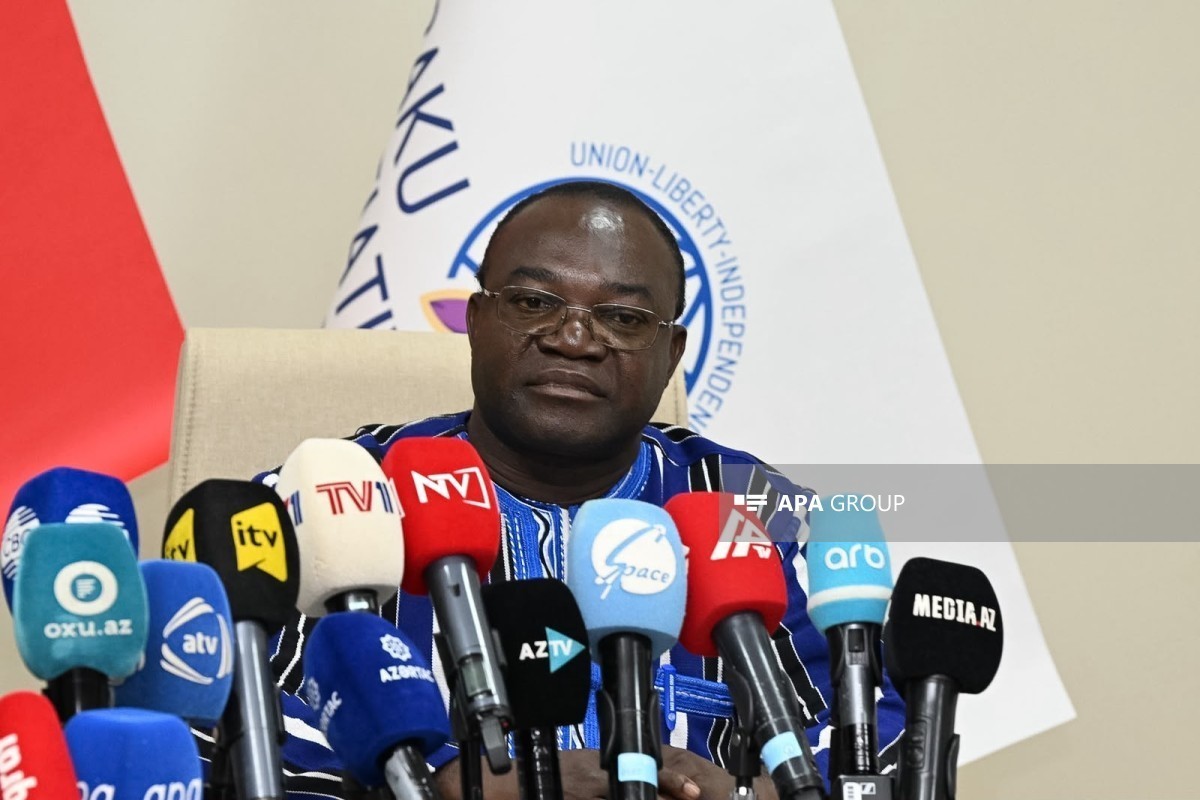
Burkina Faso official: Memorandum with BTG marks start of long-term cooperation
13:19
11 July 2026
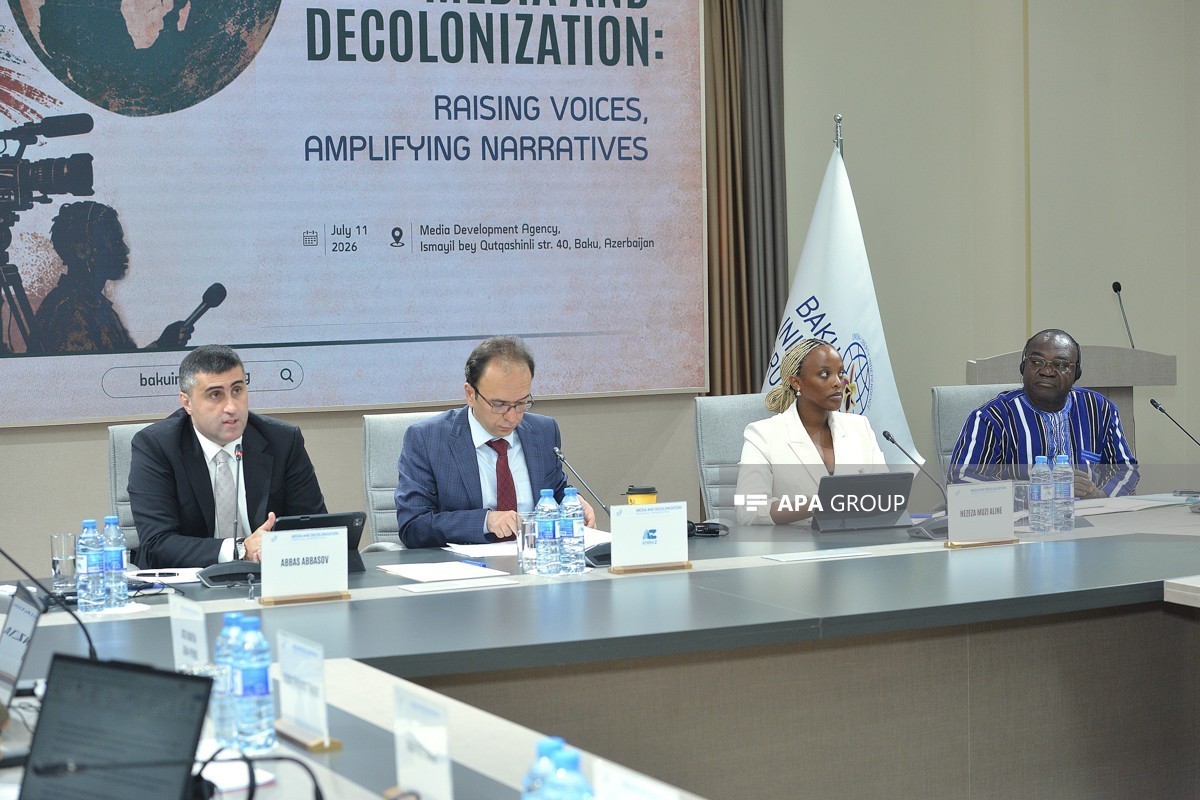
BTG signs first cooperation deal with foreign state institution
13:13
11 July 2026
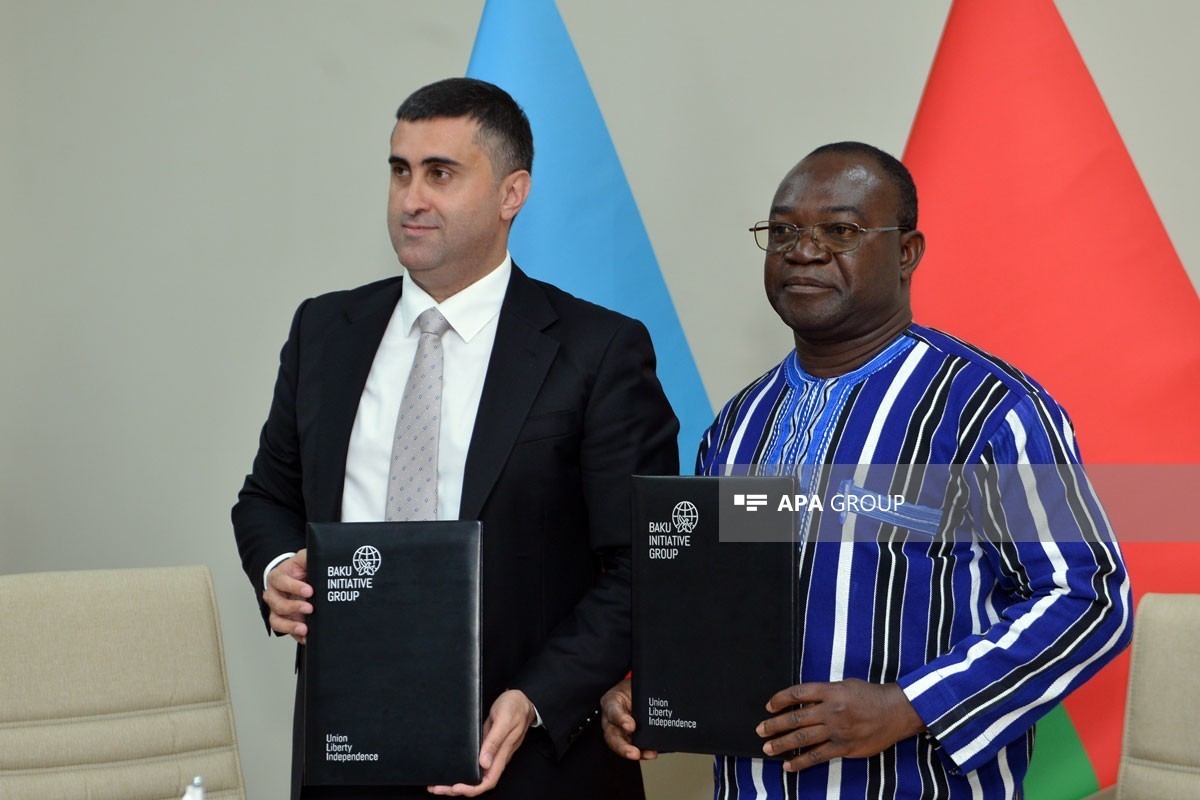 PHOTO'>
BTG signs memorandum with Burkina Faso Foreign Ministry's research institute - PHOTO
12:54
11 July 2026

NEWS FEED
Noskova beats Muchova, takes Wimbledon title
22:17
11 July 2026
Israeli Air Force attacks Hezbollah stronghold in Al-Mansouri in southern Lebanon
21:16
11 July 2026
President Ilham Aliyev’s social media accounts shared post on his meeting with residents of Guzeykhirman and Guneykhirman villages of Khojavend
20:56
11 July 2026
Rubio: Trump and I want better future for Cuba
20:44
11 July 2026
President Ilham Aliyev visited Guzeykhirman village in Khojavend district-UPDATED
20:15
11 July 2026
President: Every time I visit Garabagh and East Zangezur and see this beautiful development, my heart rejoices
19:54
11 July 2026
President of Azerbaijan: Our state is strong, our Army is strong, our will is firm
19:52
11 July 2026
President Ilham Aliyev: For the past 5-6 years, our people have rightfully lived with a sense of pride
19:50
11 July 2026
President: Every time former displaced persons return to their ancestral lands, it is a celebration for all of us
19:48
11 July 2026
Russian strikes on Sumy kill 5, including child, injure 30 - UPDATED
19:34
11 July 2026
President Ilham Aliyev attended opening of Khankendi Hotel - PHOTO
18:02
11 July 2026
President Ilham Aliyev’s social media accounts shared video from Kichik Galaderesi village in Shusha
17:39
11 July 2026
Historic oil pumping station in Kurdamir may be added to cultural heritage list
16:37
11 July 2026
President Ilham Aliyev reviewed new buildings of “Yasaman” Hotel in Shusha
16:02
11 July 2026
President Ilham Aliyev reviewed progress under public-private partnership project on Garabagh Street in Shusha
15:32
11 July 2026
Iran's Supreme Leader pledges revenge for Ali Khamenei's death, says people worldwide will help
15:22
11 July 2026
Sadigjan House opened after restoration in Shusha
15:10
11 July 2026
Russia launched a missile strike on Odesa - two dead, one wounded
14:32
11 July 2026
Boat carrying tourists capsizes off Vietnam's Phu Quoc island, killing 15
14:29
11 July 2026
President Ilham Aliyev inspected restoration works in Shusha’s Kichik Galaderesi village and met with returning residents - PHOTO
14:06
11 July 2026
International conference on media and decolonization held in Baku - PHOTO
13:35
11 July 2026
Burkina Faso official: Memorandum with BTG marks start of long-term cooperation
13:19
11 July 2026
China evacuates over one million as Typhoon Bavi nears
13:16
11 July 2026
BTG signs first cooperation deal with foreign state institution
13:13
11 July 2026
Russian strikes on Kharkiv and Zaporizhzhia leave dead and injured
13:08
11 July 2026
BTG signs memorandum with Burkina Faso Foreign Ministry's research institute - PHOTO
12:54
11 July 2026
Qatari mediators visit Iran to ease tensions
12:51
11 July 2026
Romania says five sea drones neutralized in Black Sea
12:43
11 July 2026
Azerbaijani oil trades at $77.91
12:17
11 July 2026
Ukraine creates new command to intensify long-range strikes against Russia
12:09
11 July 2026
Abbas Abbasov: BTG has succeeded in placing decolonization on the agenda of international organizations
11:47
11 July 2026
Suspect in murder of Azerbaijani citizen detained at Batumi airport, Georgian Interior Ministry says - PHOTO - VIDEO
11:39
11 July 2026
CNN: Iran attempting to restore nuclear facilities
11:31
11 July 2026
Investments in non-oil and gas sector increase by nearly 6% this year
11:29
11 July 2026
Dutch spy agencies: Russia hacked cameras to spy on military routes
11:16
11 July 2026
Azerbaijani President congratulates Mongolian counterpart on National Day
11:12
11 July 2026
Hydroelectric power stations on Hochaz River inaugurated in Lachin
11:06
11 July 2026
Ukraine strikes nearly 28 vessels in Sea of Azov overnight, Russia closes sea access
11:00
11 July 2026
Azerbaijan Defense Minister pays a working visit to Türkiye - PHOTO
10:53
11 July 2026
Trump says thousands of missiles aimed at Iran as US sets Hormuz deadline
10:49
11 July 2026
President Ilham Aliyev laid foundation stone for Hakarichay Reservoir in Lachin
10:47
11 July 2026
Operation against Çankaya Municipality, arrest warrant for 36 people including Mayor Hüseyin Can Güner
10:44
11 July 2026
Road collapses in Türkiye's Rize, residents evacuated from three buildings - VIDEO
10:10
11 July 2026
Azerbaijani Prosecutor General's Office executes legal assistance request from Montenegro
10:04
11 July 2026
Bitcoin surpasses $64,000
10:00
11 July 2026
Oil prices decline on global markets
09:39
11 July 2026
BTG has made significant progress in raising global awareness of colonialism and decolonization, executive director says
09:32
11 July 2026
Attack on Kyiv: 10 injured, including a child, fires in three districts
09:14
11 July 2026
Saudi crown prince, Trump discuss US-Iran talks, Gulf security
09:10
11 July 2026
Patriot missiles for Ukraine may be produced in Germany
07:43
11 July 2026


