










Baku-APA. When ash spews from an Icelandic volcano, 10 British scientists using laser sensors, satellite pictures and a speciallly equipped jet must tell the world where it’s going, APA reports quoting news.yahoo.com website.
The grit can block flight paths and shut airports, so the fate of millions of travelers, and billions in revenue, rides on the projections of the Volcanic Ash Advisory Center in Exeter, about 200 miles (320 kilometers) southwest of London.
Their British base — one of nine global volcanic ash advisory centers — has been on high alert since Iceland’s Eyjafjallajokul (pronounced ay-yah-FYAH-lah-yer-kuhl) volcano erupted in April, shutting down global travel for five days. It has caused sporadic disruption since then, closing London’s Heathrow and Amsterdam’s Schiphol Airport — two of Europe’s busiest hubs — over the weekend.
One rattled airline executive — Ryanair’s Michael O’Leary — has already attacked the "imaginary black plumes" predicted by the team’s computing models, which he blames for prompting excessive caution and wrongly curtailing air traffic.
"When you get a big volcanic event it gets very, very busy and very, very stressful," said Tony Hall, director of the National Oceanic and Atmospheric Administration’s Alaska Volcanic Ash Advisory Center in Anchorage.
"These things can go on for weeks, or months — it can be a very stressful time," said Hall, who has had contact with his colleagues in London since Eyjafjallajokul’s eruption.
Sarah Jackson, the British center’s atmospheric dispersion group manager, said the scientific model used to predict the spread of ash — and other dangerous particles — was developed to track contamination from the 1986 Chernobyl nuclear reactor disaster.
In a video produced by the office to explain its work, she said the modeling uses latest available data and then takes into account wind patterns and the effects turbulence, ash settling on the ground, and washout caused by rain or snow.
But, the scientists themselves acknowledge their predictions can be sketchy, and warn that long-term forecasts are rarely correct. They caution that all estimates of ash movement can quickly become outdated as wind patterns change.
Keith Groves, executive director of Britain’s Met Office — the country’s national weather forecasting service, and a commercial arm of the defense ministry — said the scientists use sophisticated equipment and have a strong record in their assessments.
"We’re quite confident that we’re producing accurate and useful predictions," Groves said, in a video produced by his office.
The British staff tracked emissions from the 1991 Kuwaiti oil fires in the first Gulf War and a major 2005 fire at an oil depot north of London, the biggest blaze in Europe since World War II.
To predict the path of the ash, they scrutinize reports from Iceland, sift through comments from pilots airlines flying over Europe — known as pireps — and consult satellite and polar orbiter imagery of the ash cloud. Data is also collected from laser sensors, called lidar — or light detection and ranging, based around Britain and used commonly in atmospheric research and to monitor cloud particles.
More data comes from research flights, including a jet owned by Britain’s Natural Environment Research Council — used almost daily through April to test the composition of the ash clouds, check the size of the ash particles and monitor levels of sulfur dioxide.
Those flights have sometimes been perilous — on May 4, a journey from southern England to Scotland was aborted after sensors detected a rising levels of ash particles. Ash can clog jet engines.
Hall said staff at the centers input data into computers running weather and ash dispersion modeling software. Resulting maps showing where ash clouds are likely to travel are then either hand drawn, or printed.
Scientists keep in regular contact with their overseas counterparts by e-mail and phone, updating each other about their latest predictions.
Through April, British forecasters prepared 18-hour projections of the movement of ash across Europe, as regulators carefully monitored the safety of the continent’s airspace. Beginning last week the ash experts have also published five-day forecasts, on the orders of Britain’s new government.
Met Office spokesman John Hammond stressed the new five-day charts are only an indication of the likely volcanic activity, and said that long term predictions of wind patterns are notoriously unreliable.
Some tour operators and airlines say they’re skeptical that the scientists can make any accurate long term predictions.
Frances Tuke, a spokeswoman for ABTA, the association of British travel agents, said the new charts can only go so far to eliminate travelers’ uncertainty.
"It is helpful, but we do have to give it a degree of caution. Our experience has shown so far that this is quite a dynamic situation that can change rapidly," she said.
But Ryanair’s O’Leary said the new charts should be scrapped, and the entire process of predicting the ash cloud’s movement overhauled.
"It is frankly ridiculous that the flight plans of millions of air passengers across Europe are being disrupted on a daily basis by an outdated, inappropriate and imaginary computer-generated model and it is time that these charts were done away with," he said.


 Follow us on Telegram
 t.me/apanewsaz
 Follow us on Instagram
 Follow us on TikTok
 Follow us on Facebook
 Follow us on X
Europe

Rutte said he wants to convince Trump of NATO's usefulness at the Ankara summit
 01:23
01:23
 26 June 2026
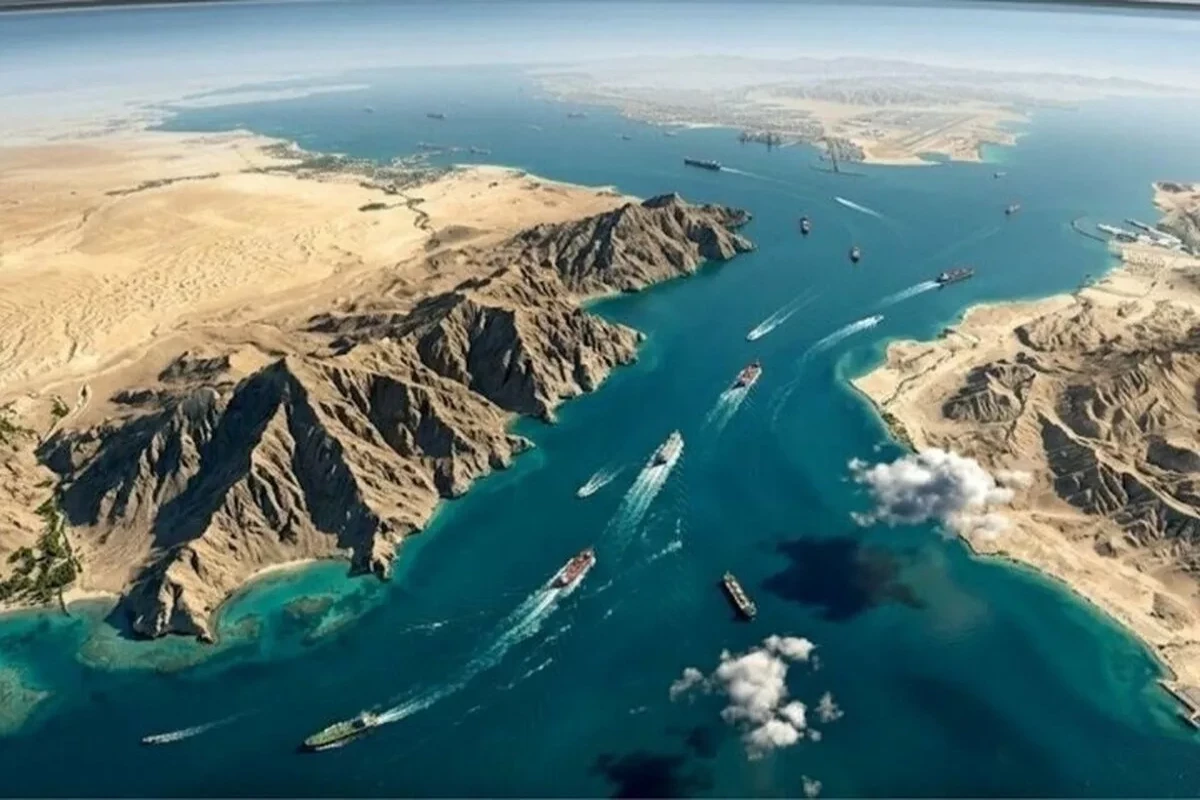
US, Gulf countries reject possibility of tariffs in Strait of Hormuz
22:38
25 June 2026

Zelenskyy approves 40-day influence operation to pressure Russia into ending war
21:41
25 June 2026
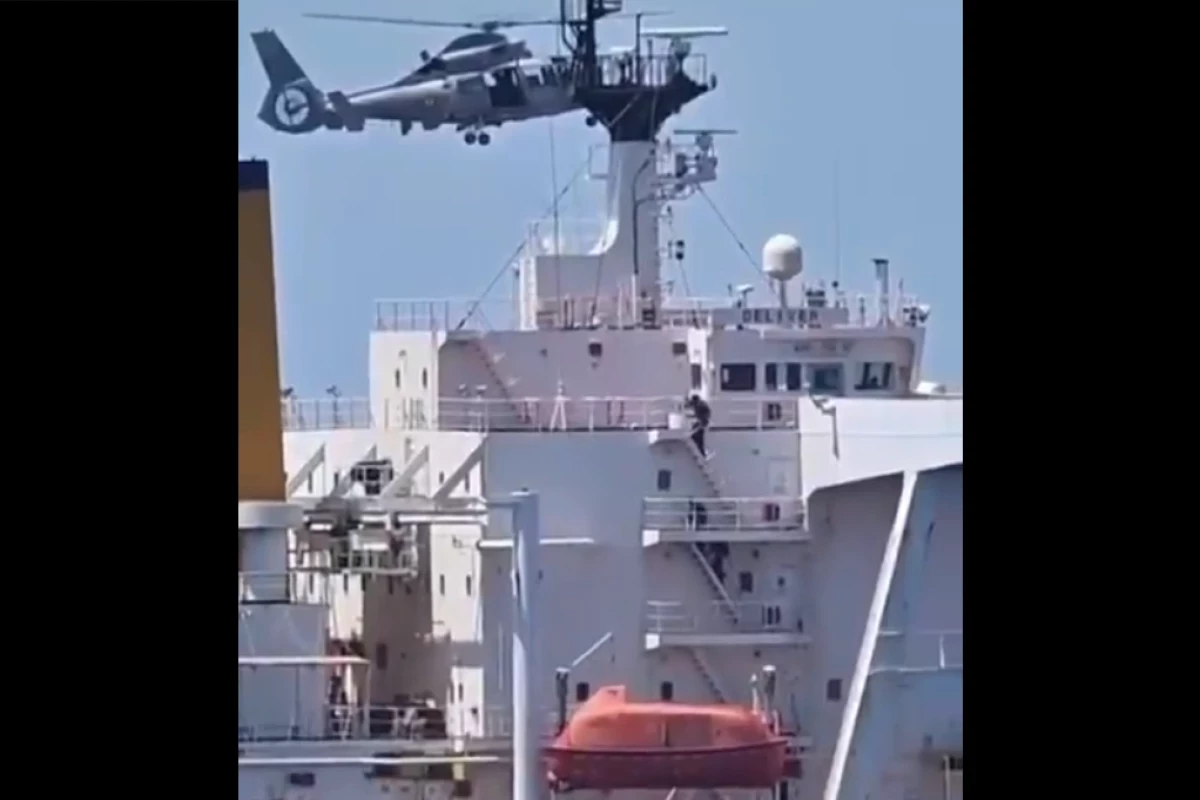
French navy has intercepted another Russian 'shadow fleet' tanker, Macron says
14:51
25 June 2026

NEWS FEED
Ecuador advances to knockout rounds at World Cup, beating Germany 2-1
03:02
26 June 2026
Iran warns vessels against unauthorized Hormuz routes after ship attack
01:52
26 June 2026
Rutte said he wants to convince Trump of NATO's usefulness at the Ankara summit
01:23
26 June 2026
IDF helicopter carrying Israeli president makes emergency landing after bird strike
00:43
26 June 2026
First Vice-President Mehriban Aliyeva shared post on Armed Forces Day
00:25
Audio
26 June 2026
Azerbaijan marks 108th anniversary of the establishment of its Armed Forces
00:00
26 June 2026
Death toll from Venezuela earthquake rises to 188 - UPDATED - 2 - VIDEO
23:18
25 June 2026
President Ilham Aliyev’s social media accounts featured video dedicated to the Azerbaijani Army
23:05
Audio
25 June 2026
US, Gulf countries reject possibility of tariffs in Strait of Hormuz
22:38
25 June 2026
President Ilham Aliyev’s social media accounts shared post on Armed Forces Day
22:04
Audio
25 June 2026
18 wagons of gasoline and 8 wagons of diesel fuel will be sent from Azerbaijan to Armenia
21:50
25 June 2026
Zelenskyy approves 40-day influence operation to pressure Russia into ending war
21:41
Audio
25 June 2026
Telephone conversation held between Azerbaijani, Turkmen Presidents
20:37
25 June 2026
Vice-President of the Heydar Aliyev Foundation Leyla Aliyeva meets with Head of the Vatican Apostolic Library and Apostolic Archive
20:14
25 June 2026
Ziya Öztürkler praises Azerbaijan's continued support for the TRNC
19:50
25 June 2026
Apple says removal of VK apps from App Store is due to sanctions compliance
19:34
25 June 2026
Ruben Rubinyan elected as candidate for Speaker of the National Assembly of Armenia
19:26
25 June 2026
Missile alert declared in Moscow region-UPDATED
19:16
25 June 2026
Hikmat Hajiyev discusses Azerbaijan–NATO partnership with Secretary General's Special Representative
18:59
25 June 2026
Armenian Prosecutor General's Office petitions CEC to authorize criminal prosecution of Gagik Tsarukyan
18:55
25 June 2026
Venezuela's foreign minister thanks Azerbaijan for solidarity following earthquake
18:16
25 June 2026
Azerbaijan and Kazakhstan agree on full transition to electronic permit system
18:10
25 June 2026
Rubio believes no final agreements reached in Anchorage
18:10
25 June 2026
US, Iran agree in principle to establish direct military communication channel, Vance says
18:09
25 June 2026
Rubio believes no final agreements reached in Anchorage
18:03
25 June 2026
Azerbaijan Army servicemen participate in Anatolian Eagle-2026 International Exercise-VIDEO
18:01
25 June 2026
Leadership of the Ministry of Defense visits Central Clinical Hospital - PHOTO
17:52
25 June 2026
Eight Azerbaijani cities to host military marches marking Armed Forces Day
17:45
25 June 2026
Azerbaijan MFA: Existing opportunities should be used to finalize peace process with Armenia
17:30
25 June 2026
Rubio says Israel, Lebanon close to commitment of intent
17:18
25 June 2026
Lukashenko: Peoples of Belarus, Russia, and Ukraine will be together sooner or later
17:09
25 June 2026
Romanian ambassador leaves Russian Foreign Ministry without comment
17:08
25 June 2026
Rubio: Iran's support for regional proxies should be addressed in memorandum talks
17:07
25 June 2026
Azerbaijan and Ukraine discuss current cooperation agenda
17:06
25 June 2026
Azerbaijan-Israel innovation dialogue held at Shimon Peres Center - PHOTO
17:02
25 June 2026
Iran, Oman stress need for coordination on Strait of Hormuz traffic in foreign minister call
16:44
25 June 2026
Ghalibaf criticizes US over claims regarding Iran's unfrozen assets
16:43
25 June 2026
Iraqi Oil Ministry denies reports of potential OPEC exit, urges output quota reassessment-UPDATED
16:39
25 June 2026
President Ilham Aliyev signs order awarding Defense Ministry servicemen
16:31
25 June 2026
Azerbaijan's President awards fallen servicemen posthumously
16:31
25 June 2026
Military Institute named after Heydar Aliyev holds another graduation ceremony - PHOTO - VIDEO
16:26
25 June 2026
Azerbaijan establishes "Intellectual Customs" information system
16:24
25 June 2026
President Ilham Aliyev awards major general rank to five Defense Ministry servicemen
16:23
25 June 2026
Ashura blood donation campaign concludes in Azerbaijan, 1,269.45 liters of blood collected -PHOTO-UPDATED-1
16:21
25 June 2026
Rubio: No Gulf country supports charging fees for passage through the Strait of Hormuz
16:14
25 June 2026
Hikmat Hajiyev, Macron's adviser review state of Azerbaijan-France relations
16:10
25 June 2026
Azerbaijani cadet awarded Italy's "Sword of Honor"
16:00
25 June 2026
Azerbaijan establishes budget-funded organizations based on several public legal entities - DECREE
16:00
25 June 2026
Defense minister: Azerbaijani Armed Forces are among the strongest militaries in the region
15:56
25 June 2026
US sends search and rescue teams to Venezuela after deadly earthquake
15:55
25 June 2026


