










Baku – APA. The European Union put up a staggering $1 trillion Monday to contain its spreading government debt crisis and keep it from tearing the euro currency apart and derailing the global economic recovery, APA reports quoting “Associated Pressâ€.
Analysts said the huge sum supplied the "shock and awe" markets had been waiting for for weeks, at least in the short term, and the euro and stocks soared on the news.
European leaders negotiated into the early hours of Monday before reaching a deal in which governments that use the euro would join the EU and International Monetary Fund in putting up euro750 billion in loans available to prop up troubled governments.
The European Central bank will buy government and private debt to keep debt markets working and lower borrowing costs, a crisis measure dubbed the "nuclear option," while the U.S. Federal Reserve joined with other central banks in the effort, reactivating a currency swap program used during the earlier stages of the financial crisis to ship dollars overseas to be pumped into banking systems as short-term credit.
The overnight decision immediately jumpstarted markets worldwide. The euro immediately shot back to life and up to $1.30, recovering from Friday’s 14-month low of $1.2523.
Stocks too basked in the glow. France’s CAC-40 stood out in Europe, surging 285.08 points, or 8.4 percent, to 3,677.67. Athens’ main index was up nearly 10 percent and Lisbon’s PSI 20 jumped 9 percent too.
Japan’s Nikkei 225 stock average rose 1.5 percent and Hong Kong’s Hang Seng index added 1.3 percent. European markets jumped higher — major indexes were up more than 3 percent — and Wall Street was also expected to surge on the open, with Dow futures also 3.0 percent higher.
Officials acted after ominous slides in world stocks and the euro last week that raised fears that the debt crisis would spread from heavily indebted Greece to other financially weak countries such as Spain and Portugal. It reached the point where President Barack Obama discussed the crisis by phone with German Chancellor Angela Merkel and French President Nicholas Sarkozy.
Policy makers worried it could shake the world economy the way the bankruptcy of U.S. investment bank Lehman Brothers did in 2008, making banks fearful of lending to businesses, hammering stocks and killing off economic recovery.
It also raised long-term worries that the crisis would force a weaker member such as Greece out of the euro.
Analysts said the measures had put out the fire for now by eliminating fears that governments would lack funds to pay off their debts. But several raised long-term worries about spreading debt of budget sinners to more responsible governments, and pointed to the lack of tough rules to keep debt from piling up again.
"It buys time. We don’t know if it will be enough. They’re trying to give the impression that they’re still united. They’ve bought some breathing space but that’s all," said Song Seng Wun, an economist with CIMB-GK Research in Singapore. "This perhaps just postpones the inevitable, the euro may have to ultimately give way, that’s the worst case scenario."
Jeremy Batstone-Carr from Charles Stanley stockbrockers said the underlying problem won’t be solved unless governments stop piling up so much debt. "The last thing you give a drunk is another drink," he said. "Put differently, you cannot make any nation that is unable to service its accumulated debts more credit worthy by extending more credit."
European Commission President Jose Manuel Barroso promised tougher rules for member countries’ spending.
On Wednesday, EU officials will propose tougher sanctions for financially wayward nations and more coordination between the governments on their economies. "We need stronger coordination, economic policy coordination," he said. It will be discussed by EU finance ministers next week.
Under Monday’s three-year plan, the European Commission — the EU’s governing body — will make euro60 billion ($75 billion) available while countries from the 16-nation eurozone would promise backing for euro440 billion ($570 billion). The IMF would contribute an additional sum of at least half of the EU’s total contribution, or euro250 billion.
"We shall defend the euro whatever it takes," EU Commissioner Olli Rehn said after an 11 hour-meeting of EU finance ministers that capped a hectic week of chaotic sparring between panicked governments and aggressive markets.
Officials hope the massive sums will deter currency speculators from betting on a euro collapse after political posturing and soothing words failed to convince investors that Greece’s financial implosion could be contained.
Markets had battered the euro and Greek government bonds even as EU leaders insisted for days that Greece’s problems were a unique combination of bad management, free spending and statistical cheating that doesn’t apply to other euro-zone nations.
Market jitters also partly contributed to a nearly 1,000-point drop in the Dow Jones industrials last Thursday. The Securities and Exchange Commission is meeting with heads of exchanges Monday to discuss how conflicting trading rules may have exacerbated the historic stock market plunge.
In the end, even longtime skeptic Germany realized Europe had to show the money after financial attacks on Greece’s debt seemed poised to spread to other weak European nations such as Portugal and Spain. Fear of default led to investors demanding high interest rates that Greece could not pay, forcing it to seek a bailout. Many feared market skepticism would make Portugal and Spain pay more and more to borrow, worsening their plight.
Spain and Portugal have committed to "take significant additional consolidation measures in 2010 and 2011," a statement from EU finance ministers said. The two countries will present them to EU finance ministers at their meeting on May 18.
"We are facing such exceptional circumstances today and the mechanism will stay in place as long as needed to safeguard financial stability," the ministers said.
Merkel said her government would approve the rescue plan on Tuesday before parliament gave it "quick but thorough" consideration.
Separately, eurozone leaders on Saturday gave final approval for a euro80 billion ($100 billion) rescue package of loans to Greece for the next three years to stave off default. The IMF also approved its part of the rescue package — euro30 billion ($40 billion) of loans — on Sunday.
The Fed’s move to back the euro defense plan reopens a program put in place during the 2008 global financial crisis under which dollars are shipped overseas through foreign central banks. In turn, these central banks can lend the dollars out to banks in their home countries that are in need of dollar funding in so-called swap agreements.
The Fed said action is being taken "in response to the reemergence of strains in U.S. dollar short-term funding markets in Europe" and to "prevent the spread of strains to other markets and financial centers." A "swap" line with the Bank of Canada provides up to $30 billion. Figures weren’t provided for the other central banks involved. They include the Bank of England, the European Central Bank, the Swiss National Bank, and the Bank of Japan.


 Follow us on Telegram
 t.me/apanewsaz
 Follow us on Instagram
 Follow us on TikTok
 Follow us on Facebook
 Follow us on X
Europe
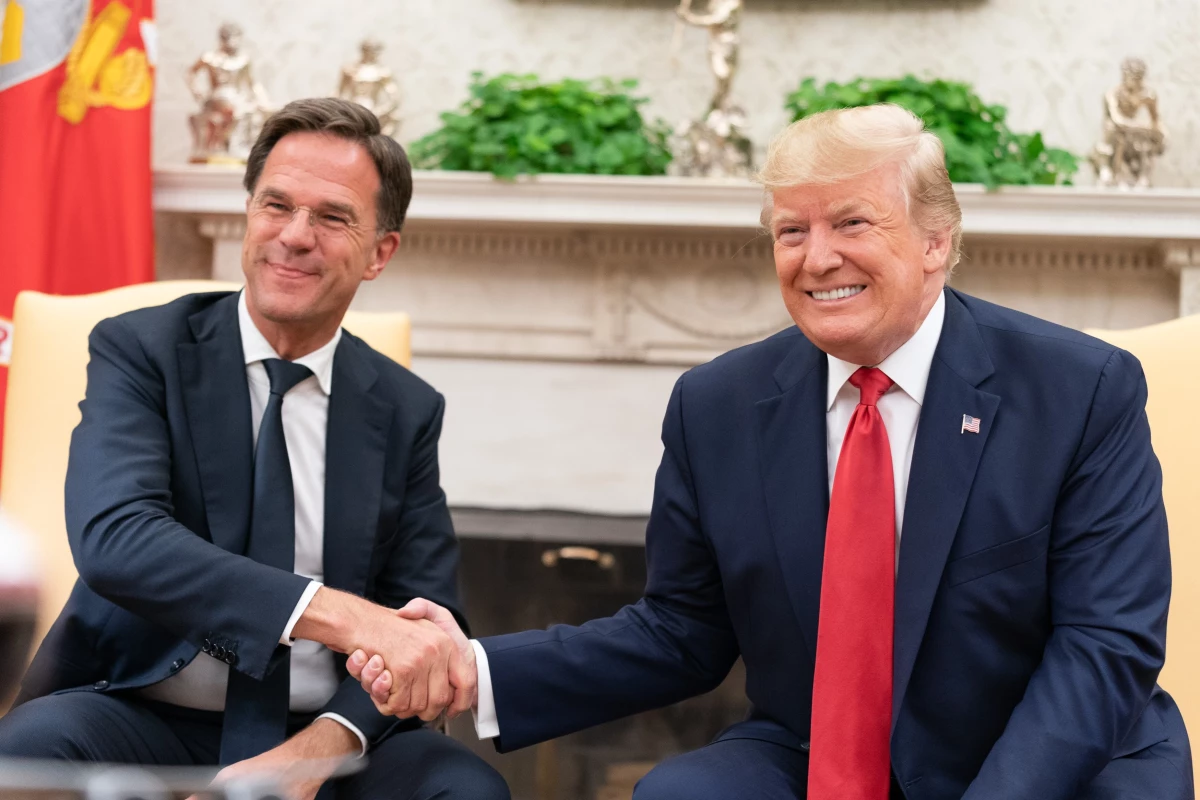
Rutte said he wants to convince Trump of NATO's usefulness at the Ankara summit
 01:23
01:23
 26 June 2026
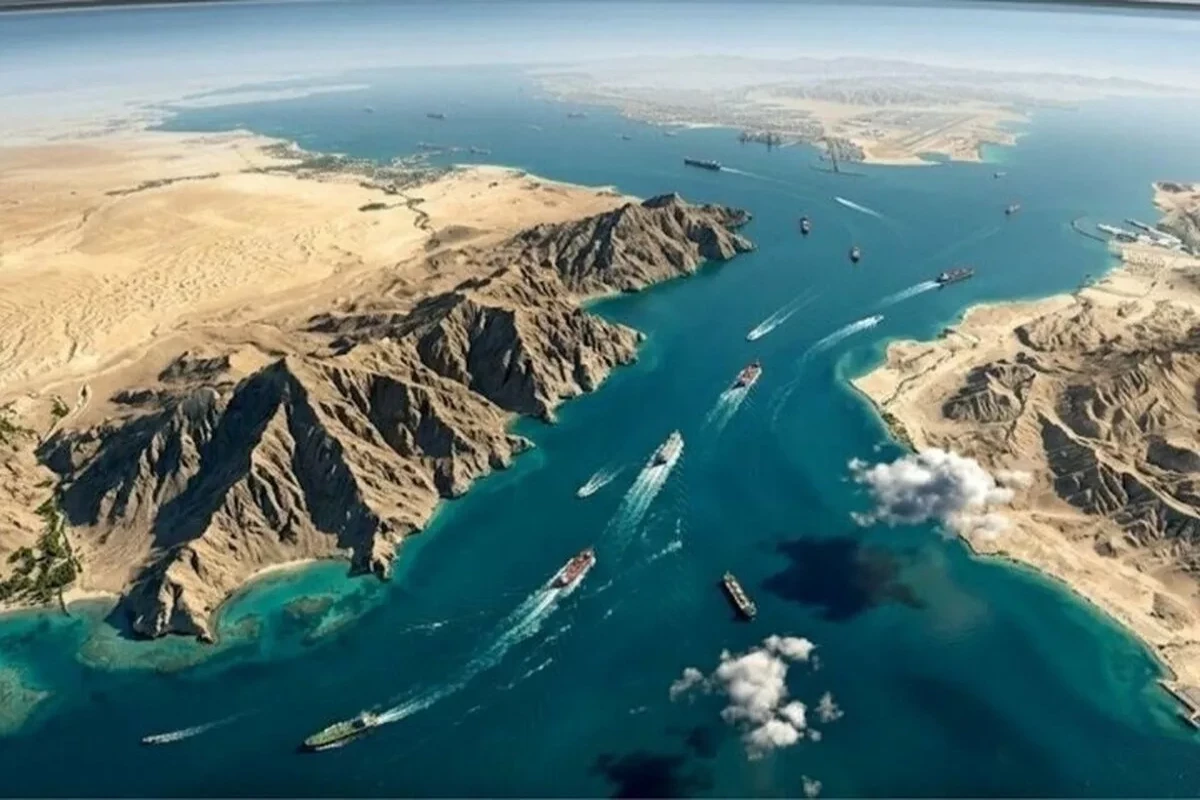
US, Gulf countries reject possibility of tariffs in Strait of Hormuz
22:38
25 June 2026

Zelenskyy approves 40-day influence operation to pressure Russia into ending war
21:41
25 June 2026
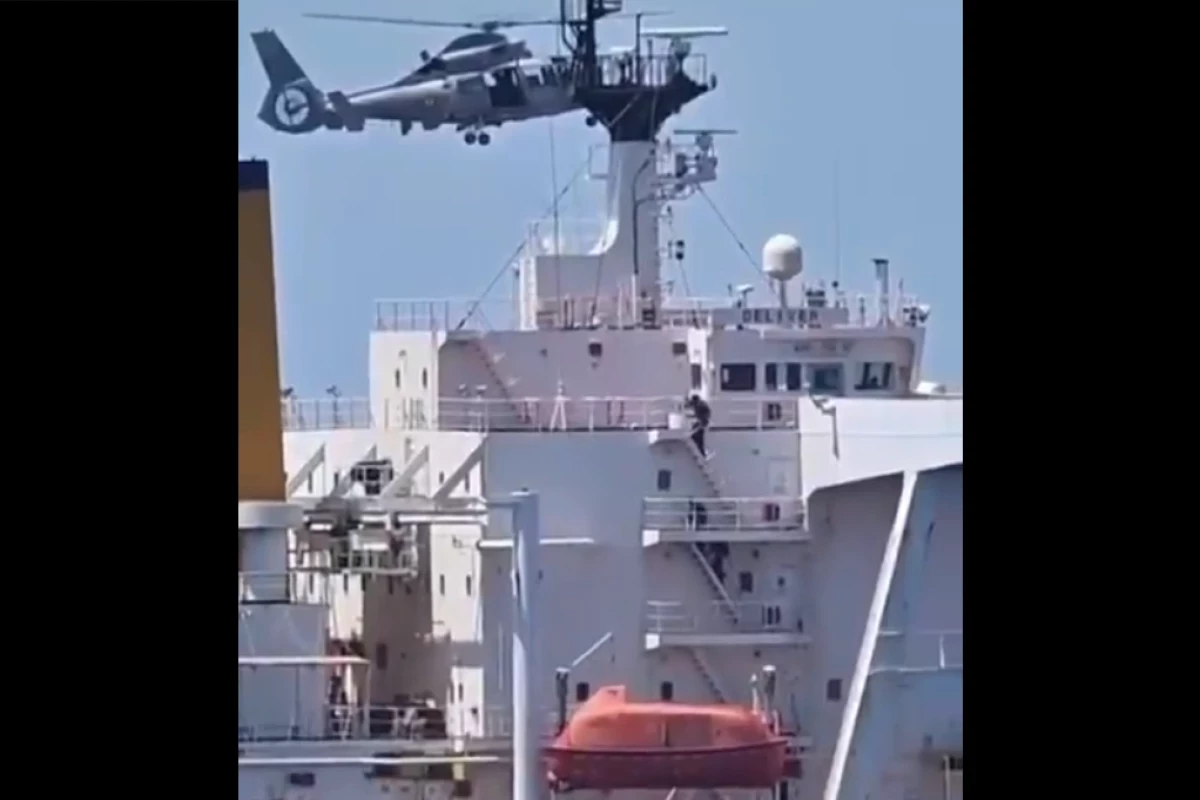
French navy has intercepted another Russian 'shadow fleet' tanker, Macron says
14:51
25 June 2026

NEWS FEED
Ecuador advances to knockout rounds at World Cup, beating Germany 2-1
03:02
26 June 2026
Iran warns vessels against unauthorized Hormuz routes after ship attack
01:52
26 June 2026
Rutte said he wants to convince Trump of NATO's usefulness at the Ankara summit
01:23
26 June 2026
IDF helicopter carrying Israeli president makes emergency landing after bird strike
00:43
26 June 2026
First Vice-President Mehriban Aliyeva shared post on Armed Forces Day
00:25
Audio
26 June 2026
Azerbaijan marks 108th anniversary of the establishment of its Armed Forces
00:00
26 June 2026
Death toll from Venezuela earthquake rises to 188 - UPDATED - 2 - VIDEO
23:18
25 June 2026
President Ilham Aliyev’s social media accounts featured video dedicated to the Azerbaijani Army
23:05
Audio
25 June 2026
US, Gulf countries reject possibility of tariffs in Strait of Hormuz
22:38
25 June 2026
President Ilham Aliyev’s social media accounts shared post on Armed Forces Day
22:04
Audio
25 June 2026
18 wagons of gasoline and 8 wagons of diesel fuel will be sent from Azerbaijan to Armenia
21:50
25 June 2026
Zelenskyy approves 40-day influence operation to pressure Russia into ending war
21:41
Audio
25 June 2026
Telephone conversation held between Azerbaijani, Turkmen Presidents
20:37
25 June 2026
Vice-President of the Heydar Aliyev Foundation Leyla Aliyeva meets with Head of the Vatican Apostolic Library and Apostolic Archive
20:14
25 June 2026
Ziya Öztürkler praises Azerbaijan's continued support for the TRNC
19:50
25 June 2026
Apple says removal of VK apps from App Store is due to sanctions compliance
19:34
25 June 2026
Ruben Rubinyan elected as candidate for Speaker of the National Assembly of Armenia
19:26
25 June 2026
Missile alert declared in Moscow region-UPDATED
19:16
25 June 2026
Hikmat Hajiyev discusses Azerbaijan–NATO partnership with Secretary General's Special Representative
18:59
25 June 2026
Armenian Prosecutor General's Office petitions CEC to authorize criminal prosecution of Gagik Tsarukyan
18:55
25 June 2026
Venezuela's foreign minister thanks Azerbaijan for solidarity following earthquake
18:16
25 June 2026
Azerbaijan and Kazakhstan agree on full transition to electronic permit system
18:10
25 June 2026
Rubio believes no final agreements reached in Anchorage
18:10
25 June 2026
US, Iran agree in principle to establish direct military communication channel, Vance says
18:09
25 June 2026
Rubio believes no final agreements reached in Anchorage
18:03
25 June 2026
Azerbaijan Army servicemen participate in Anatolian Eagle-2026 International Exercise-VIDEO
18:01
25 June 2026
Leadership of the Ministry of Defense visits Central Clinical Hospital - PHOTO
17:52
25 June 2026
Eight Azerbaijani cities to host military marches marking Armed Forces Day
17:45
25 June 2026
Azerbaijan MFA: Existing opportunities should be used to finalize peace process with Armenia
17:30
25 June 2026
Rubio says Israel, Lebanon close to commitment of intent
17:18
25 June 2026
Lukashenko: Peoples of Belarus, Russia, and Ukraine will be together sooner or later
17:09
25 June 2026
Romanian ambassador leaves Russian Foreign Ministry without comment
17:08
25 June 2026
Rubio: Iran's support for regional proxies should be addressed in memorandum talks
17:07
25 June 2026
Azerbaijan and Ukraine discuss current cooperation agenda
17:06
25 June 2026
Azerbaijan-Israel innovation dialogue held at Shimon Peres Center - PHOTO
17:02
25 June 2026
Iran, Oman stress need for coordination on Strait of Hormuz traffic in foreign minister call
16:44
25 June 2026
Ghalibaf criticizes US over claims regarding Iran's unfrozen assets
16:43
25 June 2026
Iraqi Oil Ministry denies reports of potential OPEC exit, urges output quota reassessment-UPDATED
16:39
25 June 2026
President Ilham Aliyev signs order awarding Defense Ministry servicemen
16:31
25 June 2026
Azerbaijan's President awards fallen servicemen posthumously
16:31
25 June 2026
Military Institute named after Heydar Aliyev holds another graduation ceremony - PHOTO - VIDEO
16:26
25 June 2026
Azerbaijan establishes "Intellectual Customs" information system
16:24
25 June 2026
President Ilham Aliyev awards major general rank to five Defense Ministry servicemen
16:23
25 June 2026
Ashura blood donation campaign concludes in Azerbaijan, 1,269.45 liters of blood collected -PHOTO-UPDATED-1
16:21
25 June 2026
Rubio: No Gulf country supports charging fees for passage through the Strait of Hormuz
16:14
25 June 2026
Hikmat Hajiyev, Macron's adviser review state of Azerbaijan-France relations
16:10
25 June 2026
Azerbaijani cadet awarded Italy's "Sword of Honor"
16:00
25 June 2026
Azerbaijan establishes budget-funded organizations based on several public legal entities - DECREE
16:00
25 June 2026
Defense minister: Azerbaijani Armed Forces are among the strongest militaries in the region
15:56
25 June 2026
US sends search and rescue teams to Venezuela after deadly earthquake
15:55
25 June 2026


